Opinion: UCLA’s AI policies must be consistent, include more regulations on faculty use
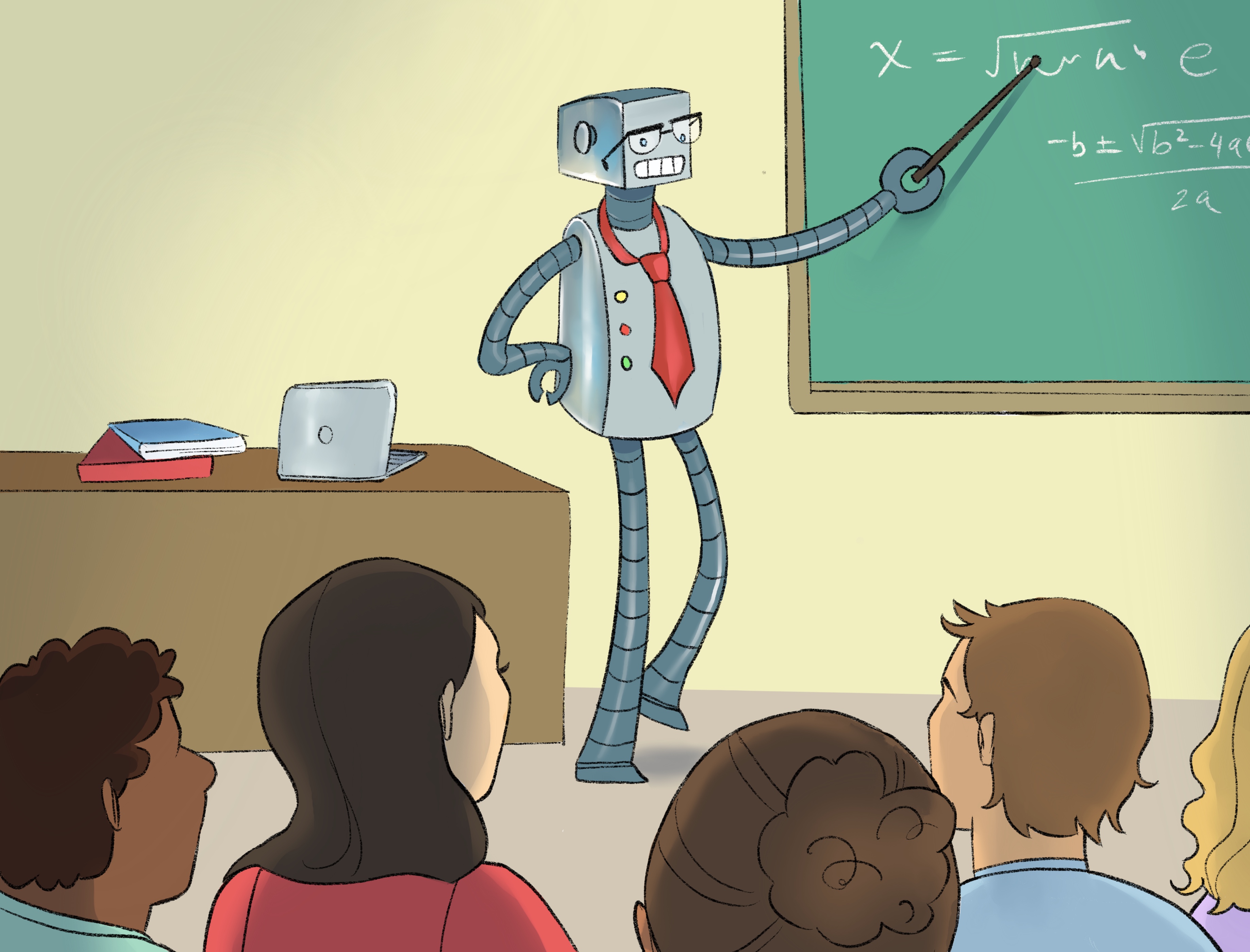
(Polina van Hulsen/Daily Bruin)

By Eva Trujillo
Feb. 1, 2026 2:34 p.m.
This post was updated Feb. 22 at 6:55 p.m.
One energy drink down and you are in the midst of considering whether to use ChatGPT for a five-point assignment.
But you know your class bans artificial intelligence, so you sigh and keep on working.
Now picture this: your professor is using AI – at a discounted price.
UCLA Digital & Technology Solutions gave faculty and staff access to ChatGPT Edu at a discounted price in fall 2025. This was done in an effort to ensure that UCLA staff can use the latest AI technology in a more secure, responsible and cost-effective way, according to a September press release.
UCLA is the first California university to implement AI in this way, aiming to integrate it responsibly into academic life. It hopes that by doing so, innovation will be fostered in teaching, learning and research.
Yet AI policies for students remain inconsistent.
The university expects students to consistently produce original and high-quality work. Then they turn around and grant faculty and staff discounted ChatGPT Edu, without any restrictions on use. UCLA must clarify its AI policy for professors, especially when professors use AI funded by the university.
Jordan Han, a first-year psychology student, said allowing professors to use ChatGPT creates an imbalance in the classroom. He added that it is unfair that students are criticized for using the AI tool when professors are given full access to it at a discounted price.
“Since professors, they’re like ‘You shouldn’t use ChatGPT,’ they shouldn’t be able to use it either,” Han said.
It is wrong for professors to have access to the most updated version of ChatGPT while students are still heavily discouraged from using it. Students and professors are operating under different expectations when it comes to AI.
Zrinka Stahuljak, a professor of comparative literature and French, said the university provided no guidance for professors on how to use the large language model. She said the university needs systemic guidance and AI literacy training for professors, warning that the current lack of support forces them to navigate AI use on their own. This leaves room for misuse, rather than benefiting students and instructors.
With such an ability to use ChatGPT, it becomes difficult to identify the appropriate boundaries.
“I’ve seen so many people just start relying on ChatGPT to write for them,” said Abigail Saguy, a professor of sociology. “Already with the internet, less people started to read. So there’s less of an intellect or less of an ability to want to learn.”
Saguy added that this leads to a decline in understanding of grammar and writing.
ChatGPT inherently allows people to think and progress less intellectually. Reliance on AI encourages intellectual complacency among professors, diminishing sustained critical engagement and weakening scholarly rigor.
Of course, a professor is a professor for a certain reason: they are knowledgeable in what they teach. Nevertheless, the implementation of this recent policy without boundaries welcomes issues. Without a clear limit set in stone, the issue is not the extent of AI use but the risk of its irresponsible application by professors.
Granted, artificial intelligence is becoming an essential part of our society. It can be useful in a classroom setting and enhance students’ learning experience.
Saguy said she uses AI in the classroom to help her students engage in open dialogue regarding their perspectives on issues of gender. The program assists students in having impactful discourses, rather than ones shielded by bias.
Still, it does not justify an AI policy without regulations. At the University of Utah, ChatGPT Edu is offered to both students and faculty. However, its use is governed by strict institutional guidelines aligned with existing academic policies.
A system of checks and balances should be applied to ChatGPT Edu by the university so that AI becomes a beneficial tool rather than an unlimited shortcut.
Regulations will give professors a better way to implement ChatGPT into their classrooms without overly relying on it. It should be used as a tool, not as a substitute for human thinking.
“The accessibility of ChatGPT for the professorial core really leaves it to the professors to figure out how to use AI responsibly,” Stahuljak said.
When classroom learning relies heavily on artificial intelligence, students engage less deeply with the material. Instead of fostering debate and critical thinking, ChatGPT delivers simple, thoughtless conclusions. Without clear and equal boundaries for professors and students, convenience replaces inquiry.
AI is up and coming, and its presence in education will soon be greater than ever. It is integral that the technology is carefully used.
If students are barred from using ChatGPT for a five-point assignment, professors should not be quietly encouraged to rely on it.
After all, ChatGPT Edu should not become the new faculty of UCLA.