Opinion: UCLA must require media literacy as a general education class
(By Ella Han / Daily Bruin)

By Antonia Pinnar
Jan. 21, 2026 3:45 p.m.
This post was updated Jan. 27 at 7:41 p.m.
UCLA claims its purpose is the “creation, dissemination, preservation and application of knowledge.”
Yet today’s students are consuming more information than any generation before them, without ever being formally taught how to evaluate it.
Information can spread rapidly, is available at our fingertips and holds the ability to shape our shared beliefs – especially in the digital age.
As such, it is essential for all people to learn critical media literacy skills. In this pursuit, UCLA must make media literacy a general education requirement.
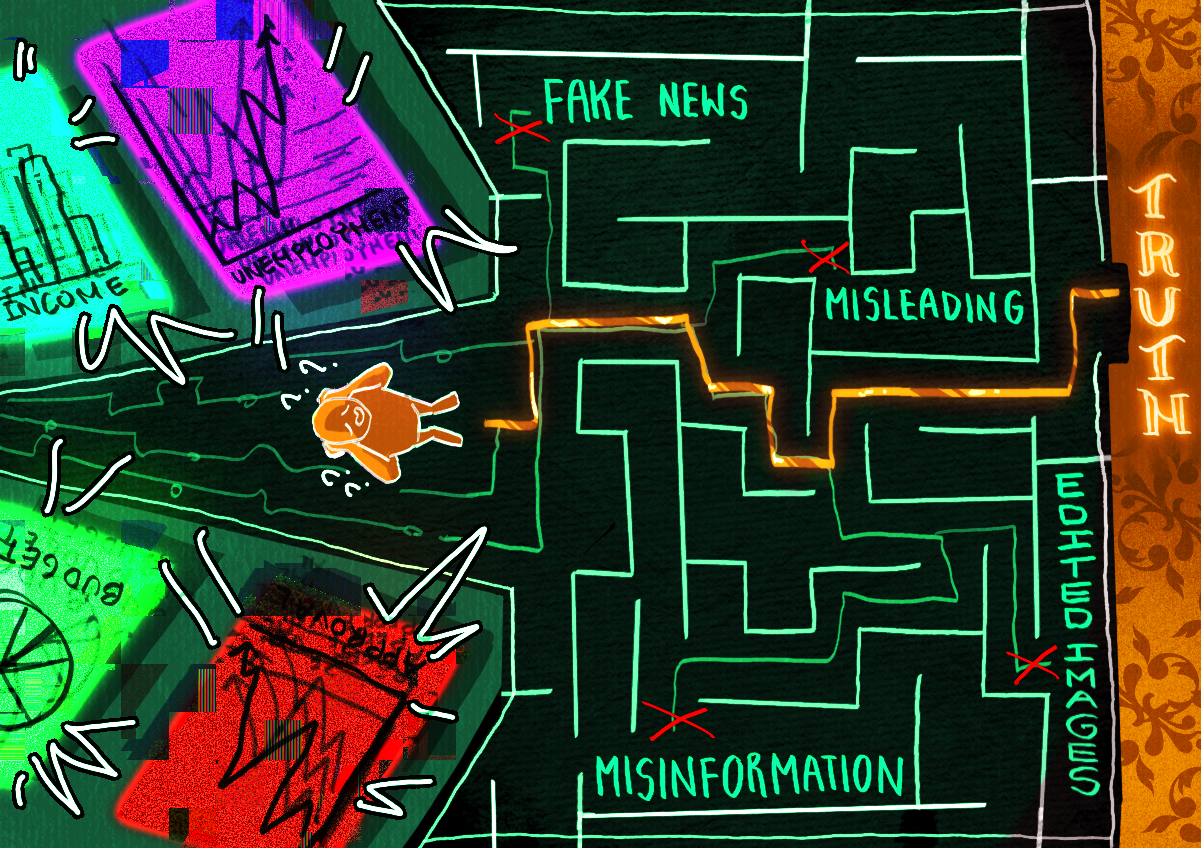
It has become increasingly difficult to determine what information is fake or altered with the rapid development of artificial intelligence technology.
“I worry a lot about AI and being able to make stuff up online. (People) post whatever they want to and give a lot of misinformation,” said Rebecca Chang, a first-year ecology, behavior and evolution student. “That could lead to a lot of problems in people’s views.”
But the more prevalent issue is the lack of recognition of biases in the media.
“One of the biggest challenges for evaluating information is judging bias,” said Jeff Share, a senior lecturer in the School of Education and Information Studies. “A lot of people focus on just authenticity and being able to tell if it’s real or if it’s fake, but I think that’s a simplistic idea that really doesn’t help us nearly as much as if we are questioning the bias, because bias always exists, whether we realize it or not.”
The danger lies not in the existence of bias, but in our lack of awareness of bias. Blindly accepting ideas without any critical thought can have dangerous consequences because the media holds the power to influence our perspectives, shape our ideologies and affect our actions.
For instance, a study by the University of Central Florida found that, during the 2016 election, the top 20 misinformed news stories received more engagement than the top 20 factual stories.
Students may believe that adding a GE requirement creates an unnecessary burden. Yet nowadays, media analysis is not an elective skill.
A UNESCO study found 85% of respondents are concerned about the impact of misinformation. Without being taught critical thinking skills, students are vulnerable to misinformation, may unintentionally reinforce echo chambers or perpetuate harmful ideologies.
Even younger students recognize the importance of media literacy. According to the News Literacy Project, 94% of teens want media literacy to be taught in schools.
“It would be beneficial overall, because it’s something that has been becoming more prominent in every field,” said Brigitte Chamu, a second-year economics student. “It’s important for every student, regardless of their major, to have this knowledge.”
Media literacy is a necessary skill across every academic field.
Share said it is fascinating to see how students from disciplines ranging from pre-med to pre-law bring distinct perspectives to media analysis. He added that media literacy is universally relevant because even something as technical as a biology article is still media.
Critical media literacy courses may combine media interpretation and production, a method utilized in Share’s courses at the School of Information and Educational Studies. By including not only analysis, but also production, students are able to see what happens behind the scenes and just how easily bias influences messaging.
“(Students) being able to do their own research/being able to distinguish information for themselves, would be helpful,” Chamu said.
Even the state of California is taking steps to incorporate media literacy into education through the adoption of Assembly Bill 873, which integrates this skill in K-12 schools. UCLA must aid in this effort. Developing critical media literacy skills is a pursuit that should not end in high school.
If UCLA intends to prepare students for a world shaped by misinformation and bias, then media literacy cannot be optional.
Ultimately, UCLA’s mission of “creation, dissemination, preservation and application of knowledge” means nothing if students are not aware of their civic responsibility to question such knowledge.