From ballgowns to bow and arrows: Rethinking feminism in Disney princess films
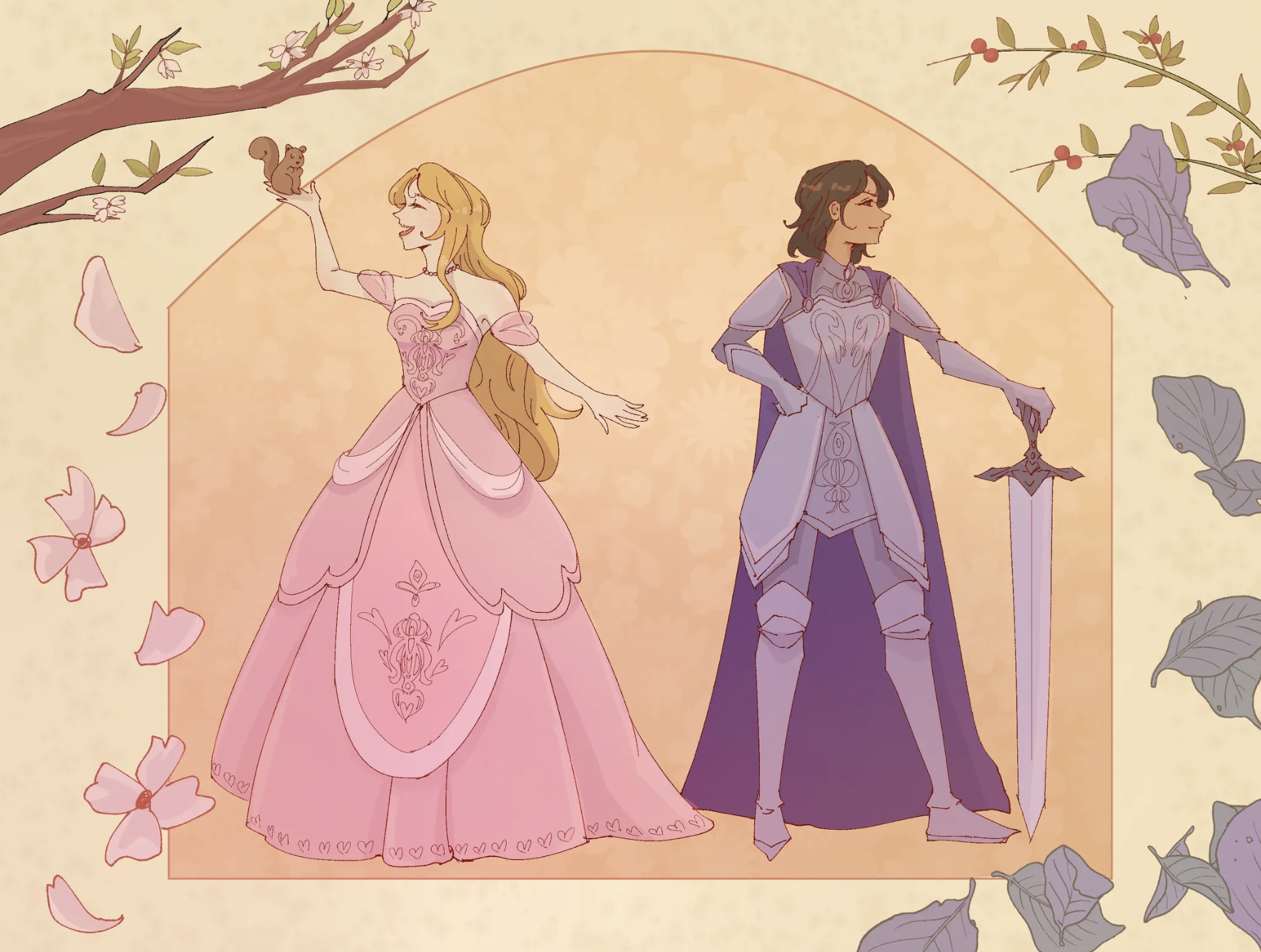
(Gina Namkung/Daily Bruin)

By Sierra Benayon-Abraham
Jan. 25, 2026 4:53 p.m.
This post was updated Feb. 1 at 6:26 p.m.
Snow White’s damsel-in-distress plotline. Aurora’s hourglass figure. Jasmine’s long hair. Cinderella’s ballgown.
These are all common stereotypes that have characterized Disney’s adaptations of princess folklore and 19th-century authors’ tales.
But decades after those original characters, Merida’s bow and arrow, Elsa and Anna’s familial love and Moana’s undying courage have dominated the screen.
Disney princesses are a staple of many childhoods. They have the potential to shape, manipulate and morph the way young children view beauty, love and feminism. With the recent casting announcement of the new live-action Rapunzel movie, discussions about feminism in Disney princess movies have once again resurfaced.
As the classic tropes for Disney princesses continue to evolve, their development must empower the next generation of girls and women while actively disarming harmful gender stereotypes. However, such empowerment is allowed to come from the older, more traditional Disney princess characters as well.
Disney has worked hard in the last decade to have more diverse representation when it comes to their princesses, especially with casting for the live-action movies.
“They’ve evolved to be more feminist by having more representation in society,” said Gabrielle Patawaran, a second-year business economics student.
Actresses are being cast as princesses who come from a wide range of cultures, ethnicities and backgrounds, and young girls are finally beginning to see more people who look like them on the screen.
This does not mean that the original Disney princess characters don’t have anything to teach us. Nor does it mean that the more modern Disney princesses are the be-all and end-all when it comes to female role models.
Feminism has emerged within these characters in more ways than just the obvious.
Alison Bechdel inadvertently upended the way in which we view feminist portrayals in movies through her 1985 cartoon strip that brought to life the Bechdel test. The test is simple and asks just three questions: Does the movie have two female characters, do these two female characters have a conversation and is the conversation about anything other than a male character?
Shockingly, many Disney princess films do not pass. The Bechdel test exposes inherent gender biases in such movies.
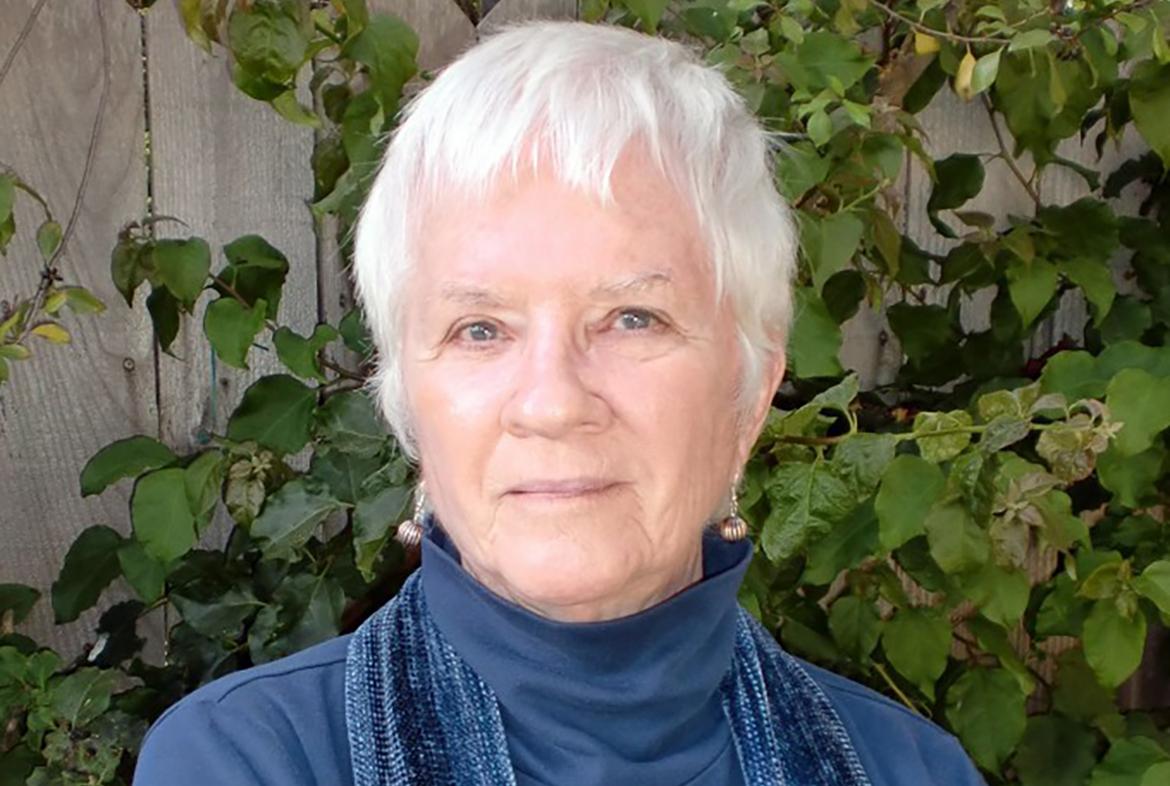
Michelle Liu Carriger, an associate professor at the UCLA School of Theater, Film and Television, studies how people perform identity in everyday life or other venues beyond the theatrical stage. She analyzes how people use theatrical concepts to understand their own identities.
“I really love the Bechdel test because it simplifies something that’s otherwise really complicated,” Carriger said.
However, it may be surprising to most which Disney princess films actually do and do not pass the test.
Cinderella passes the test by having a conversation with her stepmother in which she is assigned extra chores. There is no mention of a ball, a prince or a man.
Yet, according to some, Mulan, the princess who courageously goes undercover as a male soldier to prevent her ill father from having to do so, actually fails the test, as there are no interactions with named female characters that are not about men, marriage or Mulan’s assumed future role as a wife.
“I feel like sometimes, even some of the older ones are a little more forward thinking than some of the new ones that come out,” said Ella Kaminski, a second-year business economics and public affairs student.
The majority of more modern Disney princess movies now pass the Bechdel test with flying colors. However, Cinderella’s unwavering kindness and internal resilience in the face of emotional and verbal abuse and extreme physical labor demonstrate feminist principles in and of themselves – and she did all of this while still pursuing the man of her dreams at the ball.
There is little doubt that when young girls view Elsa and Anna’s sisterly bond, it reinforces strong female friendships. Similarly, watching Tiana open her own restaurant sparks something within young female entrepreneurs. But that does not mean we should completely discredit the lessons instilled in viewers through the other Disney princesses.
Carriger said we can formulate our opinions of the Disney princesses by asking ourselves what this character does for us individually.
“If this character, no matter whether it’s a newer one or an older one, a complex one or a simplistic one, if it inspires you to do more things and be a fully realized human and to understand yourself as sort of a protagonist in your own life, then that could be feminist,” she said.
The belief that to be a feminist you have to follow a prescribed set of values and beliefs – you don’t need a man, you don’t want to be a stay-at-home mom, you are strong if you are a rebel warrior – is false. This form of feminism might be the type that is most dominant in modern media, but that doesn’t mean that it is the only type.
According to the Merriam-Webster dictionary, the term “feminism” is simply defined as “political, economic, and social equality of the sexes.” If you are someone who believes in this simple notion – whether you want to wear a ballgown or a bow and arrow – you can consider yourself a feminist.
Nearly every Disney princess character, new and old, invites criticism for its feminist portrayal.
When asked to speak on their representation of feminism in their princess characters, Disney did not respond to the request to comment.
Kaminski said that she feels like each storyline has its own pros and cons when it comes to its representation of feminism.
Those concerns should not be forgotten and deserve to be discussed, analyzed and debated. These conversations will ultimately help shape the next movement of feminism.
Yet it is also possible to balance such critiques by highlighting how these princess characters display their own forms of feminism and can positively influence the lives of young girls and women.
“You think back on your experience, and I feel like there are certain princesses you resonate with, but I don’t think I’ve ever resonated with a princess because of that need to be saved,” Kaminski said.
Instead, Kaminski highlights that viewers may resonate with Belle’s love of reading or Ariel’s love of the ocean.
In other words, certain aspects of these princesses can become drivers for passion and creativity.
“I actually think maybe the answer is not to panic about what we let children see and what we not let them see but give them the tools to think for themselves about what it means to consume a fictional representation,” Carriger said.
So the next time you want to roll your eyes at the classic damsel-in-distress trope and old-school Disney princess, still do so. It’s a valid reaction.
But perhaps also consider the feminist traits built into these same characters and the empowering actions that they do pursue in their own plot lines.
Ian Dela Rosa is a graduate nursing student at UCLA who said he believes that Disney princesses can spread positivity. He added that Disney princesses spread the message that you can have dreams and follow them too.
There is something to be said about the potential to admire the positive lasting impact that Disney princesses can have on viewers.
Because you can be a feminist and still want a happily ever after – whatever that happily ever after may mean to you.