USAC must be a force for change, not just a voice for students
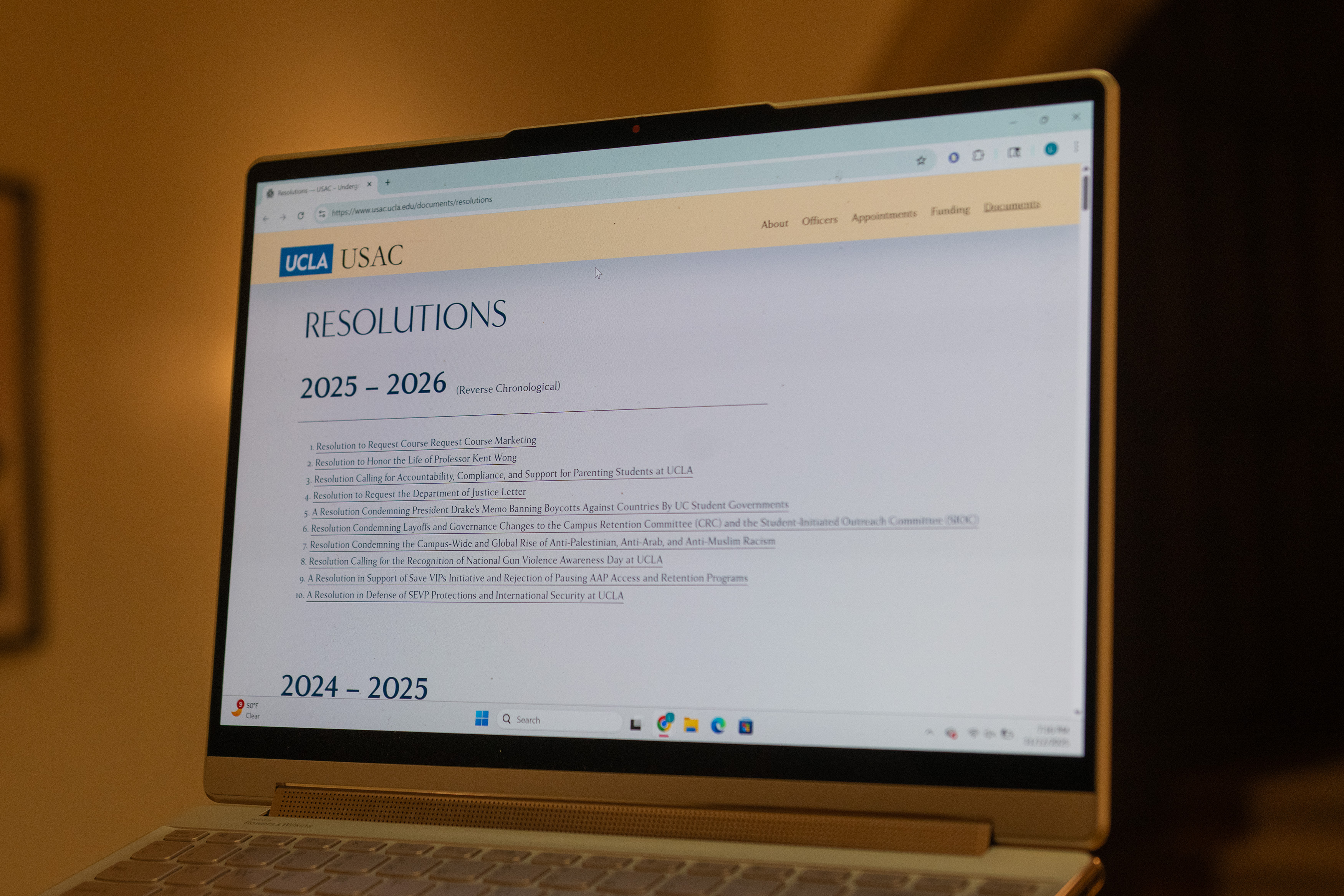
The USAC resolutions page is pictured on a laptop screen. USAC officers should ensure they follow up on their resolutions with actionable items, writes Opinion columnist Catherine Price. (Leydi Cris Cobo Cordon/Daily Bruin senior staff)

By Catherine Price
Jan. 12, 2026 2:13 p.m.
This post was updated Jan. 19 at 9:08 p.m.
Life changes quickly for students at UCLA.
It seems like every day there is a new update on meal plans, a department is losing funding or the campus administration has announced a new policy.
All these things can be hard to keep up with. Between classes, club activities and other busy schedules, students don’t have time to fight for every issue they care about.
Luckily, there’s already an advocate for students: the Undergraduate Students Association Council.
USAC, the governing body of the Undergraduate Students Association, promotes student interests by creating initiatives, funding programs and writing resolutions. USAC uses these written decisions to voice their concerns and commit to making change.
But these do not always hold the impact they promise. Resolutions that condemn administrators’ actions and stand up for students’ rights are often little more than words on paper.
USAC exists to serve the needs of the undergraduate student body, according to its constitution. However, students do not always feel they are represented by USAC.
Members of USAC should prioritize talking to students on Bruin Walk or simply having regular and clearly advertised office hours, which many offices claim to have but do not list on their websites.
Aida Ebrahimi, a fourth-year anthropology student, said outside of election campaigns, she never hears about USAC.
“What else are you doing?” Ebrahimi said. “I don’t really care about how many awards you’ve gotten. I care more about what your focus is on for students at UCLA, because that’s pretty much their whole prerogative.”
Solely holding events and advertising community engagement is not enough. Other organizations on campus do much better at involving themselves with the campus community, Ebrahimi added.
On top of feeling left out of USAC operations, students cannot count on resolutions to have real impacts.
There are two key problems with resolutions. Firstly, USAC itself does not adequately oversee their completion. Secondly, resolutions hold no real power.
Once USAC members pass resolutions, they are required to follow up with the action items.
However, in a general meeting, a representative brought up that resolution reports had not been submitted for the 2025-26 school year. The updated document available on USAC’s website is also blank.
While USAC President Diego Bollo said he encourages members to add updates, it is up to the representatives who sponsored a resolution to follow through.
This goes directly against USAC’s bylaws. They state that failure to provide required updates will be subject to review by the Judicial Board, which may then impose penalties.
USAC has not enforced this. The Judicial Board, which reviews USAC actions and legislation, has also been defunded recently, raising accountability concerns.
This is not to say USAC members do not take their resolutions seriously. But when resolutions call for administrative action, they often fall flat.
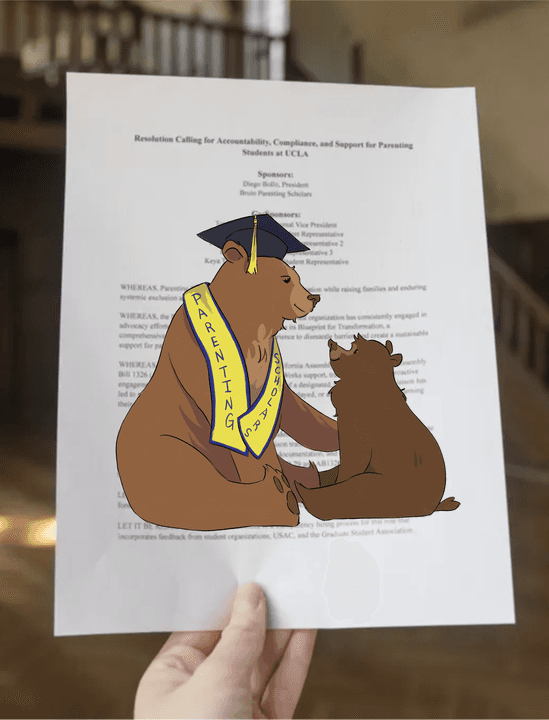
For example, a recently passed Resolution Condemning the Campus-Wide and Global Rise of Anti-Palestinian, Anti-Arab, and Anti-Muslim Racism calls for mandatory annual training for faculty, staff and students. This is something the administration discussed but was ultimately unreceptive to, according to Jayha Buhs Jackson, general representative 2 and sponsor of the resolution.
While the administration’s unwillingness to respond to student concerns is not USAC’s fault, not doing more to hold the administration accountable is.
As a general representative, Bollo sponsored a 2025 resolution declaring that “Steve Lurie was instrumental in coordinating the violent and unconstitutional police response to the student encampment” and must be held accountable. Now, Lurie is someone USAC works with regularly, with seemingly little backlash.
Of course, USAC must maintain its relationships with administrators.
“I think, the executives and myself, we’ve taken a stronger role … as a stakeholder in regards to public safety,” Bollo said. “So I attend chief advisory council meetings. I attend the Campus Safety Oversight Committee.”
While contributing to these environments is a step towards working with the administration to better student life, it is not the advocacy USAC promises. Moreover, when the real action coming from the administration does not represent student interests, it is not enough to simply attend meetings.
Integrating student voices into campus operations is important, but the actual action items of resolutions like this are rarely achieved. Moreover, the lack of follow-through after such a bold resolution is concerning.
USAC can write as many condemnations of administration actions as they want, but nothing will change unless it does more to make administrators start taking student concerns seriously.
When administrators are making decisions on student issues with little regard for what students want, USAC must be more than a voice for students. It must be a force for change.