USAC increases stipends, cuts pay for USA Judicial Board for 2025-26 fiscal year
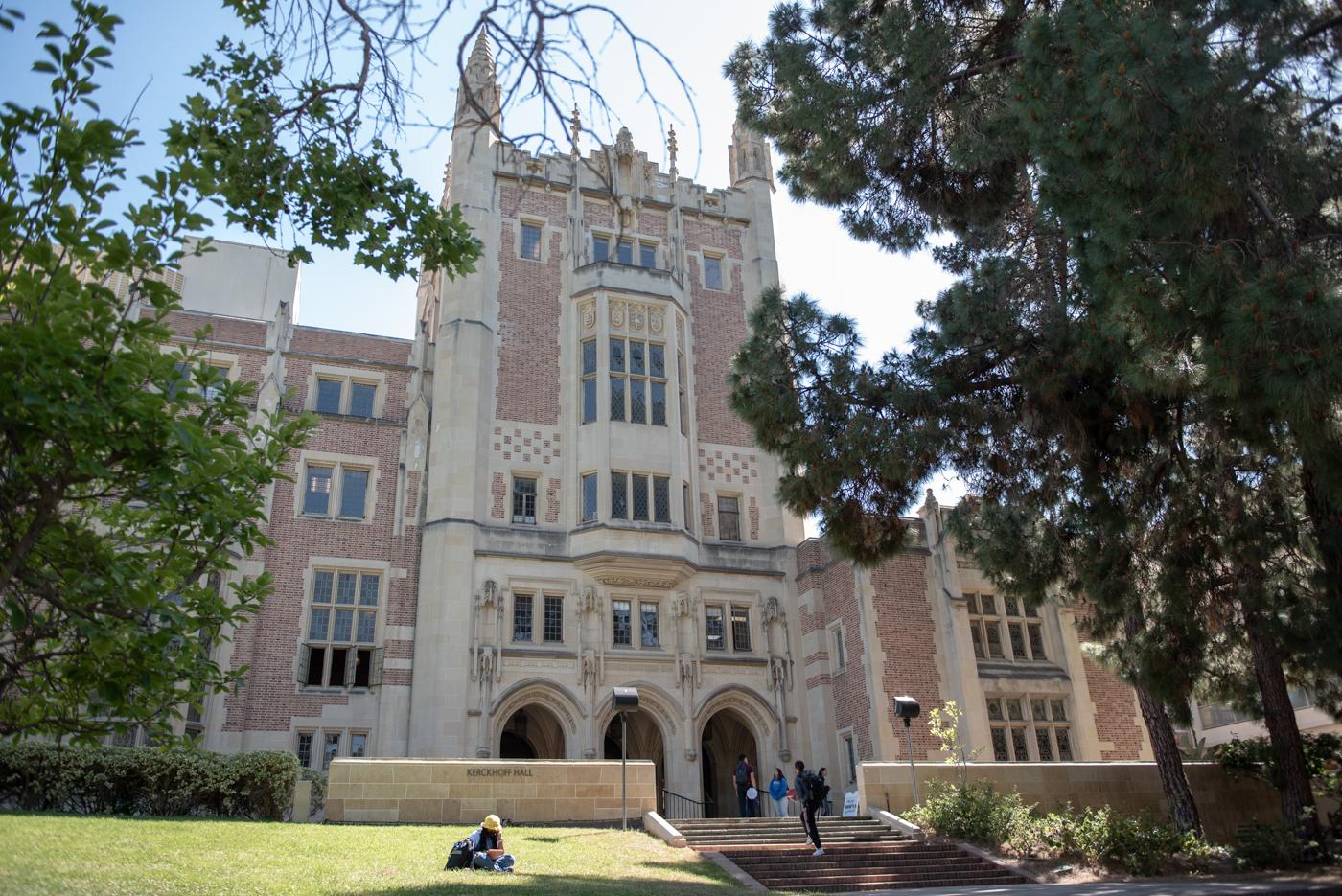
Kerckhoff Hall, which houses the Undergraduate Students Association Council, is pictured. The council’s 2025-26 budget saw an increase of almost $350,00 from the previous year.

By Natalia Mochernak
Oct. 5, 2025 1:18 p.m.
This post was updated Oct. 5 at 9:45 p.m.
The Undergraduate Students Association Council increased its stipends in accordance with the Los Angeles minimum wage and cut pay for the USA Judicial Board in its $10.9 million budget for the 2025-26 fiscal year.
The budget, which was approved by the council at a meeting July 8, estimates $10,942,934 in budgetable income collected from student fees, and designates $10,876,140 for budgetable expenses for the fiscal year, which began Aug. 1. The 2025-26 fiscal budget – almost a $350,000 increase from last year – was confirmed by the ASUCLA Board of Directors at a July 25 meeting.
Each undergraduate student will pay the association a $104.31 quarterly fee for the 2025-26 fiscal year, a $3.73 raise from last year. This includes a $4.80 Green Initiative fee, $1.86 for Bruin Bash, $2.58 for the Student Initiated Outreach Committee and $1.74 for the Campus Retention Committee, a $7.11 decrease from last year.
The association’s fees can only be raised or lowered through referendums and must also be spent according to the language of the referendums.
Jessica Alexander, the student government services division manager, said at the meeting that the council allocated $164 for a Compulsory Fee Refund.
“Any student at any time can request a refund on their student fees and if that refund is granted then, essentially, SGA would have to issue that check back to student accounting to refund that student,” she said. “We budget a very small amount in the event that happens – that has rarely ever happened.”
Meghan Do, a fourth-year English student, said she knows undergraduate students are charged quarterly fees from USAC, but added that she is unfamiliar with the council and what they do with her money.
“I think that events like Bruin Bash and Spring Sing are great ways to bring the community together … it’s a huge school,” she said. “But I think they could be more upfront about charging you. They include it among a bunch of other small fees, and they don’t really tell you why when you’re paying.”
Do said she believes USAC should use social media and other marketing strategies to publicize what they do with students’ funds.
The council budgeted more than $300,000 in expenditures for stipends for USAC officers and other members of USA governing bodies, such as the USA Judicial Board, Election Board and Finance Committee directors.
USAC officers received a pay raise of $0.59 and will now receive $17.87 an hour, an adjustment in accordance with LA minimum wage. The officers can claim a maximum of seven weekly hours during the summer and 20 during the academic year, and can earn up to $15,332.46 for the fiscal year.
The council voted to cut the pay for members of the USA Judicial Board. Last year, the chief justice received $1,500 for the year, while the associate justices received $1,200.
The USA Judicial Board serves as a board of appeals for students when USAC makes an unconstitutional ruling or decision not in line with its bylaws. The USA Judicial Board received four petitions last year, including a case alleging antisemitism in hiring practices from former Cultural Affairs Commissioner Alicia Verdugo, who resigned before their hearing.
For the 2025-26 fiscal year, the Judicial Board’s stipends were cut by half – $750 for the chief justice and $600 for the associate justices. The stipends were already previously cut by 70% by the 2024-25 council.
[Related link: USAC approves $10.6M budget, including officer raises, for 2024-2025 fiscal year]
Eli Sepulveda, the chief justice of the USA Judicial Board, said he understood USAC’s decision to cut stipends for the 2024-25 fiscal year because the USA Judicial Board hadn’t heard a case from 2021-24. However, he added that he was confused and surprised by the new cut since the board increased their activity last year.
“We have come to an agreement with then-President Adam – if we were to increase our presence on campus and if we were to be a relevant service to the student body, that we could discuss increasing our stipends and budget for this year,” he said.
Sepulveda added that the board, however, was not consulted in the creation of USAC’s budget this year and did not receive notification of their stipend cuts until after the budget had already been approved.
“It seems that USAC is not clearly communicating what they expect of us when they ask us to increase our engagement on campus because when we have done that, they still reduce our budget,” he added, prior to a private meeting with officers. “When I’ve asked them about what their criteria is for participation, they do not provide answers.”
Sepulveda said he began reaching out to USAC President Diego Bollo and Internal Vice President Tommy Contreras starting Aug. 5, and did not receive a response as to why the board’s stipends were cut until Sept. 14.
Sepulveda said that, at a private meeting held between him and some of his staff, as well as Bollo, Contreras and External Vice President Sherry Zhou, the officers explained that they decided how much money each office received for stipends based on the amount of hours they clocked. However, Sepulveda said the USA Judicial Board was never asked to report their hours for the 2024-25 school year.
Contreras and Bollo did not respond to a request for comment on the budget or why the USA Judicial Board’s funds were cut.
At the USAC budget meeting, Contreras also advocated for a full cut of the USA Judicial Board’s $300 in supply funds – used primarily to rent spaces if a case is heard.
Contreras suggested that the rental costs could be allocated through USAC’s discretionary fund if a case were to occur. The cut was made and approved by the council.
“More often than not, that money goes to waste altogether because there is no case being heard,” he said at the meeting.
Sepulveda said the previous $300 budget was not enough to cover the rent for a meeting room to hear even one case. He added that he was originally not informed by USAC that the USA Judicial Board could apply for discretionary funding to replace the cut supply funds and that if the board had to wait for discretionary funding from USAC to reserve a room, it could delay hearings of timely cases.
However, at the private meeting, Sepulveda said the officers explained that if they allocated the money for supplies and there was no case to be heard, the money would be lost.
“The judicial board, we support USAC, and we believe that this is just a product of miscommunication and mishandling of handoff and we’re fully ready to work with USAC on this issue,” Sepulveda said, prior to the meeting. “While I’m not enthused by this decision, we’re still fully ready to support the student body regardless of what ends up happening.”