State surgeon general discusses adverse childhood experiences’ effect on pregnancy
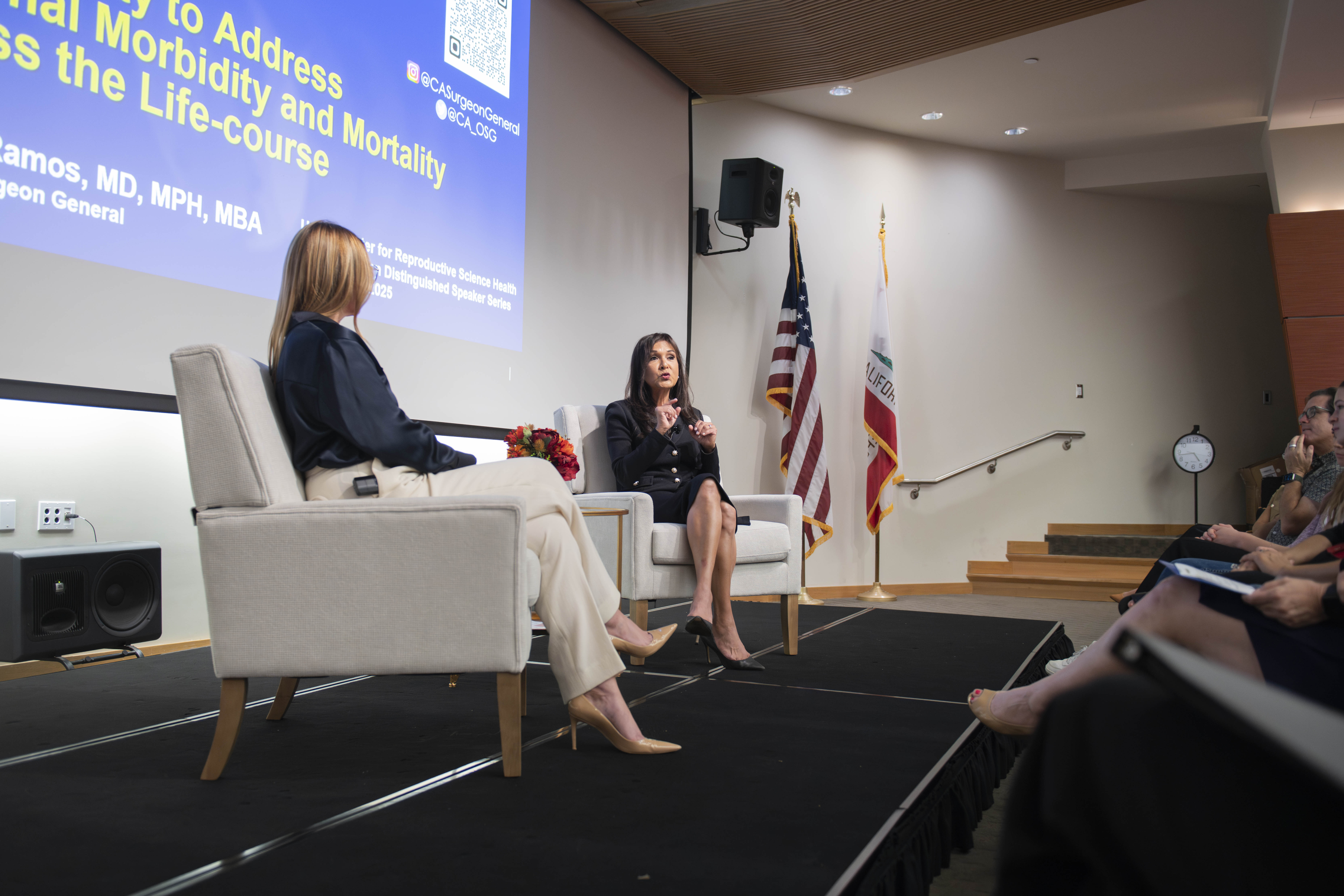
Amander Clark sits with Dr. Ramos. Ramos, an obstetrician gynecologist and public health leader who earned her master’s degree in public health from UCLA, discussed how adverse childhood experiences – such as incarceration, parental abuse, neglect and divorce – affect maternal health outcomes. (Brianna Carlson/Daily Bruin staff)


This post was updated Oct. 30 at 11:34 p.m.
California’s surgeon general said at an Oct. 20 UCLA event that addressing adverse childhood experiences – which can negatively impact maternal health – is a state priority.
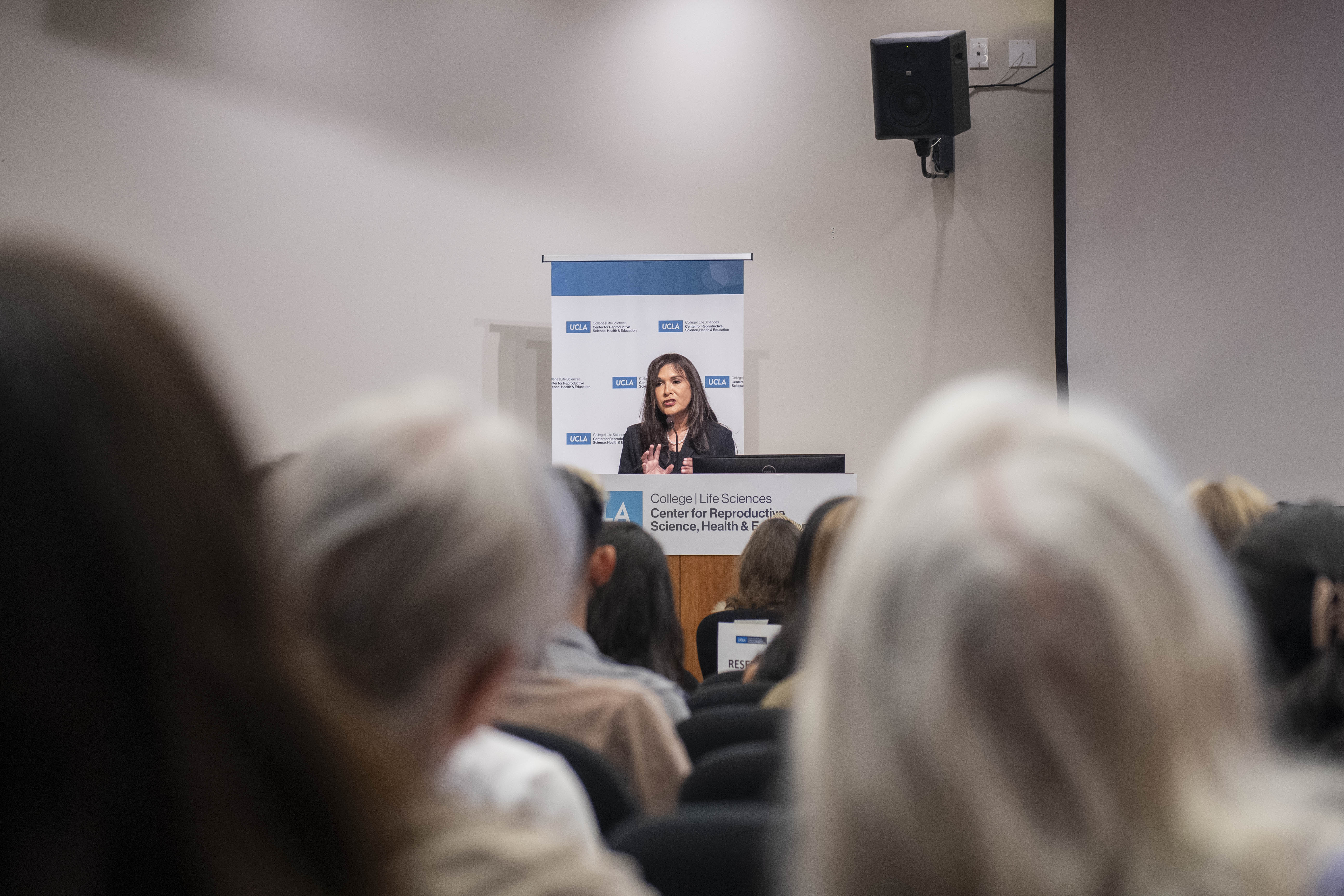
Dr. Diana Ramos, an obstetrician gynecologist and public health leader who earned her master’s degree in public health from UCLA, discussed how adverse childhood experiences – such as incarceration, parental abuse, neglect and divorce – affect maternal health outcomes. The UCLA Center for Reproductive Science, Health and Education hosted the event.
Stress and preexisting health issues in mothers can trigger epigenetic changes, which impact gene expression in babies before birth, Ramos said during the lecture.
She added that this connection emphasizes the importance of addressing the long-term health effects of ACEs in mothers to reduce pregnancy complications.
“This is what we mean when we say maternal health is multi-generational,” Ramos said during the lecture. “Because if we can help the pregnant person, you really are helping the next generation and beyond.”
Ramos started her lecture with an anecdote about a friend’s third pregnancy, which she said led her to understand how stressful childhood experiences are connected to pregnancy outcomes. Ramos added that her friend, like she did, grew up in a violent neighborhood in South Central Los Angeles, which induced chronic toxic stress that disrupted her hormone levels.
Her friend delivered all three of her babies preterm because of high blood pressure, Ramos said.
“That is the hidden connection between ACEs and reproductive health,” Ramos said. “We have to remember what happens in childhood does not stay in childhood. It shapes our biology, our behavior and our health outcomes across the lifespan.”
Ramos also highlighted the statewide Preconception Medical Assessment initiative. PreMA is an eight-question questionnaire that identifies pregnancy risk factors early and connects people to preventive resources for healthier pregnancies.
The quiz – developed by Ramos’ office, Stanford researchers and community partners – asks about various risk factors, such as cardiovascular disorders, hypertension, lung disease and drug use. The initiative builds on the Centers for Disease Control and Prevention’s Kaiser Permanente ACEs study – landmark research published in 1998, which linked early trauma to worsened health outcomes such as pregnancy complications, Ramos said.
PreMA – like the questionnaire in the ACEs study – helps physicians take a more proactive approach by connecting patients with preventative care before conception or delivery. Ramos said the name “PreMa” – pronounced like the Spanish word “prima,” which means cousin – was chosen with the hope it would resonate with Latina women, who make up the largest proportion of mothers in California.
Ramos added that partnering with institutions like UCLA, which train future doctors, public health leaders and researchers, is an important part of improving maternal health outcomes.
“If we all integrated the recognition of the importance of ACEs, of PreMA, in our health encounters in the community, imagine the healing, the prevention that we can start,” Ramos said. “We can connect families to support where it’s needed before conception. So this is not just health care, this is prevention at its most powerful.”
Ramos joined Amander Clark, the director of the CRSHE, for a Q&A panel after her presentation.
Ramos said cardiovascular disease has become the leading cause of maternal death in California across all racial and ethnic groups – a shift largely driven by women having children later in life and higher rates of chronic conditions such as obesity, hypertension and diabetes.
While cardiovascular disease has become a leading concern for women, California has made major strides in addressing earlier causes of maternal death, such as hemorrhage, Ramos added. These solutions include the state’s partnership with Stanford University to establish the California Maternal Quality Care Collaborative, she said.
“We developed protocols to address hemorrhaging … and that in collaboration with partnerships with all of the hospitals in California and with the physicians, the midwives delivering, that’s how we changed that curve, and now hemorrhage is the third-lowest cause of maternal death,” Ramos said. “We have to remember losing one mom is one mom too many.”
Nathanael Irawan, a second-year physiological science student, said he decided to attend the event because he is an aspiring physician and wanted to learn more about ACEs.
“For me, since I want to go into pediatrics in medicine, I was interested in how the stuff we feel as a child still continues on to when we’re adults, and especially for moms who have been through traumatic experiences and now are going through childbirth-related problems because of those traumatic experiences,” Irawan said.
Gwyneth Schoenbaum, a UCLA anthropology and cognitive science alumnus, said she attended the event because of her interest in reproductive health care.
Schoenbaum, who works as a genetic counselor, added that while research continues to explore the links between epigenetics and mental health, there is still a disconnect between research and patient awareness of how early life experiences can affect pregnancy outcomes.
“That’s really the push that is being made by Dr. Ramos, especially in these questions about ACE scores and things like that – wanting to hear directly from her patients about their lived experiences and actually getting to know patients as people,” Schoenbaum said. “Not just as the number, their medical record number, things like that, and how that can actually have a really important impact on health outcomes as well.”
Ramos is the fourth speaker CRSHE has hosted for its biannual speaker series, said Stephanie Kiesow-Edoh, the associate director of CRSHE. Other speakers included LA County Supervisor Holly Mitchell, New York Times national correspondent Elizabeth Dias and scientist and author Magdalena Żernicka-Goetz, she added.
Kiesow-Edoh said she hopes that attendees walked away from the event feeling empowered and inspired. She added that events like this allow people from different disciplines to connect with each other and discuss important topics.
The Distinguished Speaker Series can also expose students to new interests, Schoenbaum said.
“Having that opportunity to have them (students) hear from really influential people can change students’ life trajectories as well,” Schoenbaum said. “Maybe someone in there today heard about this and was thinking, ‘Oh gosh. I thought I was gonna be a lawyer, but actually now I really want to get into health care, and maybe I’m going to be a doula.’”