Theater review: A meditation on Alzheimer’s, ‘Am I Roxie?’ finds its footing where memory fails
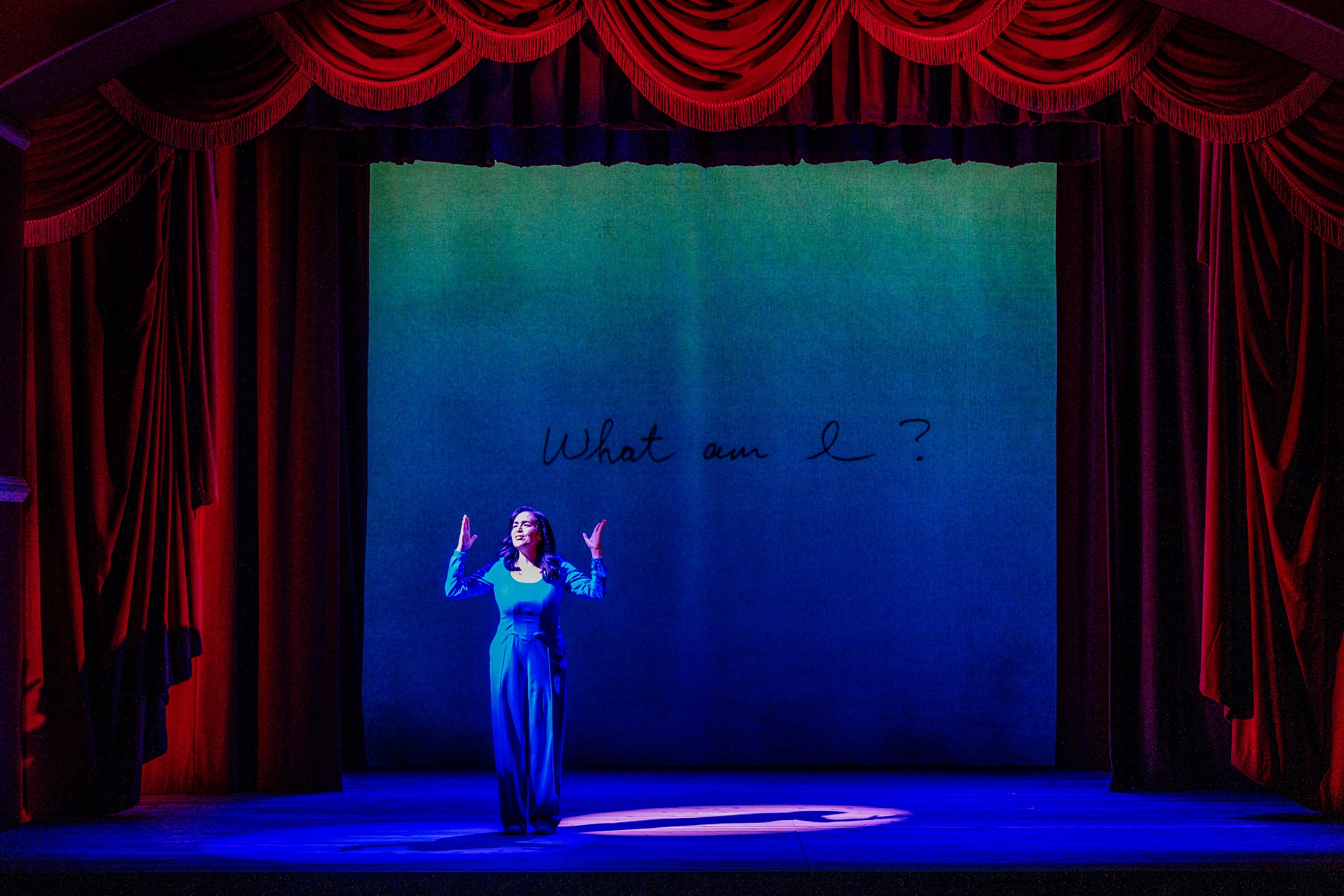
Beneath a dramatic red curtain and blue green lighting, Roxana Ortega stands with her hands in the air center stage. Throughout the show, Ortega considers what it means to be tethered to another’s decline and how humor survives amid despair. (Courtesy of Jeff Lorch/Geffen Playhouse)
“Am I Roxie?”
Directed by Bernardo Cubría
Geffen Playhouse
Sept. 3 - Oct. 5


By Eric Sican
Oct. 2, 2025 4:23 p.m.
This post was updated Oct. 7 at 10:09 p.m.
“Am I Roxie?” begs the question of selfhood, reflecting identity onto the audience.
When the lights dim and Roxana Ortega steps into the spotlight, the low-lit theatre is met with a performance that blends comedy and sorrow with striking intensity. Directed by Bernardo Cubría and currently showing at the Geffen Playhouse until Oct. 5, Ortega’s one-woman show, “Am I Roxie?” refuses to follow a linear path, instead drawing spectators into a turbulent narrative of caretaking, identity and the dark humor that emerges from grief.
Ortega – widely recognized for her voice work on Nickelodeon’s “The Casagrandes” and her time with “The Groundlings” – does not treat the stage as a podium for confession. Rather, she transforms it into a shifting terrain where memory and imagination collide. Her performance is restless and physical, as though stillness itself would concede defeat. Characters flicker in and out of existence. A whimsical aunt obsessed with mermaids, a relentless sherpa guiding her through emotional terrain, an operatic figure who seems to mock her despair. Each persona feels less like an escape than a refracted piece of Ortega herself, embodying the contradictions of love, duty and resistance.
[Related: Theater review: ‘West Side Story’ hits right notes as timeless tragedy with contemporary topics]
The work thrives on Ortega’s deft command of tone. She can wring laughter from absurd domestic scenes or miscommunications, then pivot without warning into raw admissions of exhaustion. The audience’s amusement often curdles into discomfort, only to soften again into recognition. It is in these pivots that “Am I Roxie?” reveals its most profound insight – that grief is rarely singular. It comes stitched together with absurdity, irritation and, at times, unexpected hilarity. Ortega allows the audience to laugh without dismissing the pain at hand, a delicate balance that sustains the performance’s emotional power.
Structurally, the show operates more like a collage than a straightforward narrative. Moments of physical comedy, bursts of dialogue and monologues tinged with dread overlap like shards of memory. Ortega uses this fragmentation to mirror the disorienting effects of Alzheimer’s disease – both on her mother’s and on herself as a caregiver navigating loss. At times, however, this approach threatens to overwhelm the story. The sheer number of metaphors and characters occasionally dilutes the emotional throughline, leaving certain sections feeling more frenetic than focused. A mountain-climbing sequence, for instance, teems with symbolic weight but risks burying its poignancy under layers of spectacle.
Still, Ortega’s stage presence rescues even the show’s most chaotic stretches. Her energy never falters, and her willingness to lean fully into both the ridiculous and the devastating keeps the audience invested. Each exaggerated gesture, sharp vocal shift or sudden pause builds a rhythm that makes the performance feel unpredictable yet purposeful. Even in moments when the narrative fragments, Ortega’s vulnerability anchors the piece, ensuring that the audience remains tethered to her journey.
Minimalist production choices further underscore the centrality of Ortega’s storytelling. Lighting shifts mark emotional turns without drawing attention away, and the sparse set places all focus on her constant transformations. Small costuming details and sound cues heighten the comedy or drama without overshadowing her raw delivery. The simplicity works in the show’s favor: the spectacle is Ortega herself.
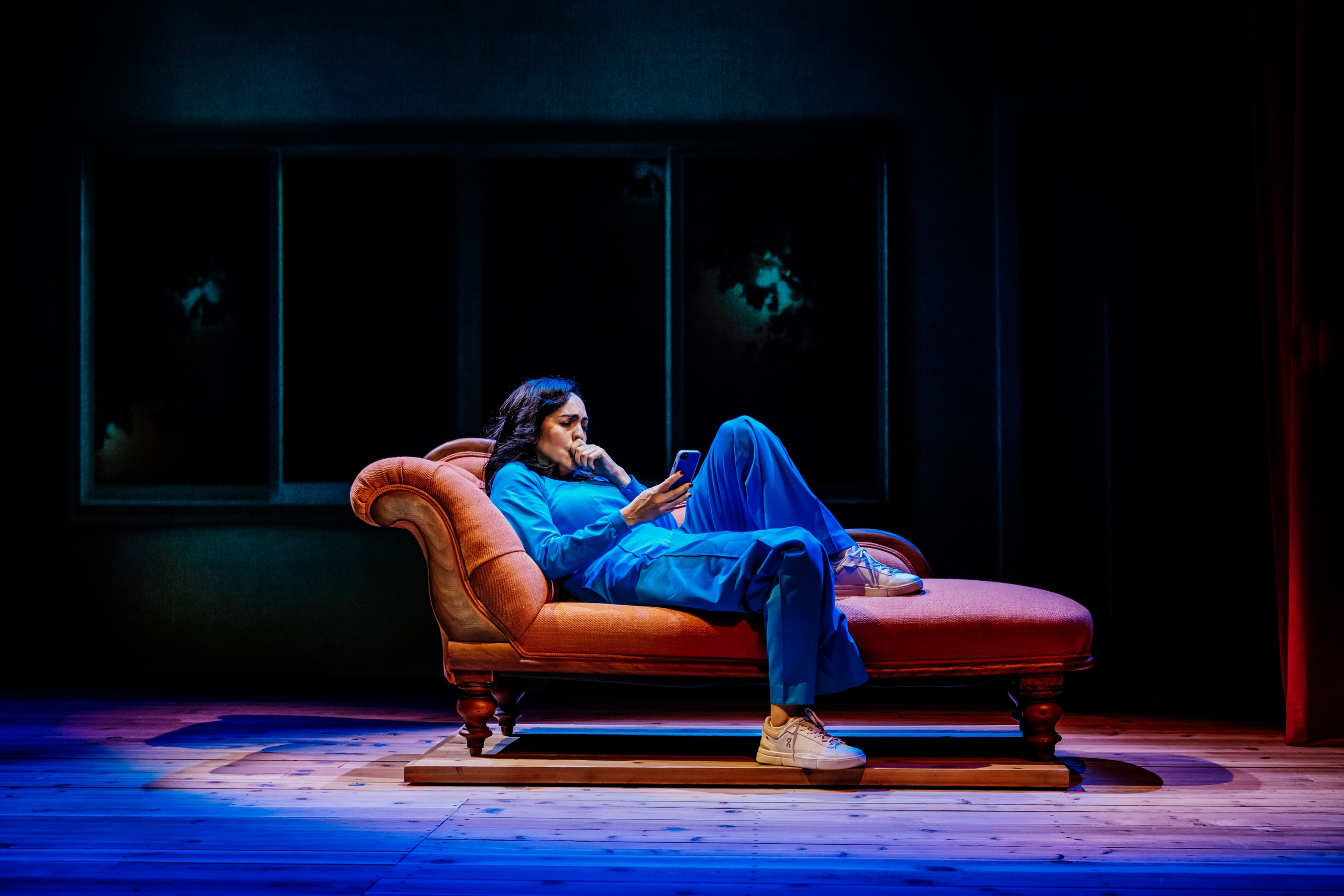
Ultimately, “Am I Roxie?” is less about resolving questions than about sitting with them. The title’s query is never definitively answered. Instead, Ortega asks what it means to define oneself while tethered to another’s decline. Who does one become when caregiving blurs identity? How does humor survive in the face of despair? Rather than tidy conclusions, the show offers the acknowledgment that contradictions are unavoidable and survivable.
[Related: Theater review: Corny comedy “Shucked” offers curious commentary, charms all ears]
By its conclusion, the performance leaves the audience with a sense of reckoning, rather than relief. It is a reminder that comedy and grief are not opposing forces but parallel ones, often colliding in ways that reveal hidden truths. Ortega’s ability to inhabit that collision – to invite laughter while refusing to dismiss sorrow – makes “Am I Roxie?” both cathartic and challenging.
Messy, poignant and fiercely alive, the production proves that even in the most painful corners of memory, theater can find vitality. Ortega does not promise healing, but she does offer a torchlight through uncertainty, illuminating the resilience that emerges when humor and grief stand side by side.