James Milliken takes over as UC President amid federal funding freeze
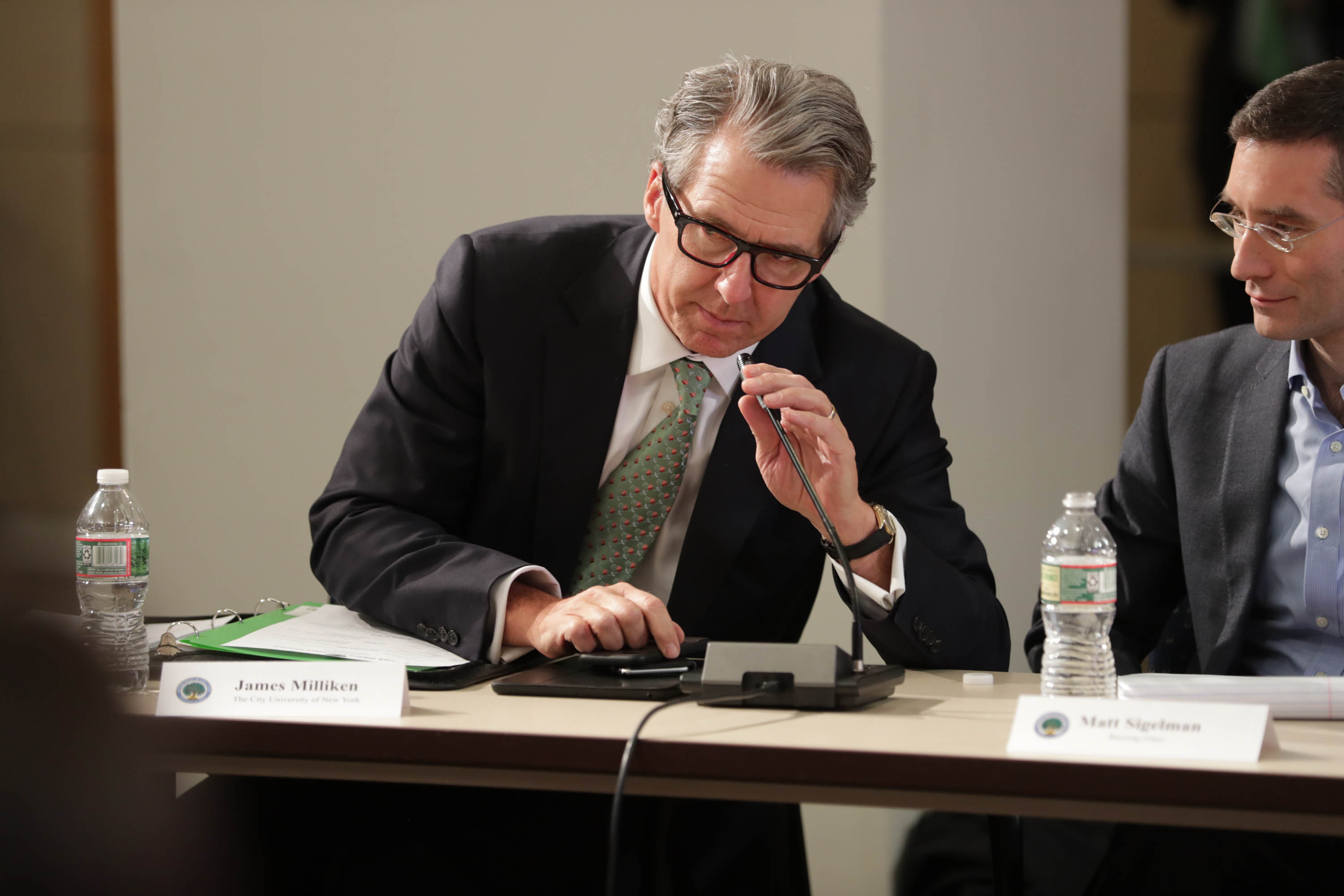
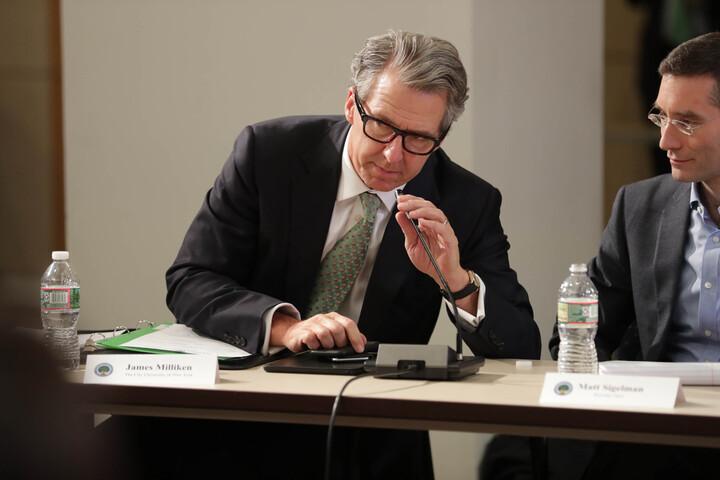
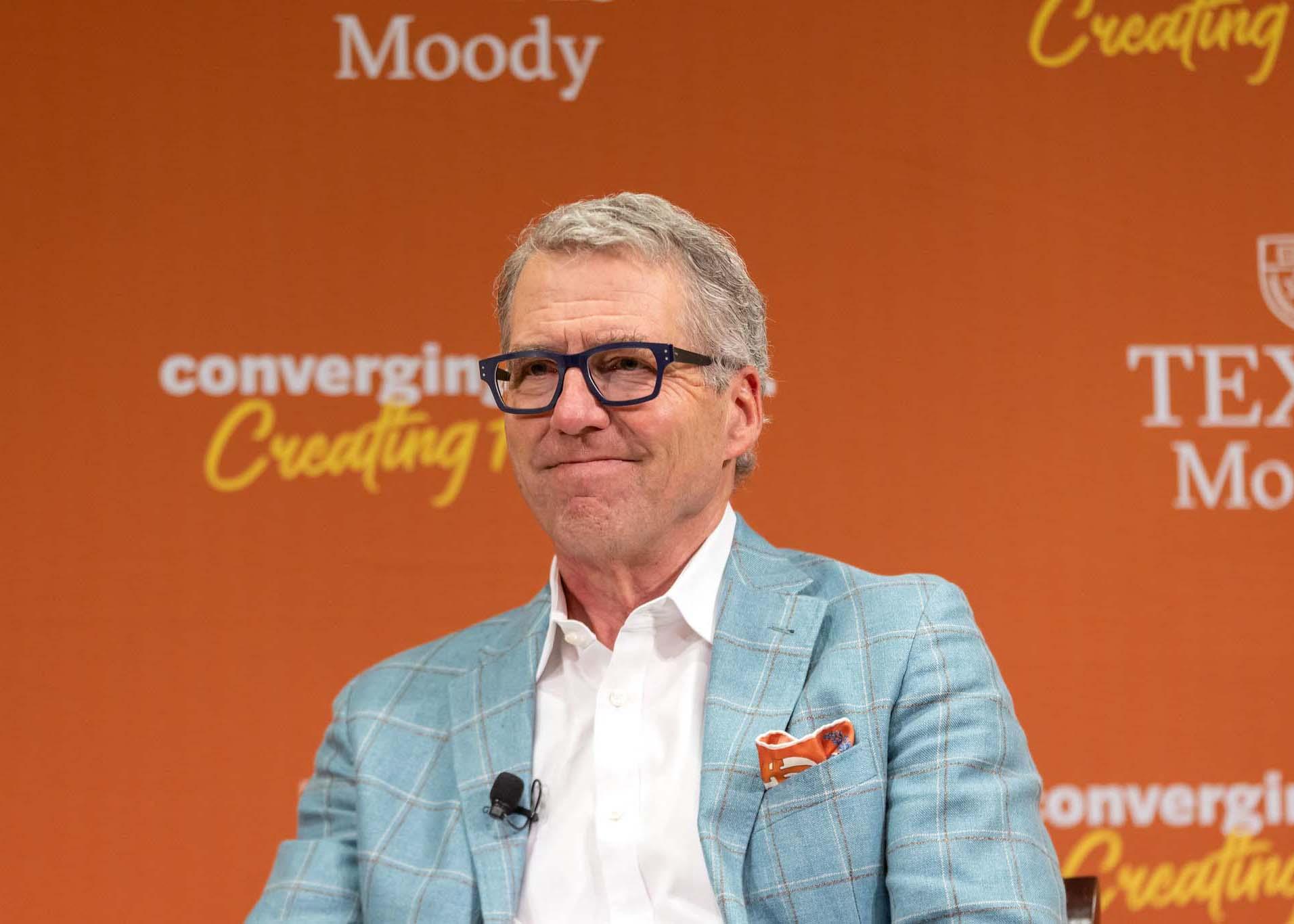
James Milliken is pictured. Milliken assumed office as UC President the night after federal funding suspensions to UCLA were announced. (Courtesy of U.S. Department of Education)

By Josephine Murphy
Sept. 18, 2025 9:47 p.m.
On the final evening before James Milliken succeeded UC President Michael Drake as leader of the University, Chancellor Julio Frenk announced the federal government’s suspension of research funding to UCLA.
Milliken, who has worked in university administration for nearly 40 years, assumed office as the UC’s 22nd president the next day – taking on the responsibility of navigating the funding suspensions, threats to diversity, equity and inclusion initiatives and affordability concerns.
[Related: ‘A man of action’: UC Board of Regents appoints James Milliken as UC president]
The transition marked the end of Drake’s presidency, which began in August 2020 amid the COVID-19 pandemic. His five-year tenure faced many challenges – including pro-Palestine protests in the spring of 2024 and executive orders from President Donald Trump related to diversity, equity and inclusion beginning in January, said Mitchell Chang, a professor of education.
“Withholding of research funding and this federal intrusion on what universities do and then everything in between – the last few years have certainly been a lot harder, but it’s not an easy job,” Chang, a former member of the chancellor’s cabinet, said.
William Purdy, another professor of education, said throughout that challenges the University faced, Drake was able to keep the UC moving forward and maintain its position as a top public university system.
“For Drake, his greatest accomplishment is just maintaining continuity through a period of tremendous change and struggle, especially including the COVID pandemic, and so preserving the University as the top system in the world through all of that trauma is noteworthy,” Purdy said.
However, he added that the role of the UC President includes a significant amount of delegation to campus chancellors in its leadership – limiting the responsibilities and credit to be taken by the system president.
Rachel Zaentz, a UC Office of the President spokesperson, said in a written statement that the UC expresses gratitude for Drake’s support of the University’s missions through his contributions to education, research and patient care.
Affordability is one of the main issues posed to undergraduate and graduate students, Purdy said, with any efforts against rising costs being valuable. During Drake’s time in office, he spearheaded the development of the Tuition Stability Plan – a multi-year plan which will adjust tuition based on incoming class and keep undergraduates’ tuition flat for up to six years. The plan will be up for reauthorization by the UC Board of Regents next year, according to the UC admissions website.
Purdy added that he believes Milliken will exhibit strong leadership in promoting affordability for students, especially in terms of tuition, but also highlighted that factors which impact his ability to control such will be out of his hands – including challenges to state and federal funding.
“As the president of a multi-campus system, Milliken will continue to provide strong leadership in trying to keep costs down and keep tuition manageable,” he said. “It’s a national crisis – college affordability – and the University of California is very much part of that conversation.”
Purdy also said he believes Drake struggled with convincing the public of the value of the UC, including by providing social and economic mobility within California, adding that he hopes Milliken will be able to build upon and improve this “sales job.”
In the final hours of Drake’s presidency, Frenk announced in a July 31 email that the federal government had frozen funds to UCLA – which he later announced on Aug. 6 amounted to $584 million.
“Since assuming his role on Aug. 1, President Milliken has been working tirelessly with policymakers, advocates, and community stakeholders to safeguard the partnerships and resources that power UC’s contributions to California and the nation,” Zaentz said in a written statement.
Milliken said in an Aug. 6 statement that the UC agreed “to engage in dialogue” with the federal government over the funding suspensions, with the UC’s immediate goal being the restoration of the funds. The funding cuts would be a “death knell” to research, as the work being done “saves lives, grows our economy, and fortifies our national security,” he added.
“These cuts do nothing to address antisemitism,” he said in the statement. “Moreover, the extensive work that UCLA and the entire University of California have taken to combat antisemitism has apparently been ignored.”
The Board of Regents, of which the UC President is an ex officio member, held an emergency meeting Aug. 11 to “discuss a path forward” following the funding freeze. In a statement following the meeting, UC Senior Vice President of External Relations and Communications Meredith Vivian Turner said in a written statement that UC leadership was engaging with stakeholders and evaluating the settlement demand from the federal government.
The Advisory Group on Research and Programs Funding Legal Issues under the Board – composed of regents, including Milliken – met additionally Aug. 19 and Aug. 26 in closed session meetings. Milliken also met with California legislative leaders Aug. 25 and 26, where they discussed the consequences of the funding cuts to UCLA and their partnership in the budget, alongside the governor, Turner said in a statement following the meetings.
“We appreciate state leaders’ continued support for UC, and we look forward to advancing our shared goals on behalf of the state and the hundreds of thousands of students, employees, and patients UC serves,” she said in the statement.
In a letter from UC Law Faculty to the Board of Regents, the former urged the latter to take a stronger stance against the Trump administration, similarly to Gov. Gavin Newsom, who has pledged and urged the University to fight against the administration’s demands. Purdy said he believes Milliken will work to “depoliticize” the University and ensure it is not used to bolster political campaigns.
Ahead of Milliken’s presidency, Chang said he believes a past strength of the UC was that of shared governance, but that leaders today must make faster decisions, thus reducing transparency in the decision-making process. He added that this can contribute to an erosion of trust between administrators and faculty.
While Chang said he had initially hoped that someone who had more experience within the UC and in California’s educational circle would be selected for the role, he said Milliken may have a “better sense” of the national landscape. He also said he believes Trump holds a “dislike” for California, adding that Milliken’s experience as chancellor of the University of Texas may provide him with insight of how to work alongside Republicans – who comprise a minority of political leadership in California.
Beyond the funding freeze, Purdy said he believes another primary issue on Milliken’s plate will be providing support to undocumented students and their families following a “traumatic” year. Milliken, alongside UCOP as a whole, can make a difference by creating guidelines pertaining to immigration, as well as by investing in assistance for international students in obtaining visas, Chang said.
Milliken will also have to determine the UC’s support of and capacity for inclusivity, said Chang, who served as interim vice provost of equity, diversity and inclusion at UCLA until June. He added that under Milliken’s leadership at UT, their DEI offices were abolished, which he said begs the question of if Milliken will oversee “the erasure over three decades of this work” with regards to DEI.
However, Purdy said all issues facing the University will “line up behind” the freeze until funds are restored, as federal funding is one of the most important things to the UC, and especially its research mission.
“Milliken’s the man for this moment,” Purdy said. “He has to be a voice for higher learning, and he’s represented systems previously. Whether it’s the City University of New York or … the University of Nebraska, Milliken’s shown competence in managing these multi-campus systems at the state level, and he’s a steady hand in a very stormy moment.”