Bruin Chamber Musicians bolster tight-knit club, keep music alive in student life
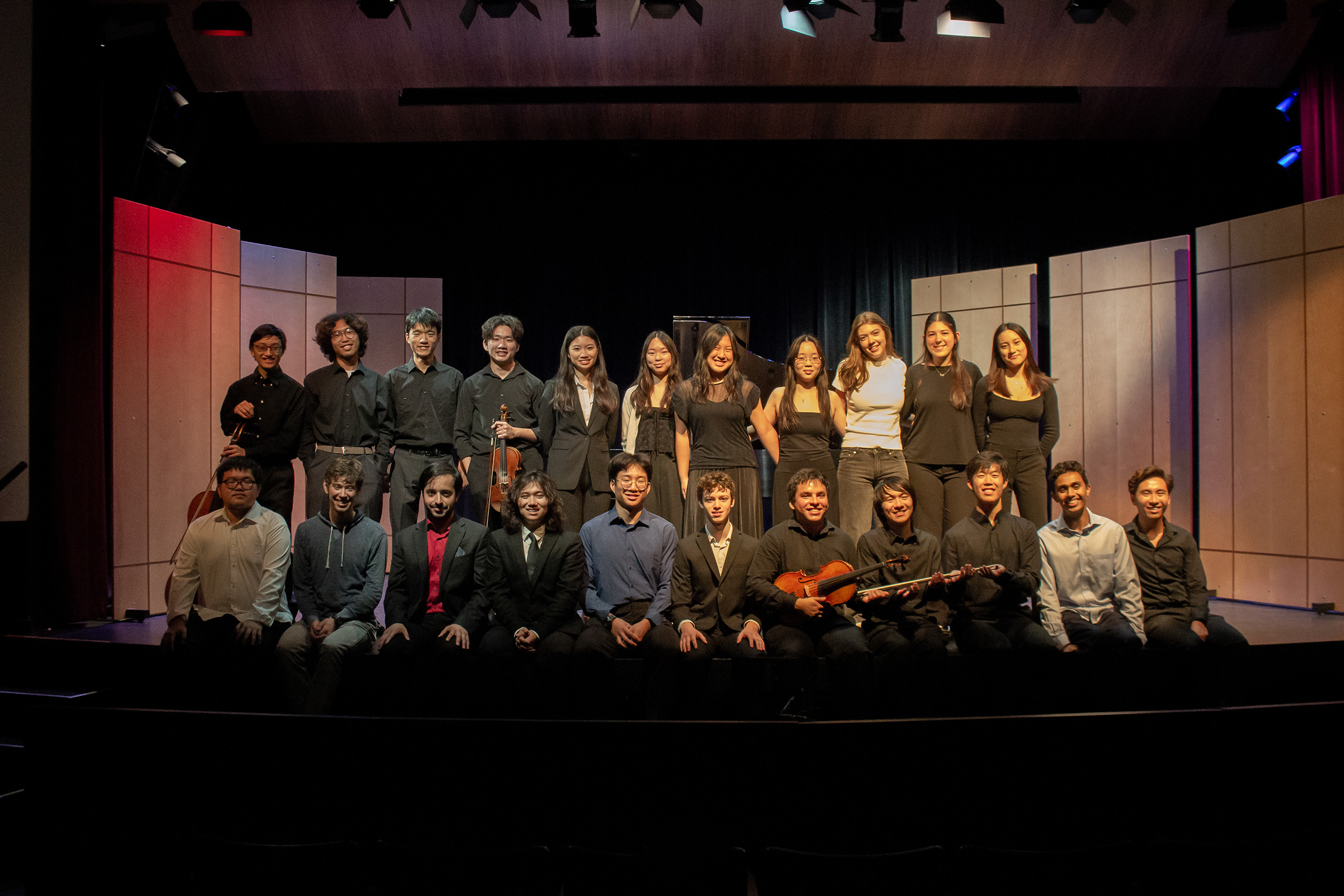
Members of Bruin Chamber Musicians pose for a photo on a stage. The student organization is catered to non-music students interested in playing in small ensembles. (Courtesy of Sophia Jin)

By Izzy De Leon
Aug. 20, 2025 7:49 p.m.
Blending music and non-music students alike, Bruin Chamber Musicians brings melodic opportunity to campus.
The student-run organization Bruin Chamber Musicians provides a space for students interested in performing chamber music in small ensembles. Featuring 15-20 ensembles – each comprised of two to eight students – BCM offers quarterly performances for its club members. BCM is a musical community that mainly caters to non-music students who have fewer opportunities to perform and practice on campus, said Spencer Bergland, a rising second-year microbiology, immunology and molecular genetics student as well as a BCM executive board member.
“A lot of people (members) have been playing music for a while, and this is a great outlet for them to play music for fun with people who are also passionate about playing music,” Bergland said. “It’s not a very rigid club. You get out of it what you make of it.”
Chamber music is innately participatory, with all ensemble members playing a substantial role which highlights their individual contributions, Bergland said. The very musically involved and intimate nature of the club and its setup makes BCM both a small and large organization, added Matheo Irazabal, an engineering and physics alumnus. BCM’s tight-knit structure also fosters a space for students who share a passion for music to form friendships and connections, said Sophia Jin, a rising third-year human biology and society, and molecular, cellular and developmental biology student.
[Related: Student vocalist Mia Ruhman reflects journey composing original opera ‘Nannerl’]
Universities foster access to activities, such as music ensembles and performances, that are otherwise hard to find, Irazabal added. As this club is not limited to music majors, Bergland said it allows students with an affinity for the art – regardless of their level of talent or experience – to join and play music.
“(BCM) gets groups of musicians together in a formal club-like structure and guides them through a quarter, such that there’s a workshop and final performance,” Bergland said.
During the quarter, ensembles that want to participate in performances attend one of the few quarterly workshops offered by the club to get feedback from board and club members, Jin said.
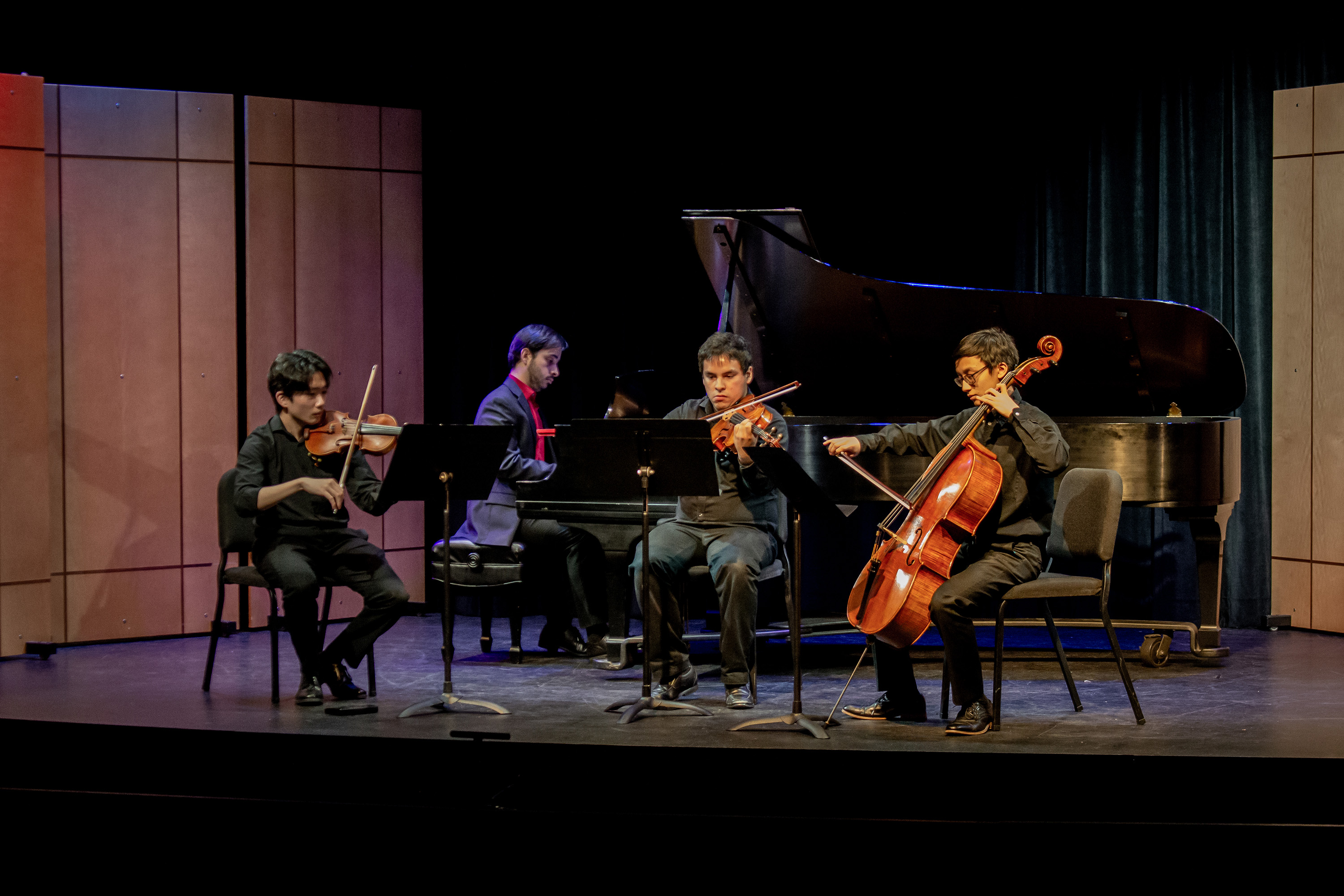
When it comes to the actual performances, Bergland said, ensembles are able to choose the kind of music they want to perform. Many ensembles lean toward classical music, given that many BCM members are string musicians, while others opt for original compositions or film music, Irazabal said.
In addition, Irazabal said BCM was a formative and positive aspect of his time at UCLA – especially as he witnessed the club’s growth in the wake of the COVID-19 pandemic. The pianist and violinist said he joined BCM during his first year and the executive board in his second year, when the club reached over 100 members. As the club has grown in recent years, Irazabal said he hopes BCM continues to expand rather than dwindle, especially since it can be a challenge to balance growing membership with sufficient resources for performances and rehearsals.
Currently hosting around the same number of students, BCM has a short, non-selective application open to musicians of all experience levels, said Jin, a student violinist and pianist. The application consists of one to two videos intended to gauge a student’s level of playing and ensemble preferences. All applicants are matched into an ensemble, said the executive board member.
[Related: African American Music Ensemble, Old-Time String Band put on spring show]
Most BCM members are not music majors, and many are pursuing STEM fields, Bergland said. This club also provides a space for students with multiple interests, including music and healthcare, to become more involved with the musical community on campus – something Jin said is very positive.
“I also think music can be a very, very important part in healthcare,” she said. “For a patient, for a nurse – a doctor who’s been in the hospital for so long, who’s tired, who’s stressed, who’s scared – I think it can be a really comforting thing. And even for us as students, it gives us an opportunity to relax, to enjoy ourselves.”
Regarding the future of the club, Bergland said he hopes to make the club experience more cumulative and dedicate more resources toward performances, better representing the effort of BCM members.
“My primary goal is allowing it (BCM) to reach as many students as possible,” Bergland said. “There are definitely people on campus who have had music as part of their life, who want to keep playing music – and I’m hoping that they’re at least aware and have the opportunity to join this club.”