

Regents hear public comment on testing, immigration enforcement concerns
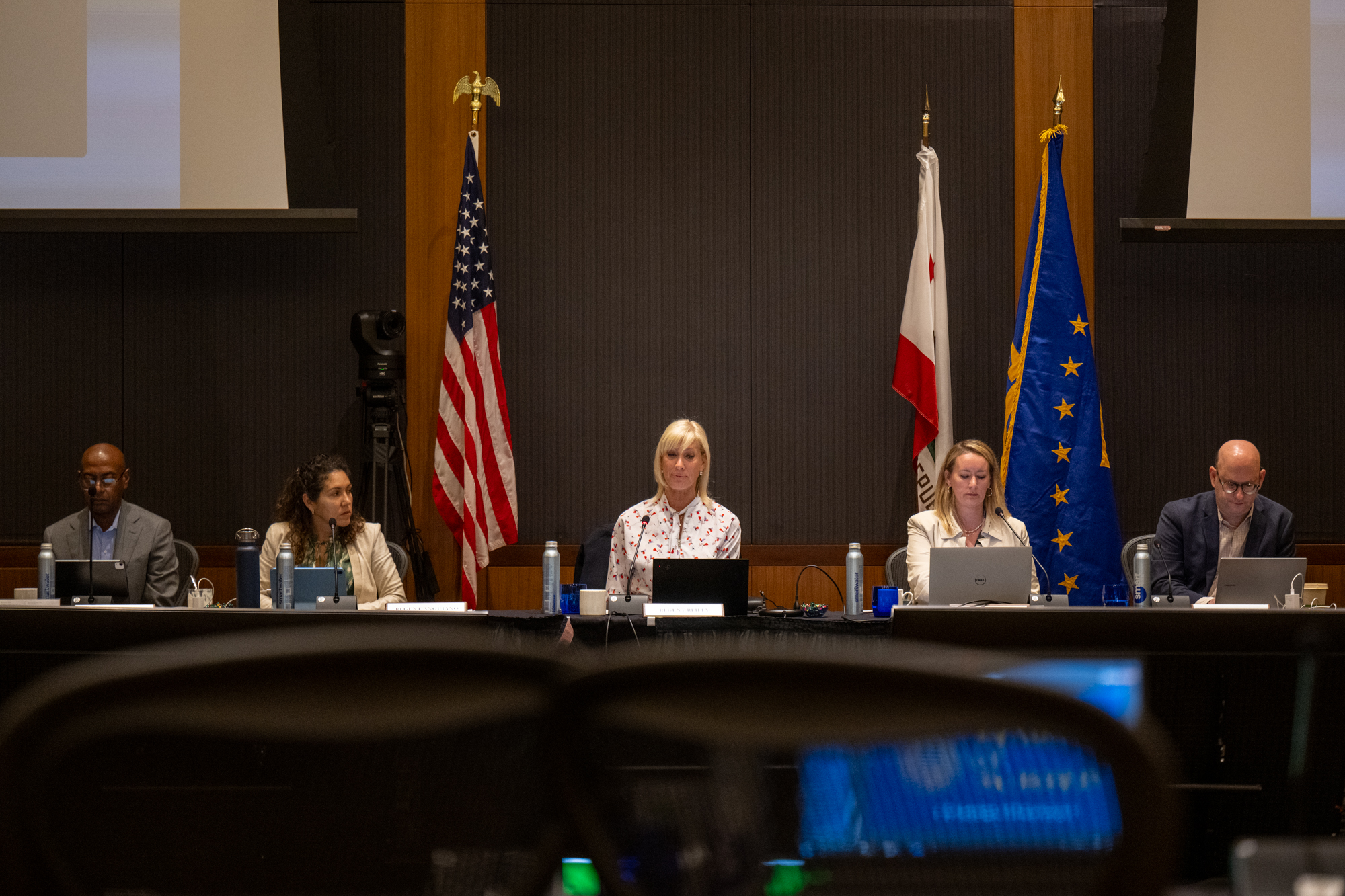
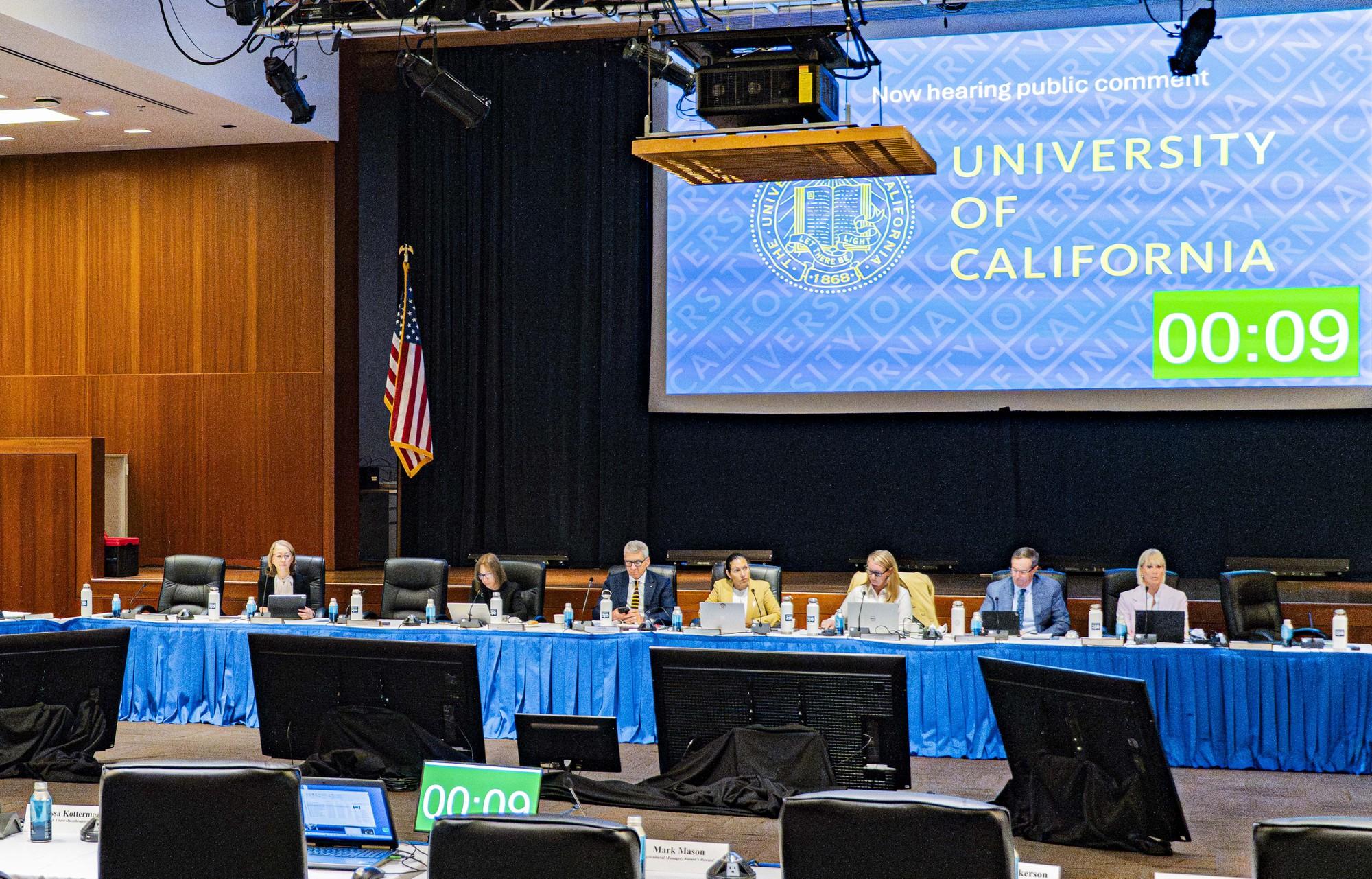
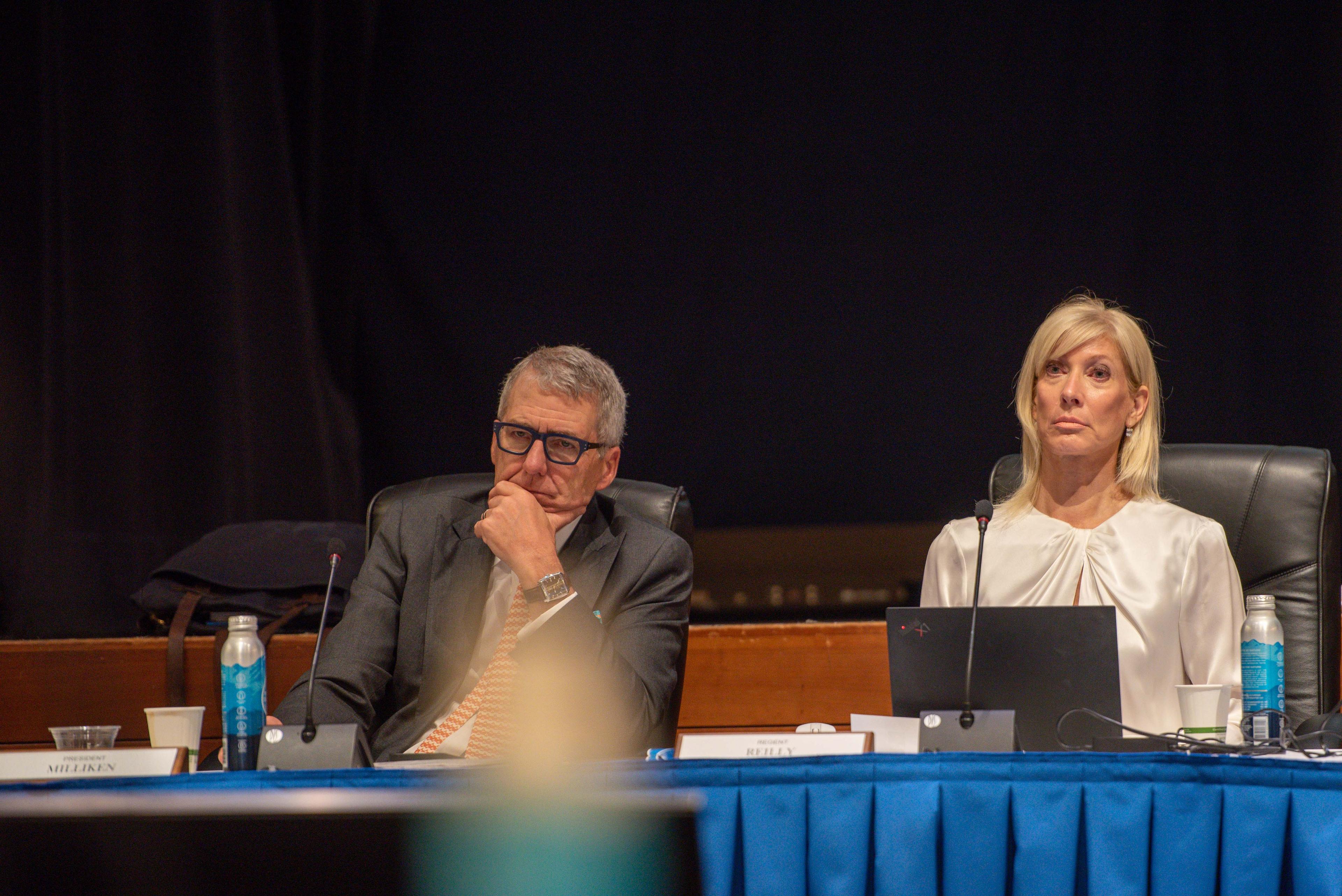
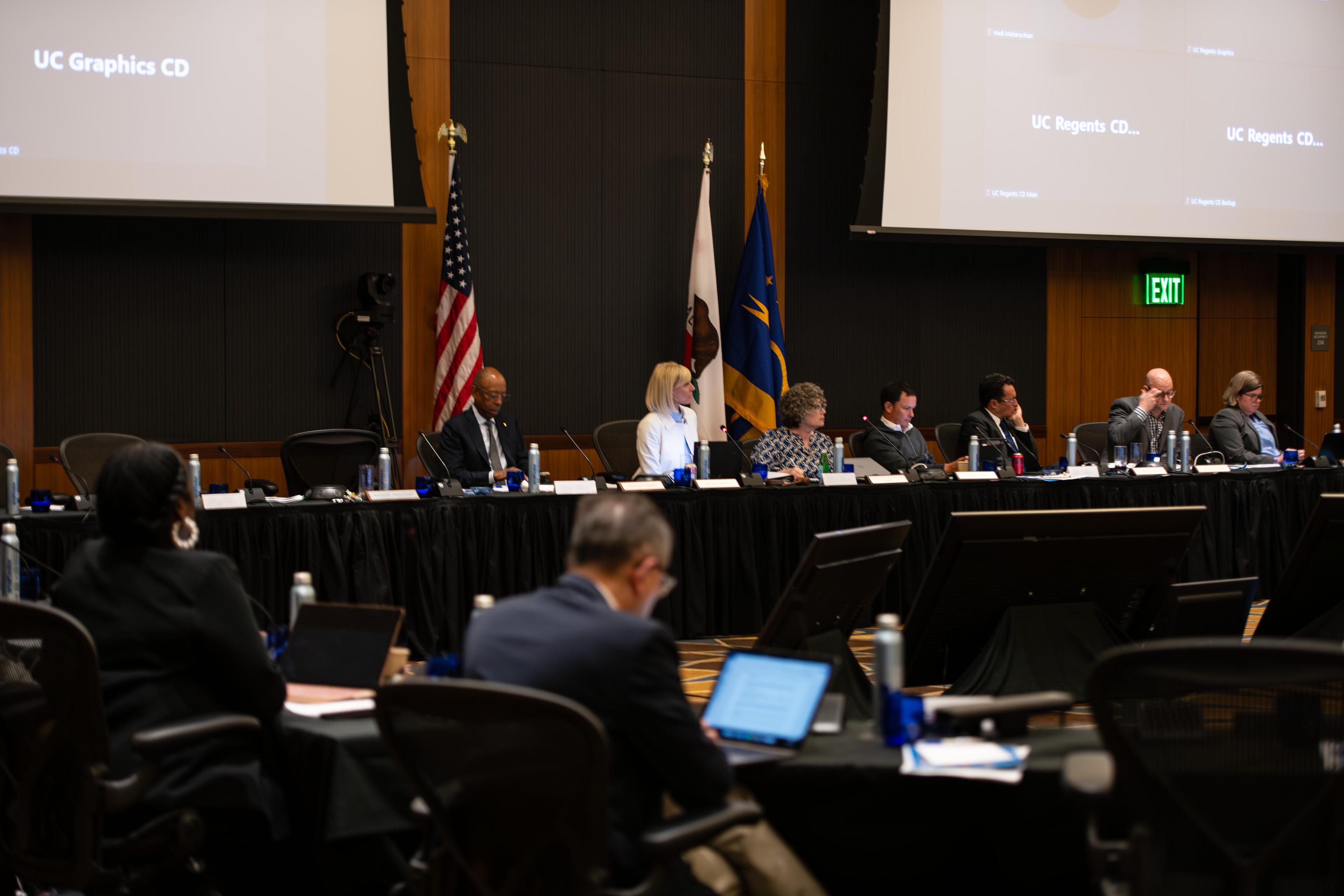
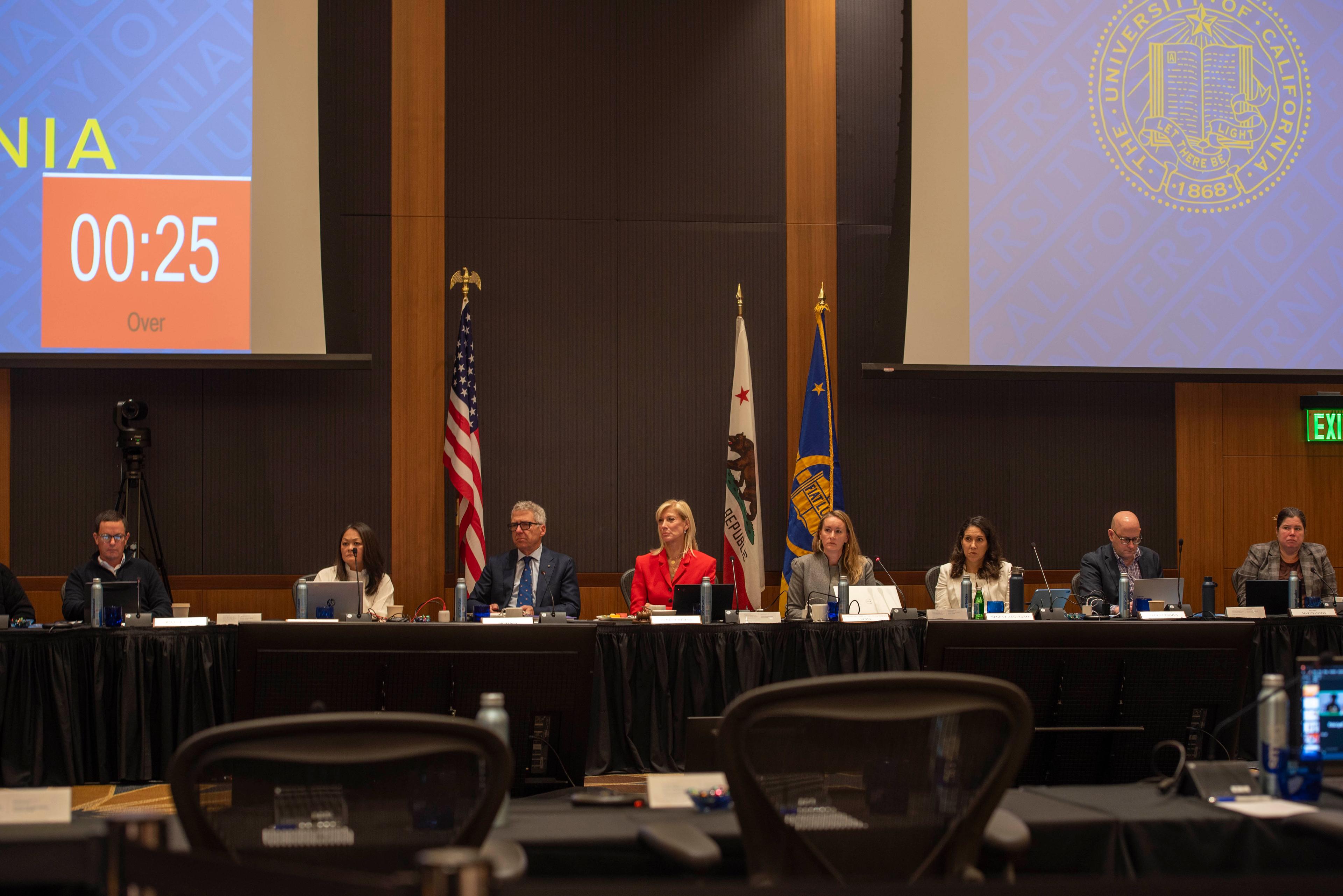
The UC Board of Regents attends a meeting. The board heard public comment at both days of its bimonthly meeting Nov. 17 and 18. (Daily Bruin file photo)


Students urged the UC Board of Regents at its November meeting to reject the proposed reinstatement of standardized testing in undergraduate admissions, confront alleged discrimination and address healthcare disparities.
The board held public comment sessions Nov. 17 and 18 at UC San Francisco’s Mission Bay Conference Center.
Over the past few months, hundreds of faculty have called on the University to reinstate standardized testing requirements, citing declines in student preparedness since the UC stopped considering the tests in 2021. The UC Academic Senate will decide whether or not to recommend reinstating the requirements to the regents by June 2027.
[Related: Hundreds of UC faculty call to reinstate SAT/ACT requirements for STEM applicants]
Anna Tamayo, a second-year business economics student and member of UCLA’s Samahang Pilipino club, said reinstating standardized testing could disadvantage students who lack access to test preparation resources.
“I am asking you all (UC Board of Regents) to think about equity for students capable of excelling in these institutions,” she said.
Madelyn Trull, who represented UC Berkeley Associated Students of the University of California Senator Omar Espinoza’s office argued that standardized testing can create additional barriers for students who require accommodations.
“Acessibility cannot begin at enrollment – it must begin with admissions,” Trull said.
Alexis Takagi, a research analyst at nonprofit organization Campaign for College Opportunity, said standardized testing reflects disparities in students’ socioeconomic status.
“The University of California has long been a pathway to opportunity for students across the state and its admission policy should recognize and reflect the diversity, strengths and potential of the students it serves,” Takagi said.
Other speakers raised concerns about reports of discrimination, including Islamophobia and antisemitism, across UC campuses.
Nuha Khan, the Advocacy Initiatives Director for Manara West – a Muslim student advocacy nonprofit – alleged that Muslim students have experienced heightened harassment from peers and professors, but have not received meaningful institutional support after reporting incidents of discrimination.
Khan also called on UC Regent Jay Sures to resign after he spoke at the Jewish American Summit on Aug. 30 where a speaker made Islamophobic remarks. She also demanded that the UC create a system-wide task force to address Islamophobia.
“Muslim students should not have to fight their own universities just to feel safe,” Khan said.
The UC Office of the President did not respond to a request for comment about calls for Regent Sures to resign.
Daniel Neuhauser, a professor of biochemistry and chemistry and member of the Jewish Faculty Resilience group, said he believes that the UC has used its resources to dismiss reports of antisemitism.
The University asked a judge in October to dismiss a February United States Department of Justice lawsuit, which alleged that UCLA discriminated against its Israeli and Jewish employees. UCLA asked a judge in September to dismiss a separate DOJ lawsuit filed in May, which alleged that the university allowed discrimination against Jewish and Israeli students.
[Related: UC asks judge to dismiss DOJ lawsuit alleging UCLA allowed antisemitism]
“Acknowledge the harm, address the needs of those affected and do what is right,” Neuhauser said.
Legislators raised concerns about healthcare disparities in the Central Valley and requested that the regents invest more resources to further expand the PRIME+ program at UC Merced. The program offers a bachelor’s of science to medical degree pathway for students who commit to practicing medicine in the San Joaquin Valley.
Congressman Jim Costa, who represents most of Fresno and surrounding areas, said families in the Central Valley face difficulties accessing healthcare providers near them and urged the UC to expand medical education opportunities.
State Sen. Anna Caballero, who represents Merced and surrounding areas, asked the regents to allocate more funding toward UC Merced’s healthcare education programs.
“I urge you to prioritize resources to help UC Merced build the rest of the capacity necessary to be able to provide services to the Valley and to the rest of the state,” she said.
UC labor union representatives also urged the regents to reverse the closure of UCLA’s childcare centers, arguing that the programs are essential to supporting university employees and student-parents. UCLA announced in August that it would close its Early Care and Education centers, which largely serve university employees, on June 30, 2027, citing budget shortfalls.
[Related: UCLA childcare program, which faced 2024 sex abuse case, to close amid budget deficit]
Catherine Cobb – president of Teamsters Local 2010, a union representing skilled trade and administrative support workers across the UC – said childcare should not be a luxury.
“If UCLA has budget problems, those problems are the result of decisions made by UCLA leadership,” Cobb said. “They should not be solved by eliminating a program that directly supports the university community.”
Speakers representing nurses and physicians at UCSF raised concerns about staffing shortages at UC hospitals.
Claire Zukin, a nurse at UCSF, alleged that some patients have experienced unsafe conditions while giving birth because of a lack of staffing and hospital resources. She added that she believes that UCSF is prioritizing profit over patient safety.
[Related: Protesting doctors, nurses allege dangerous overcrowding at UCLA hospital]
Several attendees also called attention to federal immigration enforcement officers entering some UC hospitals, calling on the regents to strengthen protections for patients and employees.
Dr. Anna Claire Fernandez, a resident physician at UCSF, alleged that federal immigration enforcement officers have refused to leave patients’ rooms while physicians and patients discussed private medical information. She added that the regents should update University protocols surrounding potential encounters with U.S. Immigration and Customs Enforcement.
“Under HIPAA we must not disclose a patient’s protected health information to law enforcement unless they have a court ordered warrant or a subpoena,” Fernandez said. “ICE often has neither.”
The UC follows the California attorney general’s model policy, which requires hospital staff to notify administrators and consult with legal counsel if immigration officers request to enter a facility or to see a patient or their information, said Heather Harper, a spokesperson for UC Health, in an emailed statement.[
“UC is committed to providing safe, compassionate care to every patient, regardless of immigration status,” she said in the statement.
Harper did not confirm or deny if immigration enforcement officers had entered the UCSF hospital.
Raul Arana, a third-year Chicana/o studies and political science student at UC Davis, said heightened immigration enforcement across the country has made immigrant students across the UC feel unsafe.
He also criticized the University for barring undocumented students from holding on-campus jobs. Although the regents initially committed to providing equitable employment opportunities through Regents Policy 4407 in 2023, the UC hasn’t advanced those goals, Arana said. The University suspended the proposal in January 2024.
In 2024 and 2026, Gov. Gavin Newsom vetoed two bills that would have allowed undocumented students to have on-campus jobs. A California appellate court ruled in August 2025 that the UC violated state law by discriminating based on immigration status, and the University must reconsider its policy barring undocumented students from on-campus jobs.
“Regents have asked the students to believe in the University of California,” Arana said. “Give them a reason to.”