Five Things: UCLA men’s basketball vs. Arizona
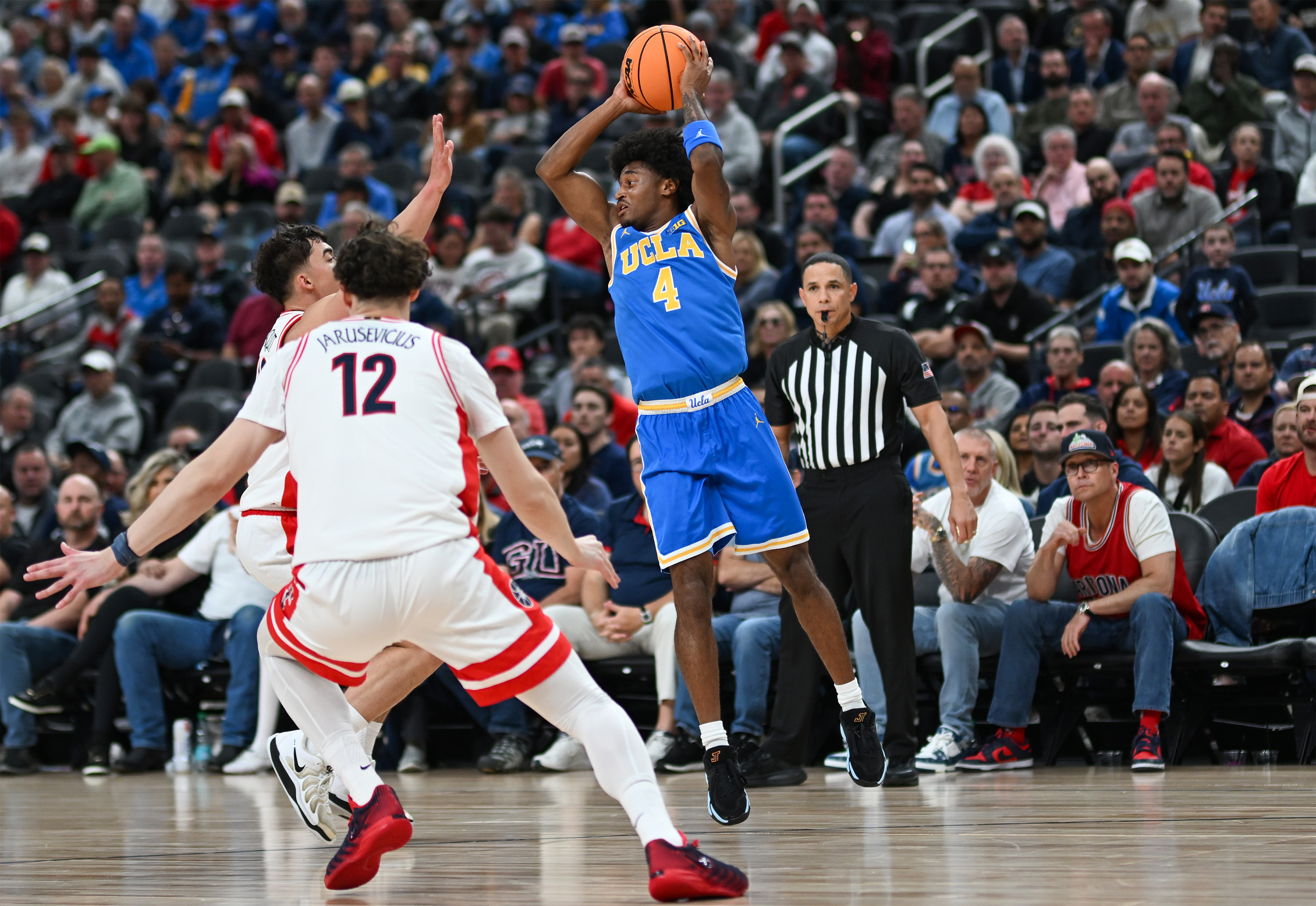
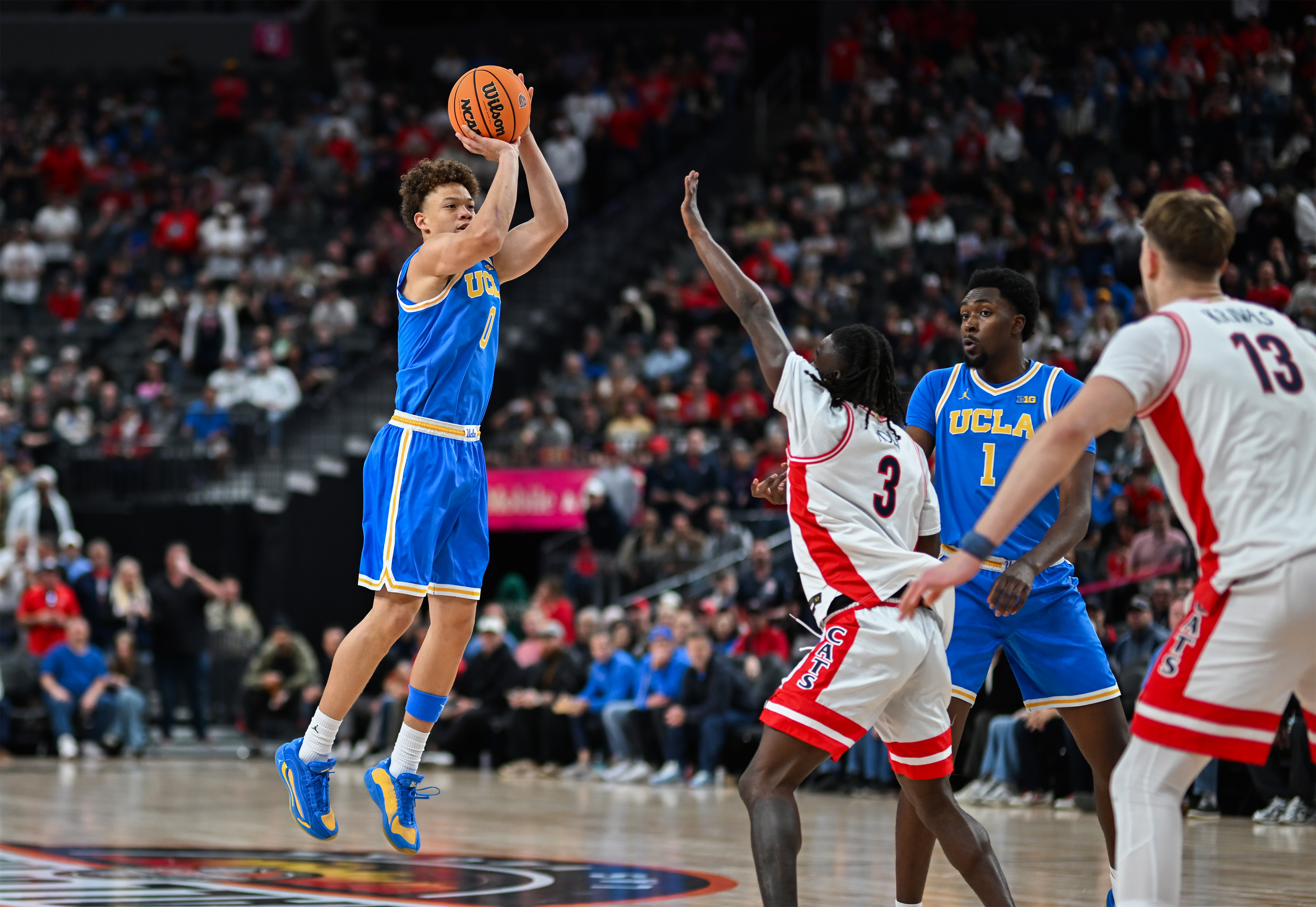
Sophomore guard Jaylen Petty brings the ball above his head with both hands. Petty totaled 13 points, seven rebounds and seven assists in his UCLA debut. (Kai Dizon/Assistant Photo editor)

By Zach King
Nov. 3, 2026 8:40 p.m.
This story was updated Nov. 3 at 9:19 p.m.
No. 22 UCLA men’s basketball (1-0) opened its season with an 84-75 victory over No. 5 Arizona (0-1) at T-Mobile Arena in Las Vegas, overcoming a career-best 38-point performance from Wildcat forward Ivan Kharchenkov and a furious second-half comeback to deliver coach Mick Cronin’s second win over a top-five opponent in 2026. The upset offered an early glimpse of a team that might have finally found the combination of defensive intensity, interior versatility and offensive depth necessary to compete with the nation’s best. Daily Bruin Sports contributor Zach King gives his five takeaways from UCLA’s season opener.
Real deal defense
Kharchenkov completely tore up the Bruins’ defense with a career-best 38 points on 60% shooting from the field and grabbed 10 boards on the night. But it never felt like Arizona’s offense truly found the consistency that vaulted it to a Final Four performance last season.
The Wildcats shot just 37% from the field, including 23% from beyond the arc, and outside of Kharchenkov, only center Motiejus Krivas shot better than 40%.
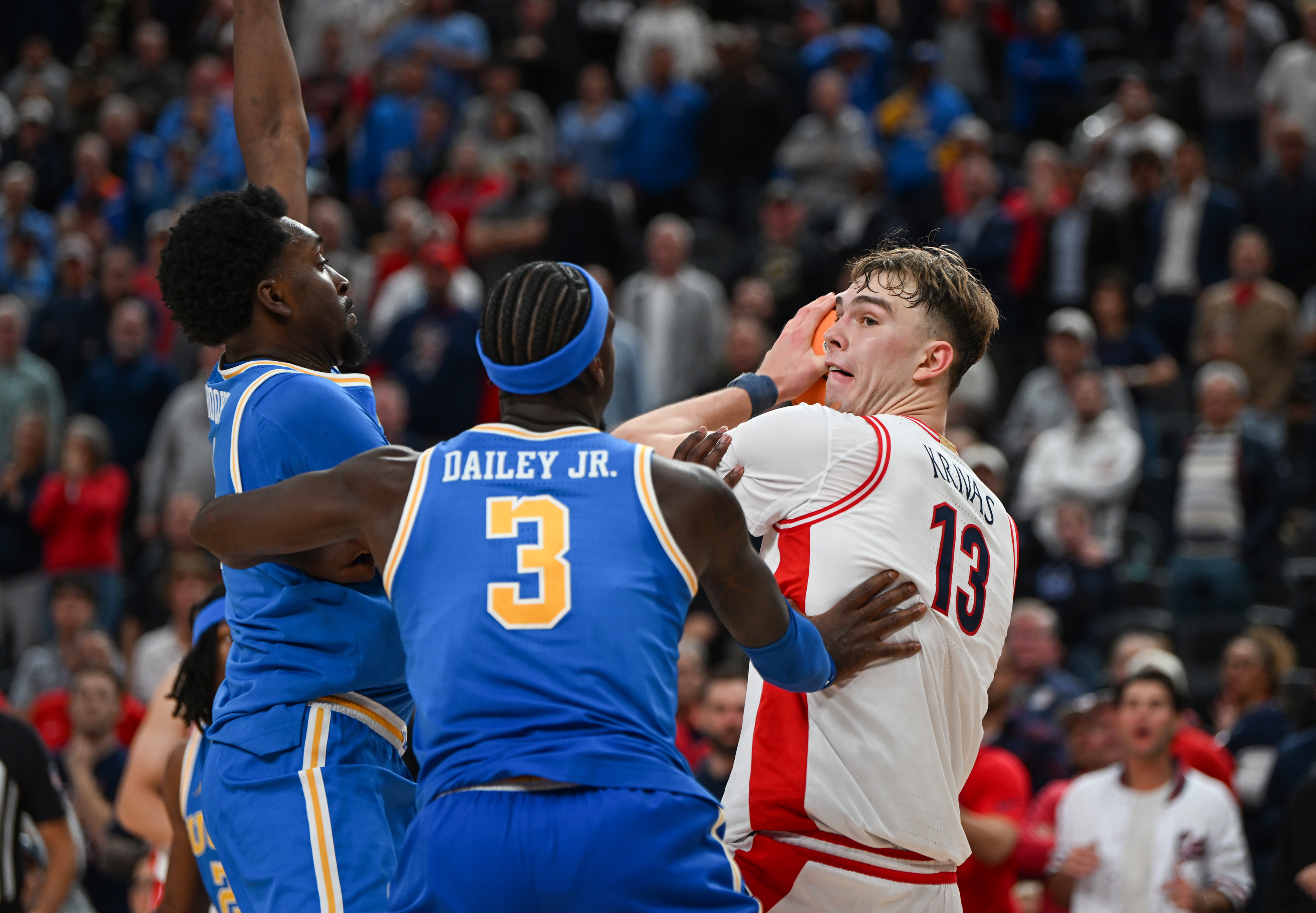
Krivas was constrained by the hybrid 3-2 defense Cronin implemented. UCLA forwards continuously packed the paint while guards doubled screens, limiting Arizona’s ability to properly pass the ball or create a consistent rhythm.
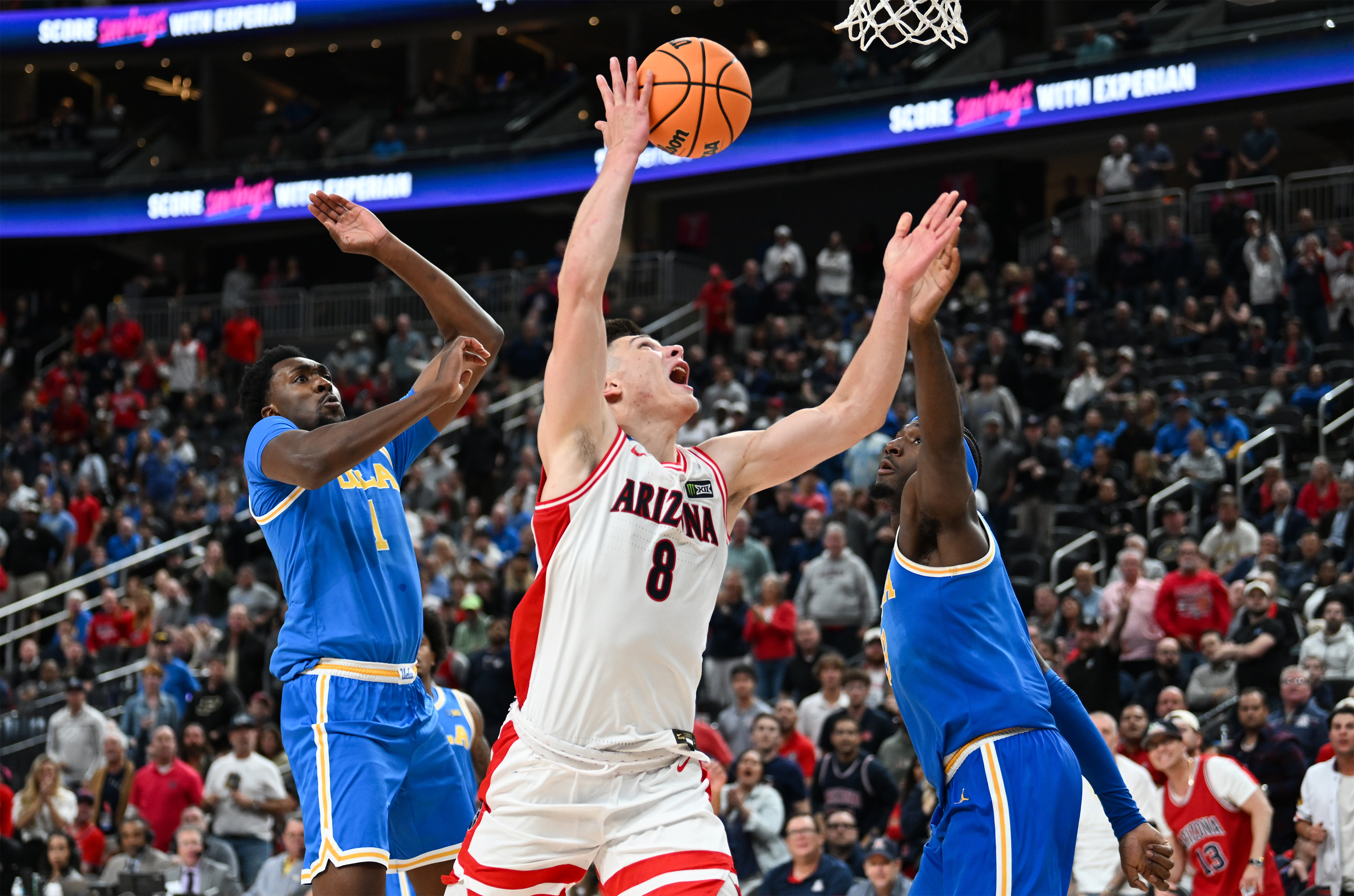
In the first half, it was guard Caleb Holt who went on a small heater to get the Wildcats within striking distance of the Bruins’ early lead, and in the second, it was sharp-shooting guard Derek Dixon. The second half may have been a different story, yet it felt like the Bruins were absorbing the pressure rather than flailing under it.
Although Arizona nearly erased UCLA’s 14-point halftime advantage, UCLA never surrendered the lead.
For a team that has made defensive intensity the foundation of its identity under Cronin, Monday’s performance offered an encouraging reminder that even a roster filled with newcomers can quickly embrace the principles that have defined the program.
Interior issues solved
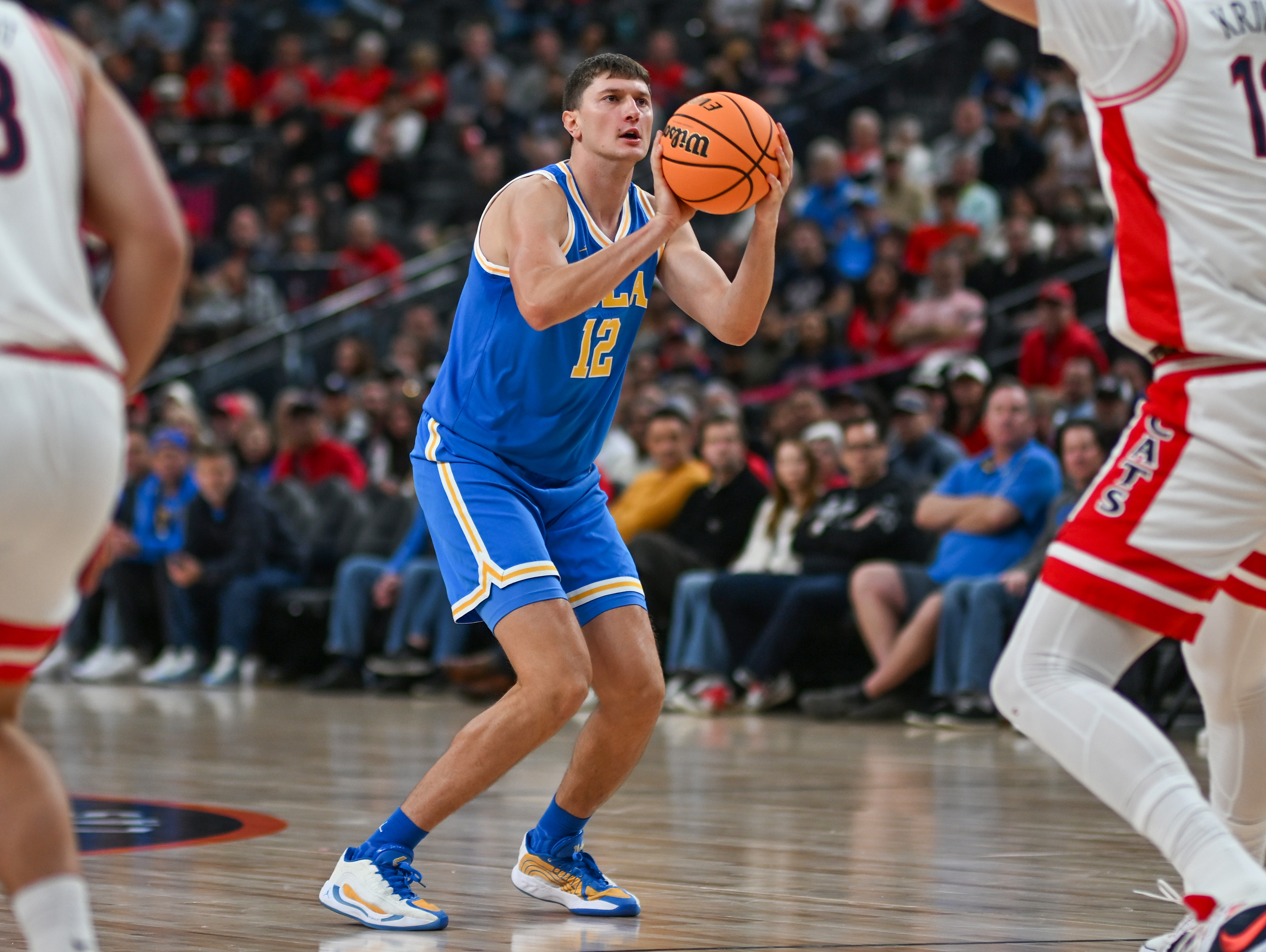
Freshman guard/forward Nikola Kusturica was given the green light throughout the game to take open shots from deep and try to take guys one-on-one from the top of the key. While many of those shots didn’t fall – Kusturica went 0-for-5 from downtown – there is no question that his athleticism, size and speed were essential to the Bruins’ ability to go out to such a lead in the first half and hang on in the second.
With three blocks and two steals, it felt like Kusturica was everywhere in the paint, giving Krivas a hard time maintaining his usual static presence on both the offensive and defensive ends. Amid all the size, length and speed he showcased, most striking was the trust Cronin had in him and the trust he maintained in himself, leading the Bruins with 39 minutes played.
Elsewhere, senior forward/center Xavier Booker had eight points and three rebounds and continued to look like he was finding space to take high-percentage shots. Transfer junior forward Sergej Macura had seven points and two rebounds and showcased a wonderful touch from downtown, draining two 3-pointers midway through the first half.
But the game could not have been won without the excellence of Eric Dailey Jr. The senior guard/forward finished with 13 points and a team-high eight rebounds, demonstrating the physicality and composure UCLA desperately needed when Arizona began to claw its way back into the contest.
Although Dailey struggled from beyond the arc – missing all five of his 3-point attempts – he consistently found ways to contribute around the basket, finishing through contact, fighting for rebounds and creating second-chance opportunities.
For a UCLA frontcourt that was repeatedly exploited by larger opponents last year, the combination of Dailey’s physicality, Kusturica’s defensive versatility, Booker’s shooting and Macura’s floor against a more physically imposing Arizona team offers a promising new identity.
Perimeter not so much, yet
Even with the Bruins’ impressive defensive performance and newfound interior versatility, Monday was hardly a flawless offensive exhibition. UCLA shot just 38% from the field, and although its 10 3-pointers proved timely, the team struggled to consistently manufacture efficient opportunities from the perimeter.
Dailey finished 0-for-5 from beyond the arc, and Kusturica missed all five of his attempts as well. Junior guard Trent Perry found himself dealing with early foul trouble, limiting his ability to dictate the game’s tempo for extended stretches.
UCLA’s offense occasionally appeared stagnant, settling for contested looks rather than creating the movement and spacing that fueled its early advantage.
Meanwhile, Dixon’s perimeter shooting – including a made triple with just over a minute left that got the Wildcats within three – exposed moments of defensive vulnerability, punishing the Bruins, who seemed too committed to stopping paint opportunities and draining open shots in crucial moments.
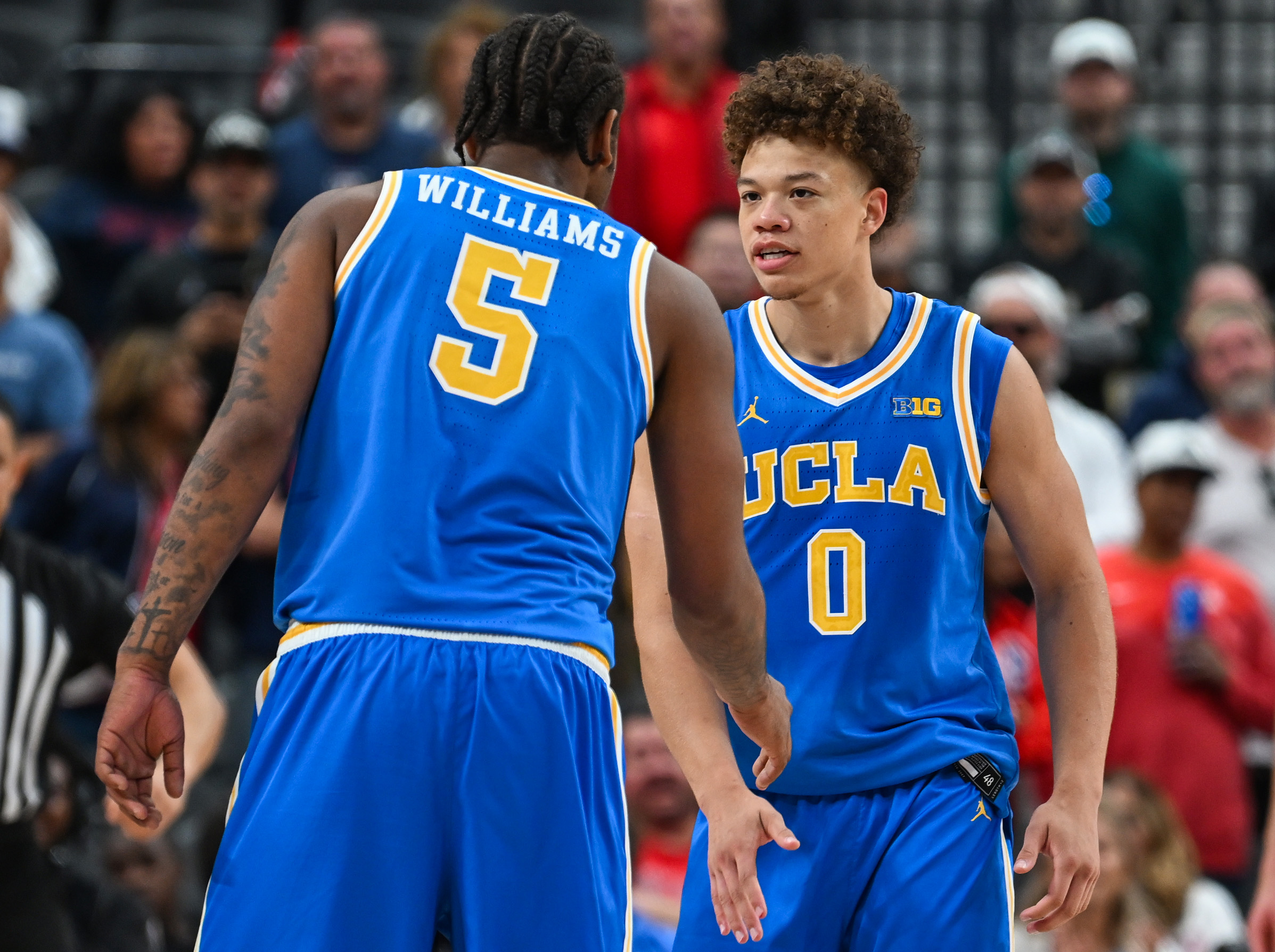
Despite the slump, Perry led the team with 21 points, including 11-for-11 free throw shooting, all of which was drawn by his relentless attempts to drive and challenge the Arizona bigs to stop him cleanly. Even when pressed during Arizona’s late attempts to strip the ball away in the backcourt – one of which resulted in a 10-second violation on UCLA – Perry established himself as a crucial piece of composure for a young UCLA squad and finished the game from the charity stripe.
For a team that has understood versatility as key to winning, seeing that versatility translate into grit under the threat of a blown lead was inspiring for what this guard room, and team in general, could become at year’s end.
Feeling Macur-ial
If Monday night proved anything, it’s that Cronin’s newest additions are far more than complementary pieces on a roster built around returning veterans.
Sophomore guard Jaylen Petty was the engine behind UCLA’s first-half offensive explosion, knocking down three triples before halftime and finishing the night with seven assists and seven rebounds. Petty consistently pushed the tempo, found open shooters and forced Arizona’s defenders to make difficult decisions in transition.
Moreover, freshman guard/forward Joe “Jojo” Philon III delivered seven points on a perfect 3-for-3 shooting performance from the field in 12 minutes off the bench, including a timely 3-pointer from the corner that extended UCLA’s lead to 11 with just over five minutes remaining. Philon immediately established himself as a danger to any opposing offense on the defensive end and showed promise on the offensive end.
And then there was Macura. The Slovenian forward offered an entirely different kind of surprise. Rather than simply throwing his weight around beneath the basket, Macura stepped outside and knocked down two triples, forcing Arizona to account for yet another perimeter threat from UCLA’s frontcourt.
Sophomore transfer guard Azavier “Stink” Robinson always made sure he was noticed when on the floor, bringing his trademark defensive intensity and athleticism to a Bruin backcourt that consistently made life difficult for Wildcat guards.
Together, the newcomers offered a glimpse of just how dangerous this UCLA squad can become when its newest faces aren’t simply filling gaps but helping to define the team’s identity.
The best part was the friends made along the way
With 40 seconds left, Kusturica went over to Dailey and seemed to whisper an idea for an inbound play in his ear. Afterward, the 17-year-old freshman threw an absolute dot to Dailey on the opposite end, and he was able to slam and help seal the game for the Bruins.
Much of the uncertainty surrounding UCLA entering the season centered on whether Cronin could successfully mesh together a roster featuring established returners, talented transfers and freshmen still adjusting to the collegiate game.
Individual talent was never in question. But after last season’s disappointing finish, the Bruins needed more than talent alone to establish themselves among the nation’s elite. They needed chemistry, trust and a willingness to embrace roles that may not always translate to the box score.
Against the Wildcats, those qualities were on full display. They didn’t play perfect basketball by any means, but the Bruins felt like a team that was ruthlessly selfless, extremely versatile and looking not for a smidge of personal excellence but rather a resilience to find a way to win no matter the cost.
Monday’s victory was the greatest gift Bruins fans itching for the consistency and teamwork they know their coach can deliver at the highest level could have asked for.