

UCLA students help pass statewide bill promoting lung cancer screening
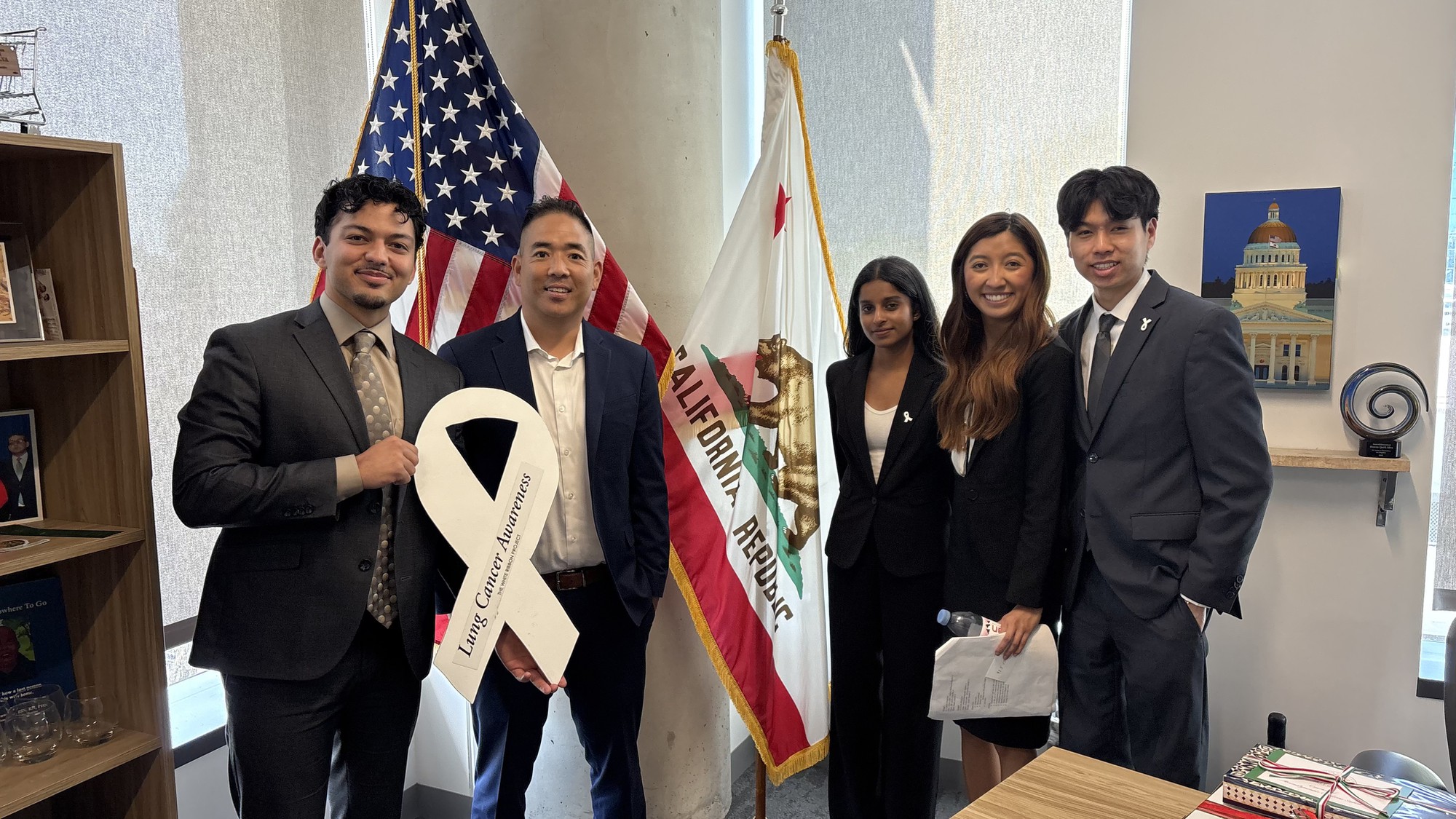
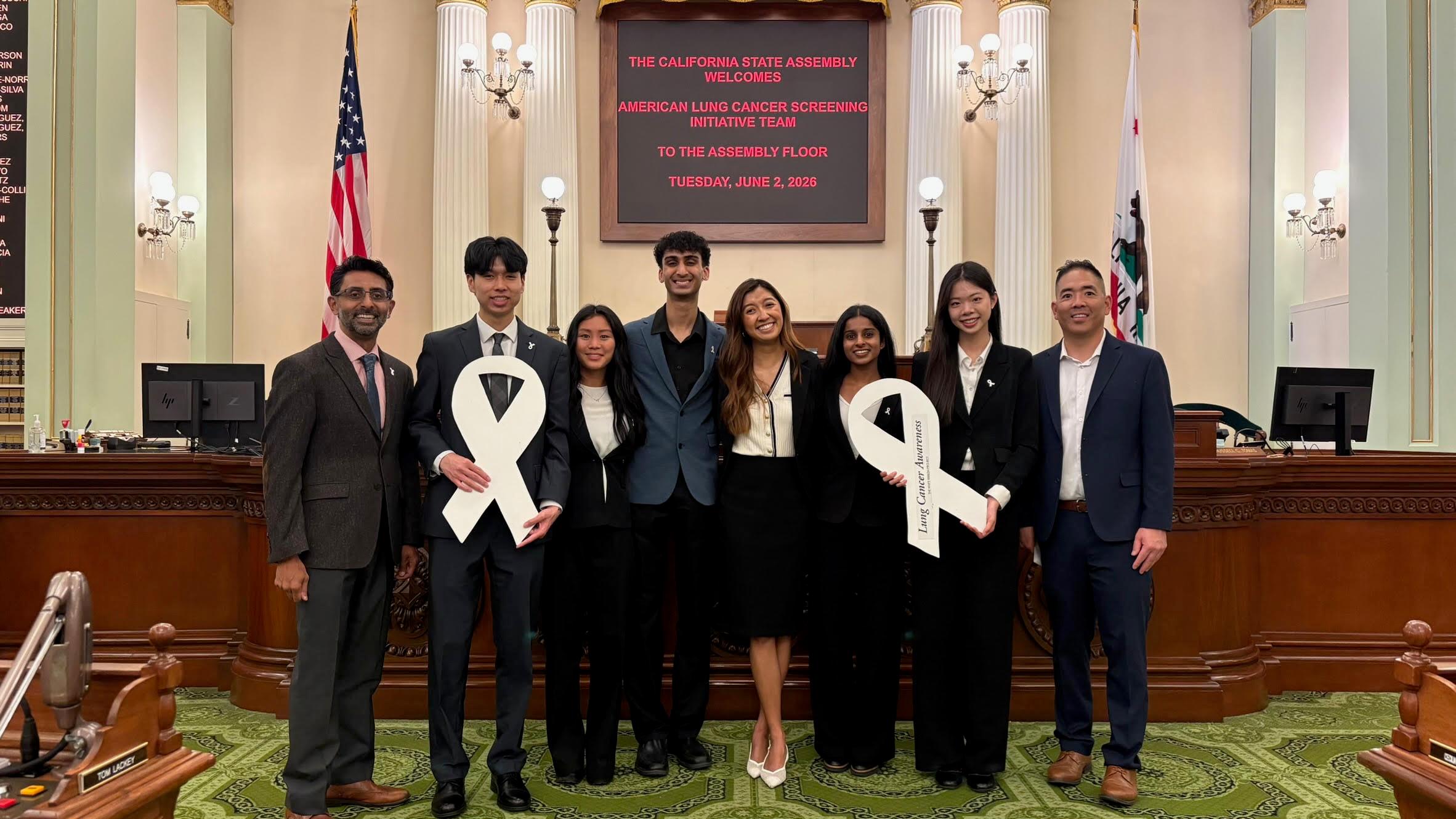
Students from UCLA’s American Lung Cancer Screening Initiative chapter championed a bill that requires tobacco retailers to display signs with information about lung cancer screening. (Courtesy of Jeffrey Velotta)

By Caitlin Brockenbrow
Oct. 12, 2026 9:53 p.m.
Gov. Gavin Newsom signed a student-conceptualized bill into law Sept. 28 to raise awareness about lung cancer screenings across the state.
Senate Bill 1124, conceptualized by members of UCLA’s American Lung Cancer Screening Initiative chapter, requires tobacco retailers to display signs with information about lung cancer screening. Sen. Bob Archuleta introduced the bill in February, and the state Assembly and Senate passed the bill in August.
“I know some of us also shed a tear because of how hard we worked for quite a long time on this bill,” said Miah Chao, the co-director of ALCSI’s national advocacy team and the co-president of the UCLA chapter of ALCSI. “We never thought at the beginning that something like this could be accomplishable for a group of college students.”
[Related: Student-led bill promoting lung cancer screening awareness reaches Newsom’s desk]
The bill requires tobacco retailers to display signage created by the California Department of Public Health by Jan. 1, 2028. The state may suspend businesses that fail to comply, revoke their licenses, fine them $500 or charge them with a misdemeanor.
“The majority of people in this country don’t know much about lung cancer being a curable disease and that it can be screened to save lives,” said Dr. Drew Moghanaki, one of the ALCSI team’s faculty physician advisors and chief of thoracic oncology at UCLA Health’s Department of Radiation Oncology.
But the ALCSI members, who began working on the legislation in March 2025, said their work is not done.
Chao, a fourth-year public health student, said they plan to track the bill as it is implemented.
“This is definitely not the end,” she said. “For example, how are the signs being designed? What type of information is contained on the sign?”
The organization wants to ensure the signs have a full list of resources that people can access through a QR code, said Elaine Dong, the co-president of UCLA’s ALCSI chapter. She added that the team hopes to create a website and partner with student volunteers from ALCSI’s California chapters to educate people about lung cancer screening.
Moghanaki said he is optimistic that the law will help other state legislators pass similar bills and destigmatize lung cancer screening.
Dr. Jeffrey Velotta, the faculty advisor for the UCLA and UC Berkeley chapters of ALCSI and a thoracic surgeon, said the majority of people in California have no smoking history but have other risk factors – including race, ethnicity, age, sex, family history and occupational exposures.
Some people do not qualify for insurance to cover lung cancer screenings and do not know they are at high risk, he added.
With many forest fires in California, firefighters and other exposed populations could also be more predisposed to lung cancer and other lung conditions, said Dr. Hari Keshava, a thoracic surgeon at UC Irvine and the faculty advisor for its ALCSI chapter.
“This is the first time we’ve had something like this signage,” Velotta said. “I’m hoping because we got this passed, it should be easier to implement more policy-changing things for other at-risk groups.”
Shaan Mehta said he and Monicka Manni, the co-directors of advocacy for the UCLA chapter of ALCSI, worked with ALCSI’s national advocacy team over the summer to develop a toolkit with information on how to navigate the legislative process and how the UCLA chapter helped get the bill passed.
“This toolkit is going to go live hopefully in the coming months or year and it’s going to help jumpstart other initiatives at colleges across America,” said Mehta, a second-year molecular, cell and developmental biology student. “We really hope to see that they take a template from UCLA and have some assistance passing their own bills in light of this one being passed in California.”
The organization’s primary goal this year is to fast-track screenings by proposing improvements to the electronic health records systems hospitals use to relay information from physicians to patients, said Manni, a second-year neuroscience student.
Building on their efforts to pass Senate Bill 1124, the chapter has also started conceptualizing a radon bill initiative, Chao said.
Having higher radon exposure, a naturally occurring radioactive gas, could increase a person’s risk of lung cancer. However, radon testing mandates in houses and public schools are quite minimal, which inspired the ALCSI team to explore new legislation in different states, she added.
Senate Bill 1124 can serve as a blueprint for others to raise awareness of lung cancer screening among high-risk populations, Keshava said.
“This is where the real work starts,” Velotta said. “It was easy for everybody to just sign petitions and say, ‘Yes, we want signage,’ … now we have to hash out all the details. That’s what I think the next big step is.”