UCLA alumnus turns medical school frustrations into AI study app ‘Neural Consult’
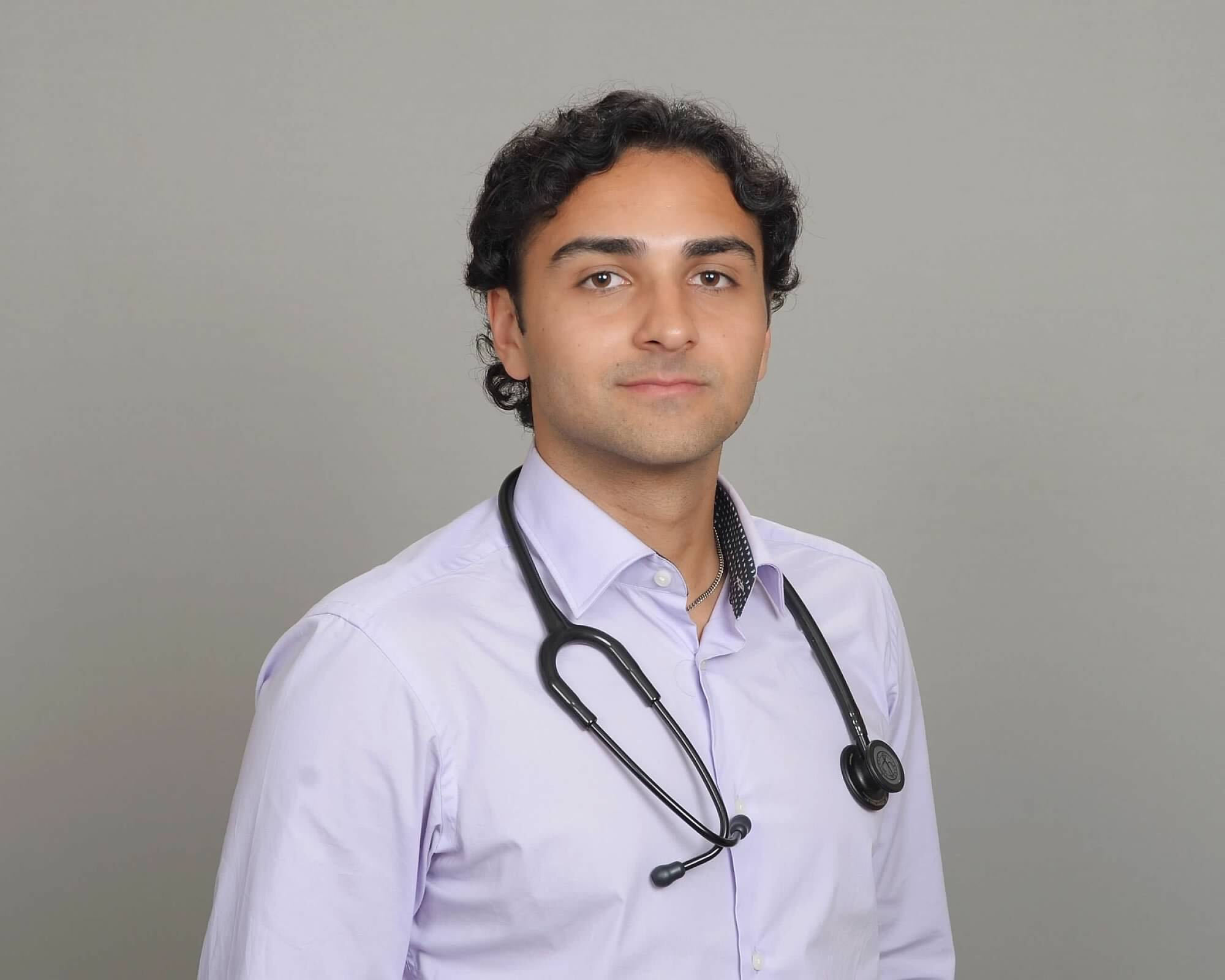
UCLA alumnus and Keck School of Medicine of USC student Arman Hussain helped create a new tool to help medical and other patient-facing students study using artificial intelligence. His tool, Neural Consult, currently has over 100,000 users. (Courtesy of Arman Hussain)

By Kyan Wang
Oct. 3, 2026 9:43 p.m.
This post was updated Oct. 4 at 11:51 p.m.
UCLA alumnus Arman Hussain said he struggled to apply both patient interaction skills and practical knowledge when studying in medical school.
Now, Hussain, a medical student at the Keck School of Medicine of USC, is trying to fix that using artificial intelligence.
Hussain helped create Neural Consult through startup Dendritic Health AI, an app that offers AI flashcards, generates board examination questions and simulates clinical settings to help medical students study.
“You’re either stuck taking one standard-made national flashcard deck or question set, or you’re just making it up by yourself as you go,” Hussain said.
Medical school students are required to take several exams as part of the United States Medical Licensing Examination. These tests are either written or practical, and they include traditional computer-based exams and simulated patient interactions.
Neural Consult currently has nearly 100,000 users and has partnered with medical, physician assistant, pharmacy and dental programs to create custom versions of the program tailored to different schools’ curricula, said Dr. Jonathan Theros, chief executive officer of Dendritic Health AI.
The tool provides citations for all information it generates to minimize risks of fabricated information, Theros, who is also an internal medicine resident at Massachusetts General Hospital, added.
Hussain said working in an evolutionary medicine lab as a UCLA undergraduate shaped his work at Dendritic Health AI by teaching him the importance of observing user behavior.
“Maybe we have an idea of what our product should be, but we let the first 100,000, et cetera, people use it, and what their feedback is is completely different than what we thought we should build next,” Hussain said. “We build in the direction of our audience and take almost an evolutionary approach to building our product.”
Hussain said he uses Neural Consult’s patient interaction simulator to study for clinical examinations. The feature allows students to diagnose actors in a simulated clinical setting, he added.
Tiffany Chen, a UCLA medical student, said some medical students use AI tools because of its ability to synthesize and personalize information.
“I’m curious to see, four, five years from now, how different it’s going to be,” Chen said. “Let alone compared to 20, 30 years ago, when they still had to highlight and annotate textbooks.”
Neural Consult has hosted mixers in New York City and Los Angeles to build community among medical students, Hussain said.
The goal is to train better doctors and provide better patient outcomes through Neural Consult, Theros said. He added that the company aims to remain a tool built by medical students, for medical students.
“What M1 (first-year medical) students who are just starting medical school love to do is meet other medical students, get to know the people who are going to be your physician peers and your medical student peers,” Hussain said. “It was Neural Consult that got to fund that, host that and bring it together, and students loved it.”