UCLA initiative pushes to expand shade infrastructure across LA County
(Haley Park/Illustration and cartoons director)

By Charlotte Martling
July 26, 2026 5:10 p.m.
This post was updated July 26 at 8:13 p.m.
UCLA researchers are pushing for Los Angeles to build more shade infrastructure ahead of the 2027 Super Bowl and the 2028 Olympic and Paralympic Games.
ShadeLA, an initiative run by the UCLA Luskin Center for Innovation in partnership with the University of Southern California Dornsife Public Exchange, aims to improve Angelenos’ quality of life by planting trees and building structures such as bus transit shelters and shade sails, said Mia Yancich, a staff research associate for the organization.
ShadeLA – a coalition of more than 30 academic, design and nonprofit organizations – is focused on providing shade to LA because of its role as a host city for major events, Yancich said.
The goal is to improve conditions beyond just the west side of LA, said Megan Mullin, the faculty director of the UCLA Luskin Center for Innovation.
“Our research makes a difference for communities across the entire region,” she said.
The coalition aims to address environmental injustice in three pilot sites, including South LA, East LA and Inglewood, according to its website. The sites – known as double-impacted areas – are defined by high temperatures, less tree cover and a lack of socioeconomic mobility, according to a national shade map by the UCLA Luskin Center for Innovation and American Forests.
“We don’t want all these people coming to the city two years from now, and there’s a heat wave happening, and there’s just not enough infrastructure. That gets really dangerous for everybody,” Yancich said.
Extreme heat is predicted to become more frequent in LA, with the countywide average daily maximum temperature being projected to rise by 5.4 degrees to 98.6 degrees Fahrenheit by mid-century, according to the LA County Climate Vulnerability Assessment. LA County experienced its hottest temperatures ever recorded during a heat wave in September 2020, and will continue to have extreme heat events, the report said.
Historical redlining has created more hazardous environments in low-income communities, said Colleen Callahan, a member of ShadeLA’s organizing committee.
“From academia to local government to nonprofits, we’re trying to work together to close the shade gap and to advance the vision that everyone has access to a cool environment to live, work, learn and play,” said Callahan, the executive director of the UCLA Luskin Center for Innovation.
Built shade casts the majority of shade at noon, while trees provide more shade later in the day, she said.
ShadeLA is applying for a grant under Proposition 4, which provides $10 billion for different climate projects and organizations in California, Yancich said. She added that the grant would help fund more shade projects in South LA.
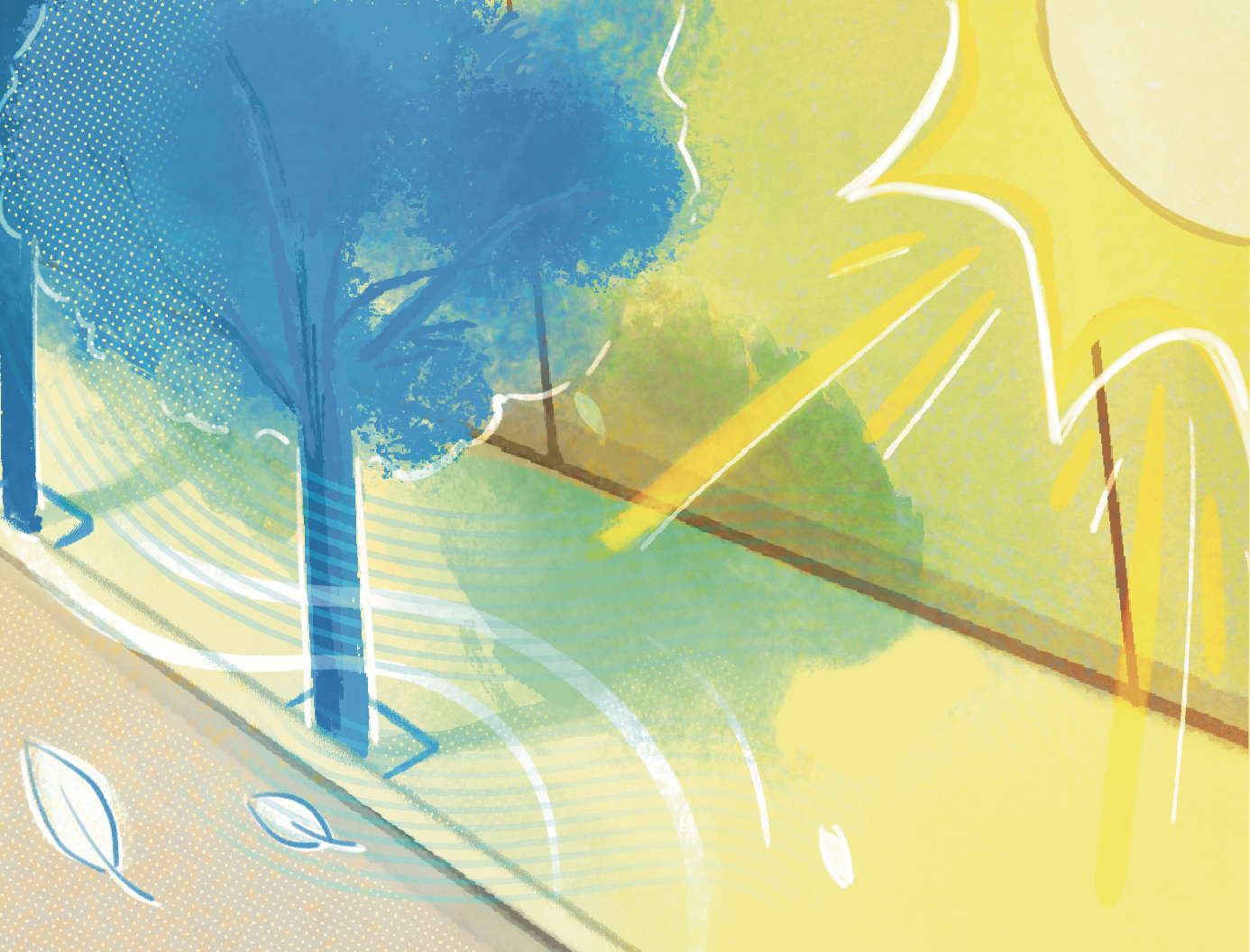
Shade is one of the simplest, most effective methods for cooling people down and helping reduce heat-related health issues, Yancich said.
“Shade can really reduce the heat burden placed on folks by a big degree,” Callahan said. “It can feel 40 or so degrees cooler in the shade than it does in the heat on something like asphalt or AstroTurf, and that can make a big difference in people’s health.”
ShadeLA also emphasizes the importance of helping people live safely and comfortably, said Edith de Guzman, the co-director of ShadeLA.
“We are in this warming trajectory because of climate change, … so the amount of space that is available to us to be outdoors safely is shrinking,” she said. “That means that if we continue to do those activities that we are used to, then we are endangering ourselves because heat already is the number one weather-related killer.”
However, creating more shade in LA has become more difficult because of restrictive city policies, Yancich said.
“It doesn’t sound like it should, but for some in the past, it’s taken up to over a year to plant a single tree,” Yancich said. “We’re trying to build out a policy playbook and streamline that process.”
Callahan said the county must be proactive about providing shade for future events and future generations of Angelenos.
“If we aren’t investing today, we’re going to be paying more later on,” Callahan said.