How the Trump administration’s revamp of funding guidelines could threaten research

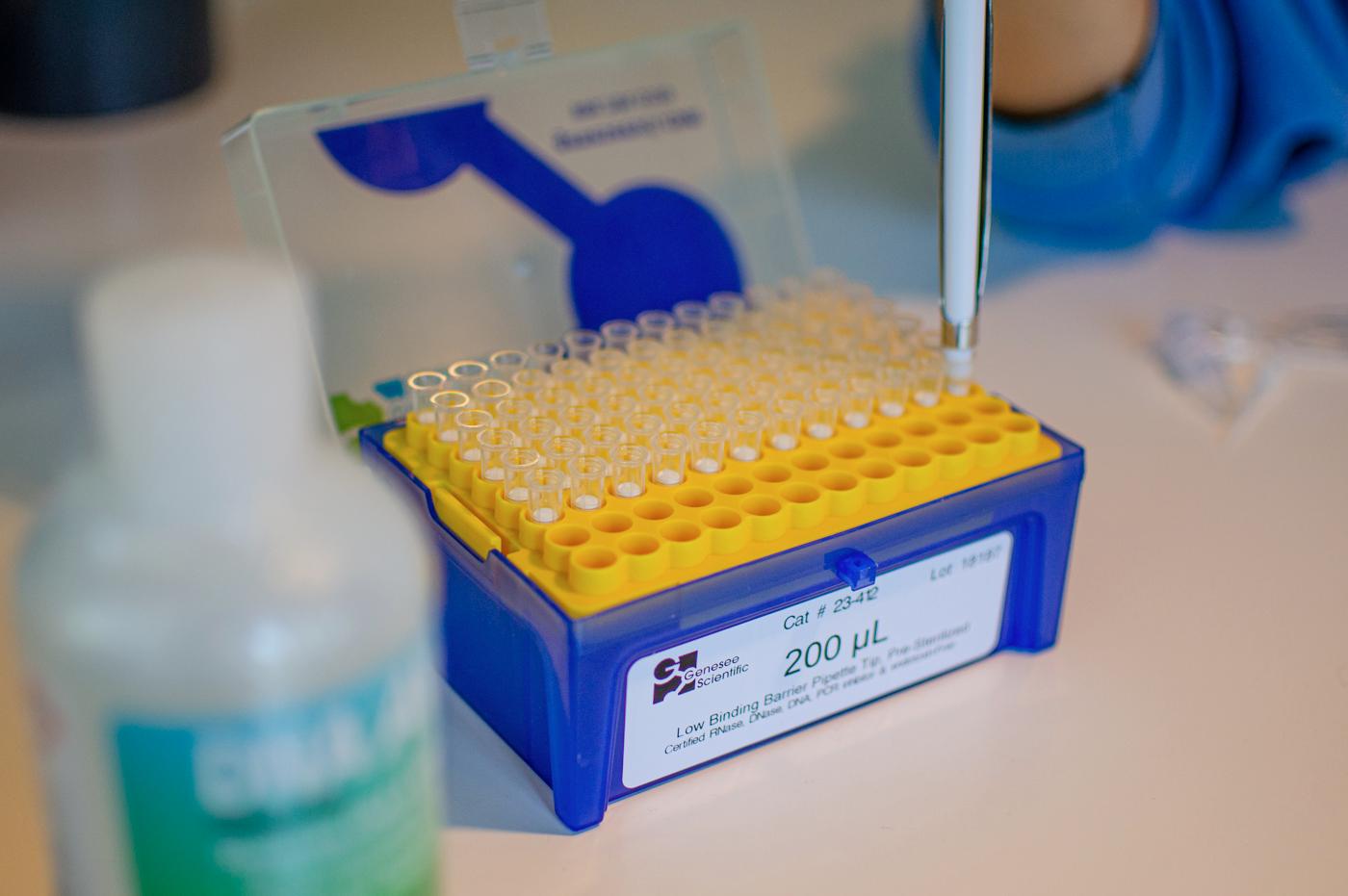
A research laboratory is featured. Researchers warn that politicians lack the scientific knowledge needed to make the important decisions on grant funding required if the revision is passed. (Selin Filiz/Daily Bruin senior staff)

By Alyssa Wong
July 11, 2026 12:57 a.m.
This post was updated July 12 at 7:39 p.m.
The federal government’s proposal to overhaul research grant funding processes could have detrimental effects on scientific research, UCLA researchers said.
The United States Office of Management and Budget proposed significant revisions to its Uniform Guidance – a framework for managing federal grants – in May, which would expand the office’s authority over research institutes, allowing it to suspend and cancel grants, restrict allowable costs and ban international collaboration. The UC is calling on community members to sign a petition against the proposal and submit public comments directly to the budget office through July 13, according to the UC Advocacy Network’s website.
The Uniform Guidance is a set of guidelines that institutions, rather than the government, interpret and enforce, said Dr. Julie Saba, a professor of pediatrics at UC San Francisco. However, the federal government’s proposal turns these guidelines into regulations, she added.
“Part of the way it works is that the money is allocated, and it’s left to the scientists to judge what is both the best science and also in the best interest of the public,” said Saba, who is also an endowed chair in pediatric cancer research at the UCSF Benioff Children’s Hospital Oakland. “Politicians are not the right people to be making those decisions, as we have seen the unraveling of our health in this country because of political overreach.”
The Uniform Guidance has provided a crucial framework for clarity and consistency in the grant-making process, a UCLA spokesperson said in an emailed statement. They added that the proposed revisions would distort the Uniform Guidance’s purpose.
“UCLA strongly opposes the Proposed Rule,” the spokesperson said in the statement. “The proposed rule would make federal research funding less predictable, increase agency and recipient burden, weaken the research enterprise, and ultimately diminish the public benefits that federally supported research delivers.”
The proposed revisions come after the federal government suspended $584 million of the university’s research grants from the National Institutes of Health, National Science Foundation and U.S. Department of Energy in July 2025. The federal government alleged that UCLA allowed affirmative action, antisemitism and “men to participate in women’s sports.”
A federal judge restored the bulk of the research grants in August and September. The same judge ruled in November that the federal government could not suspend or threaten to suspend funds from the UC.
[Related: Federal government suspends research funding to UCLA]
Saba also said the proposed rule could allow the budget office to terminate grants at any time without proper justification. The budget office would be able to review and terminate grants that have already been distributed, according to the Federal Register.
“It will politicize the grant-making process in all of these institutions by having a political appointee assigned to decide what grants get funded and what grants don’t,” Saba said.
The proposal would enable the federal government to cancel the research grants of people and topics it doesn’t align with, said Tobias Higbie, a professor of history and labor studies at UCLA. Higbie added that the Trump administration has a history of canceling grants for ideological reasons, including targeting the UC system because California is a Democratic state.
The budget office’s proposal also prevents federal funding for research containing wording around racial disparities, class disparities, and gender and sex differences, Higbie said.
“If I have to write a bunch of political nonsense into these grants just to get them approved – if I continue my scientific career in America – that just doesn’t really sit right with me,” said Cody Fan, a doctoral student in electrical engineering.
Funding uncertainty spurred by the changes could lead to job losses, said Stephanie Wert, a doctoral student in cognitive neuroscience.
“A lot of grants are already very short term, and science is not a short-term endeavor,” Wert said. “You need to know about your funding months, if not years, in advance.”
Saba said the proposal forbids the use of grant funds to publish papers, which can cost researchers thousands of dollars, especially if they choose to pay open-access fees, which are paid to publishers to make papers free for the public to read.
She added that the proposal would bar researchers from using grant funds to travel to conferences, which are important forums for scientific discussion, networking and hiring, particularly for junior researchers.
Saba, who is conducting research on a rare disease with doctors across the world, added that she would be unable to continue her research if the new guidance restricted international collaboration because there are only around 10 patients with the disease in the U.S.
“Everything is going to just slow down,” Saba said. “Blocking people from going to conferences, blocking people from going to publish, blocking people from having international collaborations, all of those things basically put a muzzle on scientific knowledge.”
Litigation would be the only way to challenge the rule if it were to be implemented, Saba said.
But before then, Wert said she believes collective action is one of the most powerful ways to fight back against the proposed guidelines.
“Each of these individual public comments needs to be looked through and responded to by OMB,” Wert said. “If we can get researchers and the public together to voice their dissent to this, we could seriously slow down this process, if not halt it altogether.”