Opinion: UCLA’s finance alumni network values genuine relationships, not transactions
(Helen Sanders/Daily Bruin staff)

By Laura Truong
June 30, 2026 11:34 a.m.
This post was updated Oct. 4 at 7:13 p.m.
At a finance career fair, desperation is easy to spot.
Finance has long been an industry in which connections often determine your professional opportunities. UCLA students are usually at an advantage here: They have a vast, engaged network of alumni who want to help fellow Bruins because that identity still means something to them.
Fortunately, UCLA makes it easier than most students realize to turn that advantage into action. UCLA ONE, for instance, is an online community where alumni have opted in to being found and contacted by fellow Bruins. Similarly, UCLA’s Career Center often hosts networking events where real recruiters show up expecting to have conversations with students seeking opportunities. Every fall, Financial Services Night draws alumni and banking firms to campus specifically to meet students.
Students should view this wealth of networking opportunities as a chance to build authentic relationships and further their careers, rather than as transactional interactions.
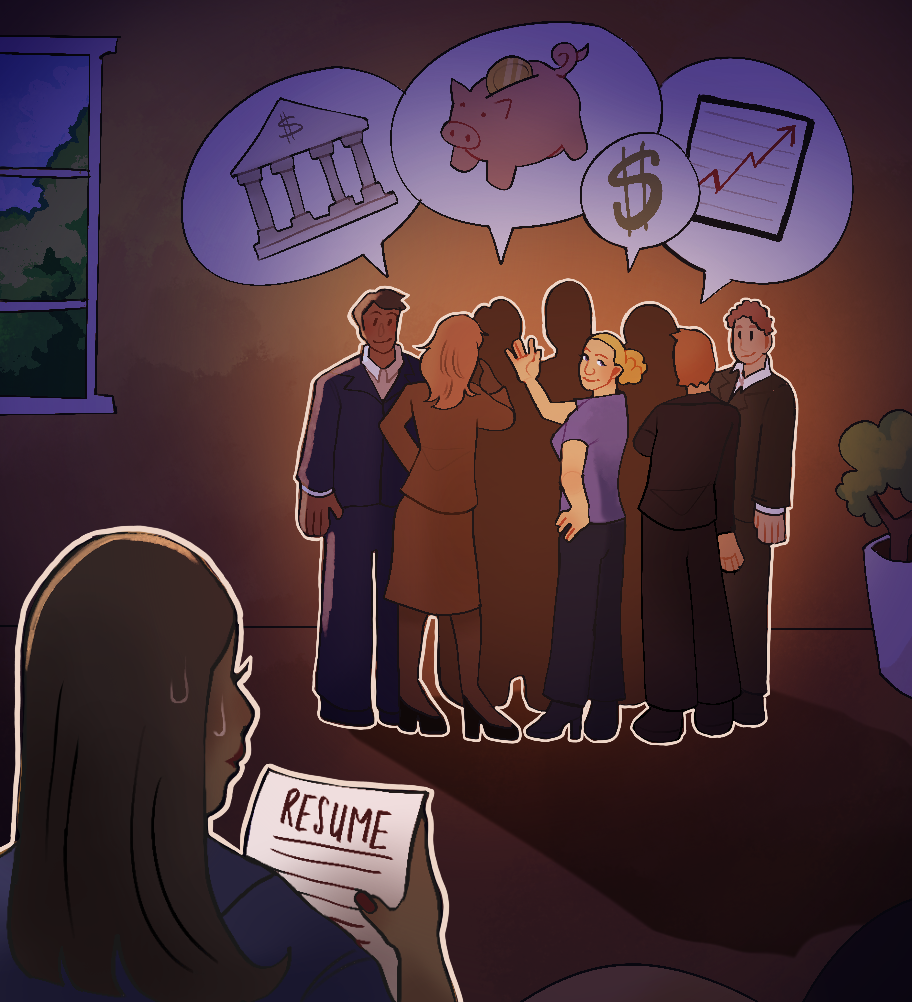
Many students make the mistake of conflating proximity with genuine connection. They stand near the right people at a career fair and assume that presence alone signals interest.
Damir Mesinovic, a managing director and wealth partner at J.P. Morgan and UCLA alumnus, said he has watched students do it time and time again at career fairs. They fixate on one recruiter and stand silently near them – but fail to engage with anyone.
According to Mesinovic, students should spend no more than five minutes with each recruiter – briefly introducing themselves, asking a targeted question about the company or market trends, requesting a business card and then moving on to meet as many employers as possible.
Additionally, asking someone you recently met to help land you an internship can close more doors than it opens, said Benjamin Wallace, a Goldman Sachs partner and UCLA alumnus. Requesting help with an internship opportunity can happen, but only after you’ve built a relationship with an industry professional, added Wallace, Goldman Sachs’ head of healthcare mergers and acquisitions in the Americas.
“Meeting somebody for the first time and, within 10 minutes, asking them if they can help you get a summer internship is probably not the best approach,” said Wallace. “You need to build a relationship with that person first before you put an ask like that on the table.”
Emily Nguyen Grimbacher, a former investment banking executive director at Perella Weinberg Partners and a UCLA alumnus, said it is key to ask finance professionals questions that reflect your genuine interests. Coffee chats, she added, are a way for students to learn about the professional they are meeting with, the bank they work for and the overall industry, all of which will help them in future interviews.
But it is important to invest in a relationship past the first coffee chat.
Building a relationship can look like following someone’s career and congratulating them on professional milestones, said Benjamin Hood, a managing director of research at Morgan Stanley and UCLA alumnus.
To be sure, networking can seem inherently transactional. Research finds that most people land jobs through weak ties, suggesting the engine of professional advancement is nothing but strategic access to information that some students simply don’t have.
By that logic, every coffee chat is a calculated move to gain more information, not an expression of genuine curiosity.
But knowing that weak ties are connected to opportunity doesn’t mean your ties have to – or should – be hollow. In reality, the wider and more authentic your network, the more doors you open for yourself.
Chris Ramsey, a recent UCLA alumnus and founder of the Bruin Finance Society, said networking does carry an inherently transactional element – but that should never be the sole purpose.
“People would rather help out people who they’re friends with – they want to provide guidance to people who they are on good terms with and really like and respect,” Ramsey said.
Alumni return to Financial Services Night, agree to coffee chats and respond to LinkedIn messages not because they are obligated to but because they feel their connections with UCLA students are real.
The alumni network is not a vending machine – it is a community that rewards those who show up with genuine curiosity, rather than a self-serving request. Students who understand this distinction early are the ones who will have those relationships five, even 10 years out of college – when they matter most.
The architecture of finance is relationship-driven by design, not by accident. The industry’s insularity is precisely why genuine human connection stands out.
Students who understand this aren’t just better networkers – they’re prepared for an industry where trust is the real currency.