Opinion: It is up to students to resist normalization of extreme rhetoric online
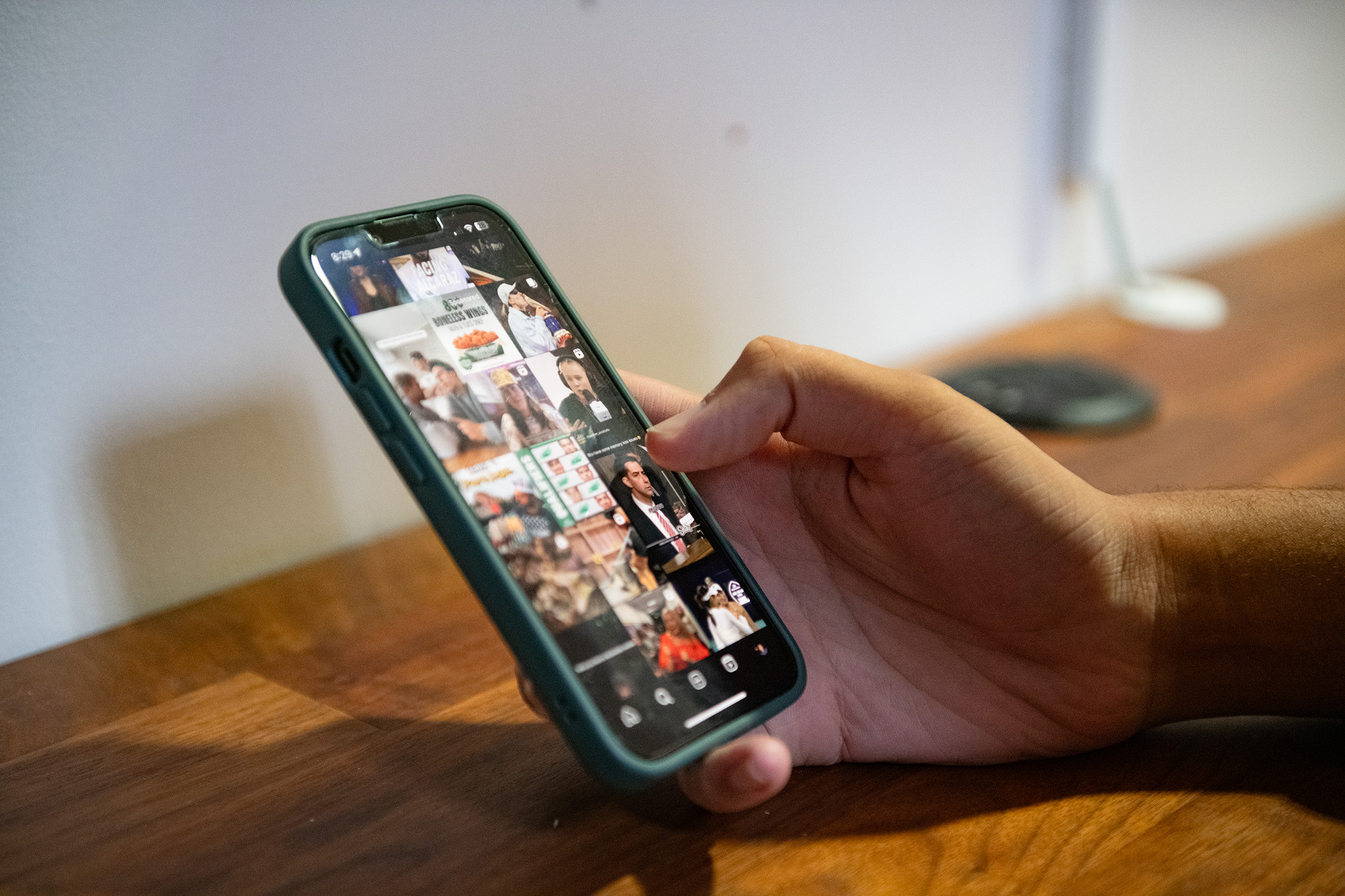
A phone opened to a social media platform is pictured above. Tia Jolie Cooper argues students must resist the normalization of extreme rhetoric on the internet. (Daily Bruin file photo)

By Tia Jolie Cooper
May 18, 2026 12:39 p.m.
This post was updated May 31 at 7:24 p.m.
“A whole civilization will die tonight, never to be brought back again.”
This statement made by President Donald Trump on Truth Social is part of a broader pattern of provocative and controversial rhetoric.
The president of the United States, an individual regarded with immense authority and global influence, is expected to communicate with restraint and responsibility. Yet, statements like this suggest a shift toward normalization of rhetoric that is increasingly extreme and polarizing.
UCLA students, as both media consumers and participants in political discourse, need to remain critical of this rhetoric rather than letting such statements become background noise.
Controversial and jarring statements on social media are nothing new. Every day, American civilians say what they please online. That is their First Amendment right – the right to free speech.
However, we should not confuse the right to free speech with a lack of consequences.
Free expression is a fundamental right, but it does not exist in a vacuum – especially when it comes from those in positions of power. Their words shape public discourse and influence how people understand and respond to global events.
[Related: Opinion: Amid normalization of dark humor, Bruins must choose empathy over entertainment]
I have been grappling with how Trump can make statements such as these and, despite significant media coverage, fail to provoke sustained public outrage.
Has repeated exposure to extreme rhetoric fundamentally changed how the public processes and reacts to political language? What are the broader consequences for public discourse and expectations of leadership if this becomes the norm?
The answer lies partially in a shift in how political communication works today.
“That’s not just about Donald Trump as president,” said Stuart Soroka, a professor of communication and political science. “That’s a social media phenomenon.”
The normalization of extreme rhetoric can be attributed to a media environment that rewards sensation and attention-grabbing content, Soroka added.
This pattern is reinforced by the sheer volume of these statements.
“When you make statements like that fairly frequently, the ability for it to shock or to get through to the public is diminished over time,” said Thomas Sherrer, a political science and public affairs lecturer.
Over time, what once would have been jarring becomes expected. However, the attention people give to these shocking messages is short-lived and rarely translates into sustained concern or accountability.
This shift is part of a cultural change in how we process information.
“As a culture, we’ve become a bit desensitized to the onslaught of extreme or inflammatory rhetoric that comes in many ways, but especially through social media,” said Kristen Shahverdian, director of campus free speech at PEN America.
It becomes easier to scroll past and harder to critically engage with what is being said on social media platforms.
Normalization carries significant consequences for college students. We are growing up in an environment where this media landscape is – simply put – normal.
This shift changes how individuals react to political statements, and more importantly, how they interact with one another. When extreme rhetoric becomes routine, it lowers the standard for what is considered acceptable in public discourse.
On college campuses, where open dialogue is meant to be encouraged, this environment can create hesitation.
Students may feel less inclined to engage in meaningful political discussions, either because they have become desensitized to political discourse online or because the pressure and scrutiny make them fear saying the wrong thing and facing backlash.
The issue at hand is not simply what Trump is saying but how often it is said, how it is delivered and how we respond. In a media environment driven by speed and attention, even the most extreme rhetoric can lose its impact.
The continuation of this pattern risks Trump’s statements going unchecked and redefining the expectations held for those in power.
It is up to students, as both media consumers and participants in public discourse, to resist this normalization and hold those in positions of power to a higher standard of accountability. In practice, this means critically evaluating political rhetoric, engaging in informed discussions and refusing to become desensitized to language that once would have prompted concern or scrutiny.
We must continue to question inflammatory rhetoric and hold elected officials accountable, because what we choose to normalize today will shape political discourse tomorrow.