Opinion: UCLA campus is no place for hateful rhetoric, political debaters getting views
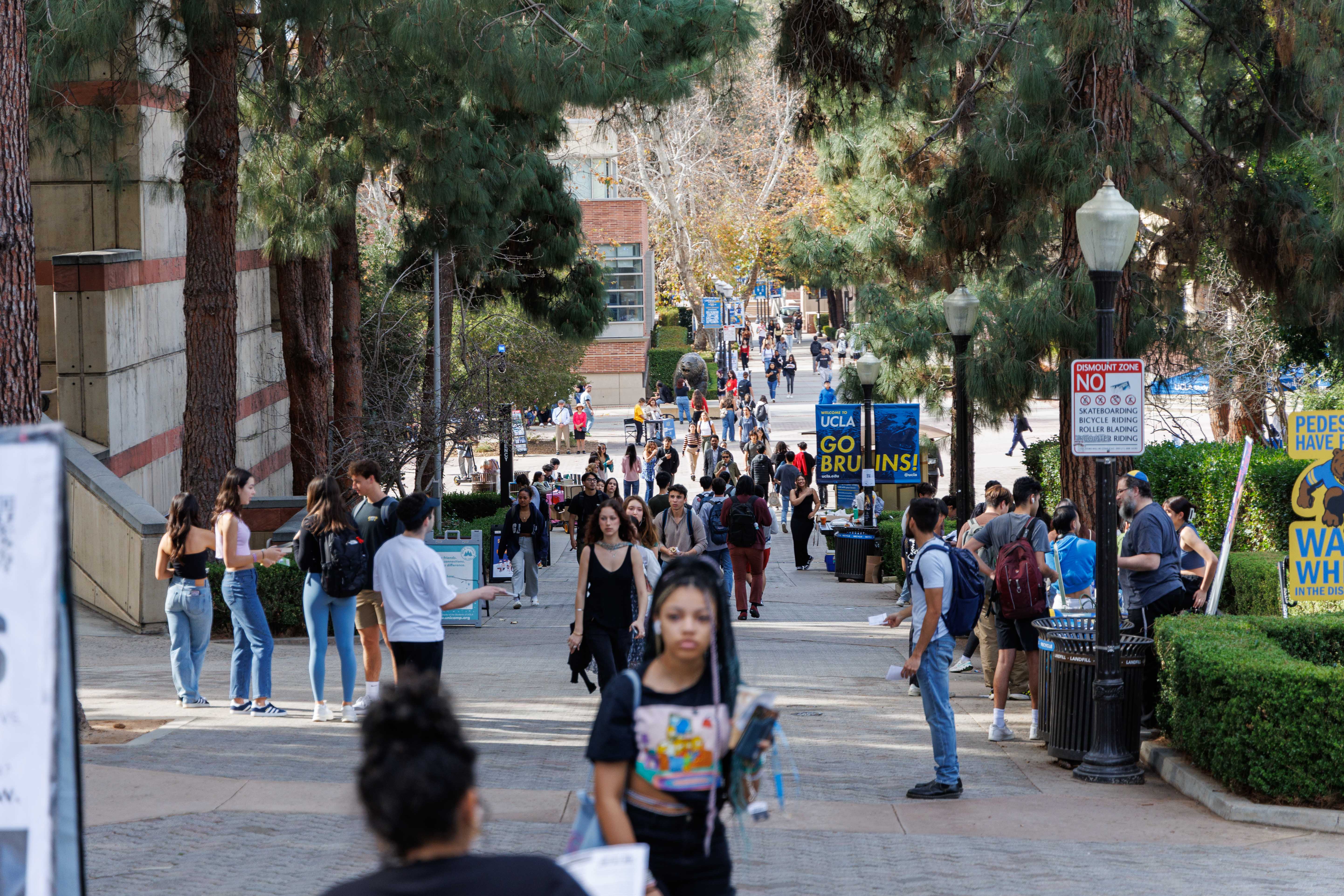
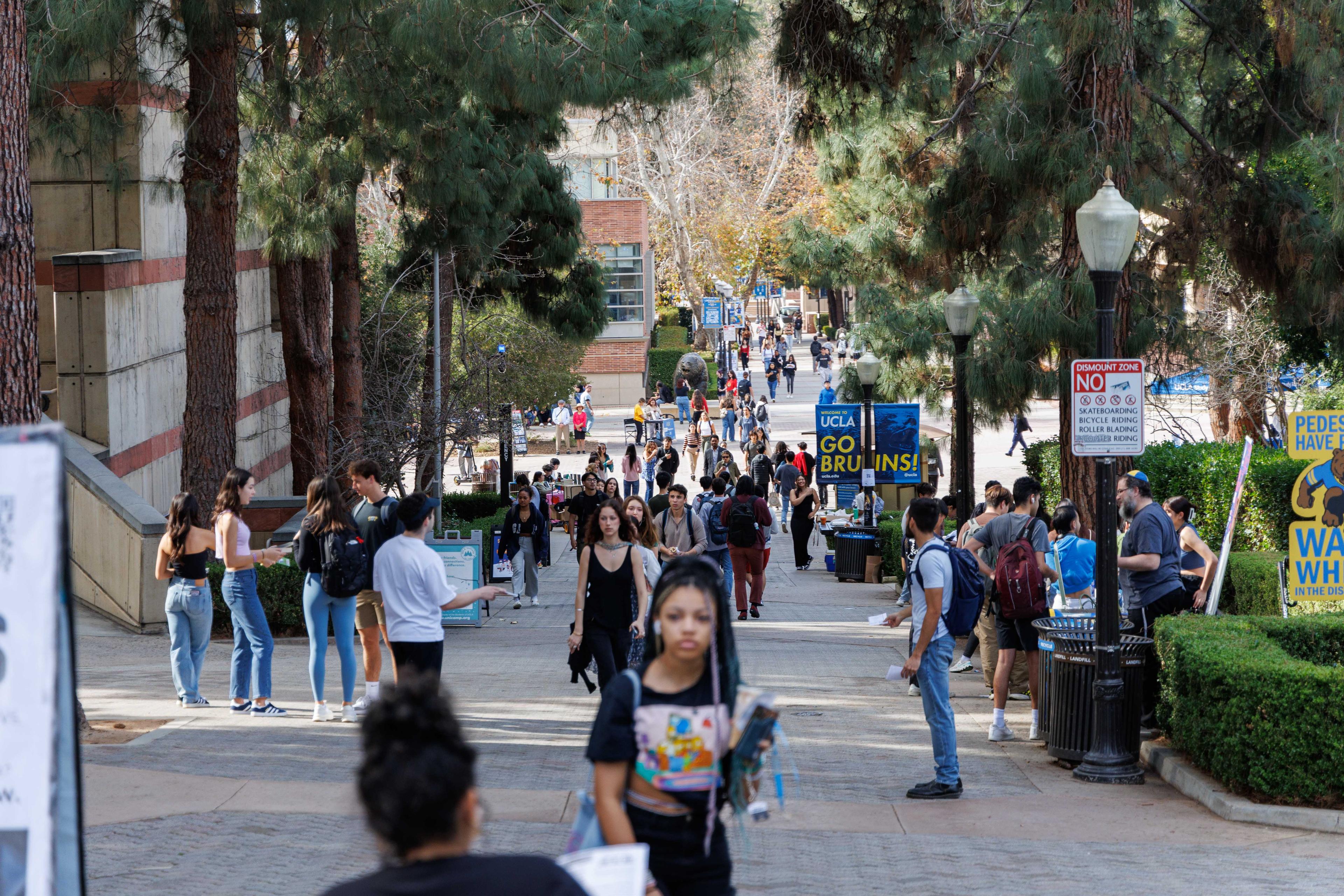
Bruin Walk is pictured. Columnist Julia Kinion argues that political debaters on campus are unproductive and harmful if they only further solidify people’s preexisting perspectives. (Daily Bruin file photo)

By Julia Kinion
Jan. 23, 2026 5:56 p.m.
This post was updated Feb. 8 at 7:30 p.m.
Bruin Walk is the place for speed-walking to class, avoiding eye contact with people flyering and arguing about controversial political issues.
Political debaters are a common sight on UCLA’s campus. They can be spotted wielding expensive camera equipment, holding a microphone and proclaiming slogans like, “Abortion is Murder.” The purpose of these stands is explicitly stated in bold signs affixed to their tables – DEBATE ME.
Political debaters on college campuses are harmful because they platform vitriol and exacerbate political polarization. Students should avoid all engagement with debaters – both arguing and heckling – and instead seek out informed conversations with other students.
Researchers at Dartmouth have investigated the backfire effect – the psychological phenomenon where people presented with evidence that contradicts their beliefs only become more steadfast in their opinions.
Dartmouth psychologists used newspaper articles in this study. However, newspaper articles are an objective means of communicating information. Given that even newspaper articles are unlikely to change a person’s mind, shouts and insults are a lost cause.
Quinn Ha, a first-year psychology student who watched a political debate on campus Jan. 14 said arguments with political debaters often involve personal insults.
“I think it’s a low blow, the way that they go about these things,” Ha said. “Earlier – in that other debate that guy was having – he had to resort to making fun of the other student’s stutter in order to get a reaction.”
Ad hominem attacks – counterclaims that attack a person’s character rather than address the content of their argument – are a defining feature of political debates on college campuses.
This is because political debaters are filming and posting their conversations on social media. As a result, the debate is set up to be click-worthy. A reasonable conversation between two civil people is much less entertaining than an impassioned screaming match.
However, this kind of debate is also unconvincing for the people involved.
Manasi Vartak, a second-year mathematics and economics student, said the debates come across as insincere and sensationalized.
“The people that come are a little bit disingenuous because they’re just trying to do whatever will get people the most riled up,” Vartak said.
Political debaters try to get views, not change them.
The focus on angering college students leads to debaters embracing extreme viewpoints. This can platform harmful and hateful rhetoric, while presenting an inaccurately polarized view of the political spectrum.
The extremist nature of the debates fails to change the minds of students and does not encourage students to participate in the civic process.
“I feel like it could draw people away just because they see the toxicity in these types of debates, and they wouldn’t want to associate themselves or interact with that,” Ha said.
Some people argue that political debates expand students’ perspectives by exposing them to right-wing ideas that would not otherwise be present on largely liberal college campuses.
Dennis Feitosa, a conservative commentator known online as Def Noodles, comes to UCLA regularly to debate students on controversial political ideas.
“We’re here providing a perspective that most of these students aren’t going to hear anywhere here,” Feitosa said.
Feitosa said his goal is to plant potential seeds of doubt in the minds of students – even if their minds are not changed outright, the dialogue could incite them to inquire deeper into political issues.
Yet this is not consistent with Feitosa and other commentators’ presentations on campus.
While a reasoned discussion might shift the perspective of students, the diatribes of political debaters – filmed and edited to maximize engagement on social media – are not persuasive. The function of political debaters is to anger, not to inform. Consequently, this style of political dialogue is not productive for any interlocutor.
“A lot of the times they end up getting into some screaming match or they’ll insult whoever is asking the question,” Vartak said. “I don’t think that anyone’s ever had their mind changed by someone coming on campus.”
Political conversations are more important than ever. But televised arguments with content-driven political commentators are not the types of conversations that students should be having. Students must instead make an effort to have civilized conversations with other students who share different beliefs.
We need to talk about politics more and scream about them less.