Initiative urges UCLA to redefine antisemitism, anti-discrimination policies
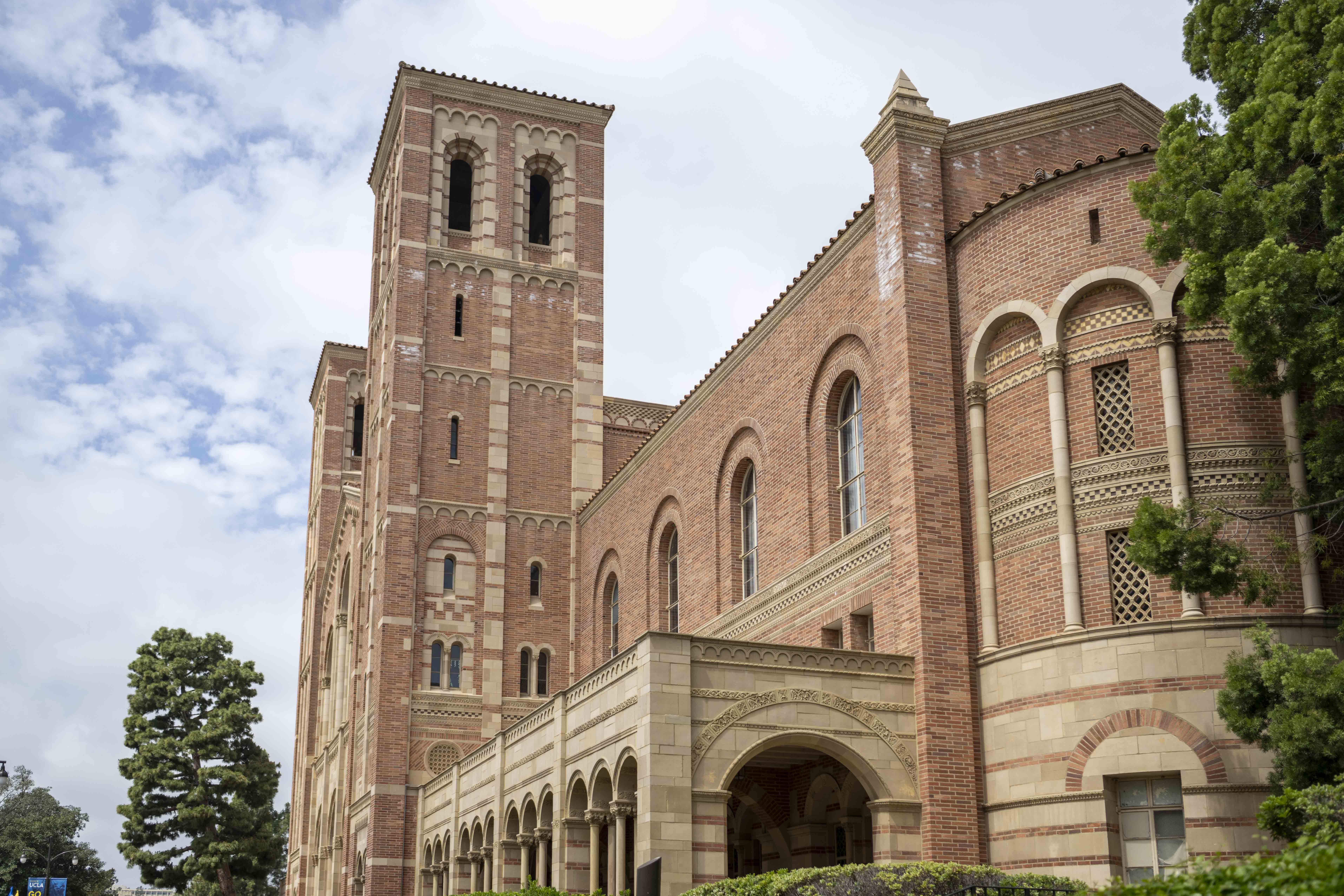
Royce Hall is pictured. The Initiative to Combat Antisemitism urged the university to consider a new definition of antisemitism, enforce anti-discrimination policies and ask faculty not to participate in anti-Israel boycotts in a Thursday report. (Crystal Tompkins/Daily Bruin senior staff)

By Phoebe Huss
May 17, 2026 10:52 p.m.
A UCLA committee urged the university to consider a new definition of antisemitism, enforce anti-discrimination policies and ask faculty not to participate in anti-Israel boycotts in a report released Thursday.
The Initiative to Combat Antisemitism – which Chancellor Julio Frenk created March 2025 – seeks to implement the recommendations of a previous task force, which said in a 93-page October 2024 report that community members have perceived high levels of antisemitic and anti-Israel bias since the start of the Israel-Hamas war in October 2023. The Thursday report also discouraged faculty from using UCLA’s name or resources to advocate for anti-Zionism in compliance with state law and recommended that UCLA forbid instructors from expressing political beliefs in class.
The report comes nearly a year after the federal government withheld $584 million in UCLA’s federal research funding over alleged antisemitism. While a federal judge restored the majority of the cut grants in August and September, and in November blocked the federal government from freezing or threatening to freeze the UC’s funding, the Trump administration sued the UC in February, alleging that UCLA allowed an antisemitic campus environment.
Allegations of antisemitism emerged after spring 2024, when pro-Palestine protesters set up an encampment in Dickson Plaza to demand the UC divest from companies associated with the Israeli military. The Israeli military’s offensive – which came after Palestinian political party and militant group Hamas attacked Israel on Oct. 7, 2023, killing 1,200 – has killed more than 70,000 Palestinians, according to the Gaza Health Ministry.
However, organizers have denied the encampment was antisemitic, citing the fact that Jewish people were a part of the protest and that protesters took part in Jewish celebrations, including a Shabbat and a Seder.
Stuart Gabriel, a professor at the Anderson School of Management and the initiative’s leader, presented a draft of the report at an April 20 meeting. About 12 students attended the meeting, including members of Hillel at UCLA, Students Supporting Israel, Jewish on Campus, Jewish Voice for Peace and the Undergraduate Students Association Council.
Gabriel said at the meeting that the initiative aims to address UCLA’s response to the encampment.
“We found out that we didn’t follow our own rules during this period,” Gabriel said.
Since its April 2025 formation, the initiative has developed anti-bias training and collaborated with UCLA and its Civil Rights Office to address concerns of slow-moving responses to discrimination complaints, according to the report.
Another recommendation in the enforcement category of the report is for the UC to adopt the International Holocaust Remembrance Alliance 2016 Working Definition of Antisemitism.
The IHRA defines antisemitism as any perception of Jewish people that manifests as hatred, including claiming Israel’s existence is racist, holding Israel to standards not demanded of any other democratic country, describing Israel using images associated with antisemitic stereotypes and comparing Israeli policies to those of the Nazis.
Pro-Palestine protesters at UCLA have repeatedly compared the Israeli military to the Ku Klux Klan. USAC has previously claimed the establishment of Israel is an example of settler colonialism.
Gabriel said at the meeting that the group particularly resonated with two of the IHRA’s examples of antisemitism – which are denying Jewish people the right to self-determination and holding Jewish and Israeli people collectively responsible for the actions of the Israeli government, according to the report. The report also said criticizing the Israeli government or particularly focusing on Israeli policy over other democratic countries is not antisemitic.
Aaden Poyuzina – one of the two undergraduate students in the 15-member initiative – said the report aims to help students who have experienced antisemitic discrimination. Poyuzina, a third-year political science and public affairs student, alleged, however, that the CRO has not shown care in its responses to discrimination complaints – something he said the report fails to address.
Poyuzina said the initiative interviewed students who had attempted to file discrimination-related complaints with the CRO and faced dead ends. Students told him they were not aware of the status of their reports after filing them, and some people had to wait at least six months to receive a response from the CRO, he added.
“It was honestly very disheartening,” Poyuzina said. “It showed that our Civil Rights Office needs a lot of work.”
Poyuzina said he would like to see the CRO provide a service in which students can track the progress of their discrimination complaints. The report said UCLA and the CRO have taken steps to fix the reporting process, including appointing a Title VI officer and improving the case management system.
Students in the initiative criticized the CRO for allegedly sending insensitive responses to students who filed discrimination complaints, Poyuzina said. Faculty members, however, pushed back against these criticisms at initiative meetings because the CRO cannot validate that discrimination occurred without risking legal repercussions, he added.
“For the university to say that what happened to you is wrong actually does open the university up to risk of almost admitting fault,” Poyuzina said.
Poyuzina said he believes the university can find a way to show care to complainants without opening itself up to risk.
Gabriel said in an interview he believes the initiative’s thorough audit of the CRO and implementation of anti-discrimination training for civil rights officers will ensure students have more positive experiences with the discrimination reporting process.
“Every single person on campus, whoever they are, now can go forward with this idea that we have a Civil Rights Office that’s really been scrubbed, that’s really been evaluated, and for the right reasons,” Gabriel said in the interview.
[Related link: Chancellor Julio Frenk announces plan for new Initiative to Combat Antisemitism]
The report also includes sections about enforcing existing rules and laws, developing and enhancing training on antisemitism and overhauling the CRO’s current discrimination reporting system.
The report said UCLA must comply with an injunction in a case against the UC in which three Jewish UCLA students and a professor alleged the university allowed an antisemitic environment during the 2024 Palestine solidarity encampment. UCLA must prohibit the exclusion of Jewish staff and students from activities on the basis of their religious views towards Israel in compliance with the injunction, according to the report.
The UC announced in July that it paid $6.45 million to settle the lawsuit, some of which went toward the Initiative to Combat Antisemitism.
[Related: UC to pay $6.45M to settle antisemitism lawsuit over pro-Palestine encampment]
The report also calls on the UC to enforce Assembly Bill 2844 and UCOP public statements from 2013 and 2024, which oppose anti-Israel boycotts.
AB 2844 prohibits the California Legislature from using taxpayer funds to support entities that engage in antisemitic discrimination under the pretext of boycotting Israel and requires that people entering contracts of at least $100,000 with state agencies follow anti-discrimination laws.
The UC must make amendments to its policies and the UC Faculty Code of Conduct to limit faculty participation in anti-Israel boycotts and follow anti-discrimination laws, the group recommended in the report.
Benjamin Kersten, a fellow with the Alan D. Leve Center for Jewish Studies, said boycotts are a basic, nonviolent democratic tool, adding that he believes the state law could be used to argue that any anti-Israel boycott is discriminatory.
“The way it’s written, it’s always going to insert the idea that there is this inherent aspect to the Jewish faith that’s about the modern-day political entity of the Israeli government,” he said. “Those things have to be pieced apart.”
Former UC President Michael Drake announced in a July 2 letter to University chancellors that student governments could not boycott companies because of their affiliation with Israel.
USAC has previously endorsed the Boycott, Divestment and Sanctions movement against Israel and criticized Drake’s ban on anti-Israel boycotts last year.
[Related links: USAC approves letter criticizing ban of student governments’ anti-Israel boycotts]
Gabriel said in the interview that he believes anti-Israel boycotts are counterproductive to creating understanding between disagreeing groups.
Several meeting attendees criticized both the recommendation to adopt the IHRA’s definition and the 2024 report’s definition of Zionism, which said it is the movement for the self-determination of Jewish people in their ancestral homeland.
Kersten, who attended the meeting, said he believes Zionism should be defined as a political ideology, rather than a religious movement.
“As long as Zionism has been a part of Jewish history, so has anti-Zionism,” Kersten, a doctoral student in art history, said. “It’s troubling to me that criticism of Zionism is being reframed as discrimination against Jews.”
Kersten, a member of JVP, said at the meeting that he opposes Zionism because it has resulted in the deaths of Palestinians – not because it is a movement of self-determination.
Another JVP member said self-determination applies to Israelis, not all Jewish people.
Gabriel said in the interview he believes the report does not infringe on students’ freedom of speech, adding that he hopes to ensure all people are comfortable sharing diverse points of view on campus.
“Part of what’s going on at UCLA is we are trying, and the administration is trying, very hard to promote a code of conduct,” he said.
Gabriel said at the meeting he believes Israeli students should not be held responsible for the actions of Israel’s government.
“You can criticize the Israeli government until the cows come up,” Gabriel said at the meeting. “That’s absolutely your right to do. What you can’t do is blame the graduate student in astronomy who’s Israeli for those policies.”
Poyuzina said another strategy for combating discrimination – which is not part of the final report – is engaging in dialogues with people of different beliefs and helping people understand others’ experiences with discrimination.
“This report specifically, I really hope that dialogue actually comes out of it, that we get groups talking with one another,” he said. “It’s not necessarily about understanding the other viewpoint. It’s more so about just hearing it, and finding the humanity in something that you disagree with.”