Nontraditional students find community, redefine the UCLA college experience
(Riya Partap/Daily Bruin)

By Alisha Hassanali
May 12, 2026 11:08 p.m.
Most of Katie Hirahoka’s days begin at 3 a.m.
Hirahoka, a third-year economics student, needs the time to do her homework, drop her six-year-old son off at school and attend her own classes. She previously served in the military for eight years – including in Germany, helping Afghan refugees relocate during the United States’ military withdrawal from Afghanistan – before enrolling at UCLA when she was 28.
“I don’t think age has anything to do with it, just as long as you want to do it,” she said. “At UCLA, one of the greatest things that I’ve learned is different people’s perspectives and their life experiences.”
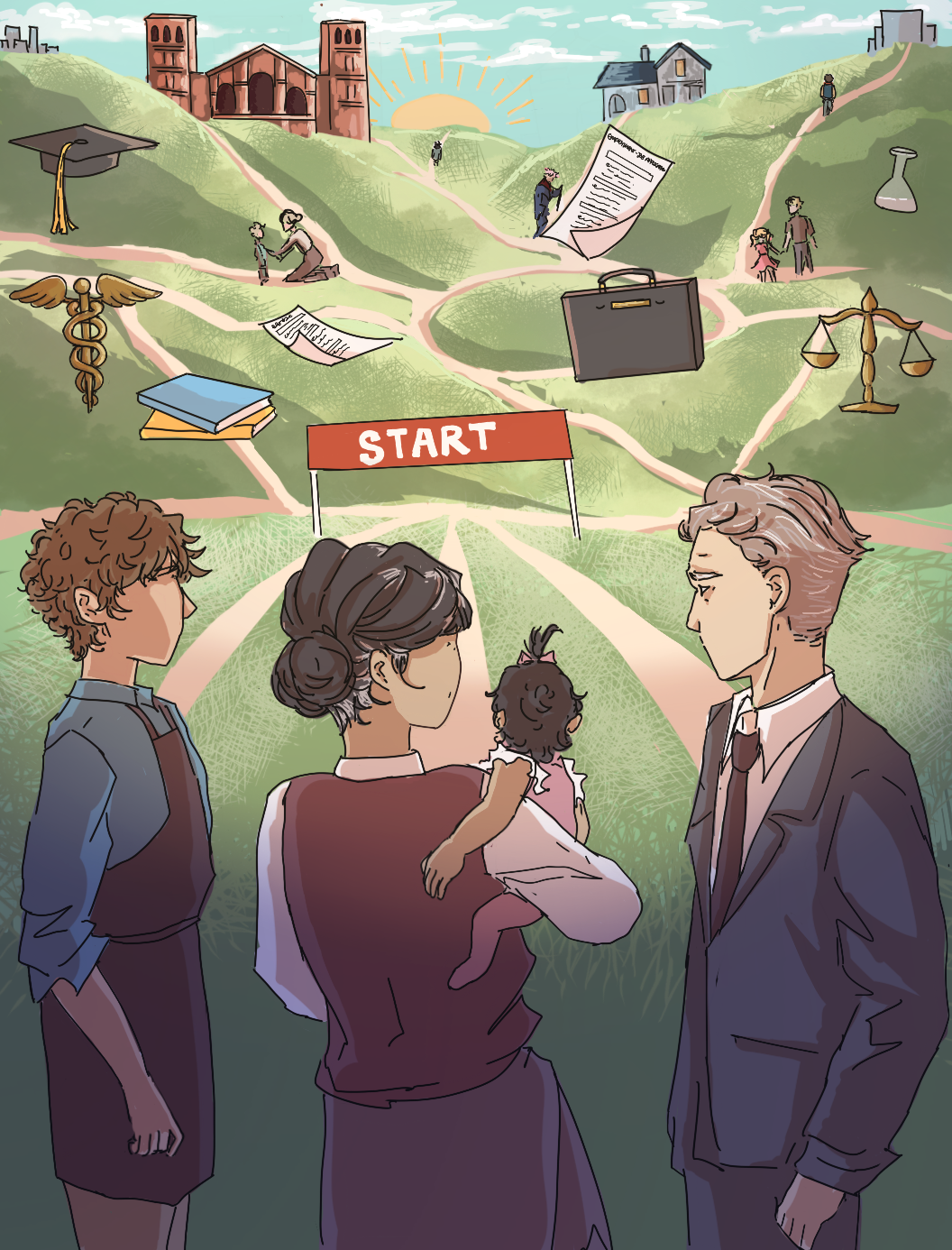
Hirahoka is one of the many nontraditional UCLA students who chose to pursue higher education later in life.
Russell Sontay, who enrolled at UCLA when he was 32, said as a parenting student, he often feels guilty about prioritizing family over school events or vice versa.
However, Sontay, a third-year Chicana and Chicano studies student, added that he has found ways to involve his sons in UCLA activities – such as by attending family events hosted by the Bruin Parenting Scholars, an organization that provides academic and personal support for parenting students.
Sontay said he dreamed of attending UCLA ever since his father gave him a Bruins-themed backpack as a child. But when Sontay dropped out of high school at 15, he said he started to doubt that he could ever fulfill his lifelong dream.
“I was told, ‘People like you don’t go there,’ or ‘Only smart people go there,’ so it always stuck with me,” Sontay said.
Now, as the incoming chair for BPS, Sontay said he provides nontraditional students with peer mentorship and other resources to help them find community.
“Nontraditional students really should believe in themselves more,” he said. “We should have more confidence. Keep your chin up. You’re amazing. You belong just as much as anybody else does, and you’re actually juggling a lot more than most people.”
Lindsay O’Brien, a fourth-year English student, said she frequently questioned whether she belonged at UCLA or whether she was too old to return to school when she first enrolled.
However, O’Brien – who came to UCLA when she was 35 – said she now believes her nontraditional background has allowed her to excel in her classes. Her more than 10 years of work experience in retail and restaurants have made her resilient and adaptable, she said.
“I already had my youth,” O’Brien said. “I had all of the highs and lows of figuring out how to be a person and what kind of person you want to be, so I do think it’s been a lot easier for me to just lock in and do my work.”
Hirahoka said she is also a caregiver for her mother, who experiences heart problems and often has to be taken to the hospital. Balancing school, caregiving and spending enough time with her son has been a challenge, she added.
Living in University Village – university apartments for student families – brought Hirahoka a sense of community, she said. The parents living in University Village often look after each other’s children, she added.
While Hirahoka said she was initially intimidated by UCLA’s large class sizes and campus size, she formed connections with peers through her general education classes.
For O’Brien, meeting new people by working at on-campus organizations – such as the LGBTQ Campus Resource Center and the Student Leadership Academy – has also helped her feel a sense of belonging at UCLA.
“We need to be reminded that old dogs can learn new tricks, and you could always deepen who you are and learn more and just be more of what you want to be,” O’Brien said.