Dully’s Drop: Reflecting on, grading UCLA men’s basketball’s 2025 portal pick-ups
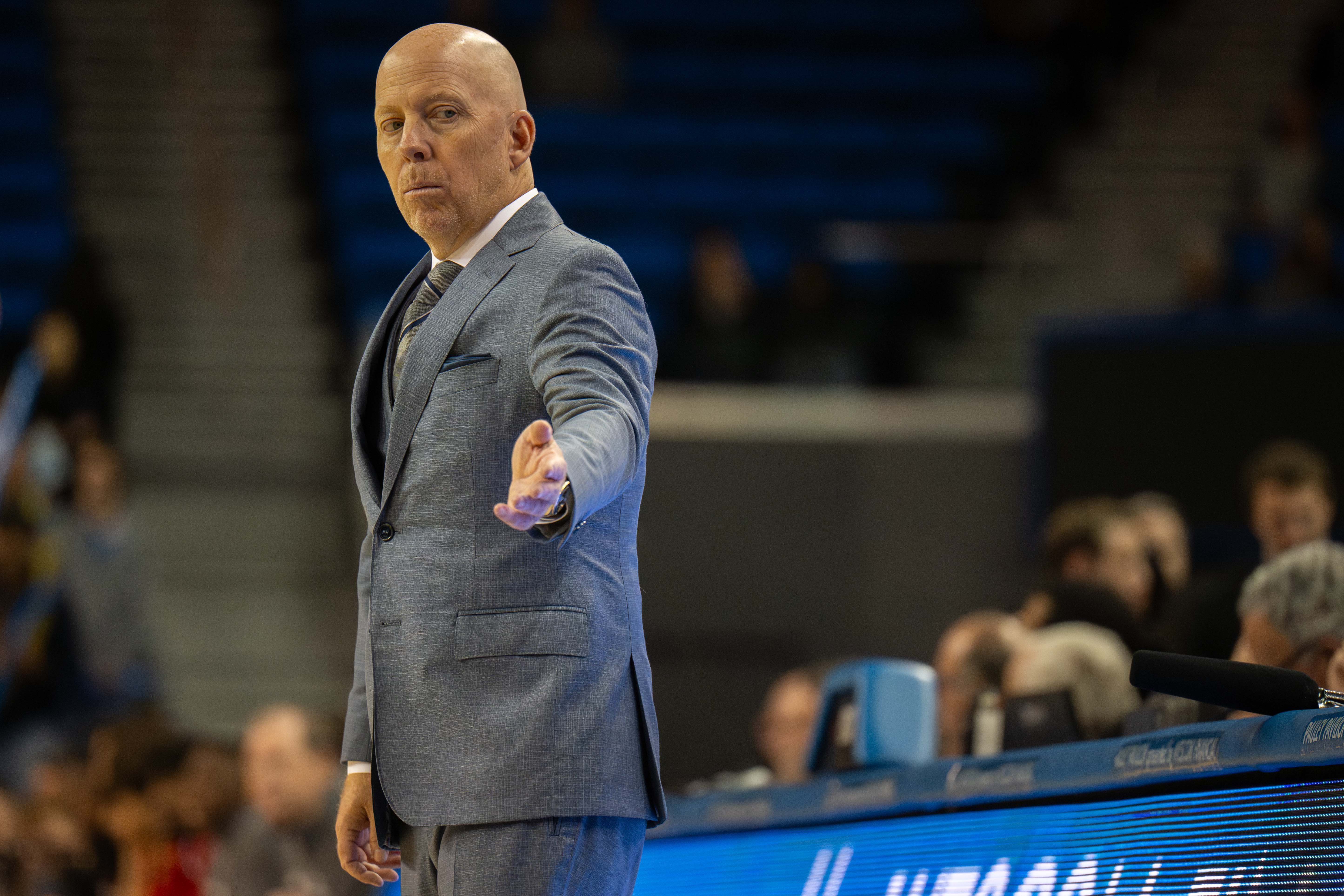
UCLA men’s basketball coach Mick Cronin gestures toward his sideline. (Aidan Sun/Assistant Photo editor)

By Connor Dullinger
May 12, 2026 11:08 p.m.
This post was updated May 25 at 10:19 p.m.
The transfer portal is a never-ending cycle. A large chunk of players leave, while typically a solid contingent stays, as the ever-swinging door of the portal goes back and forth. Daily Bruin Sports editor Connor Dullinger reviewed the six transfers who left UCLA men’s basketball last offseason and how they fared on their new teams. But in this iteration of Dully’s Drop, we will grade the players coach Mick Cronin added in the 2025 transfer portal and how they panned out for the 2025-26 campaign.
[Related: Men’s basketball lost 6 players to the portal in 2025. How have they fared?]
Donovan Dent:
2025-26: 13.3 ppg, 7.6 apg, 1.7 spg, 34.4 minutes per game
2026-27: Graduated
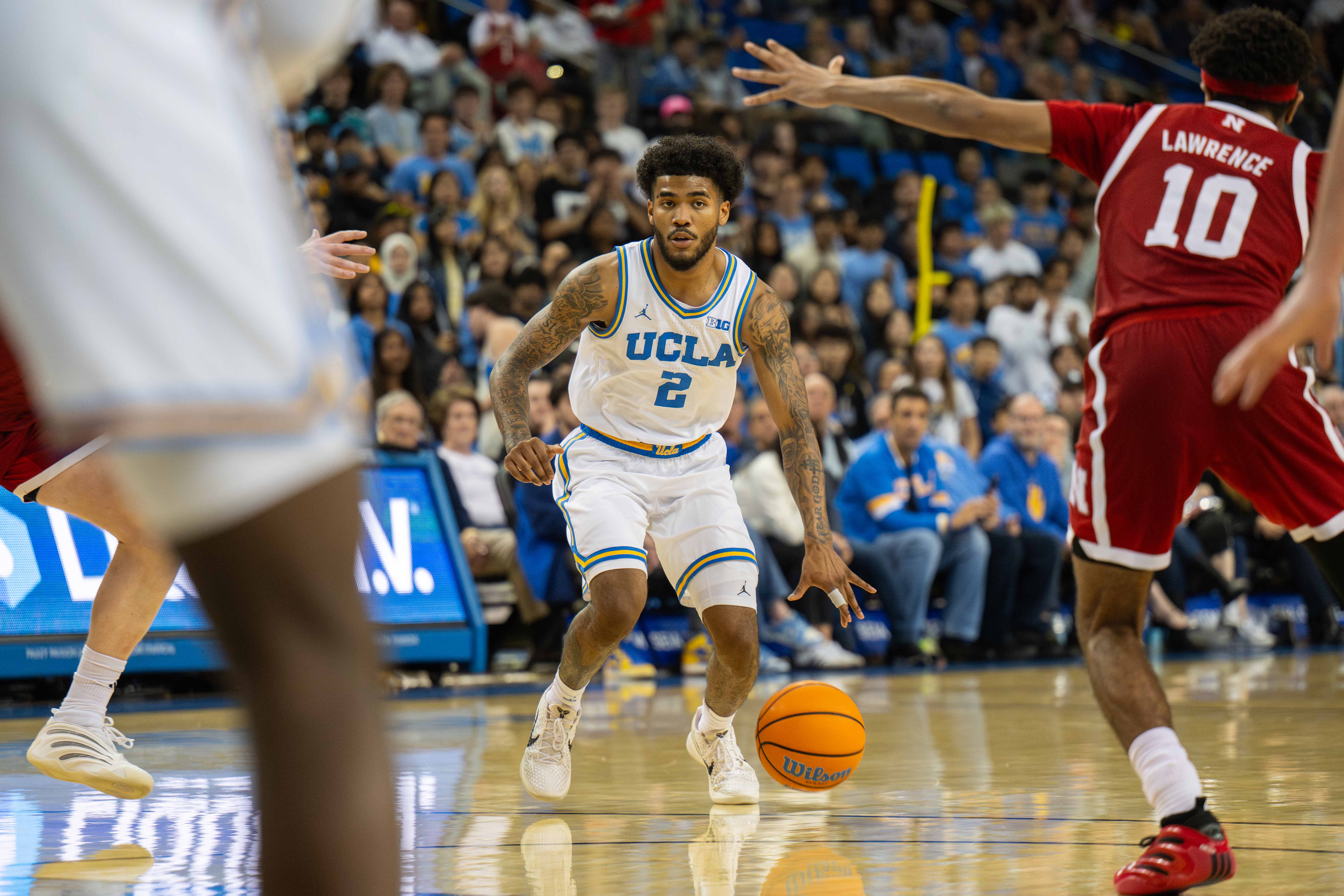
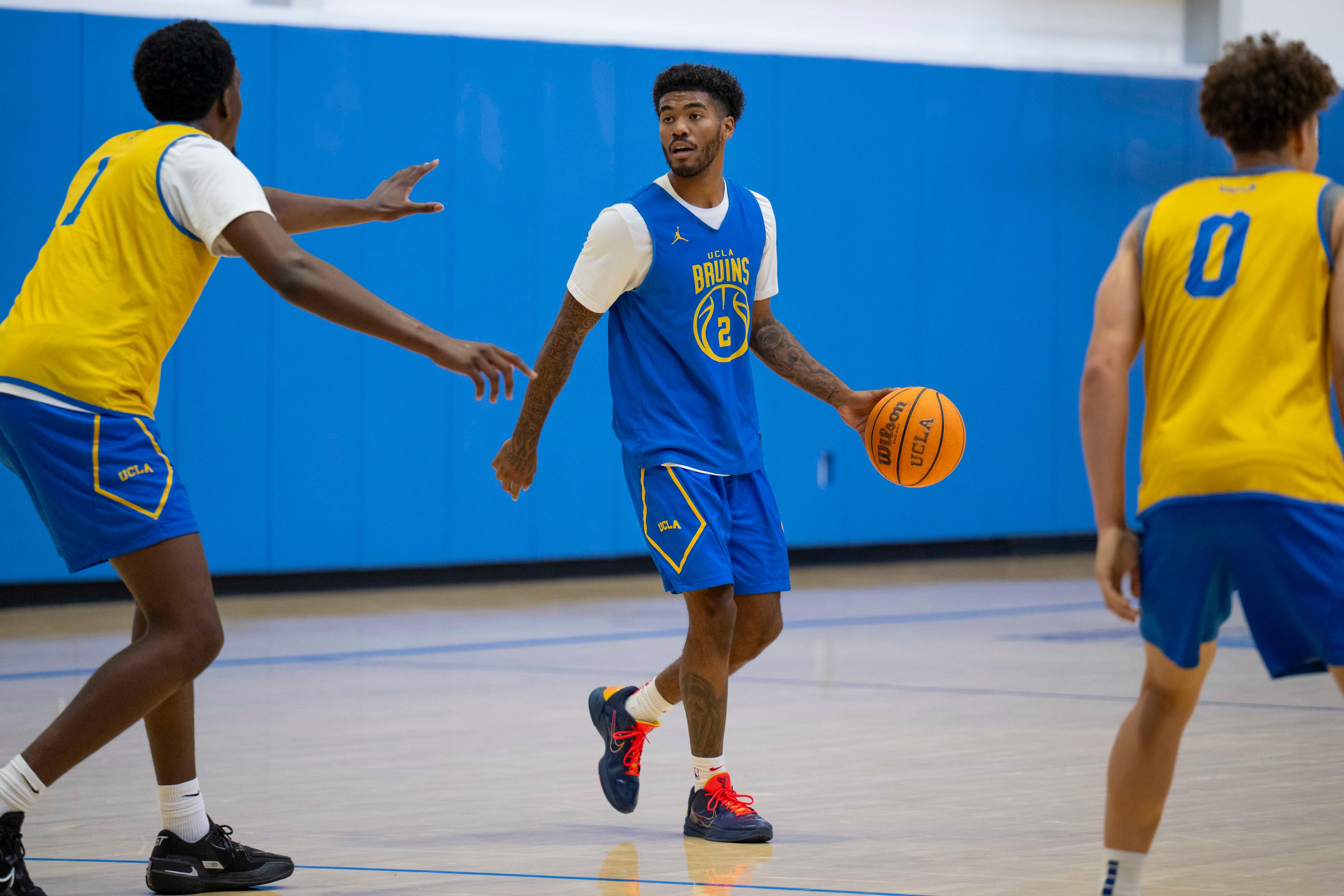
When senior guard Donovan Dent committed to UCLA through the transfer portal, many considered it to be one of the top acquisitions of the offseason.
The pickup of Dent, along with the retention of senior forward Tyler Bilodeau, senior guard Skyy Clark, junior guard/forward Eric Dailey Jr. and sophomore guard Trent Perry, gave the Bruins a guard-heavy starting five that probably ranked as the best offensive team Cronin has ever coached.
Dent was an AP All-American honorable mention at New Mexico and the reigning Mountain West Player of the Year, averaging 20.4 points and 6.4 assists per game. Dent ranked as a top-three player in the transfer portal and was sought after by blue-chip programs including Duke and Kentucky.
So when Dent pledged his allegiance to Westwood, it was tabbed a major win for a Bruin program that has yet to get past the Sweet Sixteen since the First Four-to-Final Four run in 2021.
But things started off slow for Dent during his time wearing a blue-and-gold jersey.
Dent shot 2-for-22 from beyond the arc from the beginning of the season until Jan. 17 against Ohio State. His shooting woes did not lie solely at the 3-point line. Dent struggled to maintain an efficient clip from the field throughout the nonconference schedule, shooting above 50% in just eight of his first 17 games.
The Riverside local also wilted against top competition early on, scoring just 11 points on 5-for-16 shooting from the field against then-No. 5 Arizona on Nov. 17. Dent followed that up with 1-for-8 shooting from the field for three points alongside six turnovers in a loss to California on Nov. 25.
I’m not tabbing Dent as an inefficient or incompetent player in his first few months as a Bruin, but I would not be alone in saying Dent disappointed the UCLA faithful when it came to his scoring ability and its translation to the Big Ten.
His scoring improved as the season went on, but his outside shot never really developed. He was shooting 25.4% from beyond the arc on the season – a steep drop from his 40.9% clip from the year prior. And when faced with the juggernauts of the Big Ten, the abundance of size in the paint and the proficiency of perimeter defense seemed to give Dent problems.
Regardless, Dent averaged 13.3 points per game, ranking second on the team. He came into the form many expected of him in the homestretch of the season when it really mattered. Dent scored 55 points between both of his bouts against crosstown rival USC, a triple-double against Rutgers in the Big Ten tournament and 23 points and 12 assists against Michigan State in the Big Ten quarterfinal.
While many can point to Dent’s scoring pitfalls, everyone is obliged to acknowledge his presence as one of the best facilitators in the nation. The point guard ranked third in the nation in assists, assists per game and assist-to-turnover ratio. Dent’s facilitation was so prolific that he finished the last 10 games of the season with 93 assists to just eight turnovers.
Dent’s ability to run the offense will be virtually impossible to replicate, and the Bruins will need a significant leap from Perry and new transfer Jaylen Petty to come close to the contributions Dent made.
Grade: A-/B+
Xavier Booker:
2025-26: 7.3 ppg, 3.5 rpg, 1.2 bpg, 20.1 minutes per game
2026-27: Senior at UCLA
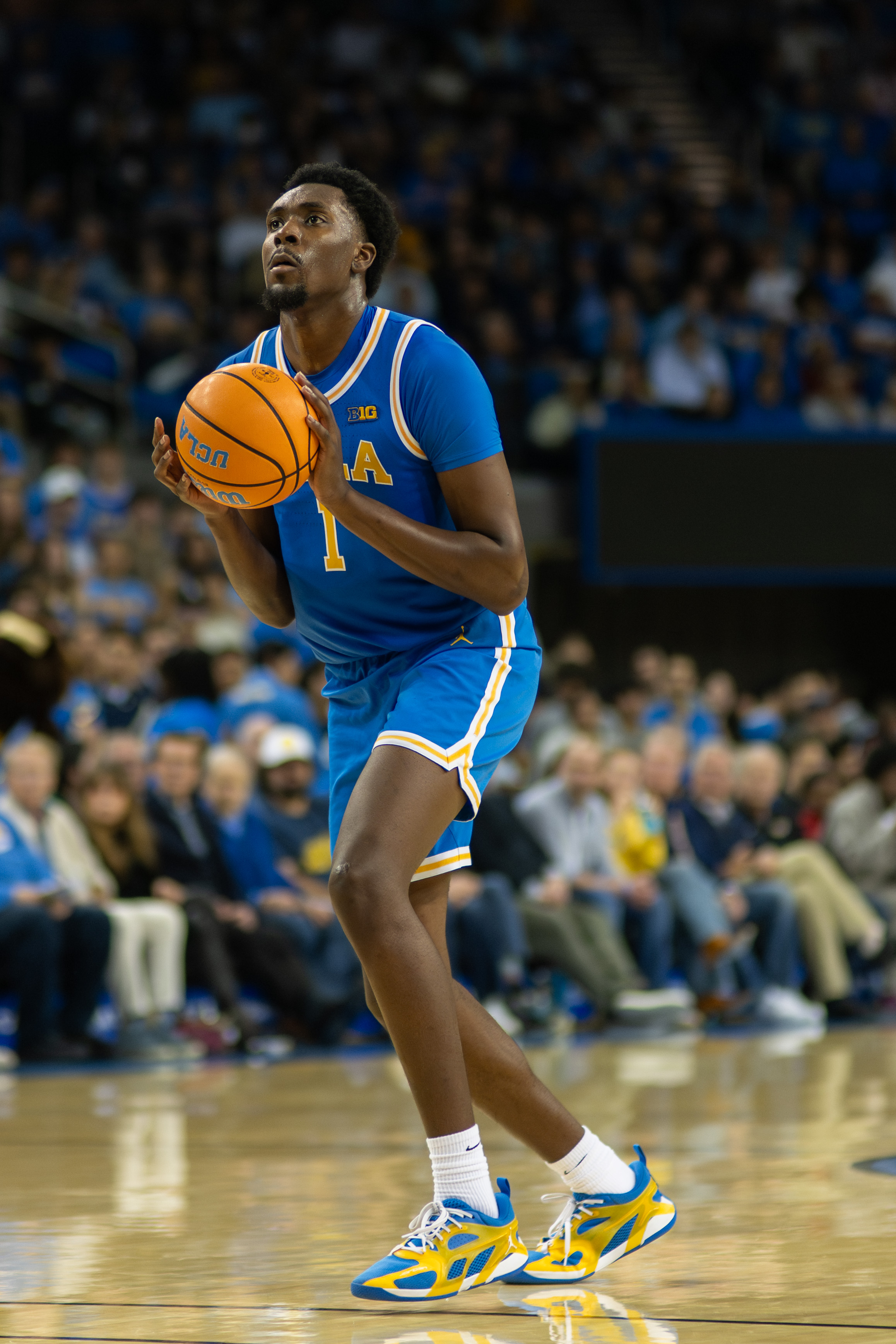
After the 2024-25 season, the Bruins desperately needed a center.
After former Bruin center Aday Mara transferred to Michigan, UCLA looked even more helpless to add a new five man. Cronin tried putting Bilodeau at the center spot, and the Bruins consistently wilted to bigger teams that dominated the glass and the interior.
Cronin and his staff turned to Michigan State forward/center Xavier Booker – a former five-star recruit who struggled to see the floor in his two seasons in East Lansing.
And from the beginning of the season to Dec. 13, Booker looked to be a solid addition in the frontcourt. Booker averaged 10.6 points and 5.1 rebounds per game across that stretch while shooting 7-for-14 from beyond the arc.
As soon as Booker became a mainstay in Cronin’s starting five, however, he retreated to the depths of the Bruin bench. Booker averaged just 9.3 minutes of game action from Dec. 17 to Jan. 17 – it looked like the Bruins had gone back to a centerless roster.
Cronin opting for a three-guard lineup – consisting of Clark, Perry and Dent – to go alongside Bildoeau and Dailey did not help either, giving Booker fewer minutes to operate throughout the regular season.
But in the dying embers of the 2025-2026 season, Booker actually seemed to excel in the sixth-man role.
His performance to end the season seemed to earn him a substantial spot in next year’s Bruin squad.
Booker averaged 13.3 points, 4.7 rebounds and 1.7 blocks per game over the last three games of the season, which featured the Big Ten semifinal and the first two rounds of March Madness, all while shooting 15-for-27 from the field and 6-for-11 from beyond the arc.
There is no doubt Booker has the athleticism and skillset to be an exceptional offensive center. His long-range shooting gives him the ability to stretch the floor, he forces defensive mismatches as opposing big men have to guard him all the way out on the 3-point line and he has the speed and lateral quickness to efficiently defend the interior and run the floor in transition.
With no significant additions coming to the Bruins frontcourt in the offseason, Booker looks to have secured the starting center spot – or at least significant playing time off the bench under Cronin.
Booker grew exponentially with one year under Cronin.
Now, the hope is that Booker can do even more in year two, especially on the defensive and rebounding end.
Grade: B/B-
Jamar Brown:
2025-26: 3.8 ppg, 2.7 rpg, 0.6 spg, 15.6 minutes per game
2026-27: Graduated
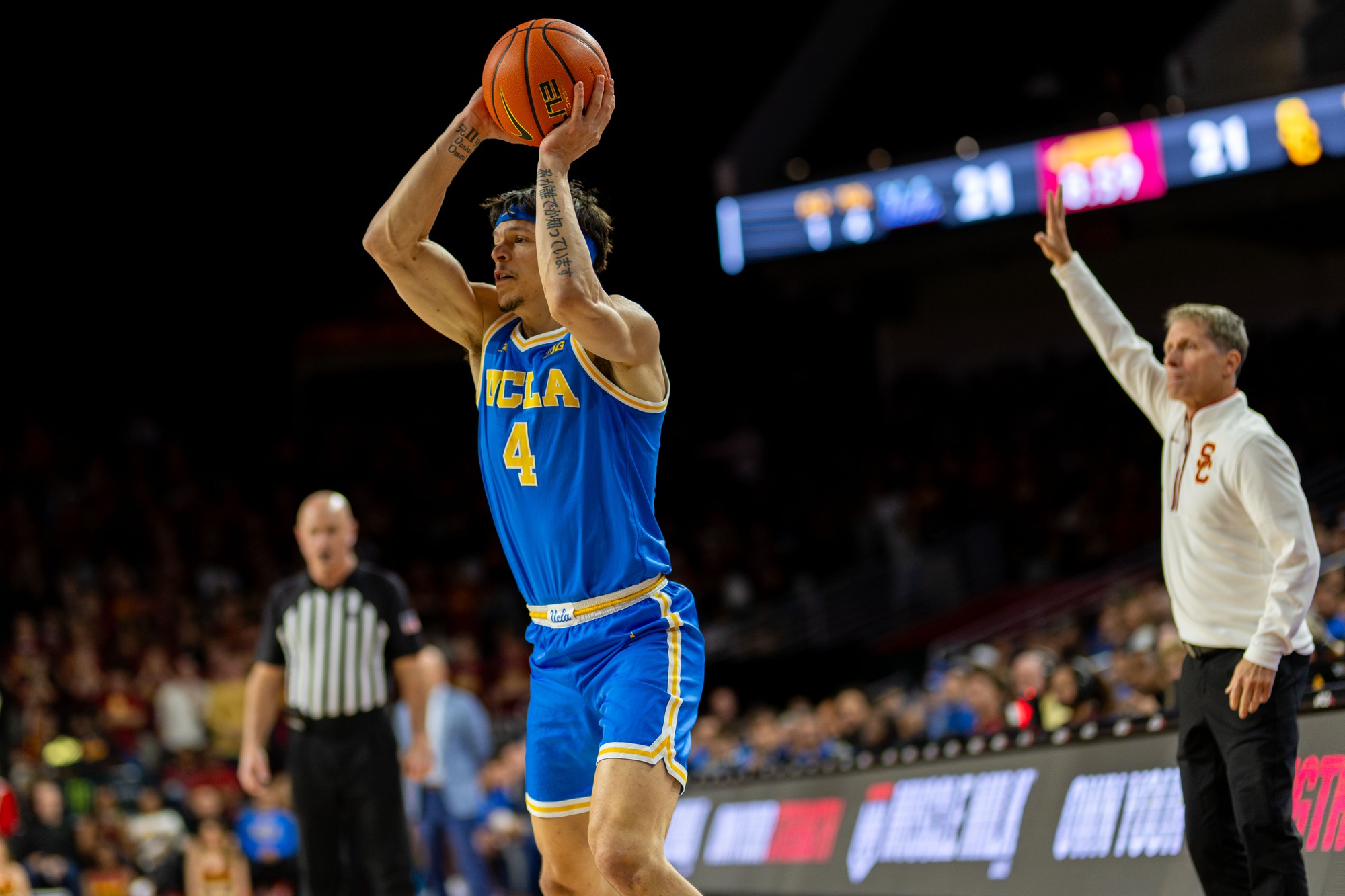
I was excited when Jamar Brown joined UCLA from Missouri-Kansas City.
His tape and stats looked like he would be somewhere between former Bruins Lazar Stefanovic and Kobe Johnson, giving Cronin and his staff a sixth man option who could shoot the deep ball, dominate both ends of the glass and be a defensive spark plug.
Brown averaging 17 points and 7.4 rebounds per game and an ultra-efficient 40.2% 3-point shooting percentage in his final year at Missouri-Kansas City gave the idea to many of the UCLA faithful that Cronin found an under-the-radar role player.
And in 2025 it looked like that’s exactly what the Bruins got.
Brown played 20 minutes per game through the first 13 contests of the season, averaging 6.6 points and 3.9 rebounds per game all while shooting 15-for-33 from beyond the arc.
But as soon as the Big Ten schedule commenced, Brown lost his role in the rotation – an outcome that coincided with a significant shooting drought.
Brown played just 7.8 minutes per game in the final month of the season, losing his minutes off the bench to redshirt sophomore guard/forward Brandon Williams, redshirt freshman guard Eric Freeny and Booker.
From Jan. 3 to the end of the season, Brown shot just 10-for-40 from beyond the arc – a stark contrast from his over 40% 3-point shooting percentage earlier.
Brown never panned out to be the player he was a year before.
The Bruins brought Brown in to be a 3-and-D wing who could dominate the boards at his position while also defending players in spots two through four.
But Brown finished his one-year tenure as a minor role player who could solidly defend, grab boards and supply the Bruins with energy but struggled to get out of his shooting slump. This consequently led him to spend the majority of his time on the pine.
Grade: C/C-
Steven Jamerson II:
2025-26: 1.9 ppg, 2.0 rpg, 0.5 apg, 9.6 minutes per game
2026-27: Graduated
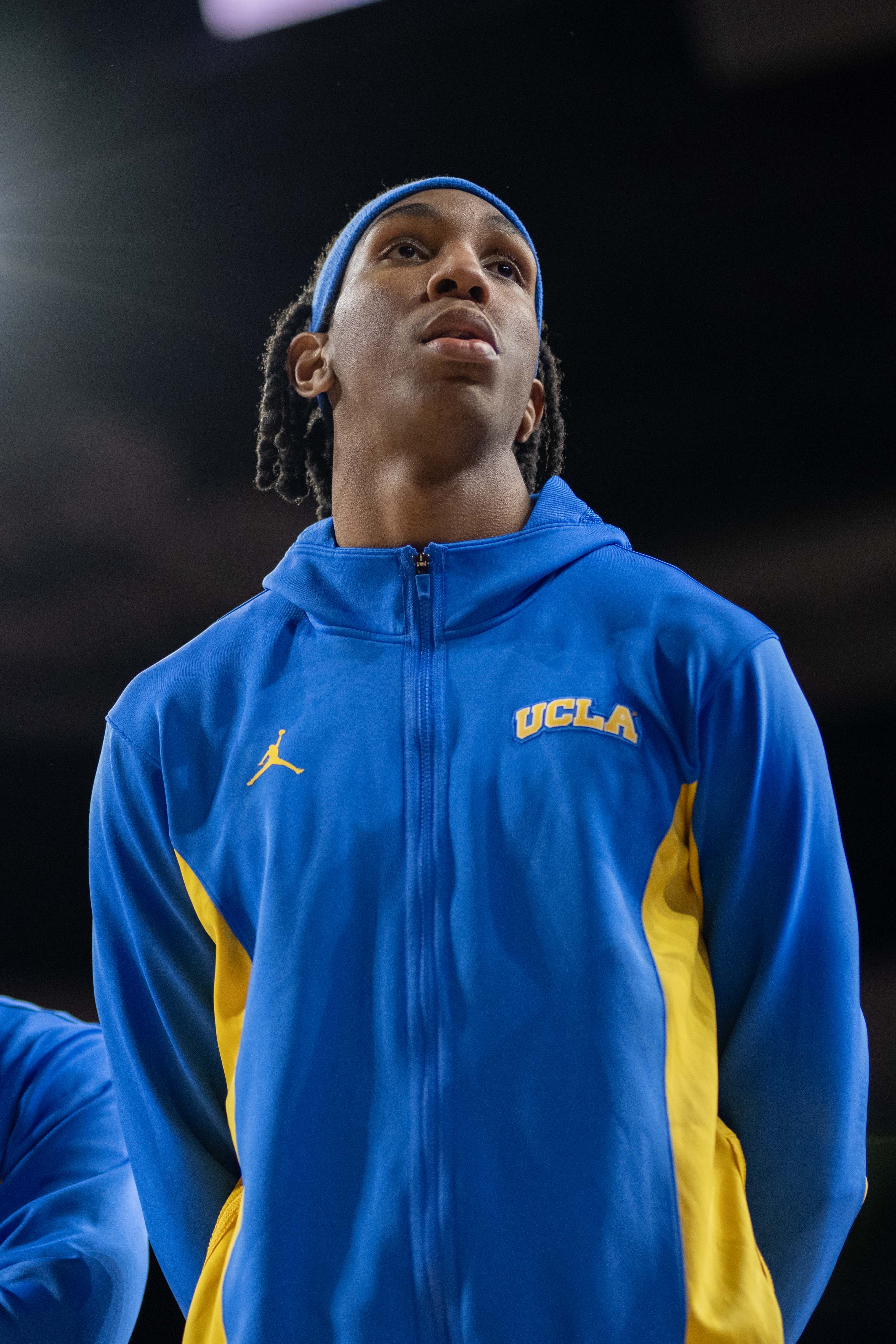
Steven Jamerson was another player I thought would contribute more than he actually did.
After averaging 10 points and 7.8 rebounds per game in his final year at San Diego, I thought Jamerson would be a much improved version of former Bruin William Kyle III, seen by Westwood the year prior.
I could not have been more wrong.
Kyle turned out to be an extremely efficient center at Syracuse – averaging 8.4 points, 7.1 rebounds and 2.5 blocks per game – with the last stat ranking eighth in the nation.
Meanwhile in Westwood, Jamerson’s time in a UCLA jersey will be most remembered when he was ejected by Cronin from a Feb. 17 game and told to go to the locker room.
Jamerson was best used in a limited number of minutes, providing a spark off the bench that could block shots, grab rebounds and provide two-to-four points on easy looks in the inside.
And that is exactly what he did in the final three games of the season, totaling nine points on 4-for-4 shooting from the field to go alongside six rebounds and three steals.
Outside that role, Jamerson lacked the tools and skillset to thrive in the Big Ten and the UCLA lineup. He had little outside shooting, couldn’t be trusted to pass or dribble and fouled too much to be effective on defense or on the boards. In fact, Jamerson fouled 77 times as a Bruin but only scored 64 points.
Jamerson was brought in to be a solid back-up center who could protect the interior, clean up the glass and score at an efficient clip – attempting to be the player Kyle was at Syracuse.
Instead, Jamerson looked a lot like the UCLA version of Kyle, struggling to see the floor. When he did, he provided solid energy-grabbing rebounds and forced turnovers, but he really lacked the skill set to thrive.
Grade: D
Anthony Peoples Jr.:
2025-26: 0.3 ppg, 0.8 rpg, 1.7 minutes per game
2026-27: Graduated
No one expected Anthony Peoples Jr. to be a significant contributor.
Peoples averaged five points and 2.4 rebounds per game during the 2024-25 season at North Carolina Central. He was brought to UCLA to fill out the roster and serve a similar depth role to redshirt juniors guard Jack Seidler and forward Evan Manjikian.
Peoples played in just six games, seeing the court only in the dying embers of the affair when the Bruins had virtually won or lost.
When he did play, he averaged 0.3 points and 0.8 rebounds per game across 1.7 minutes per game.
Peoples hailed from Corona, California, and gave the Bruins both a veteran presence on the Bruin bench and depth in the frountcourt – standing at 6-foot-9 and 230 pounds – if they ever needed it.
Due to his absence of playing time and impact on the court, as well as the lack of expectation that existed surrounding his addition to the roster, it is unfair for me to grade the acquisition.
With the graduation of Peoples, Seidler, Manjikian Manjikan and the transfer of redshirt freshman guard Christian Horry, however, Cronin will have to fill the gaps left in the backend of the bench.
Grade: N/A