Opinion: Amid allegations of antisemitism, USAC’s censure of Israeli speaker is reckless
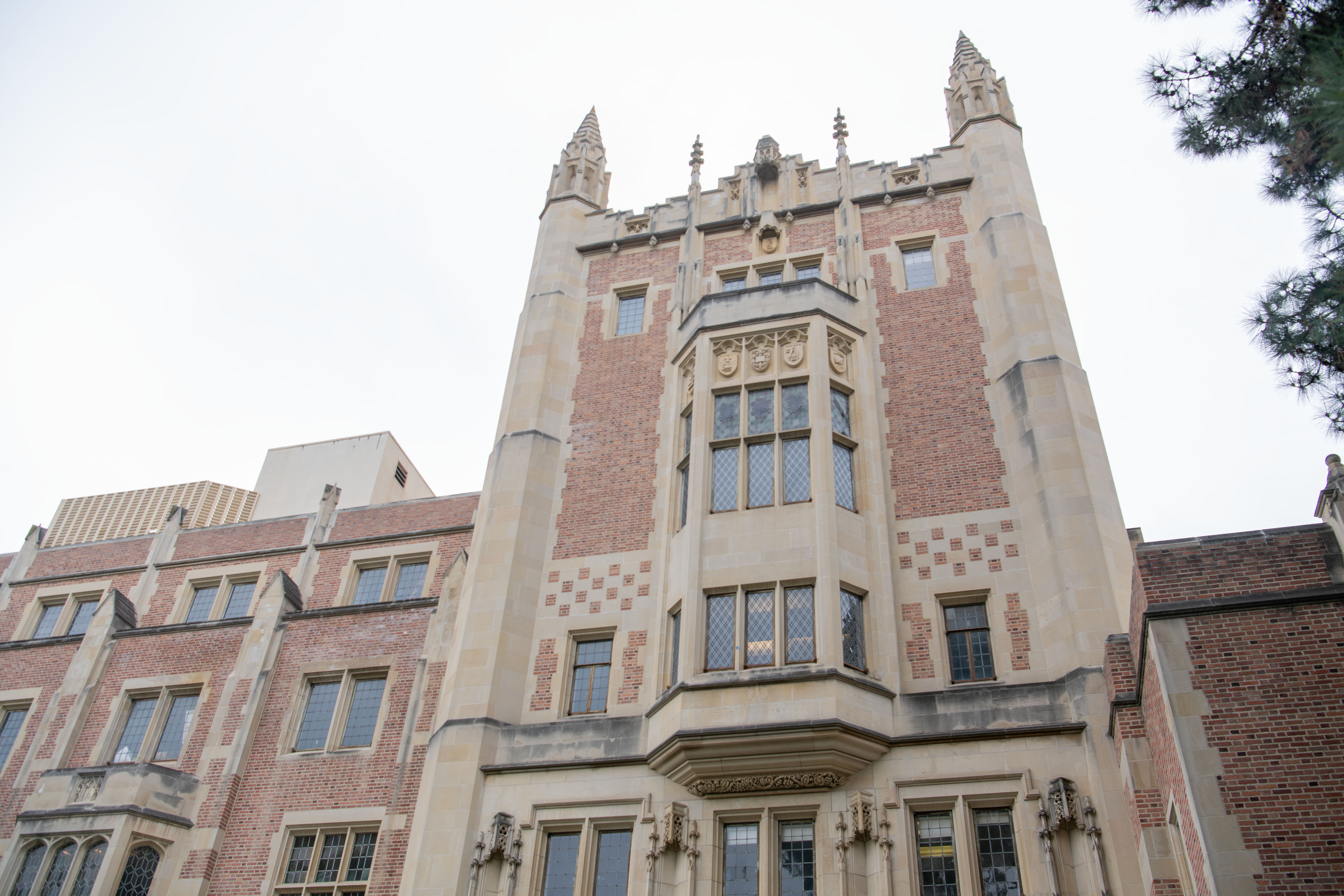
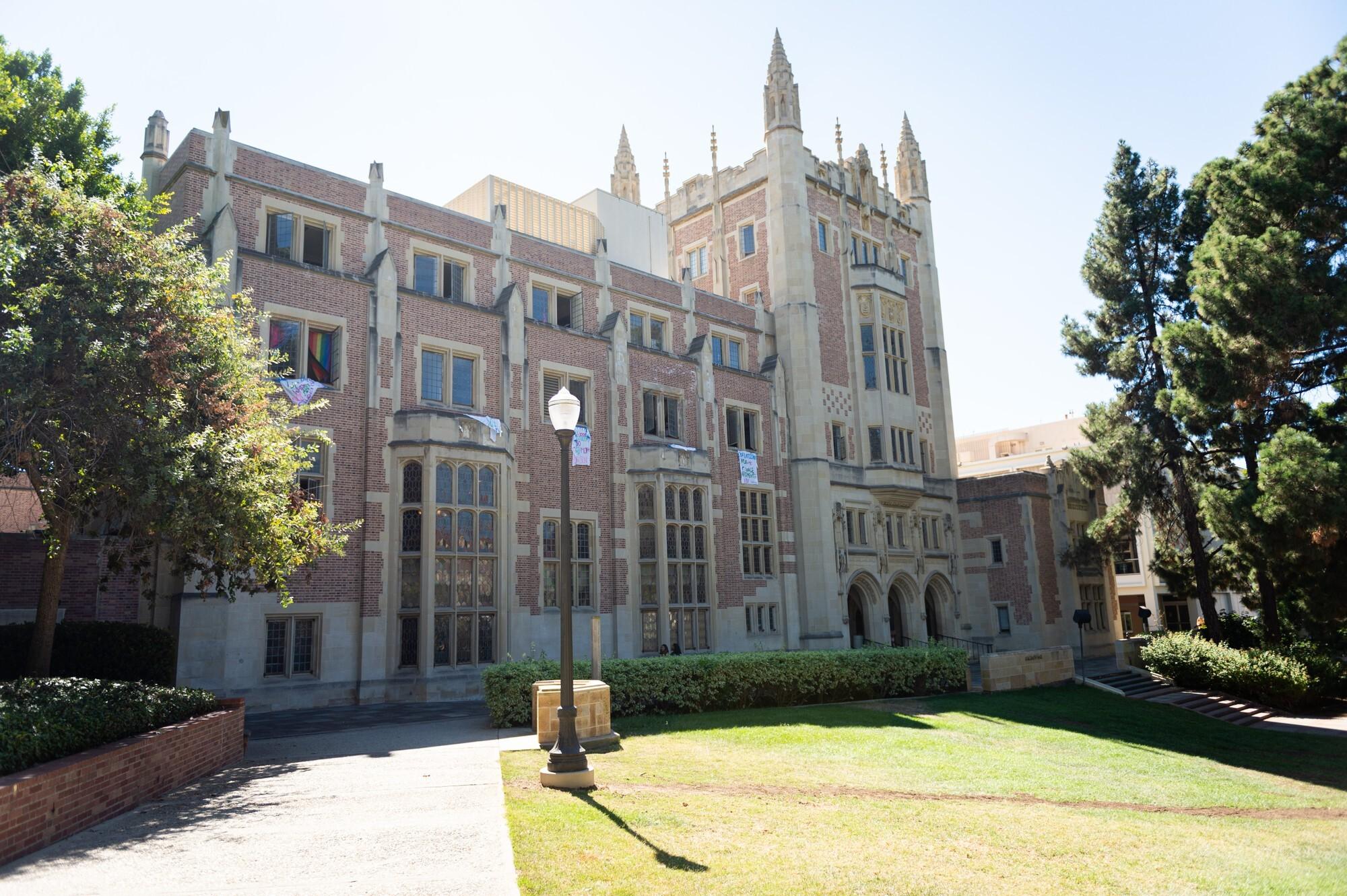
Kerckhoff Hall is pictured. Opinion columnist Emilio Lois argues that USAC should not critique student organizations for using their freedom of expression. (Amelia Chief/Daily Bruin senior staff)

By Emilio Lois
May 11, 2026 6:07 p.m.
This post was updated May 17 at 8:47 p.m.
The Undergraduate Students Association Council recently reignited the fiery debate over free speech and antisemitism on college campuses.
At its April 14 meeting, USAC passed an open letter titled “Letter Condemning Event with Omer Shem Tov,” hours after Omer Shem Tov spoke at an event jointly hosted by Hillel at UCLA, the UCLA Younes and Soraya Nazarian Center for Israel Studies and UCLA’s chapter of Students Supporting Israel. At the event, Shem Tov shared his harrowing experience being held hostage by Hamas for 505 days.
[Related: UCLA student government accused of antisemitism for condemning Israeli hostage talk]
USAC’s letter contended that institutional sponsorship of the event contributes to a campus where Palestinian students are marginalized and atrocities committed by the state of Israel are normalized.
However, the letter’s condemnation collapses distinctions that matter, treating criticism as condemnation and student-led programming as institutional endorsement. In the future, USAC must restrain itself to critiques that support student organizations’ freedom of expression.
USAC’s approach displays a lack-of-good-faith engagement and strategic foresight that damages UCLA’s reputation and contributes to a campus divided by ideological barriers.
[Related: Opinion: Politics can tear the country apart. Open your heart and bridge the gap.]
Talia Davood, a general representative on the council, said USAC made no effort to contact event organizers and learn about the content of Shem Tov’s speech or the purpose of the event, despite purporting to value open communication.
“They did not ask me any clarifying questions, and they decided to pass the letter on the one night that I wasn’t there to be able to offer the transparency they were asking for,” said Davood, who also helped organize and promote the event. “It made me question, ‘Do you really care for the truth and do you really want to foster open dialogue and communication, or did you have certain assumptions about the event and did you just want to pursue your own agenda?’”
USAC’s lack of engagement is disturbing. If the letter’s signatories did not attempt to educate themselves about the intent behind the event and made a public condemnation without consulting event organizers, this does not reflect their stated values of open dialogue.
None of the 10 USAC representatives who passed the letter responded to requests for comment.
Their letter specifically cited concerns over “institutional sponsorship of this event.” The only UCLA organization affiliated with the event was the UCLA Younes and Soraya Nazarian Center for Israel Studies, which did not provide funding. The event was organized primarily by SSI, with support from Hillel at UCLA, an organization independent of the university, said Delilah Hirshland, a third-year history student and event coordinator for SSI. UCLA was not involved in planning or funding this event in any way, Hirshland added.
The letter also criticized the “selective platforming of narratives,” but this accusation is incomplete. The Consortium for Palestine Studies at UCLA, a faculty-led academic body, has hosted pro-Palestine speakers with support from academic units like the history department and anthropology department. This demonstrates a similar level of institutional backing as the Omer Shem Tov event.
However, the letter is correct in that there may be an imbalance of implicit support from UCLA.
Chancellor Julio Frenk and his wife Felicia Knaul attended the event in a personal capacity, claiming to support Jewish organizations, which lent the event the appearance of greater legitimacy and institutional buy-in while allowing UCLA to maintain the appearance of neutrality on the issue.
Meanwhile, there do not appear to be administrators at or above the vice chancellor level of Palestinian background who can do the same. Thus, any administrators that attend pro-Palestine events will be accused of being politically motivated. This leads to asymmetry in the level of implicit institutional support that events on each side can receive from administrators.
The letter also alleges that the event platformed a distinct political narrative. However, organizers contend that the event itself was not politically motivated.
“If people on the other side came to Omer Shem Tov just to hear that perspective, I think they would have been surprised at how much time he spent talking about peacebuilding,” Hirshland said.
Politically, Omer Shem Tov has aligned with right-wing conservatism by speaking at events like Turning Point USA’s AmericaFest.
“He (Donald Trump) was sent by God to release those hostages,” Shem Tov said at AmericaFest, according to Fox News.
It is fair for USAC to condemn and criticize these views. Still, they must also affirm the Jewish community at UCLA’s right to host speakers, regardless of the views those speakers may share.
However, the most troubling aspect of USAC’s letter is its lack of awareness.
“I thought it was ill-advised and very myopic, also just tone-deaf to what I think USAC is really here for,” said Rabbi Dovid Gurevich, director of Chabad House at UCLA. “It had a lot of elements that were very problematic.”
The event was hosted on Yom HaShoah, or Holocaust Remembrance Day, a day rooted in reflection and commemoration. USAC’s decision to publish this letter on Yom HaShoah displayed an alarming lack of sensitivity toward the Jewish community.
Regardless of the representatives’ intent with the letter, their actions are reckless.
This letter follows the Trump administration’s repeated attempts to slash UCLA’s funding for alleged antisemitism on campus. The title of the letter explicitly condemns the event itself and buries nuanced criticisms, such as tacit institutional support of the event, or lack of counterbalancing pro-Palestine speakers.
I am not arguing for silence. USAC has the right to express its views if it feels the occasion warrants it. Yet in a climate where the federal government is actively seeking evidence of campus antisemitism, the gap between what the letter says and what it appears to say is itself problematic. A condemnation that can easily be read as antisemitic, regardless of the underlying intent, is a failure of craft at a time when appearance is of the utmost importance.
Student government must remain committed to building a campus where all students feel welcomed, supported and heard. USAC officials’ words should speak for us all.