UC Board of Regents voices support for Senate Bill 985
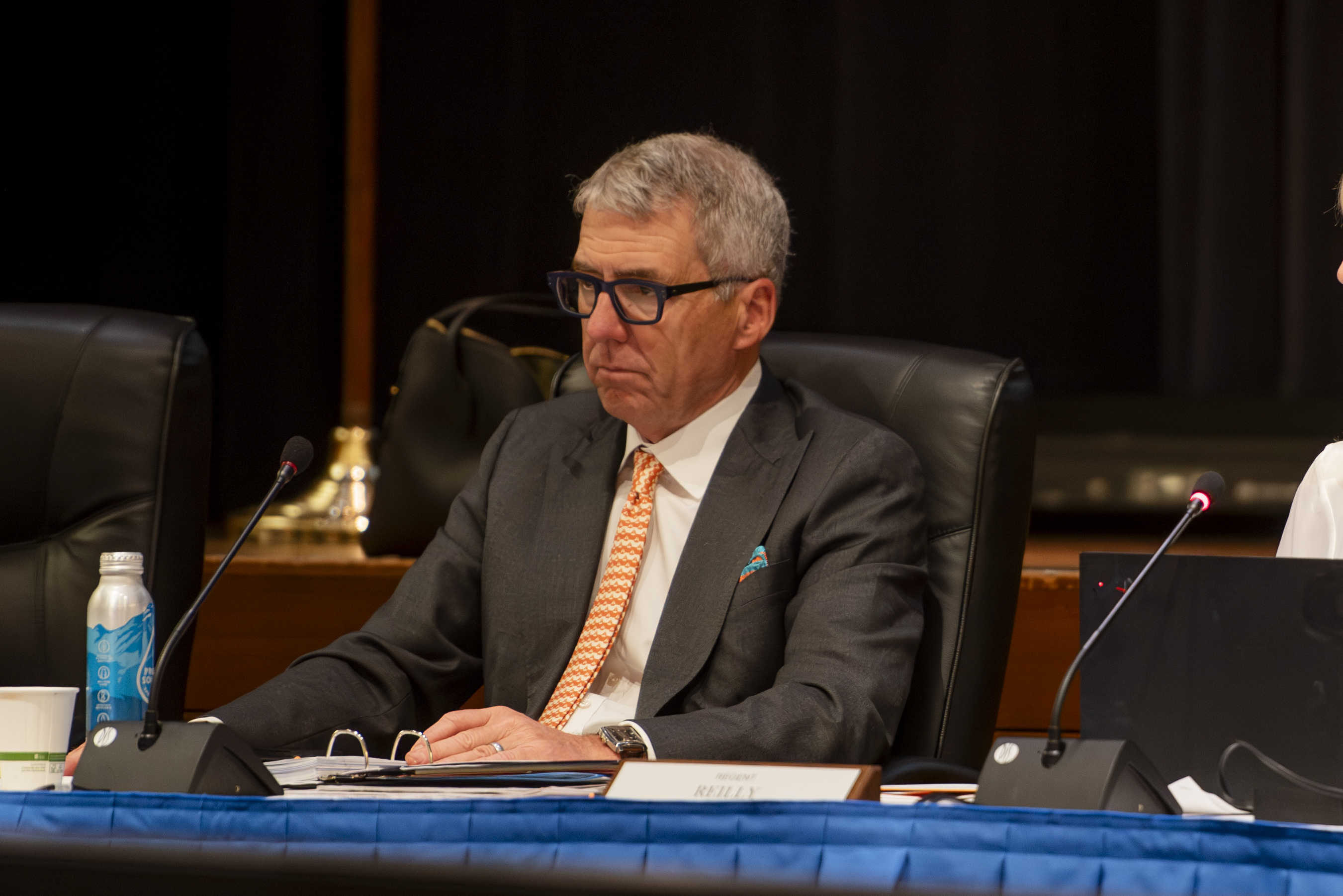
UC President James Milliken at a UC Board of Regents meeting. The board voiced support for a state bill that would put a $23 billion research bond on the November 2026 ballot at its Wednesday meeting. (Maggie Konecky/Daily Bruin senior staff)


The UC Board of Regents voiced support for a state bill that would put a $23 billion research bond on the November 2026 ballot at its Wednesday meeting.
Senate Bill 895 – which the UC sponsored in March – would fund research grants, loans and research facilities if passed by the California Legislature and approved by voters. The regents reviewed the potential impacts of the bill and commended ongoing UC-led research projects during their May meeting held Tuesday and Wednesday at the Meyer and Renee Luskin Conference Center.
Hundreds of supporters of the bill, including UC President James Milliken, rallied for SB 895 outside the state capitol in Sacramento on Monday, according to a UC statement.
State Sen. Scott Wiener proposed the bill in the wake of the Trump administration’s cuts to research funding at the UC and nationwide. United Auto Workers Region 6 – which represents many states on the West Coast, including California – is a co-sponsor of SB 895.
[Related: UC sponsors state Senate bill that proposes $23 billion research bond]
The Trump administration froze $584 million of UCLA’s federal research funds in late July, alleging that the university allowed antisemitism, affirmative action and “men to participate in women’s sports” as reasoning for the freeze. A federal judge restored most of the funding in August and September, and the same judge in November ruled that the Trump administration could not freeze – or threaten to freeze – the UC’s federal research funding.
[Related: Federal Funding Cuts to UCLA]
In a Sept. 3 letter to Wiener, Milliken said the funding cuts threatened the entire UC system, adding that it receives nearly $6 billion in research funding from the federal government annually.
“What I want to emphasize today is that the continued leadership of the University of California in research is not guaranteed,” Milliken said during the Wednesday meeting. “Our research enterprise depends on a rapidly evolving funding environment.”
The UC’s state governmental relations office emphasized the University’s role in driving workforce development, economic growth and medical innovation in California through research in its report to the Regents.
The regents also praised the University’s existing scientific research, which included $7.48 billion in projects and more than 6,000 contracts and grants in the 2025 fiscal year, according to a report presented to the Board by the UC Office of the President on Wednesday. Recent UC research projects have focused on topics ranging from coastline renewable energy production to a treatment for a rare genetic metabolic disorder, according to the report.
UC researchers conduct more than 8% of the academic research done across the United States, according to the report.
“Bond measures such as the one led by State Senator Wiener are critical for sustaining California as the research powerhouse it is and will help UC preserve its research central to protecting jobs, advancing climate research vital to our state’s agricultural enterprise and supporting life-saving medical innovations for our communities,” said Ahmet Palazoglu, the chair of the UC Academic Senate, during the Tuesday meeting.
Seanbiron Johnson, a second-year mechanical engineering student at UC Berkeley, said he believes the UC should also work to secure funding for social science and humanities research – especially race and ethnic studies-focused research – which are areas the bill does not address. The Trump administration has pursued grant cuts for research across the country that it deems focused on diversity, equity and inclusion.
“The themes of this report are about health, technology, finance, agriculture, which are all imperative,” Johnson said. “Federal cuts to NSF (National Science Foundation) and NIH (National Institutes of Health) grants are to not only STEM labs, but also social science research labs. Research on race, policy, ethnic studies, community health disparities, aren’t getting the same attention.”