Opinion: Students must illuminate religion to understand the world around us
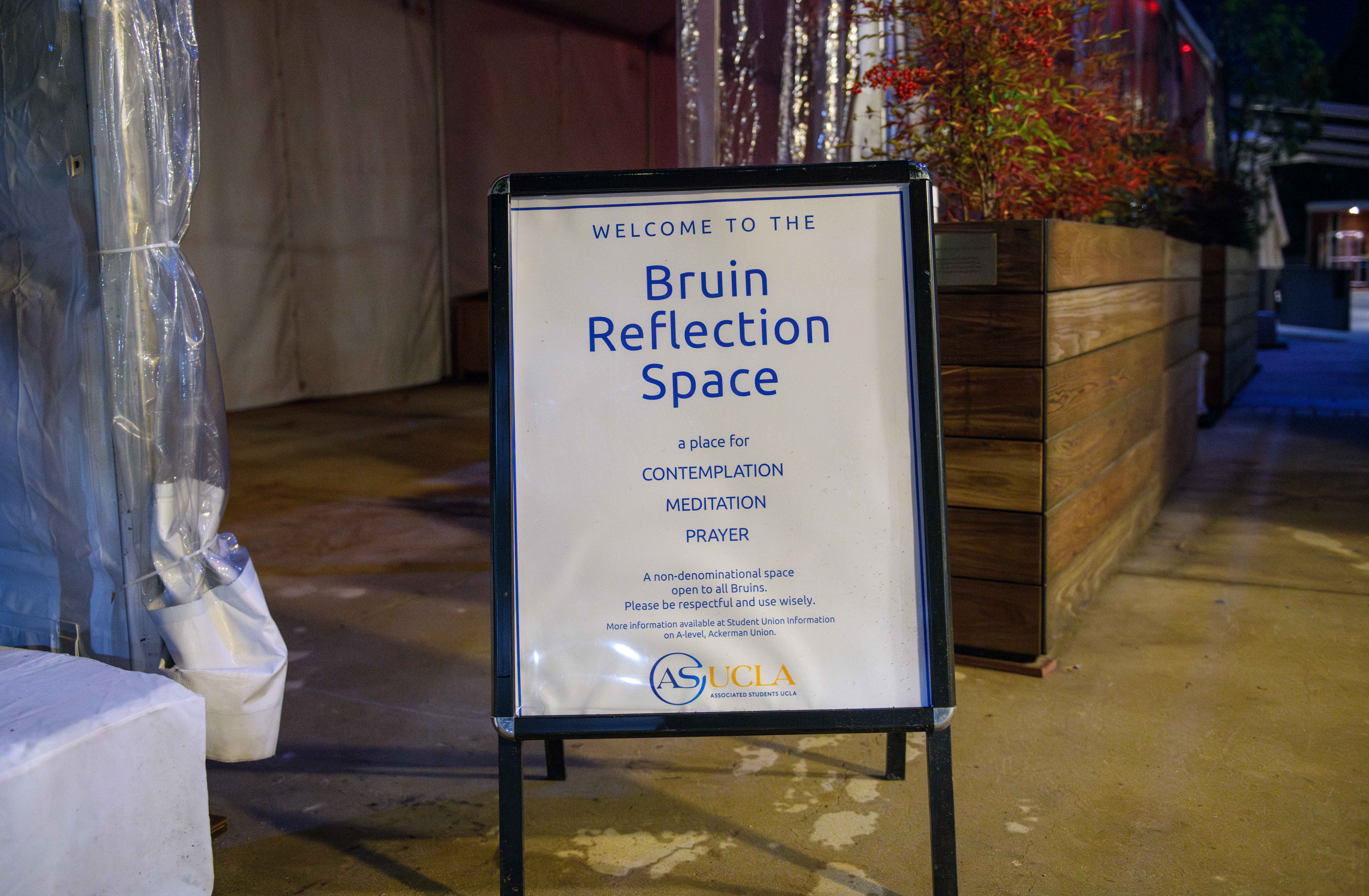
The Bruin Reflection Space is pictured. Students should make an effort to learn about a range of religious beliefs, argues columnist Sawyer Kim. (Dylan Winward/Daily Bruin senior staff)

By Sawyer Kim
May 5, 2026 1:36 p.m.
This post was updated May 12 at 7:35 p.m.
A critic of President Trump has emerged. He denounces the United States’ war on Iran, not on a political or economic basis, but a theological one.
Pope Leo XIV’s outspoken criticism has triggered unprecedented discourse between the Trump administration and the Vatican.
The dispute brings focus to a topic too pressing to avoid but too often overlooked – religion.
Religion intersects with every facet of human life, past and present. For this reason, students seeking to understand the world around them must not ignore it.
Students should pursue opportunities to educate themselves on the various religious ideas and identities that inform humanity.
“All you need to do is look at the front page of a newspaper and pick a topic related to something that’s going on in our world,” said Beth Kraemer, assistant director and student services advisor for the Center for the Study of Religion. “And you can find religion. If it’s not at the heart of it, it’s certainly playing a role.”
Kraemer added that religion is one of the most far-reaching and impactful topics taught on campus. She said theology was foundational to the early development of the university and the religious themes apparent in campus architecture.
For those taking any course on history, literature or philosophy within the Western tradition, it does not take long for Christianity to reveal itself as an indispensable contextual piece to the puzzle.
This is not only true in the humanities. Science’s past and future development requires similar awareness. Key discoveries such as the Copernican Revolution and the Big Bang are inevitably bound up with the religious ideas of their day.
However prevalent religion may be, students – though eager to debate and critique – rarely treat it with a genuine attempt at understanding.
“I think a lot of religions are glossed over,” said Omar Slayyeh, a third-year microbiology, immunology and molecular genetics student who is Muslim.
Slayyeh said he recalls only spending one chapter on Islam during his K-12 education.
Possibly driving this aversion is a failed distinction between describing religion and prescribing it.
Carol Bakhos, the Robert E. Archer chair in the Study of Religion, said UCLA focuses not on preaching religion in the classroom but teaching it with both a sensitive and critical eye.
“One of the most gratifying aspects of teaching is knowing that students walk away not necessarily agreeing with whatever religion they just learned about, but being more respectful or mindful of differences,” Bakhos said.
A brief walk down Bruin Walk on a busy day will quickly reveal the relevance of this sensitivity – a myriad of religious groups express themselves on UCLA’s campus.
Religion – from the unaffiliated to the most passionate zealot – informs our identity, the communities we grew up in and the ideas we care about most. To reject understanding the religions shared by those around us is to place barriers between ourselves and others.
For those interested in the expansion of knowledge, our curiosity should drive us to courses on religion, temples, mosques, churches and ultimately closer to our fellow students.
UCLA’s motto, “Fiat lux” – let there be light – references Genesis’ creation account and expresses our interest in illuminating the world around us.
Without an understanding of religion – the ideas pulling us in and out of war, the foundations of the disciplines we study, the lives of the students we walk past every day – even our own motto remains, ironically, shrouded in darkness.