Op-ed: Californians must protect higher education funding with SB 895

By Aradhna Tripati
April 28, 2026 2:45 p.m.
This post was updated May 14 at 7:38 p.m.
I became a plaintiff in Thakur v. Trump because the federal government terminated my research grants and others – not because the work was failing, but because it addressed topics this administration wanted to silence.
Four of my National Science Foundation grants were terminated or suspended.
The largest funded the Center for Developing Leadership in Science, which I founded at UCLA in 2017. Since then, we’ve supported more than 580 fellows: high school, undergraduate and graduate students, postdocs, faculty and community members, with over a 90% retention rate in STEM.
That’s roughly double the national average. We work on clean water, air, climate, energy, food, data and the future of science and health.
But we are undergoing a massive reduction in program size compared to last year. Some of our students can’t pay for rent, tuition or food because our funding was their lifeline.
You can restore a budget line. You cannot restore a decade of trust. What’s being destroyed is not just research funding, but the knowledge infrastructure communities use to document environmental harm, advocate in court and train the next generation of scientists. The community relationships at the heart of this work are not disposable or replaceable. They are the product of showing up, year after year.
The Ninth Circuit has found that federal agencies selected grants for termination based on viewpoint. That’s not routine budget discretion. It’s constitutional overreach. But being right in court doesn’t pay anyone’s salary or protect anyone’s education. And while the administration dropped their appeal in February, their proposed 2027 budget aims to heavily cut climate, environment, clean energy and minority health research and spending, environmental justice and more.
This affects every student.
If you think research funding cuts are a problem only for professors in lab coats, think again. Research funding pays for the undergraduate opportunities that help students get into medical school, graduate programs and competitive jobs. It supports the graduate students who TA your classes.
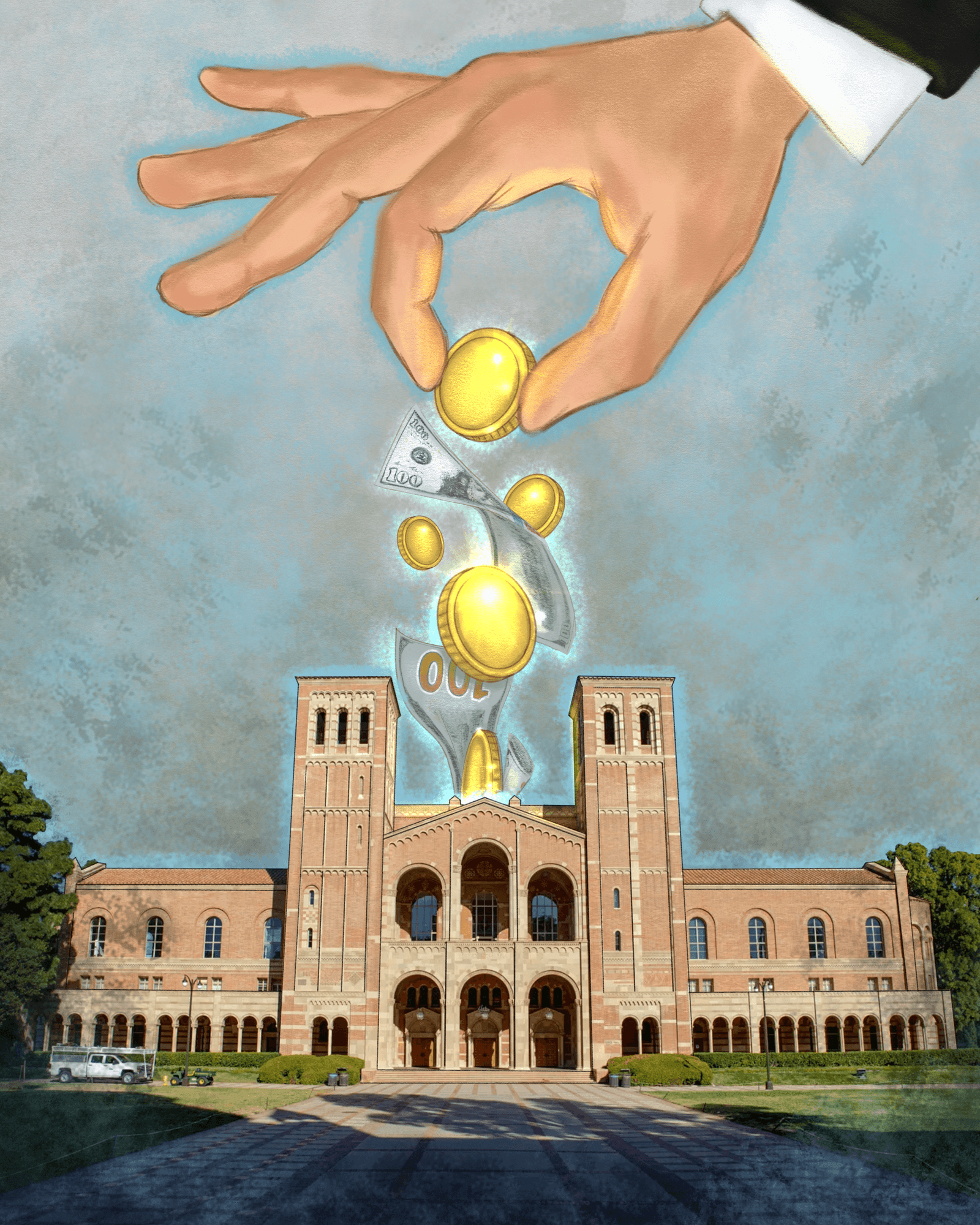
UCLA saw $584 million in federal research grants frozen or suspended and then a demand of another $1 billion of the UC system’s money to unfreeze funds. UC leaders say that would “completely devastate” our universities. Ask yourself where that money would come from. The pressure to raise tuition will grow. The labs that give UCLA its reputation, the faculty and research who attract top students and make a degree mean something all depend on stable funding.
National Institutes of Health funding alone supports more than 55,000 jobs in California and generates $14 billion in economic activity. The research happening at UCLA, from cancer treatments to wildfire prevention, water resilience and pandemic preparedness, doesn’t stay in Westwood. It becomes the clinical trial that could save your grandmother. The early-warning system that gives firefighters an extra hour to evacuate your hometown. When that research stops, it doesn’t pause. It collapses.
But California can lead.
In 2004, after an administration restricted federal funding for stem cell research, voters passed Proposition 71, creating the California Institute for Regenerative Medicine with $3 billion in bonds. That investment produced FDA-approved therapies and established California as a global leader, supporting student training, careers and treatments. Now we need to do it again.
SB 895 would place a $23 billion science and health research bond before voters in November to fund peer-reviewed work in biomedicine, climate, wildfire prevention and areas the federal government is abandoning. But SB 895 needs two-thirds approval in the Legislature.
And UCLA and UCOP must act too. They have endowments and this is the moment to use them. Centers like the CDLS, which support students regardless of background, partner with communities across our city for our futures and embody what a public university exists to do – protect.
Call your state legislators. Ask your parents to call theirs, wherever in California they live. Tell them to protect higher education funding, pass SB 895 and save programs like CDLS. Show up for the coordinated actions happening across UC campuses. Sign our petition. Make noise. And vote.
This is a fight about whether Californians want cures, jobs, affordable education and climate resilience or to leave those decisions to chaos.
I didn’t become a scientist to watch this work get destroyed for political points. I became a scientist because I believe in training young people to solve the hardest problems we face.
California gave us the opportunity to do this work together. Now it’s California’s turn to protect what we’ve built.
Aradhna Tripati is a UCLA professor, founder and executive director of the Center for Developing Leadership in Science and a plaintiff in Thakur v. Trump. She is a recipient of a Presidential Early Career Award in Science and Engineering and a Fellow of the American Geophysical Union.