Opinion: ‘Vote for your future’: Students must vote in USAC elections to ensure diversity
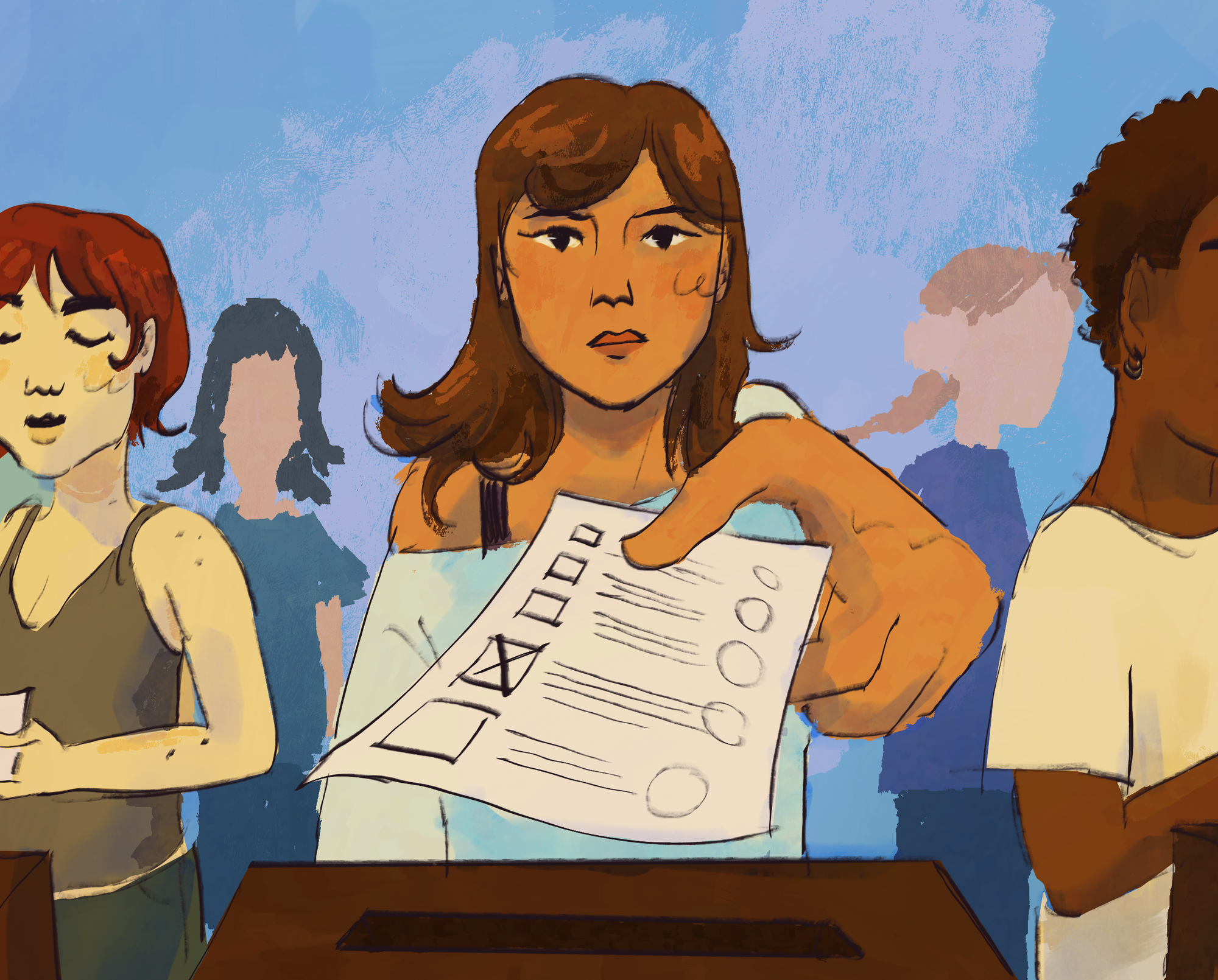
(Brooke Osias/Daily Bruin)

By Keira Perkin
April 27, 2026 3:00 p.m.
This post was updated May 7 at 7:40 p.m.
UCLA students come from 107 different countries.
29% of UCLA’s undergraduate student body are first-generation college students. 35.1% of undergraduates are Asian and Pacific Islander. 22% are Hispanic and 6.5% are African American.
Creating an Undergraduate Students Association Council that adequately represents the UCLA student body is no easy task.
But when students are actively involved in choosing their representatives, the council better mirrors our campus diversity. This May, students must vote in the USAC elections. By voting, students ensure our officers adequately reflect the student body next year.
USAC is the governing body for UCLA students. Managing roughly $10.9 million of undergraduate tuition money in the 2025-26 fiscal year, the organization makes countless important decisions. USAC officers ensure all students are represented at different levels of the University of California system.
[Related: Opinion: USAC must ensure motivated students take office, disseminate election details]
Voter turnout in USAC elections and referendums has historically been low.
“In 2020 the turnout was 30%, then it dropped to around 19-20% in 2021 and in 2022, it went down further – around 13%, which was actually the lowest in a whole decade,” said Syed Tamim Ahmad, the chair of the Undergraduate Students Association Elections Board and a fourth-year physiological science student.
When voter turnout dips so low, USAC is not accurately representing our diverse voices.
When groups of people are underrepresented in various government bodies, it becomes easier for those government entities to ignore their concerns, said Thomas Sherrer, a political science and public affairs lecturer.
These groups need to be more participatory to ensure their governments understand and respond to their specific needs, he added.
Voting in May’s election is an opportunity to make your voice heard. But it’s also a way to practice exercising your civic duty to vote.
“I do feel encouraged to go out and do my research and vote for who I believe is best fit because I’m aware that, now, it’s college-governing or college-student governing bodies. It’s very important for you to actually know what they stand for,” said Ebenezer Mahteme, a first-year political science student.
Additionally, awareness about the election procedures is especially important, Mahteme said. Many eligible voters are pushed to vote but need to be educated about the process of voting, what they are voting for and who the candidates are, he added.
USAC elections directly impact students. While the effects may seem less direct, the United States also holds many important elections. By practicing voting and demystifying the process, students prepare for a lifetime of important civic engagement. As such, USAC is a great space to start.
“It definitely puts people into the practice of doing the research when it comes to voting,” Mahteme said. “It puts the candidates into practice of seeing what the students want and seeing how the students might react to certain changes. I think it’s really beneficial for both sides of the perspective when it comes to an election.”
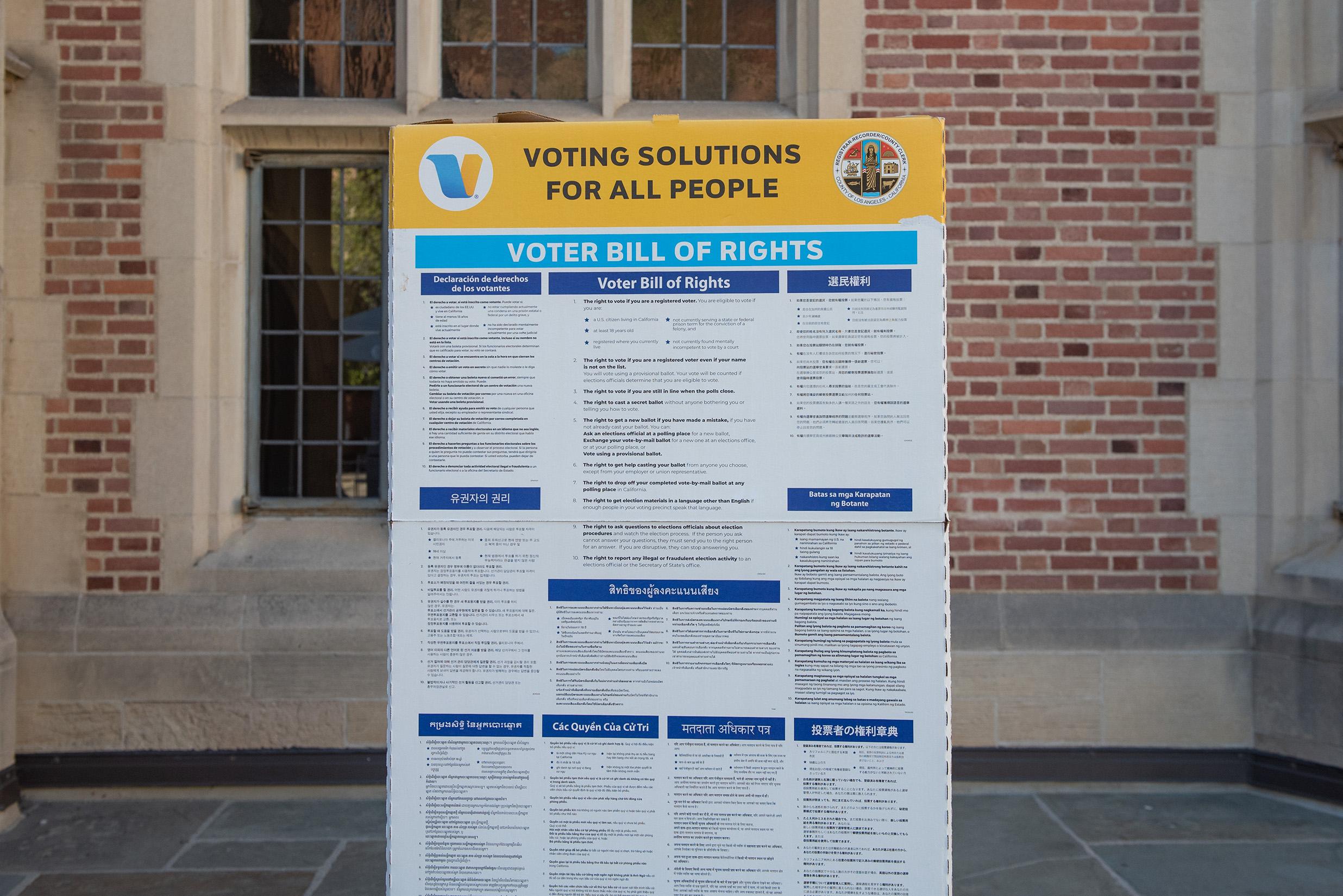
For many groups, voting has not always been an option. For people of color, women, people in poverty and many others, disenfranchisement has historically silenced their political voices.
“We have a long history of minority groups having to fight for the right to vote and get access to the ballot and then preserve that, even when they legally have the right,” Sherrer said.
Because of this, today we owe it to our predecessors to exercise the right to vote they fought so hard for. Voting in the USAC election this year and in the future acknowledges and celebrates the work of the many individuals who fought for suffrage.
[Related: Hammer Museum hosts Richard Hasen, discusses voting rights, disenfranchisement]
Students are busy people. Their many commitments may make becoming sufficiently knowledgeable about each candidate difficult. Time, especially during midterm exam season, becomes a real barrier to voting.
However, the time spent researching each candidate will be greatly outweighed by the benefits of a USAC council that accurately represents the student body’s needs.
It must be a priority for each student to build a USAC council that represents our student body. But this cannot happen without every student’s vote.
Students must schedule time to read over the candidates’ positions and the proposed referendums. At the very least, students should pay attention to the USAC endorsements coming from various student clubs and organizations that they feel align with their views.
“People should be excited about the election season,” Ahmad said. “We’re going to do things a bit differently this year to incentivize voters, and you can see that in the atmosphere in the upcoming elections.”
When our student body is silent, our campus fails to represent its diversity.
In May’s election, vote for your future.
Vote for every person who came before you.
Vote because it’s your civic duty.