Opinion: USAC must ensure motivated students take office, disseminate election details
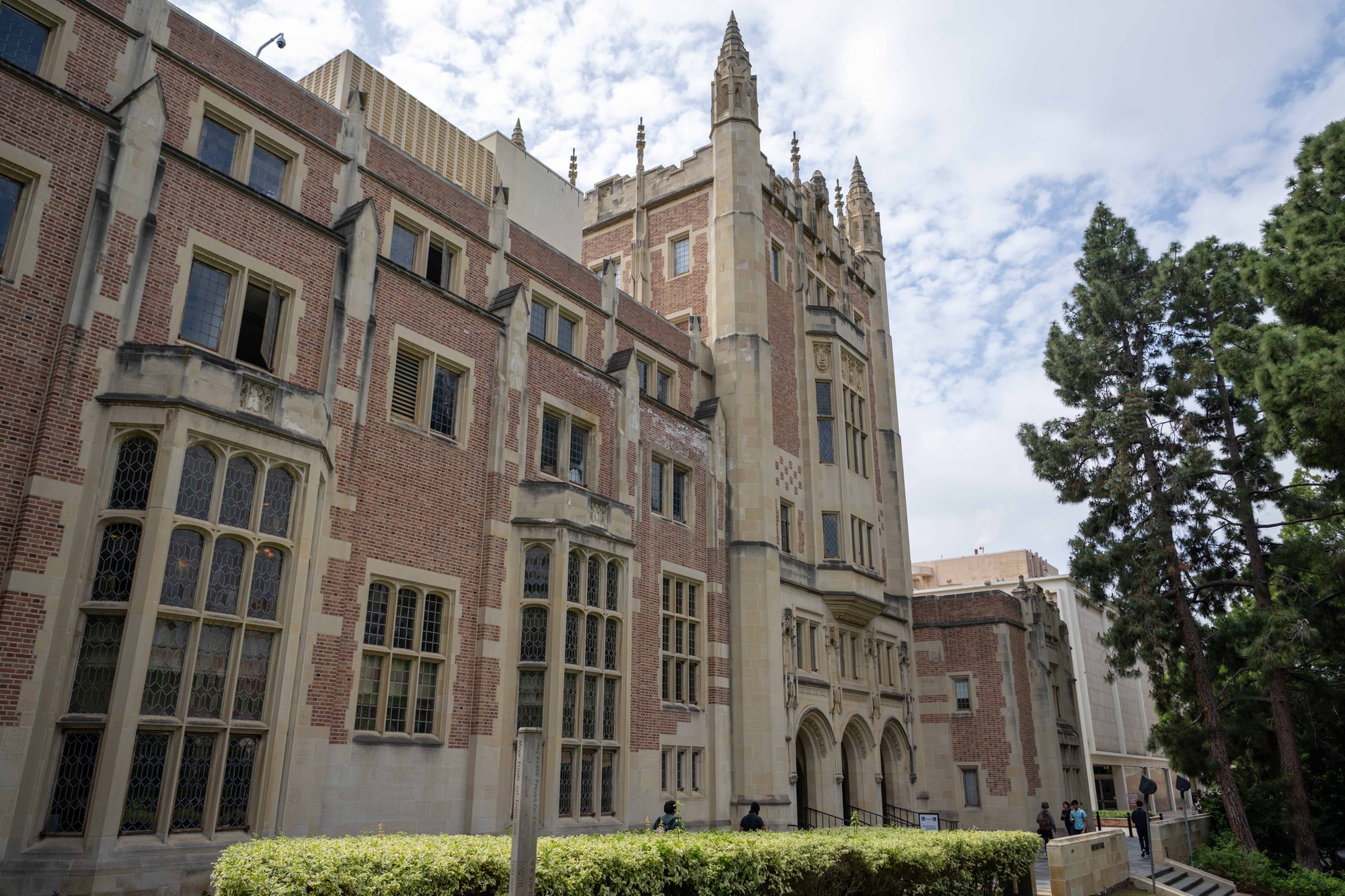
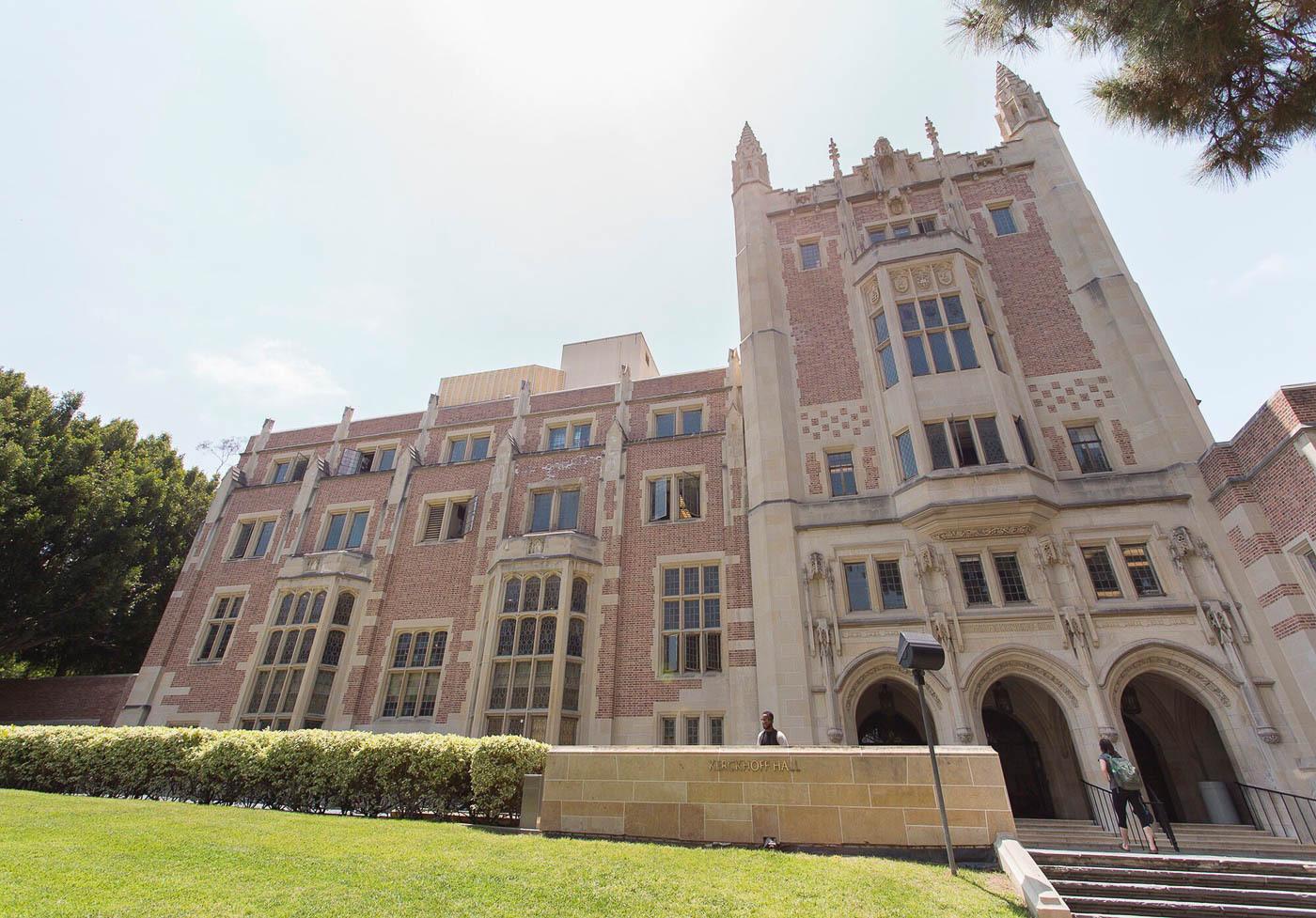
Kerckhoff Hall is pictured above. Columnist Copeland Williams argues the Undergraduate Students Association Elections Board and other students must end the streak of unopposed candidates running for USAC. (Crystal Tompkins/Daily Bruin senior staff)

By Copeland Williams
April 20, 2026 3:32 p.m.
This post was updated May 5 at 11:48 p.m.
Fifty signatures and some paperwork could get a UCLA student in good academic standing a maximum of $15,332.46.
If you do not believe me, try running for a position on the Undergraduate Students Association Council.
[Related: USAC’s financial transparency website initiative remains delayed past expectations]
USAC elections are next month, and seven of 13 offices have an unopposed candidate in the race. Six candidates ran unopposed in the 2025 election.
In the 2025-26 fiscal year, USAC officers received $17.87 per hour up to 20 hours per week and gained control of $10.9 million of undergraduate tuition money from the quarterly USAC fee. Yet, this year almost half of the candidates are not running against an opponent.
The Undergraduate Students Association must encourage more students to run for office to end the streak of unopposed candidates. Candidates who run without opposition have few checks on their abilities as leaders. Furthermore, the USA Elections Board should implement stronger requirements for candidacy to ensure unopposed candidates remain qualified.
Some offices struggled to get even one candidate this election.
The USA Elections Board shared a post on Instagram two days before the candidacy deadline urging students to run for USAC international student representative.
The post makes it evident that there is, in fact, a low application rate for USAC elections. This leaves the few candidates to often win their races by default.
The undergraduate student body’s lack of knowledge on USAC proceedings and election conduct causes low student participation in running for office.
“I feel like I only hear about USAC elections when it’s happening for a week,” said Lili Sturgeon, a second-year political science student. “It’s not a very big part of student life otherwise.”
Sturgeon represents a large population of Bruins who do not monitor USAC proceedings amid their academic and extracurricular commitments.
“In large-scale elections, any single member of the public doesn’t have a ton of incentive to become informed,” said Daniel Thompson, an assistant professor of political science. “If there isn’t a party system that can help facilitate that information, there isn’t a lot of media that everybody’s soaking in that people get a feel for who’s who, then it’s often not in anybody’s interest to go seek it out.”
All undergraduate students should know about their candidates and consider running themselves. But current low applicant participation shows this is not the case for most students.
USAC should prioritize the dissemination of information on the council’s activity and election procedure to equip and motivate students to run for office and remain informed.
However, if the streak of unopposed candidates on the USAC ballot does not end, the USA Elections Board should alter the requirements to apply for candidacy.
Candidates are currently required to have at least a 2.0 cumulative GPA, be a currently registered undergraduate student, be in good academic standing, meet the minimum unit requirement, meet additional unit requirements for some higher level positions, submit a candidacy petition signed by 50 students and complete a candidacy packet.
The first few are standard requirements to join clubs, declare minors and graduate with a bachelor’s degree at UCLA. The last two could likely be completed in a day.
The Elections Board should implement a competency and knowledge test to be a USAC candidate if this lack of opposition continues. This test would question potential candidates on their knowledge of the USA, the position they are running for and UCLA as a whole.
Students deserve to feel certain that their options – opposed or not – are qualified to both receive and allocate their fees. Fifty signatures and paperwork does not instill an adequate level of confidence as testaments to a candidate’s ability.
Syed Tamim Ahmad, the chair of the Elections Board and a fourth-year physiological science student, said in an emailed statement there are accountability measures in place for candidates running unopposed.
“Students retain the ability to engage with candidates through forums, candidate statements and public discourse, and they may choose to abstain or vote accordingly,” Ahmad said in the statement.
Interaction with candidates is an important measure of their ability to lead on the council. Yet, many students do not have the time or willingness to participate in these discussions.
A definitive marker of an official’s capabilities is their knowledge of the people and community they are running to represent. A required aptitude test would guarantee all candidates are capable of representing UCLA’s undergraduate student body, even if there are no options otherwise.
“When fewer students choose to run, it highlights an opportunity for increased outreach, awareness and empowerment so that more individuals feel both capable of and encouraged to step into these roles,” Ahmad wrote in the statement.
Take this gap in electoral participation as an opportunity to make change in UCLA’s community next year.
Maybe you could make a difference and earn more than $15,000.