Opinion: UC Board of Regents must remove less-lethal munitions, abandon Assembly Bill 481
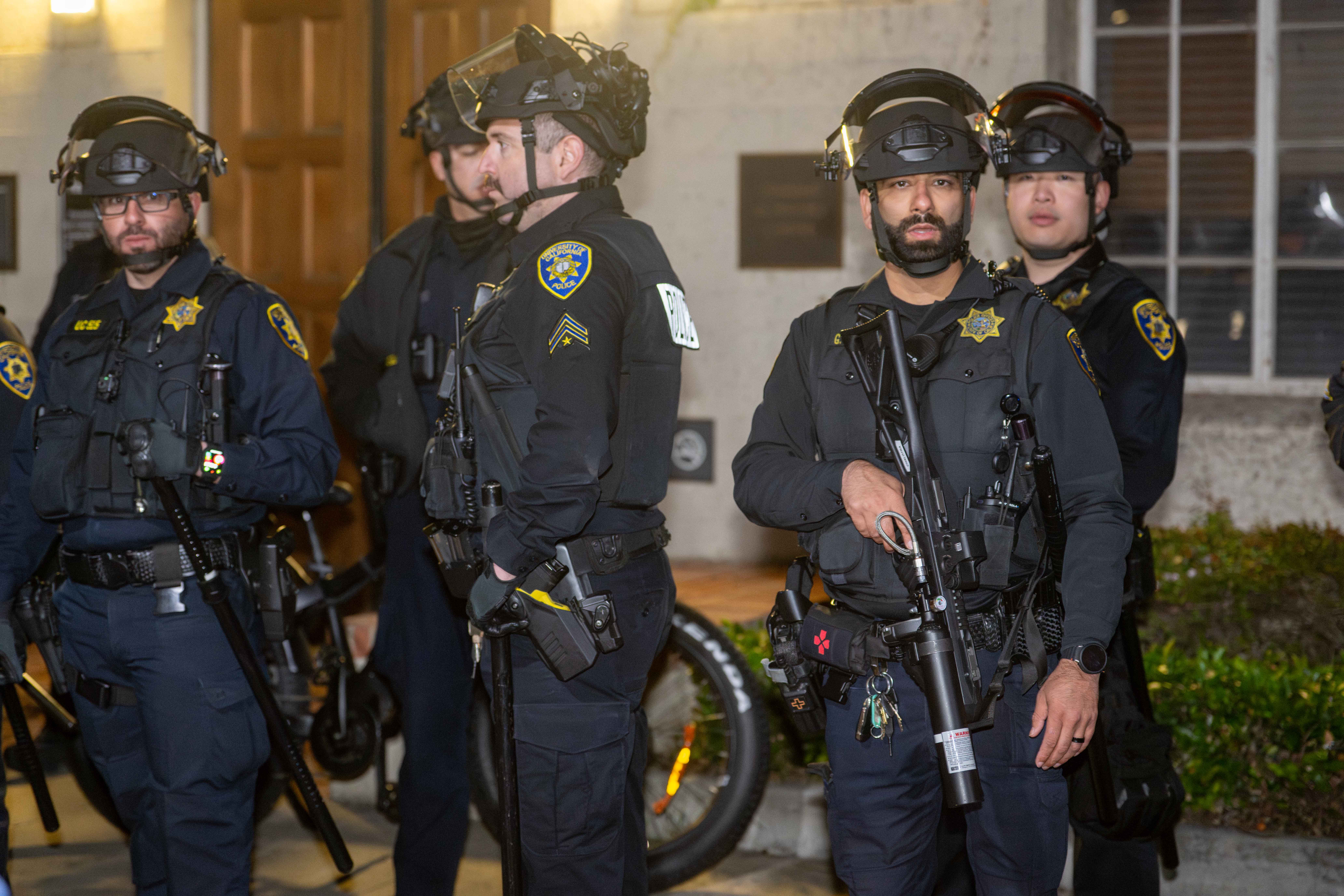
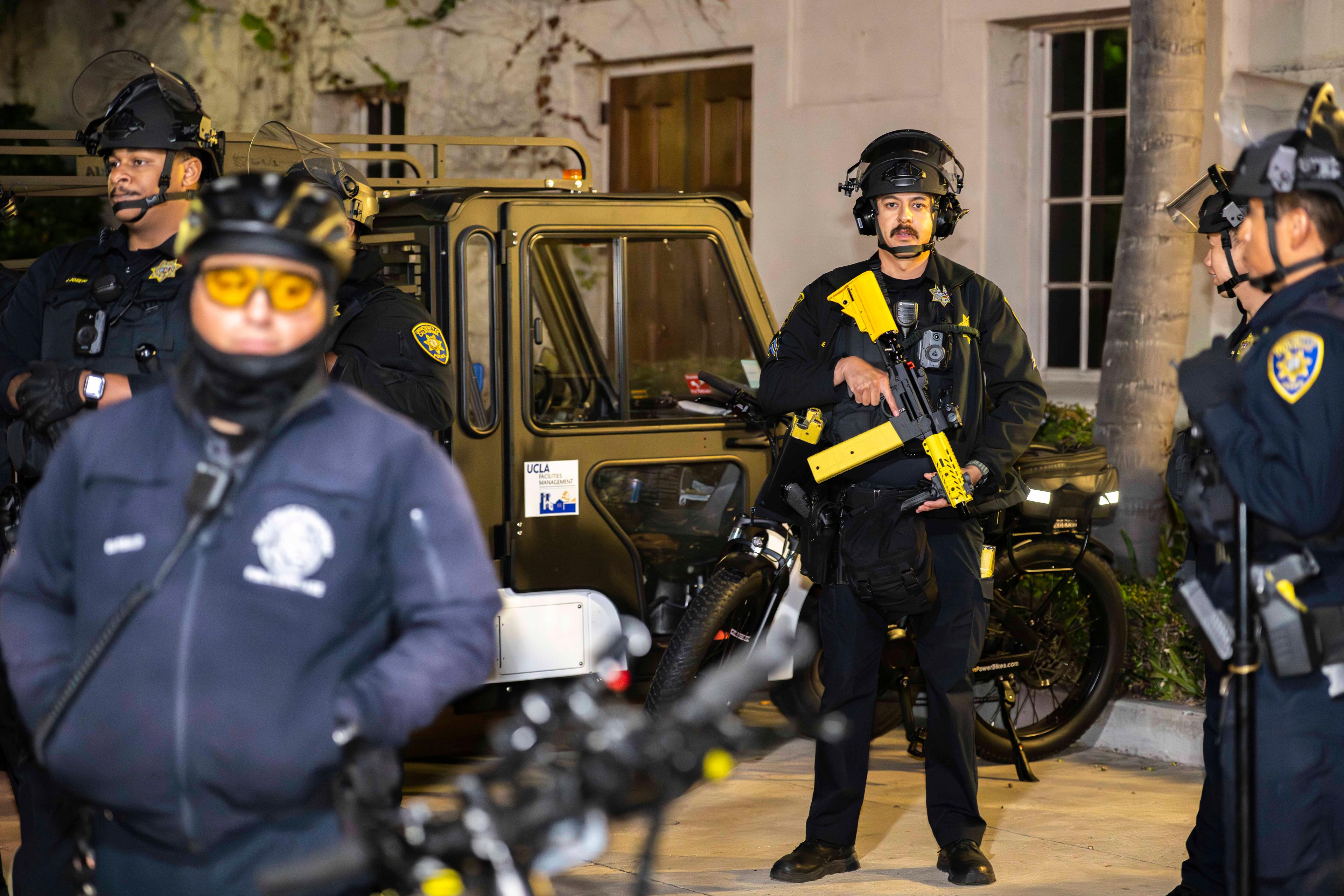
UCPD officers stand with less-lethal weapons. Such munitions pose real threats to student safety, argues columnist Lilly Leonhardt. (Andrew Ramiro Diaz/Photo editor)

By Lilly Leonhardt
April 26, 2026 6:20 p.m.
This post was updated April 28 at 7:34 p.m.
It was natural to find aspiring journalist and UCLA student Parker Hupf snapping photographs of the crowd from a freeway overpass during a June 2025 anti-Immigration and Customs Enforcement protest.
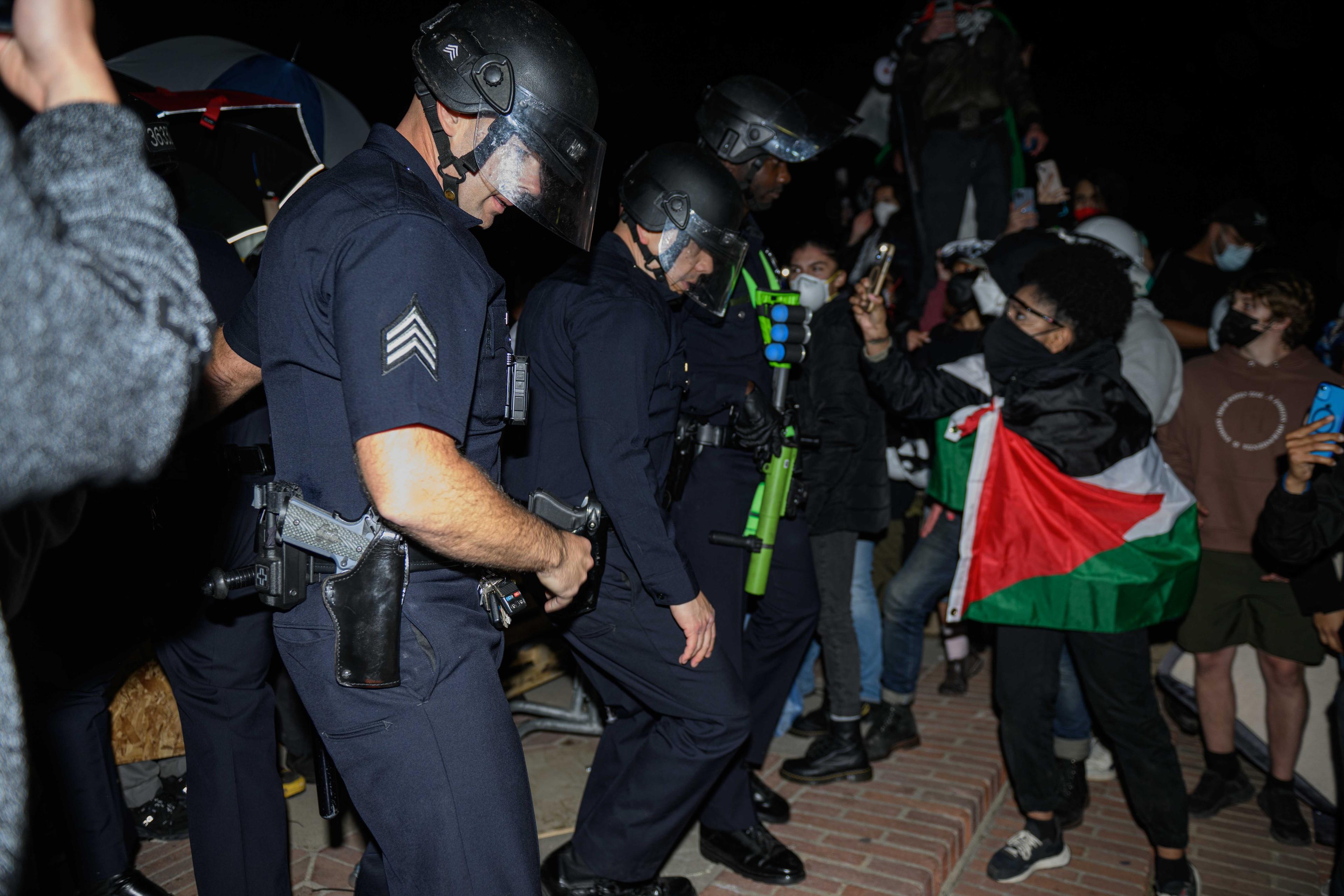
But as the protest escalated, LAPD officers detonated a flash grenade – which they consider a “less-lethal weapon” – at Hupf’s feet.
Her world went black. She stayed in the hospital for a month. Hupf sustained serious brain trauma, lost hearing in her right ear and received other injuries.
Nearly a year later, Tucker Collins, a first-year student at the University of Southern California, lost his eye while taking pictures at a No Kings Protest in March. Hupf, a fourth-year political science student at UCLA, said she hopes that Collins’ experience will help the country realize that less-lethal weapons are unsafe, despite their moniker.
The UC Board of Regents approved the UCLA police department’s request for more less-lethal munitions in accordance with Assembly Bill 481 in September 2025. The regents must revoke this measure given the danger it poses to students exercising their First Amendment rights.
[Related: UC Regents approves UCLA police department request for less-than-lethal munitions]
“I think unfortunately, when these weapons get handed to police officers, they are far too cavalier about using them,” said V. James DeSimone, Tucker Collins’ lawyer and a UCLA Law School graduate. “They are target-specific weapons, and because of the damage they can do, should only be used if that individual – the person they are aiming at – is posing an imminent threat of serious bodily harm or death.”
In Collins’ case, the weapons were used by federal troops. The United States Department of Homeland Security did not respond to a request for comment regarding the case.
When officers use these weapons to help with crowd control, it represents a lack of respect for First Amendment rights, said Chris Tilly, a professor of urban planning.
“It sends a message of your university doesn’t respect your opinion, sees you as a criminal to be controlled rather than someone expressing an opinion through protest,” he said. “I don’t think that’s a message that the University of California should want to send.”
The continued use of less-lethal weapons is even more alarming since LAPD is no longer permitted to use 40-millimeter launchers, according to NBC.
“How can university police force have access to these weapons and be able to deploy these weapons – and the literal LAPD cannot?” Hupf asked.
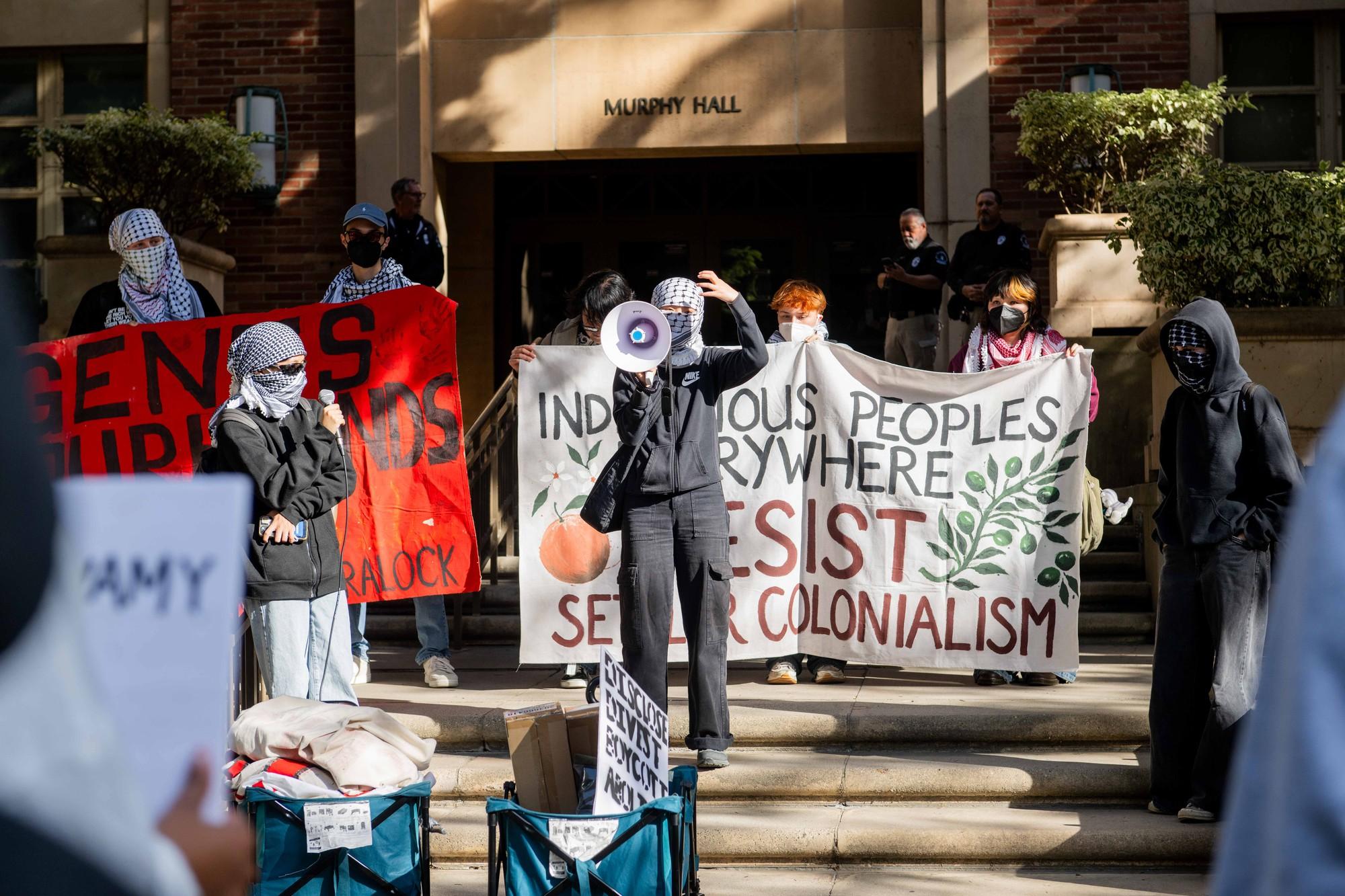
Michael Chwe, a political science professor who has previously protested with the UCLA Faculty Association, said he and a student are working on a petition urging UCPD not to use weapons banned by the LAPD.
He added that the best way to make changes is for coalitions of students, faculty and staff to protest.
“All of us should be able to say our campus police should not be using weapons which have been used almost exclusively to suppress protest,” he said.
Despite the consensus against these weapons, there is no indication that UCPD will lose its access to them over the coming months. AB 481 only requires an annual review of the use and efficacy of the weapons, which is due in the fall.
Officers have received training with 40-millimeter launchers and are not permitted to use such weapons for routine crowd dispersal, a UCPD spokesperson said in a written statement.
They added that even when officers are armed with such weapons for high-profile events, that does not mean they intend to use them and that only assaultive or life-threatening behavior garners such a response.
Even though the weapons will not always be used, their presence can set a chilling tone for students exercising their First Amendment rights.
The UCLA police department website says free speech is a protected right. However, the site also says civil disobedience is an unprotected form of speech and will incur consequences.
As less-lethal weapons come back onto the political stage with the tragedy of Tucker Collins, the regents have an obligation to consider the danger of these weapons. The regents must also remember the injury that less-lethal weapons have caused to UC students, such as Hupf.
The “less-lethal” label is not enough to make these munitions permissible. The regents must void AB 481 and stop approving weapons – which could be lethal – in our so-called sanctuaries of learning.
“They’re not called non-lethal, they’re called less-lethal,” DeSimone said. “The reason they’re called less-lethal is because they could kill someone.”