Eric Garcetti discusses modern approaches to peacemaking at UCLA event
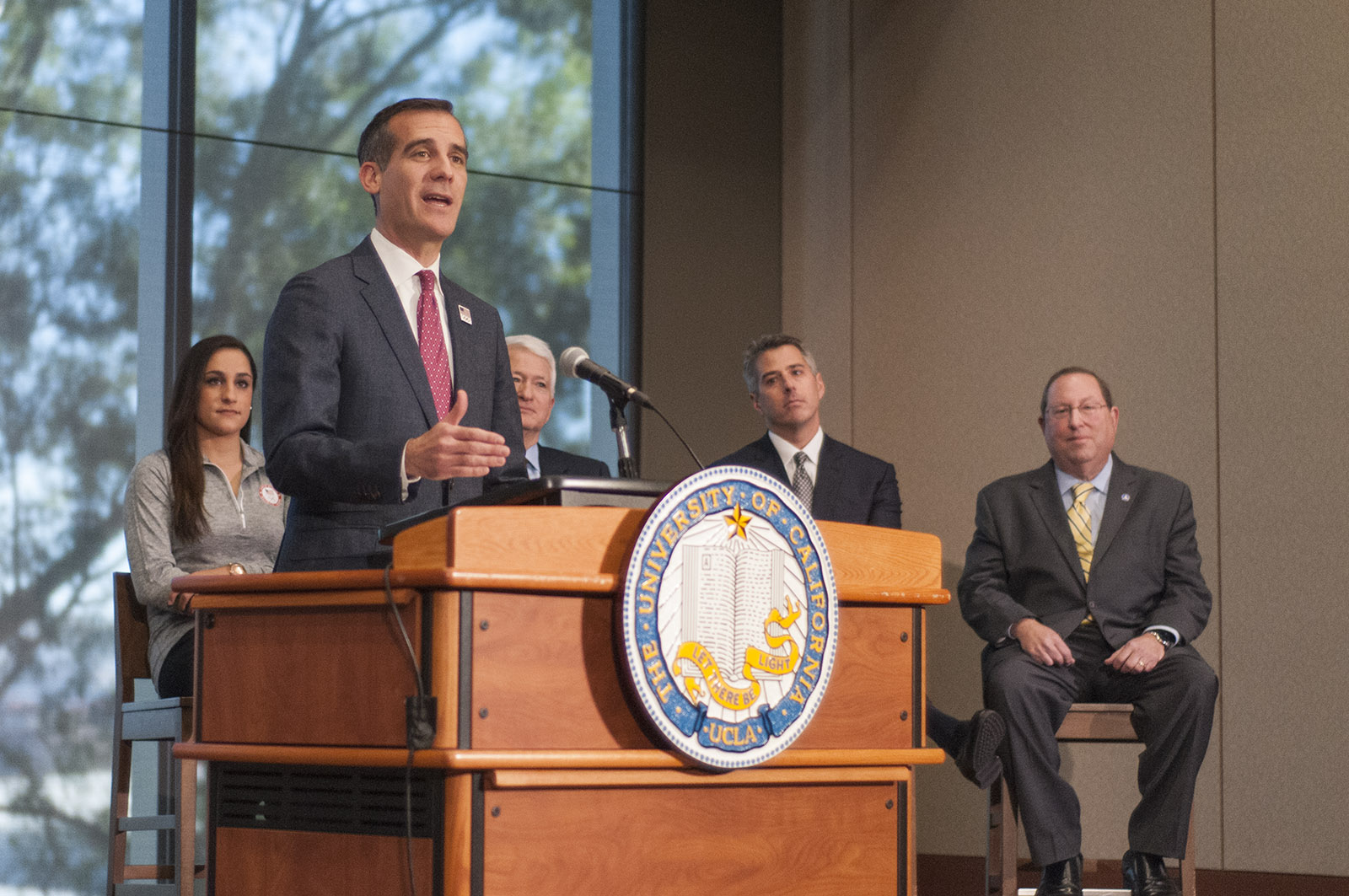
Eric Garcetti, a former Los Angeles mayor and United States ambassador to India, speaks to a crowd. Garcetti said countries need to rethink their approaches to international peacebuilding at a Tuesday UCLA event. (Daily Bruin file photo)

By Prannay Veerabahu
April 24, 2026 1:39 p.m.
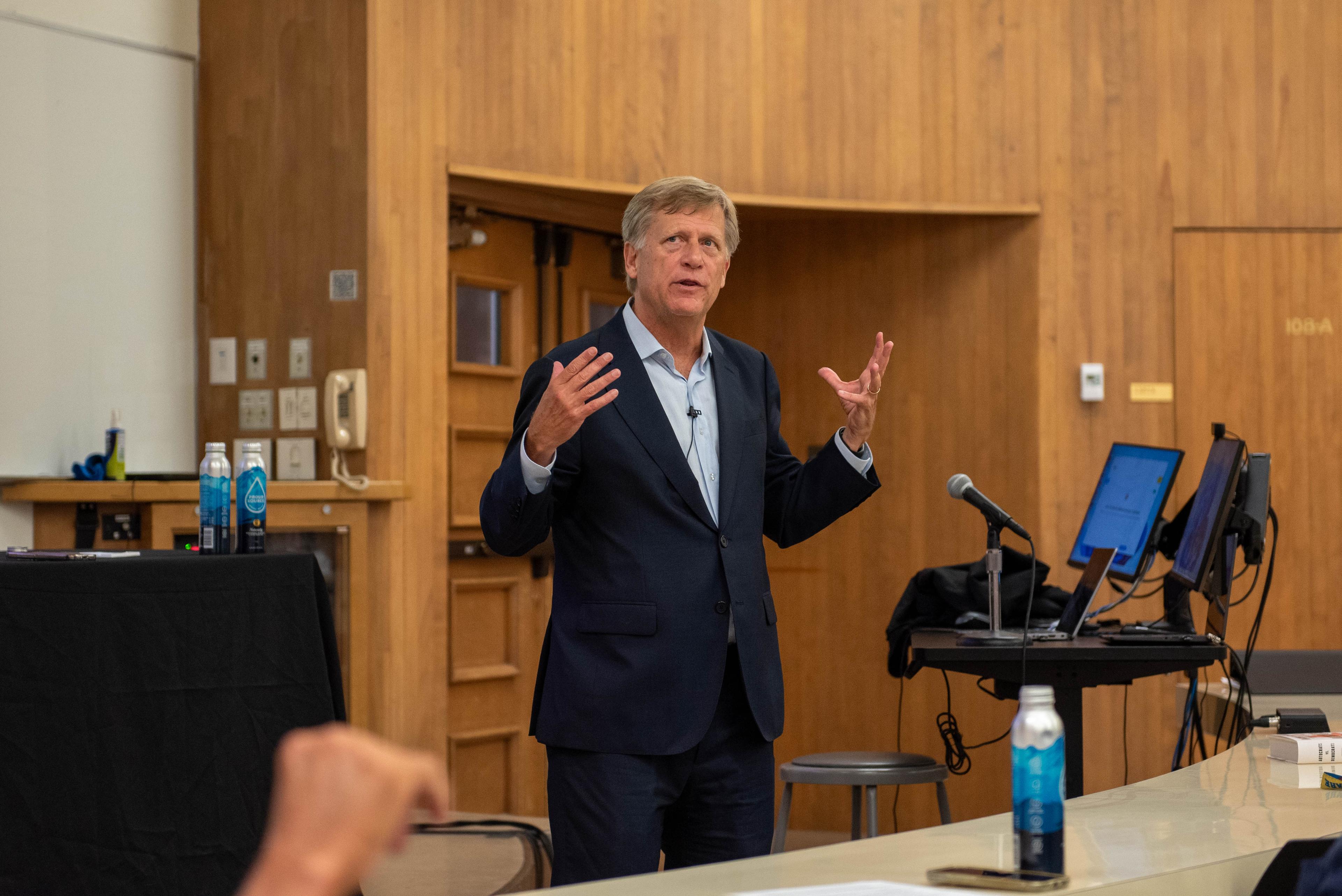
A former Los Angeles mayor and United States ambassador to India said countries need to rethink their approaches to international peacebuilding at a UCLA event Tuesday.
Eric Garcetti, who served as the U.S. ambassador to India from 2023-25 and the mayor of LA from 2013-22, spoke at the 2026 Bernard Brodie Distinguished Lecture on the Conditions of Peace, an annual lecture series hosted by the UCLA Burkle Center for International Relations.
Garcetti said disinformation, income inequality and international institutions’ failure to respond to conflict have defined current politics.
“We face 21st-century problems with aging, 20th-century legal architecture,” he said.
Certain Trump administration actions, including disregarding existing treaties and imposing tariffs, have played a key role in dismantling the international order, Garcetti added.
A new global peace framework must shift away from fossil fuels and account for trade and the changing nature of drone warfare, he said. Garcetti added that he believes countries should shift economic dependence away from the U.S. and China and create coalitions among other countries.
“We have spent our entire adult lives inside a single, unusually stable structure,” Garcetti said. “So we have no literacy, we have no muscle. We are, in a genuine sense, institutionally naive about what building international order from rubble actually requires.”
Kal Raustiala, the director of the Burkle Center, moderated a Q&A with Garcetti after his speech.
India and the Middle East are interdependent on each other for the flow of workers and capital, Garcetti said in the Q&A. Indian diplomats are concerned about the war between the U.S. and Iran because of India’s close ties with Israel and Arab states, he added.
The U.S. and Israel struck Iran on Feb. 28, killing the nation’s Supreme Leader and prompting retaliatory attacks on U.S. military bases and Israel.
After the attack that killed key Iranian leaders, Iran was accused of attacking ships, which led to the closure of the Strait of Hormuz, through which approximately one-fifth of the world’s oil travels. Many countries, including India, that are dependent on oil from the Strait of Hormuz have experienced energy shocks, according to the Wall Street Journal.
Iran does not bear significant domestic costs for prolonging the conflict, while the U.S. lacks a clearly defined end goal, Garcetti added.
“How do you negotiate peace when you don’t know how war will be waged?” Garcetti said. “How do you negotiate peace when you don’t have a vision of what you want to see?”
Arrnavv Chawla, a first-year business economics student, said he came to the talk to learn more about the behind-the-scenes of major global decisions and the U.S. and India’s place in international affairs.
Kaitlyn Cui, a fourth-year political science student, said she appreciated Garcetti’s diverse perspectives, which are pulled from the local communities he worked with and his energy policy background.
Garcetti’s talk helped her understand the gap between politicians at the international level and people at the community level, she said.
“There’s a gap between what leading politicians at the global or federal or state levels are thinking about and what communities are thinking about.” Cui said. “This local-global connection is something that I don’t see as much emphasized in mainstream conversation.”
Kimberly Serrano, a graduate student in business administration, said she enjoyed hearing Garcetti’s proposed peace frameworks, and his call to repair the three fundamental pillars of peace in America: republican governance, international law and economic interdependence.
“(Hope) is a very hard lesson to teach and practice right now, but I really liked how he reframed that,” Serrano said. “Hope starts from you the moment you realize your power and your agency.”