What do people get wrong about transferring to UCLA?
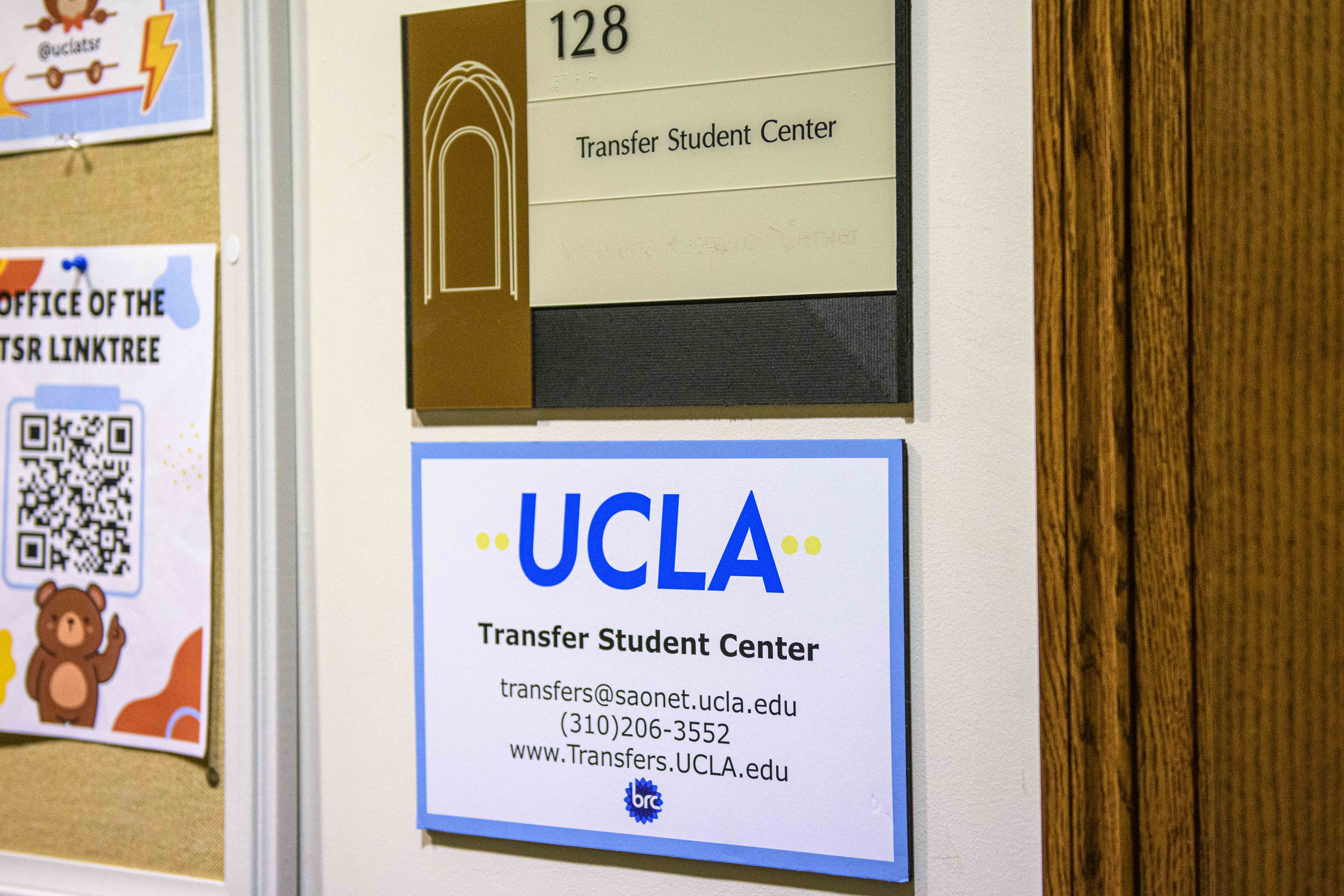
The Transfer Student Center in Kerckhoff Hall is pictured. UCLA transfer admission decisions are released in late April. (Daily Bruin file photo)

By Delilah Brumer
April 21, 2026 9:53 a.m.
This post was updated May 14 at 7:58 p.m.
Transfer students make up more than a third of the UCLA undergraduate student body, but myths persist about the transfer experience and application process.
Nearly 53,000 transfer students have graduated from UCLA in the past 26 years, according to the university’s alumni association. Although the vast majority – about 92% – of these students come from California Community Colleges, their paths to UCLA vary greatly. UCLA’s transfer student body includes Bruins from many backgrounds, such as first-generation college students, adults who have returned to higher education after a gap, veterans, commuters, parents and international students.
Some common misconceptions about UCLA transfer students revolve around the timeline of getting to UCLA, the support available and these students’ levels of academic preparation. This article takes a look at some of these myths.
Myth #1: Transferring always follows a linear timeline
The model for transferring in California, based on the California Master Plan for Higher Education, is to spend two years at a community college and complete lower-division major and general education courses, then spend two years at a UC or California State University. However, this four-year timeline rarely comes to fruition, according to a 2020 report by the Public Policy Institute of California.
The PPIC report found that 19% of California Community College students with plans to transfer do so within four years, and 28% do so within six years.
One of the main barriers to transferring is that the process can be very complicated, said Marisol Cuellar Mejia, a senior fellow at PPIC and one of the report’s authors.
“There was not really a lot of clarity in terms of the specific courses that the students needed to take,” Cuellar Mejia said. “We saw that people that were actually transferring – the ones that were successful at transferring – they ended up coming into the four-year institutions with way more units than they needed.”
Unlike UCLA students who are admitted as first-years, the course requirements for transfers are major-specific.
These major requirements are not uniform between different UCs and CSUs, which can be a problem for community college students who are unsure of where they aim to transfer, Cuellar Mejia said.
The concern of prospective transfer students taking the wrong classes or too many classes is common, but it is also something community college counselors can help students tackle, said Sunday Salter, the transfer center director at Los Angeles Pierce College in the San Fernando Valley.
“We do believe it’s a special group of people who get through it because it is not a simple thing to navigate,” Salter said.
Myth #2: Students have to tackle transferring on their own
While some prospective UCLA students may feel alone in the transfer process, the California Community Colleges offer several resources to support this journey.
Pierce College, which has one of the highest UCLA transfer rates in the state, offers a range of support for prospective transfer students, including peer advisors, university fairs and counseling events, Salter said.
Gov. Gavin Newsom signed Assembly Bill 1291 into law in 2023 to help streamline the UC transfer process. Based on the new law, the UC system will pilot a program for community college students who earn associate degrees for transfer to receive priority admission to UCLA, beginning in the 2026-27 school year.
The push to make the UC transfer process more accessible for California Community College students has coincided with state lawmakers wanting the University to enroll more in-state students, according to CalMatters.
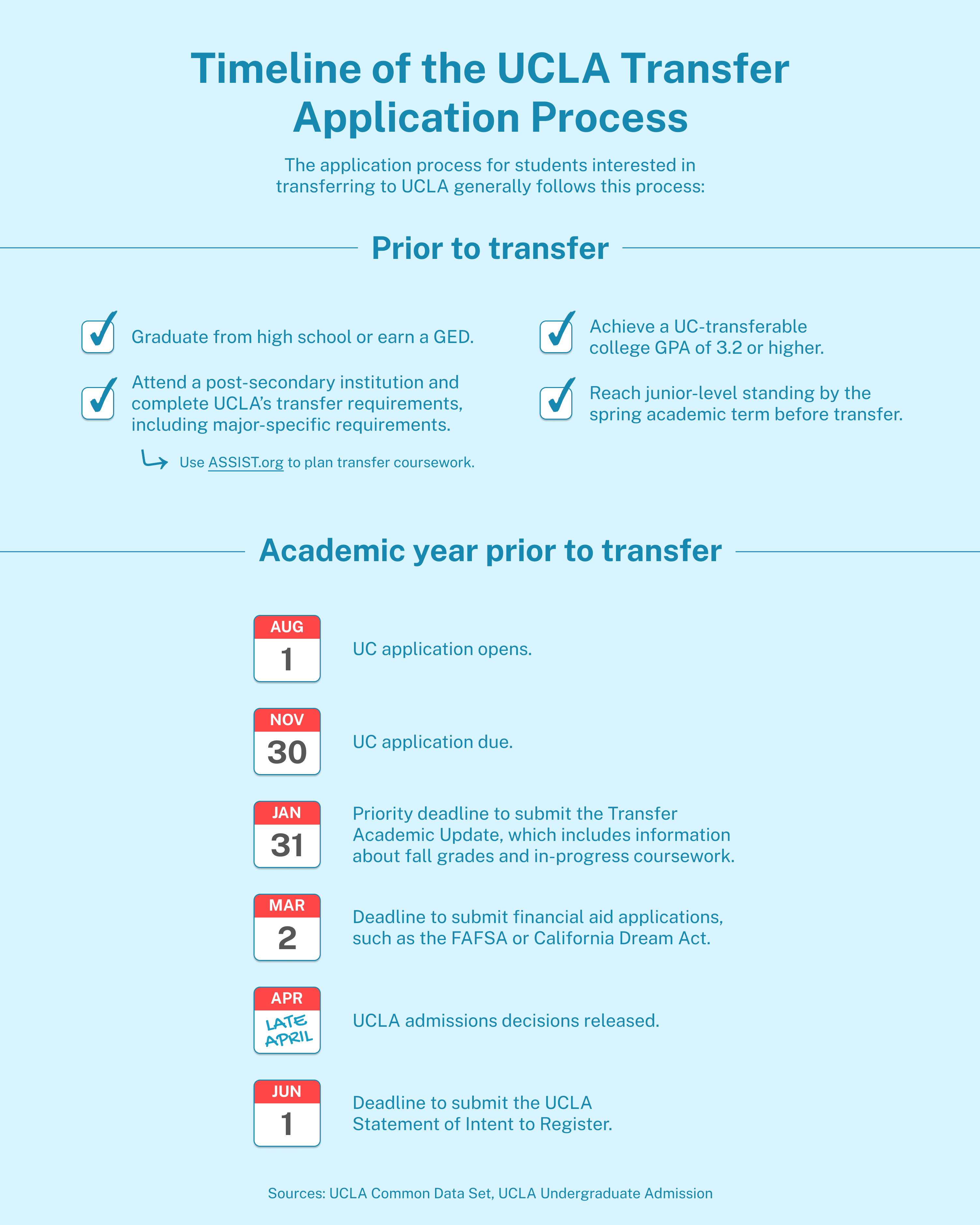
Imaan Kamran, a third-year nursing student, said her main advice to prospective UCLA transfer students is to take advantage of the various resources available to them. Kamran, who transferred from San Diego Miramar College, recommended resources like community college transfer counselors and the official California college transfer planning website, ASSIST.org.
Community college transfer counselors can help students plan their course loads, map out their degree plans and assist with the process of applying to four-year universities.
Kamran said she spent three years at community college before transferring because of the long list of transfer requirements for nursing students.
“I actually had a bit of experience already with my older sister, because she transferred,” Kamran said. “She said that she just made sure to talk to her counselor, and so I consistently did that.”
Myth #3: Transfer students are behind compared to their peers who were admitted as first-years
Hyerim Yoon, the Undergraduate Students Association Council’s transfer student representative, said a misconception she encounters at UCLA among nontransfers is that transfers are less capable than they actually are.
There is only so much transfer students can do to combat this idea, and they should not have to do it alone, Yoon said.
“We are on track with our other fellow traditional junior-level peers, but we still get treated like freshmen,” Yoon added.
Transfer students reported experiencing stigma about their transfer status, according to a survey from the Center for Studies in Higher Education at UC Berkeley. Nearly one in five survey respondents reported concealing the fact they were transfer students at least once in the past.
Despite institutional barriers that can be challenging, transfer students are a special and resilient community, Salter said.
At UCLA, transfer students graduate at an almost identical rate as first-year admits, according to UC data from 2024.
“Transfer students – I’m one myself – have a lot of grit, and they fight for what they need at a level that’s pretty amazing,” Salter said.