‘The essence of the law school’: School of Law ends graduation speaker auditions
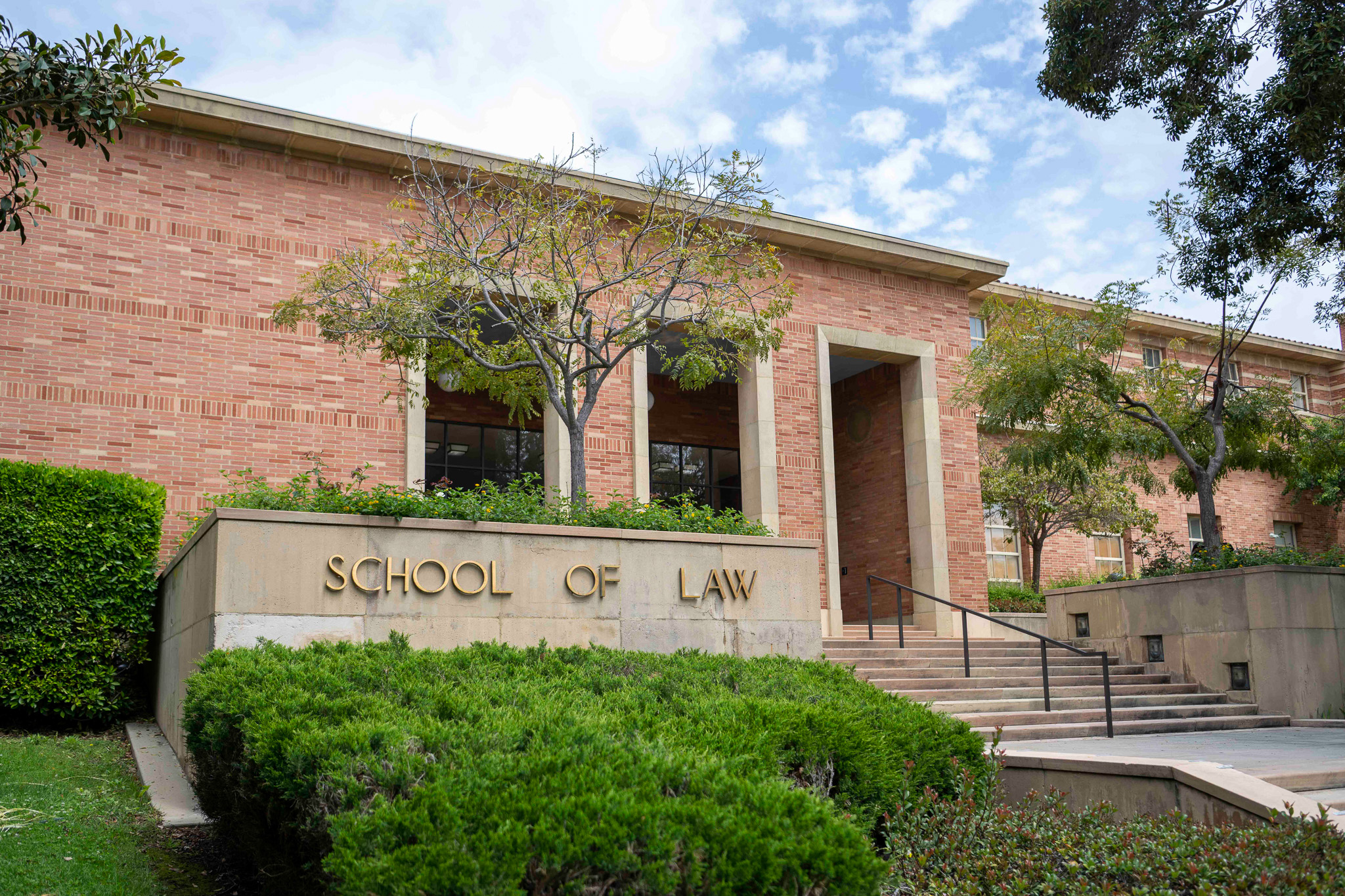
The School of Law is pictured. The Student Bar Association – the School of Law’s student body government – announced in a March 13 email that only SBA officeholders will provide the commencement remarks in May. (Crystal Tompkins/Daily Bruin senior staff)

By Alisha Hassanali
April 19, 2026 10:06 p.m.
James Womack was looking forward to auditioning to become a speaker at the School of Law graduation ceremony in May.
But this spring, Womack learned he was barred from doing – or auditioning for – the commencement speech.
School of Law historically used an open audition process for selecting student graduation speakers, according to a March 23 letter sent to the Student Bar Association Executive Committee. The SBA – School of Law’s student body government – previously created an audition committee composed of SBA Graduation Committee members and graduating student volunteers, the letter said.
The SBA announced in a March 13 email, however, that only SBA officeholders will provide the commencement remarks this year. Last year, more than 45 students auditioned to speak at the graduation ceremony, according to the March 23 letter.
“At the end of the day, it’s less about who speaks and more about whether the class had a role in choosing who speaks,” said Debby Rab, a law student at UCLA.
Aniq Chunara, a law student at UCLA, called for the reinstatement of an open audition process for graduation ceremony speakers in the March 23 letter to the SBA. More than 100 students across the juris doctorate, master of laws and master of legal studies programs at the School of Law signed the letter.
“The principal concern this raises is not about any particular student speaking, but about the elimination of an opportunity that has historically been open to the student body as a whole,” Chunara said in a March 11 email to Dean Michael Waterstone, Assistant Dean of Student Affairs Bayrex Martí and Director of Student Life Carmina Ocampo.
Destinee Dickson, the president of the SBA, said in an emailed statement that the SBA’s governing documents do not require an audition process for choosing a graduation speaker. The SBA made the decision to have elected leaders deliver speeches to create consistency and allow for representation across all the graduating programs, she added in the statement.
“We understand that students care deeply about graduation and want it to reflect the full class,” Dickson said in the statement. “This approach prioritizes representation across each graduating program through elected student leaders, while also ensuring the ceremony remains focused on celebrating all graduates and allowing time for the full commencement program, keeping the focus on each student and this special moment.”
Womack, a law student at UCLA, said he believes SBA’s response dismissed the students’ concerns. He added that he would like to see increased transparency from the SBA.
“We’re just trying to have a conversation about this,” he said. “Why was this not discussed? Why are we breaking with a decade worth of tradition on what this student speaker process looks like – without any visibility or any transparency from student government?”
Yanis Layadi, a LL.M. student at UCLA, said he believes the SBA’s decision excludes students who may have not joined student government but still have meaningful perspectives to share. Removing the audition process could limit diverse student perspectives and take away the class’s ability to have a speaker who truly represents them, Womack added.
Womack said he supports a goal to educate the next graduating class about continuing the tradition.
“There’s so many different people out there in our class that we find have fascinating backgrounds, fascinating stories. And those aren’t the same people that are interested in being involved in student government,” Womack said.
Layadi added that, while he was not interested in auditioning, he believes the removal of the graduation speaker tradition undermines democratic processes in student government.
“It’s the essence of the law school,” he said. “We’re taught at law school democratic values, diversity, inclusion, everything. So the least we can do is, for this particular moment – we should implement these values that we are taught.”