‘There’s not real power in Washington’: Former Sen. Butler is focused on the local
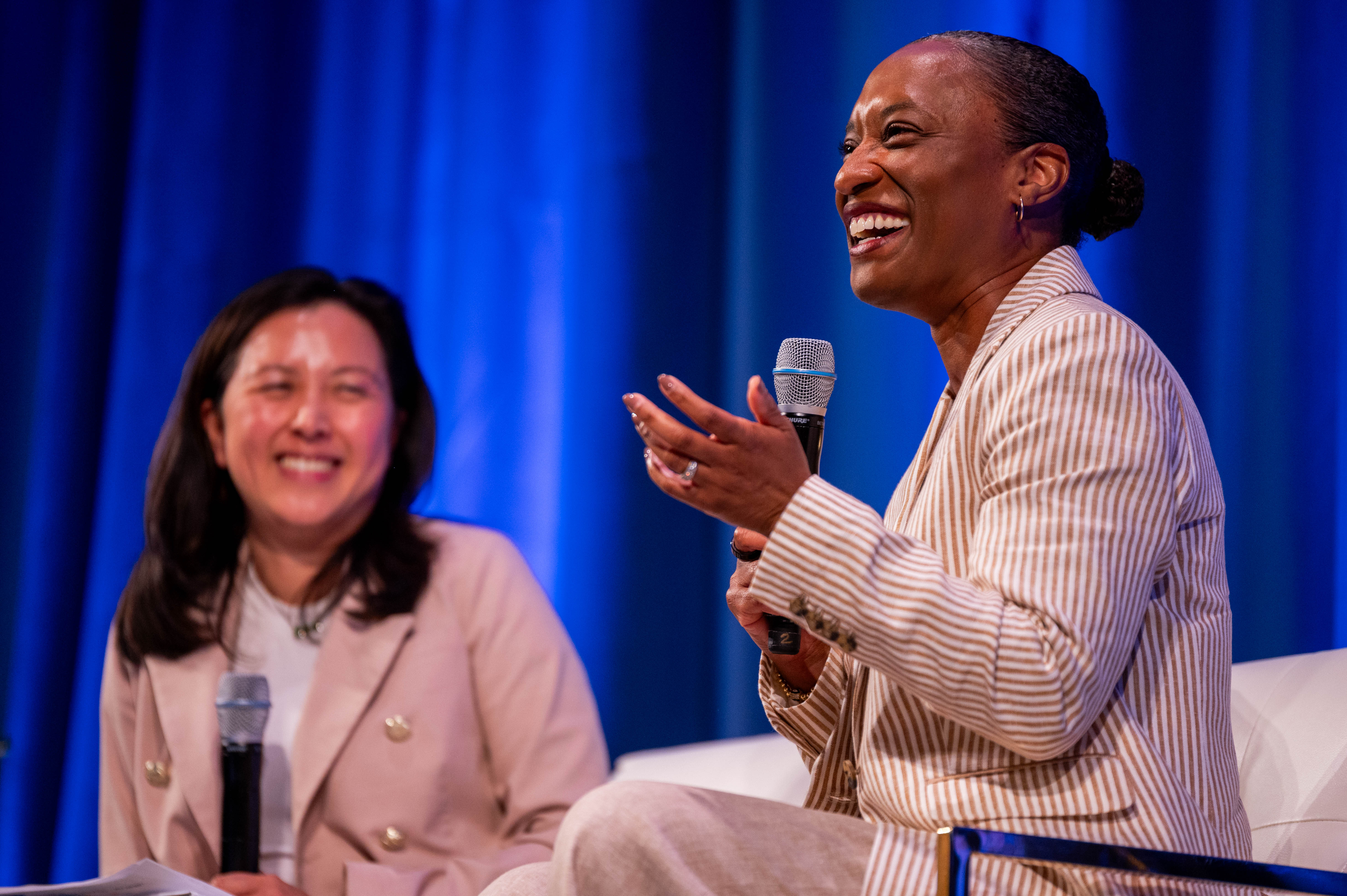
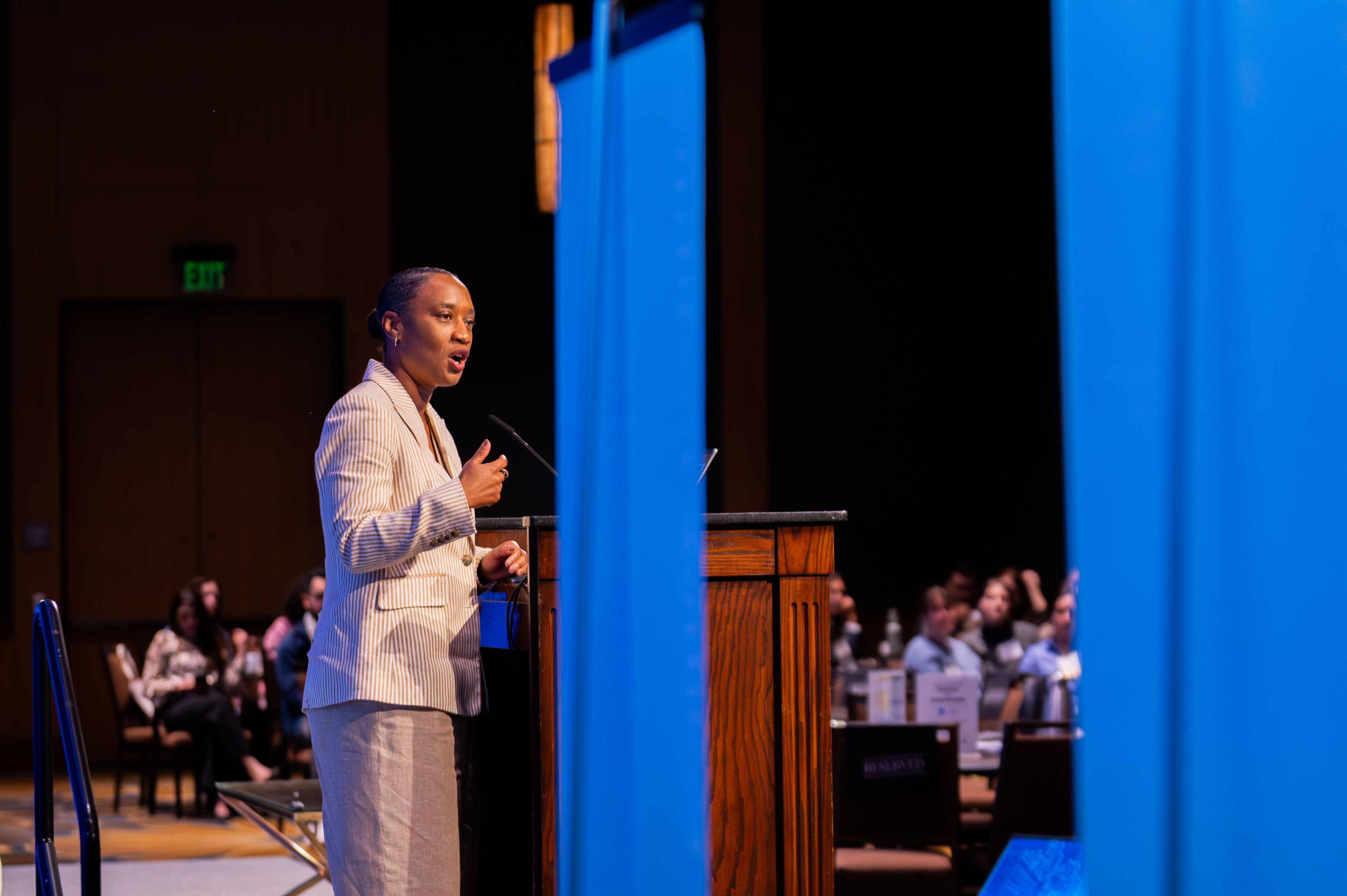
Former U.S. Senator Laphonza Butler and Alissa Ko, a UCLA alumnus and the vice president of external affairs for the insurance company Health Net, are pictured. Butler emphasized the importance of local government in enacting political change at the UCLA Luskin School of Public Affairs 2026 summit Wednesday. (Kai Dizon/Daily Bruin senior staff)

By Josephine Murphy
April 16, 2026 11:00 p.m.
Former U.S. Sen. Laphonza Butler emphasized the importance of local governments in enacting political change at the UCLA Luskin School of Public Affairs 2026 Luskin Summit on Wednesday.
Butler, the event’s keynote speaker, was appointed by Gov. Gavin Newsom to replace U.S. Senator Dianne Feinstein after she died in 2023. She was succeeded by Sen. Adam Schiff.
Butler was also previously appointed to a 12-year term on the UC Board of Regents in 2018 by then-Gov. Jerry Brown, but resigned in 2021 for other professional pursuits.
Butler said in an interview that she believes the Trump administration has targeted UCLA because it encourages critical engagement and independent thinking. The Trump administration froze $584 million of UCLA’s federal research funding in July – most of which has since been restored – citing that the university allegedly allowed antisemitism, affirmative action and “men to participate in women’s sports.” It also sued the university in February, alleging it allowed an antisemitic work environment.
“Don’t let somebody who’s never been on your campus tell you what your campus is supposed to be like,” Butler said in the interview. “You came to this campus for a reason and continue to make it great, not just because of those who made it great for you, but so that you can leave something great for those who are coming after you.”
Alissa Ko, a UCLA alumnus and the vice president of external affairs for insurance company Health Net, moderated the conversation.
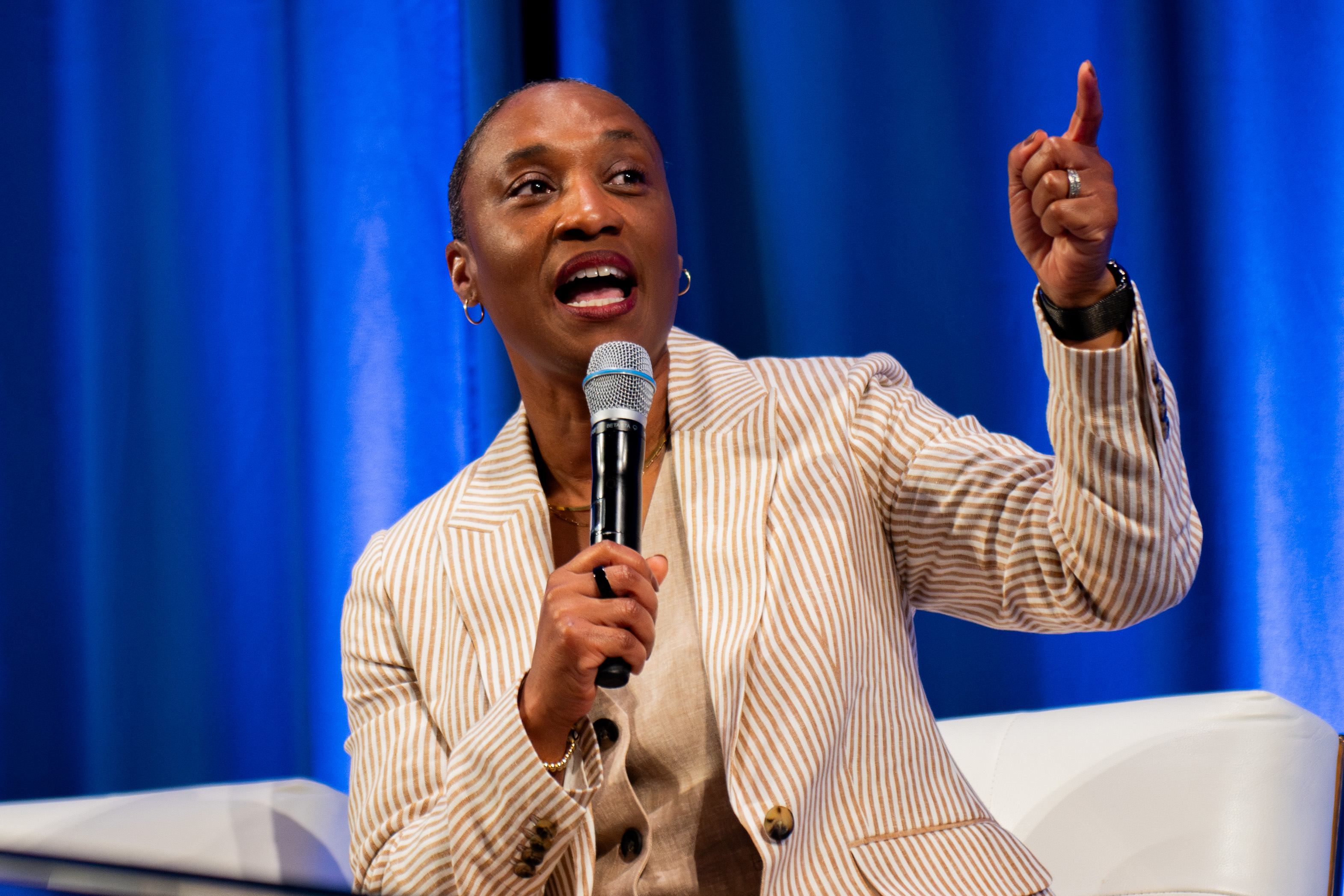
Butler said in a speech that many Los Angeles and California citizens are currently struggling financially because of the rising cost of living. Even with a decreased quality of life index rating, Butler said she believes Angelenos have maintained optimism.
Solving policy concerns rests in the hands of local governments, Butler added in the speech.
“Local is where power is tested,” Butler said “Local is where policy meets people.”
Butler said during the discussion that she chose not to run for the U.S. Senate because she did not see her role in the federal government as the best avenue for her to create change.
“There’s not real power in Washington,” she said. “The only power that exists in those buildings is the power that the people who don’t live in Washington give them.”
She added in the discussion that she believes a major issue in American politics is the difference in representation in the U.S. Senate, comparing California’s population of about 40 million to smaller states, whose entire populations are just fractions of the size.
Butler also said during the discussion she hopes greater participation in local government will propel change. She added that people need to be open to new leaders and that older generations should make way for younger voices in government.
Political instability in the U.S. has contributed to cynicism among young Americans, she said. No shortcuts can be taken when it comes to rebuilding trust, she added.
“There’s a whole generation of emerging leaders that have never experienced government working,” she said.
Anthony Garcia, a public policy graduate student, said Butler’s references to her identity and how it ties into her policy work were inspiring. The discussion made Garcia, a first-generation student, consider how he fits into policy discussions, he added.
“These are fields I’ve never been exposed to before, and so now having that critical consciousness of not only my position, but as well as the other people who are involved in these fears,” Garcia said.
Haregeweyne Kebede, a graduate student in public policy, said she appreciated Butler’s acknowledgement that maintaining hope can be difficult while working in policy.
Butler said during the discussion that she urges students to pursue careers and government, adding that they should not doubt them in the process.
“As a Black woman working in policy and politics, I know what it means to be in rooms that were not designed with you in mind,” she said. “I also know what it means to stay in the room anyway.”
Contributing reports by Rune Long, Daily Bruin contributor