UCLA advocates react to Trump administration’s anti-transgender demands
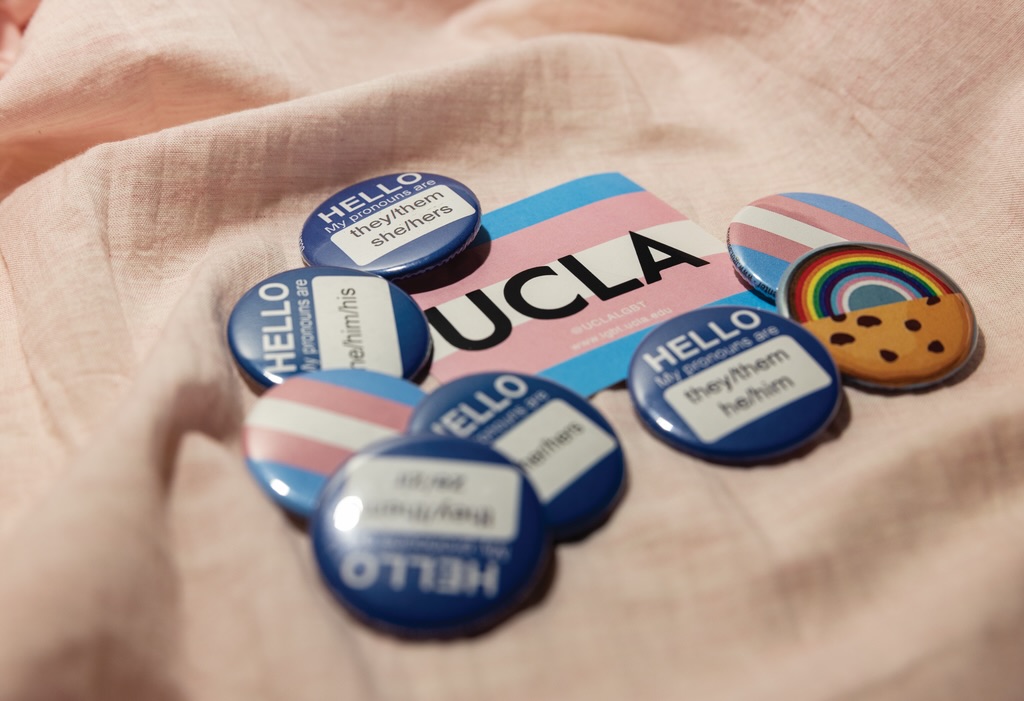
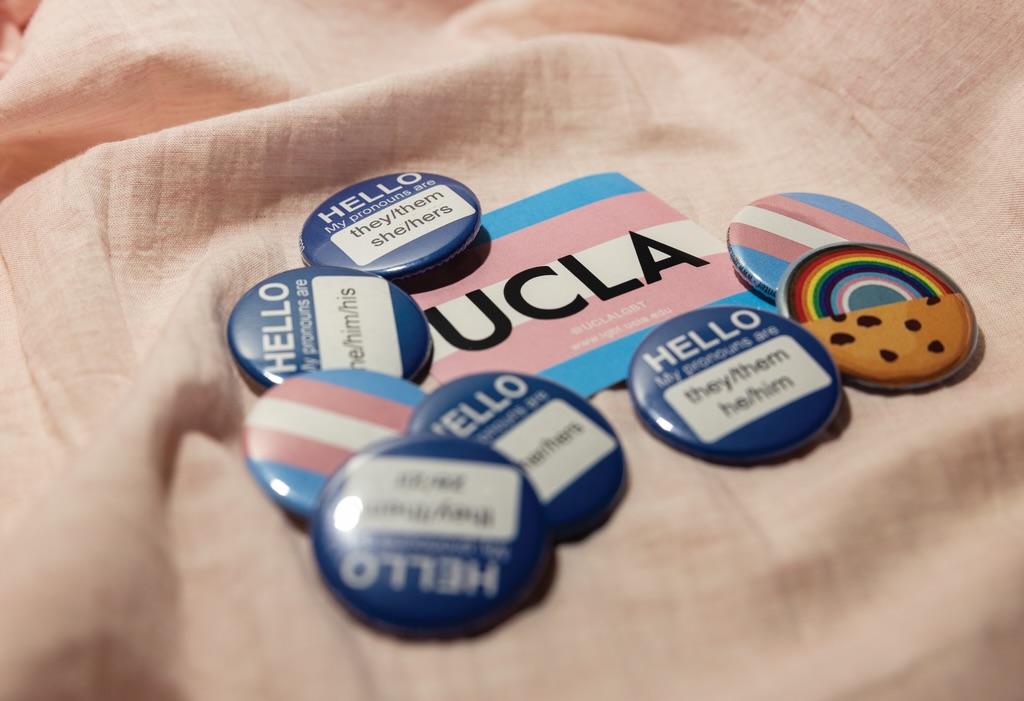
Pins with the transgender flag and sets or pronouns, as well as a sticker with the transgender flag on it, are pictured. The Trump administration asked the UC in August 2025 to implement anti-transgender policies at UCLA to regain its suspended federal research funding. The University did not accept them. (Daily Bruin file photo)

By Lilly Leonhardt
March 3, 2026 7:34 p.m.
The Trump administration asked the UC in August 2025 to implement anti-transgender policies at UCLA to regain its suspended federal research funding. The University did not accept them.
But the federal government’s demands are still alarming to the transgender community, advocates said.
“Trans Bruins are not abstractions in a policy debate,” said Jay Yusuf Taimish and Pamuk Altan-Bonnet, the co-presidents of the Lavender Health Alliance, in a co-authored written statement. “They are our friends, our neighbors, our classmates. They are integral members of this community who deserve the full protection of their rights, their dignity, and their freedom to thrive at UCLA.”
The federal government suspended $584 million in federal research funding to UCLA in late July, citing UCLA allegedly allowing transgender women to participate in women’s sports, as well as antisemitism and affirmative action, as reasoning for the freeze. However, a UCLA Athletics spokesperson told the Daily Bruin following the funding suspension that the university, as a member of the NCAA, complies with the league’s ban on transgender women participating in women’s sports, which was implemented after Trump signed a February 2025 executive order seeking to ban them from competition.
The Trump administration sent a demand letter to the UCLA about a week after the freeze, which requested that the university pay $1 billion and provide a $172 million claims fund for those allegedly impacted by Title VII violations. The administration asked for several policy changes, including ending diversity initiatives, restricting international student enrollment and hiring external auditors to oversee the university. The letter was not publicly accessible for more than two months – until a federal judge ordered its release in late October.
[Related: UC releases Trump administration’s proposed settlement for UCLA research funding]
A federal judge ruled in November that the settlement demands were illegal – which the U.S. Department of Justice initially appealed but later dropped Feb. 13. The same judge temporarily restored the bulk of UCLA’s frozen research funding in two rulings made in August and September.
The DOJ instead sued the UC on Feb. 24 for allegedly allowing for a hostile work environment for its Jewish and Israeli employees – an issue that Mary Osako, the vice chancellor for strategic communications, said in a written statement that it has taken meaningful steps to curb.
The proposed settlement included several anti-transgender policies the university would have to agree to to regain its federal research funding, including requiring UCLA to issue a public statement declaring that it does not recognize transgender people’s identities.
It also demanded UCLA end gender-affirming health care for minors at the David Geffen School of Medicine and all UCLA-affiliated hospitals.
UCLA would also have had to provide women-only housing, per the agreement’s terms.
“The settlement’s demands would fundamentally compromise UCLA’s ability to provide care consistent with established medical guidelines created by credible professional organizations,” Taimish and Altan-Bonnet said in the emailed statement.
Taimish and Altan-Bonnet added in the statement that if UCLA Health were to end gender-affirming care for minors, it would signal that political pressure can impact UCLA’s commitment to medicine.
“Even though most UCLA students are adults, this provision would affect the entire trans and non-binary student body,” Taimish and Altan-Bonnet said in the emailed statement. “An attack on the standard of care for minors signals that the University’s commitment to evidence-based medicine can be compromised by external political pressure.”
Natalie Munoz, a third-year human biology and society student, said she believes the settlement demands could be the first step of the Trump administration’s plan to limit health care for members of the LGBTQ+ community in the U.S.
Children’s Hospital Los Angeles – once a leading provider in transgender health care – closed its gender-affirming care clinic July 22. Kaiser Permanente halted gender-affirming surgeries for patients under 19 in August. Both CHLA and Kaiser cited pressure from the Trump administration as reasoning for the policy changes.
More than half of U.S. states have enacted some policies that limit minors’ access to gender-affirming care as of Jan. 29 – and half of all transgender youth in the U.S. live in 27 states that have restricted this care, according to the UCLA School of Law Williams Institute.
The proposed settlement also included an incorrect reference to the Feinberg School of Medicine when describing the anti-gender-affirming care policies that UCLA Health should implement. This is the name of Northwestern University’s medical school, part of a university the Trump administration also withheld federal funding from.
“It just goes to show you how this is clearly not the work of a professional who has the best interest of students in their heart,” said Tammy Ofek, the advocacy coordinator of Trans UCLA Pride.
The settlement also demanded UCLA appoint an administrator and resolution monitor to ensure UCLA has stopped providing surgeries for transgender minors and to issue semi-annual reports documenting UCLA’s compliance with the demands.
The Trump administration’s demands for political oversight over health care are alarming, Taimish and Altan-Bonnet said in the emailed statement.
Munoz, the vice president of the Lavender Health Alliance, said transgender students students are more anxious with being public about their identities as a result of these proposals.
“Something we talk about a lot in our club is the choice of anonymity,” she said. “We used to post a lot more pictures of our members, our group meetings, our board meetings on Instagram and things like that. We stopped doing that as much because of the fear that if UCLA were to have to denounce LGBTQ+ and trans communities – people in clubs like our club would be targeted.”
Ofek said she would be shocked if the university decided to comply with Trump administration’s demands.
“If UCLA were to make such a statement, or in fact, agree to many of these provisions – it would be an utmost betrayal of the promises that they’ve made to every single trans, gender-diverse, LGBT student on this campus,” Ofek said.