Recession or vibecession?: Experts predict 2026 is not headed for a recession
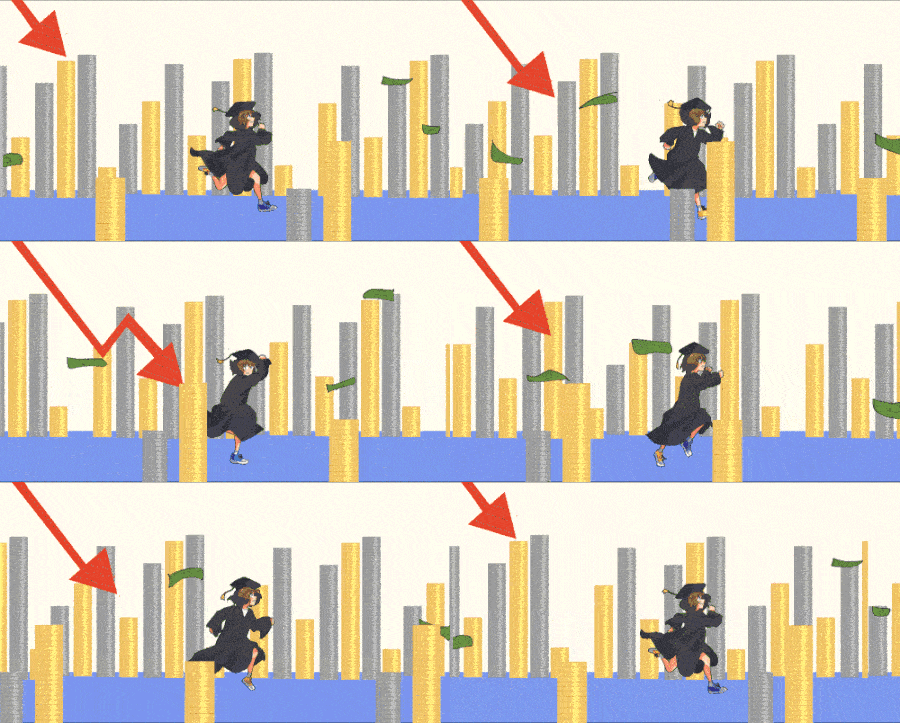
(Animation by Luna Fukumoto/Daily Bruin, Desiree Gonzalez/Daily Bruin staff)

By Senai Wilks
March 2, 2026 4:40 p.m.
This post was updated March 3 at 8:03 p.m.
Labubus, low-rise jeans and Lady Gaga – these unrelated items have been labeled by social media users as recession indicators.
For generations, people have pointed to specific popular culture phenomena to try and predict economic downturn despite data suggesting otherwise. Deviations in mainstream culture, consumer spending habits and fashion trends are now used as predictive tools for social media users online, according to CNN.
However, economists do not report that 2026 is a recession period or anticipate that one will occur later in the year.
Recessions are measured by analyzing domestic output and employment rates, said Harris Eppsteiner – the associate director of economic analysis at The Budget Lab at Yale – in an emailed statement.
“Gross domestic product (total income in the economy) is still rising, job growth – though slowing – is still positive, and unemployment – though ticking up – is still low,” Eppsteiner said. “In a recession we would see declines in GDP, negative overall job growth (i.e. job losses), and high unemployment, all of which would last for at least several months.”
According to the National Bureau of Economic Research’s Business Cycle Dating Committee, a recession occurs when economic activity significantly declines across the economy’s sectors for several months.
The committee identifies peaks and troughs in the economy by tracking business cycle factors such as consumer spending, employment levels and industrial production. Specifically, the month following a peak marks the beginning of a recession and the month of a trough marks the end, according to the NBER.
Chris Surro, an assistant adjunct professor in the Department of Economics, said two quarters of negative national gross domestic product growth can also precede an impending recession. He added, however, that this estimation tool is not always accurate.
“During COVID, for example, there was a very sharp downturn,” Surro said. “We actually only had one quarter of negative GDP growth, but it was so severe that that was classified as a recession despite not meeting that kind of rule of thumb.”
In the second quarter of 2020, GDP fell 28% from the previous period but quickly recovered to a 35% increase by the next, according to data from the United States Bureau of Economic Analysis. The COVID-19 recession began in February and ended in April, making it the nation’s shortest recession since tracking began in 1929.
Compared to 2020, GDP growth in 2025 only fell 0.6% in the first quarter and did not reach a recession, according to the NBER.
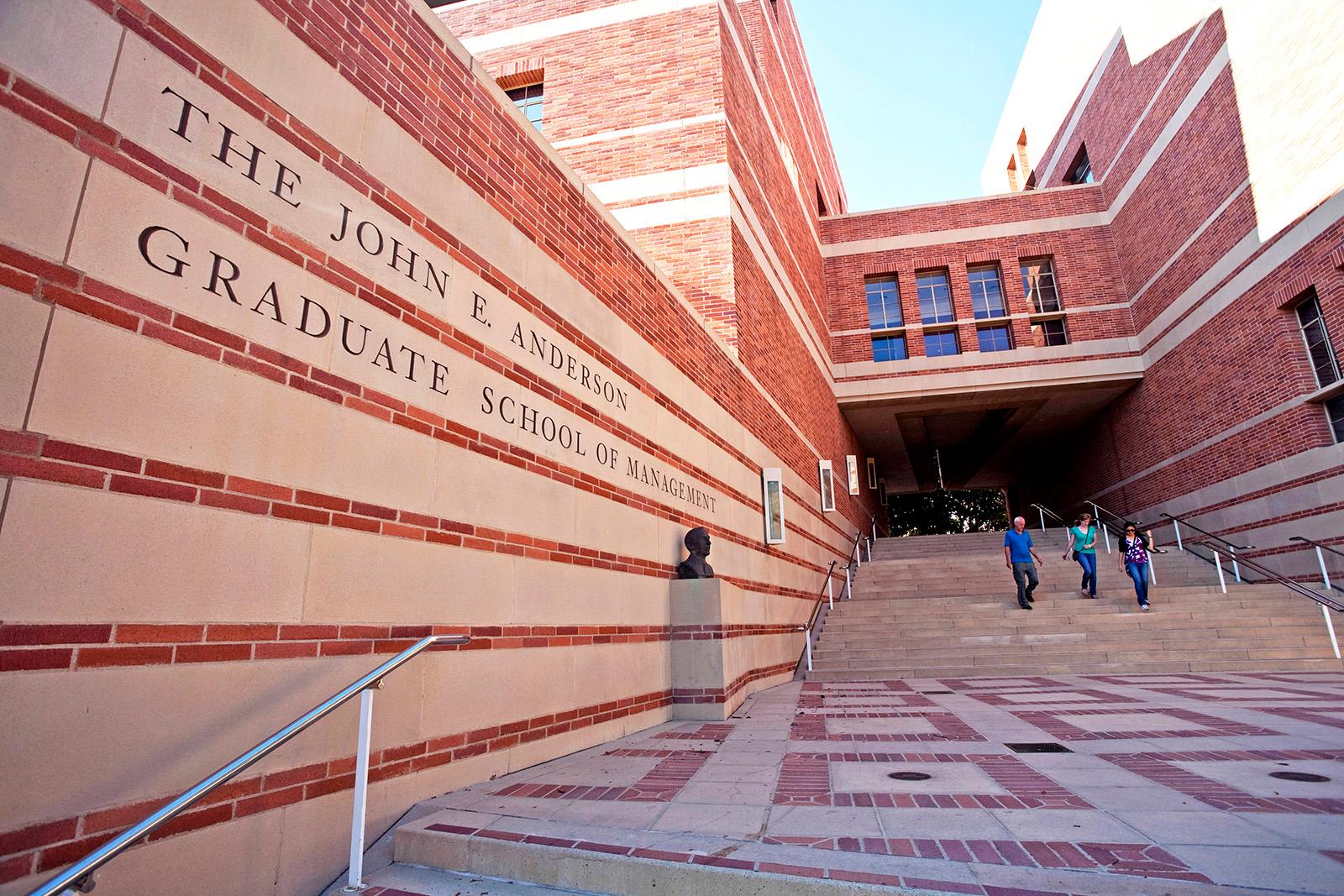
Last year, GDP remained high with a peak of $31 billion and low of $30 billion, which is often a sign of a healthy economy, but senior economist of the UCLA Anderson Forecast, Clement Bohr, said the nation’s high unemployment rate posed conflicting outlooks on the economy’s wellbeing.
“The economy is a complex organism,” Bohr said. “Things don’t always fit as neatly into our theories.”
Bohr said consumer spending by high-income households contributed to the steep increase in GDP, creating an incomplete portrait of consumer spending by middle- and low-income households. He added that despite the health care and social services industries seeing growth, nearly every other industry saw a decline.
Tracking unemployment rates offers another way of measuring a potential recession.
According to the U.S. Bureau of Labor Statistics, the unemployment rate was 4.1% in December 2024 but grew to 4.4% by December 2025, signaling the gradual rise in unemployment throughout the year. However, the unemployment rate decreased to 4.3% in January, which could possibly indicate increased employment in 2026.
Though 2025 was never actually a recession despite slow job growth, the average American negatively perceived the economy.
Surro said consumer pessimism toward the economy has been consistent since the pandemic.
In April 2025, the Federal Reserve reported that consumer sentiment in mid-2022 fell lower than during both the 2008 financial crisis and pandemic. By late 2024, sentiment rose slightly but was still substantially lower than pre-pandemic levels.
Consumer sentiment failed to recover the following year. According to the University of Michigan’s Surveys of Consumers, consumer sentiment in 2025 was low – signaling pessimistic outlooks on personal finances and the overall health of the economy.
Consumers’ tendency to rely on emotion rather than statistical evidence is not unusual.
In 2022, economic commentator Kyla Scanlon coined the term “vibecession” to explain the phenomenon of consumers believing that the economy is worsening even if data says otherwise. For consumers who believe in recession indicators, a vibecession could be motivating their reliance on these predictive tools, according to the economic news site Marketplace.
This framework can also offer a possible explanation for low consumer confidence.
In a January 2026 report, the University of Michigan found that starting in 2025, older people on average had a more positive outlook on the economy than younger generations.
Surro said inflation could be a potential explanation for why consumer sentiment has not recovered since the pandemic recession. He added that although inflation is an indicator that people have money to spend, it can be demoralizing to have prices rise at the same or at a greater rate than wages.
The BLS reported that the consumer price index – an index measuring the average price in urban households’ consumer baskets – went up 2.7% over the course of a year. In January 2026, CPI rose 0.2% compared to the previous month. The BLS measures these rising CPI figures as official signals of potential inflation.
Surro also said high youth unemployment statistics may have contributed to low confidence for college-aged consumers.
The BLS reported that in July 2025, 10.8% of people aged 16 to 24 were unemployed – a 1% increase from July 2024. In comparison, the youth unemployment rate was 8.7% in July 2023 and 8.5% in July 2022.
Bohr said when the economy is facing a weakening labor market, the most vulnerable parts of the labor force face the greatest hits – including minority workers and young workers – impacting college students seeking jobs post-graduation.
This year’s economic outlook is still uncertain, but Eppsteiner said tariffs and artificial intelligence will determine 2026’s economic growth.
“Going into 2026, the big questions are (a) how much will various policies continue to put a drag on economic activity, and (b) to what extent this ‘AI boom’ is going to continue,” Eppsteiner said in an emailed statement.
Anticipating the rise in technology firms expanding into AI and positive impacts of the H.R. 1 bill, Bohr said the 2026 economy should grow at or slightly above its potential rate. According to the Congressional Budget Office, GDP is projected to grow by 2.2% in 2026.
According to the Stanford Institute for Economic Policy Research, most forecasters expect slight job growth and for the current unemployment rate to remain stable throughout the year. Other economists predict the labor market will grow in the second half of the year as consumers feel the effects of tax cuts and the easing of monetary policy.
However, they report that the economy could be negatively affected if AI encourages greater layoffs or if unemployment fails to stabilize. These outcomes will only be revealed as the year continues.
“We’re cautiously optimistic,” Bohr said.