Opinion: It is dangerous, insensitive for UCLA to call Bari Weiss ‘future of journalism’
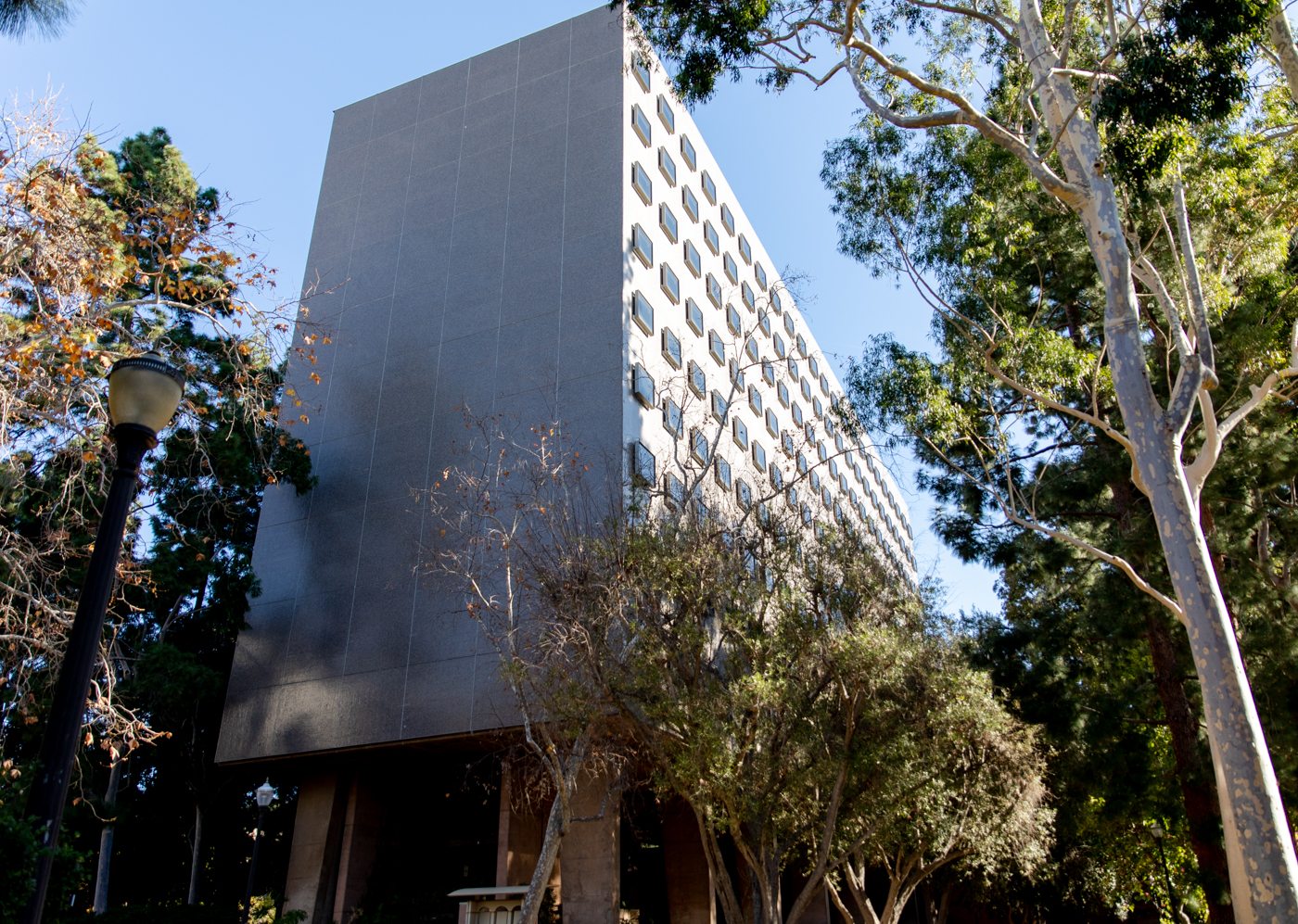
Bunche Hall is pictured. Even though her lecture has since been canceled, calling Bari Weiss the future of journalism was dangerous and insensitive, writes columnist Rana Darwich. (Daily Bruin file photo)

By Rana Darwich
Feb. 24, 2026 2:52 p.m.
This post was updated March 29 at 7:28 p.m.
Editor’s note: This article contains references to alleged sexual assault, which some readers may find disturbing.
For a now-canceled event, UCLA’s Burkle Center for International Relations invited Bari Weiss, who has a pattern of minimizing sexual assault allegations, to speak at “The Future of Journalism” lecture.
The lecture is off the calendar. But the message it sent is not.
By promoting Weiss under that banner, the Burkle Center signaled what kind of journalism it is willing to endorse. The decision to frame Weiss as “The Future of Journalism” is insensitive and dangerous, especially since our democracy is in such a fragile state.
[Related: Opinion: Journalism, being a journalist is an act of resistance we must lean into]
Controversial figures can provide useful insight. But treating Weiss as the future of journalism endorses a reality in which dismissing survivors and censoring student investigative work are considered success.
In 2018, popular comedian Aziz Ansari’s date accused him of coercive sexual behavior in an article published by Babe, a now-closed feminist media outlet. Weiss described what happened as just bad sex in a New York Times opinion column written in response.
In her column, Weiss rejected characterizing the encounter as sexual assault, instead arguing that Ansari was “guilty of not being a mind reader.” She wrote that he had no professional leverage over his accuser and said she believes including the story in #MeToo trivializes the campaign.
Christine Blasey Ford testified in front of the Senate Committee on the Judiciary that then-Supreme Court nominee Brett Kavanaugh sexually assaulted her. Weiss said she believed Ford was honest but questioned if her account should disqualify Kavanaugh.
“We all know memory is capricious,” Weiss said in a September 2018 appearance on MSNBC. “Should the fact that a 17-year-old presumably very drunk kid did this, should this be disqualifying?”
Weiss’ comments minimize the severity of sexual assault: a life-altering, traumatic crime inflicted on another human being.
“The future of journalism needs to be speaking out on these things, reporting the truth as they happen,” said Abhishek Jagannathan, a former Daily Bruin contributor and second-year public affairs student. “Journalism has to hold the government accountable.”
Prominent journalists publicly questioning sexual assault survivors contributes to a culture that shames survivors. When this criticism is public, those who have experienced sexual violence may not want to come forward with their stories.
“Sexual assault is a really big deal,” said Allyson Jamka, a third-year chemistry student who said she has experienced sexual assault. “I don’t think it’s something that should be just put underneath and shoved to the side, especially when it’s someone in office or someone in power.”
Four out of five students do not report the sexual violence they experience to law enforcement, according to the Rape, Abuse and Incest National Network. Thirteen percent of graduate and undergraduate students experience sexual assault, according to RAINN. On a campus the size of UCLA, that amounts to thousands of students.
“What Bari Weiss had to say regarding sexual violence is again very diminishing to women who have been through this kind of thing,” Jamka added.
But Weiss’ harm to journalism extends beyond her pattern of undermining survivors’ experiences with assault.
In December 2025, as CBS News’ editor in chief, Weiss pulled a 60 Minutes segment exposing human rights abuses against more than 252 Venezuelans who were deported to El Salvador’s brutal Terrorism Confinement Center. The segment featured research conducted by students at UC Berkeley’s Human Rights Center, who spent months investigating conditions inside the facility.
Weiss became editor in chief of CBS News after Paramount, CBS’s parent company, needed federal approval for its sale to Skydance, owned by David Ellison. Critics have pointed to the timing and the Ellison family’s public support for President Donald Trump as raising questions about the appearance of political and corporate conflicts of interest.
Kyle Sweasey, a graduate student in journalism at UC Berkeley who worked on the investigation, said that while the student researchers wanted to call attention to the Venezuelan men’s suffering, attention instead was drawn to Weiss, Ellison, CBS and censorship.
“The message that it sends is that you have your fun in your journalism pursuits while you’re in school, but as soon as you leave school, you will have to fall in line to this model that is basically a stenographer for power, a spokesperson for the billionaire class,” Sweasey said. “That’s what Bari Weiss seems to be representing more than anything.”
A UCLA spokesperson declined to address specific questions about Weiss’ record or the speaker selection process, instead directing the Daily Bruin to the university’s administration and policies webpage.
But a link to Title IX resources cannot pass for accountability.
[Related: CBS Editor-in-Chief Bari Weiss’ UCLA on-campus lecture canceled]
If Weiss is who the Burkle Center was prepared to allow to teach the future of journalism, the university implies dangerous standards and expectations for the field. Journalism should be a means of truth and an upholder of democracy, not a model where, as Sweasey writes, media executives get to decide what is platformed.
“Having someone come to campus like that is setting up a space for people who have been abused that is not safe,” Jamka said. “With UCLA having the Rape (Treatment) Center on the back of their ID card, we can’t just be having people like that walk onto campus when we are so strongly against sexual assault.”