UCLA alumnus Dakota Dry learns ‘How to Begin Again’ in debut album
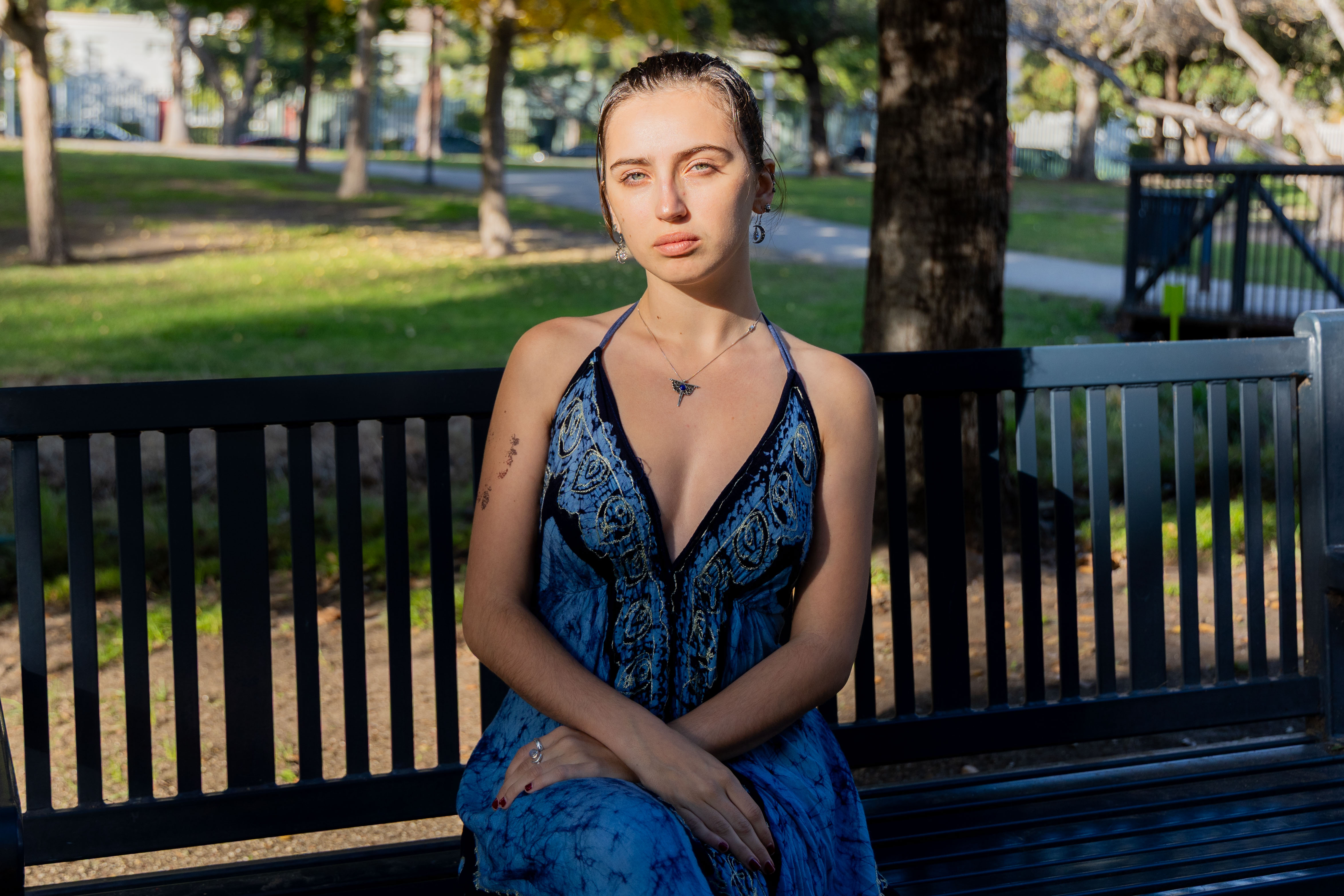
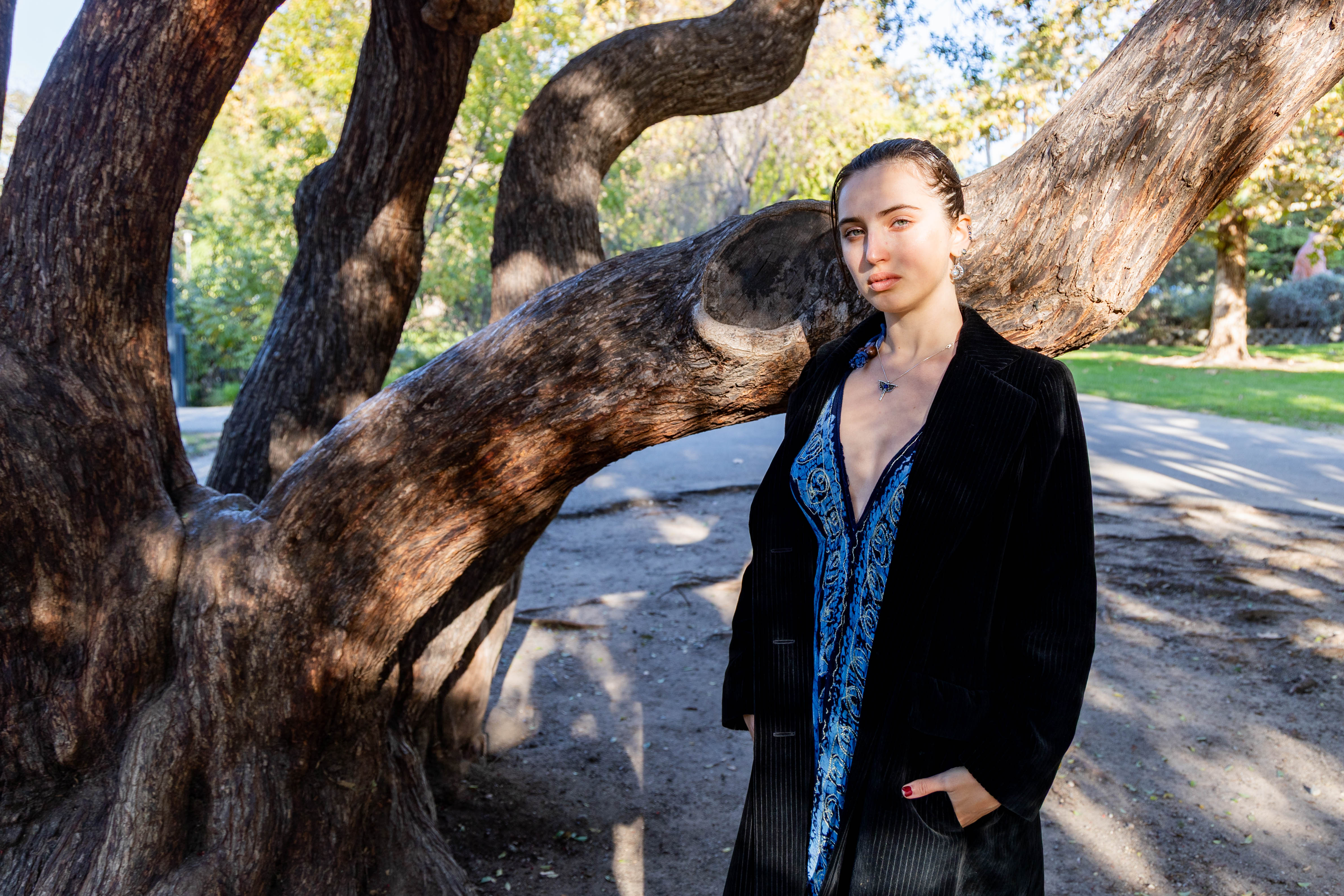
Pictured is UCLA alumnus Dakota Dry, sitting down on a bench while wearing a blue dress. Dry released her debut album, “The Edge of Our Never Ending Universe,” in November 2025. (Chenrui Zhang/Daily Bruin)

By Reid Sperisen
Feb. 18, 2026 4:02 p.m.
This post was updated Feb. 18 at 8:50 p.m.
For Dakota Dry, “The Edge of Our Never Ending Universe” is a place she knows.
The singer-songwriter and alumnus graduated in 2024 with a degree in ethnomusicology and released her debut studio album, “The Edge of Our Never Ending Universe,” in November 2025. Dry said she wrote the first song for the LP in 2020 and began compiling tracks to make an album in 2024. With nine songs, the LP includes tunes such as her 2023 release “Hopelessly” and the 2024 single “How To Begin Again.” Dry said her music feels like a time capsule, as poems written in her Notes app have evolved into complete songs.
“A lot of these songs, they just really flowed out of me in moments of necessity,” Dry said. “But there are also songs that I’ve sat with and edited over time, but the core pieces of them flowed out.”
Dry said she recorded some of the songs on the album in studios at the UCLA Herb Alpert School of Music during her time as a student and others at home studios of producers she collaborated with in North Hollywood. The singer-songwriter said she played piano on some of the songs and developed all of the album’s string arrangements but worked with friends and collaborators to find the sounds she wanted with other instruments such as drums, bass, violin and electric guitar. Some of the tracks, such as the first single “Hopelessly,” were recorded as close to live as possible, playing the instruments together at the same time, Dry added.
[Related: Emily Chu connects with audience through honest lyrics, circular relationship]
One of the musicians Dry worked with was alumnus Hannah Searles, who graduated in 2025 and played bass on the new record and in Dry’s live shows. Searles said the songs were recorded across a few different sessions but with the guitarist and drummer also present to ensure a cohesive sound. Despite experiences recording songs with other artists, Searles said it is a distinctive feeling with Dry because of the personal nature of the singer-songwriter’s work.
“I play quite a bit of live music these days, and I’ve done quite a bit of recordings,” Searles said. “When you have someone like Dakota, whose music is so deeply personal to who she is, it feels really special having those songs come together.”
Some of the artistic influences who shaped the album include Adrianne Lenker, Big Thief, Mitski and Weyes Blood, Dry said. The third track “Why Can’t You Free Me” was difficult to record because of the vocal range it requires, but Dry said she likes to write songs just outside of her vocal abilities so she can work her skills up to them. The title track is the tune that Dry said she is most proud of in terms of lyricism and songwriting. The songs on the album are autobiographical and have become more self-referential over time, Dry added.
“Maybe details are changed and things like that, but the core feeling is always something that I was needing to release in some way or was experiencing in some way,” Dry said. “I am listening to these songs and like, ‘Oh my god, this is so funny. I really felt that way, that’s crazy.”’
The title track was essential for inspiring the direction of the album, which Dry said focused on prioritizing authenticity to herself without trying to appeal to a specific audience. Dry considered several choices for the album title, including “New Moon” and “How To Begin Again,” but said she chose “The Edge of Our Never Ending Universe” because it felt truthful to the album concept and allowed each track to be part of the same universe.
“I wanted the album to be a journey of being in a relationship,” Dry said. “I wanted to track that feeling of being so completely immersed in this universe of this person, and then the universe that you create with a person and that feeling of being in that world.”
The same intention went toward the photo shoot for the album’s cover, which Dry said was meant to feel like a symbol by using a shot of her hands rather than her face like the rest of her single covers. Dry said the cover was shot while on a camping trip with her friend and collaborator Raina Markham, with the original goal of showing the crescent moon tattoo on her left wrist and the hawk tattoo on her right wrist. The album cover is a still image taken from a video of her hands playing with water in a lake – the blurriness making the cover appear like a painting, she said.

Markham, who graduated from UCLA in 2024 and met Dry when they were both first-year students, said it has been satisfying to see Dry’s work out in the world after months or years of development. She added that she played violin for Dry on the album and has enjoyed watching the evolution of some of the songs as the sounds changed over time. “How To Begin Again” underwent several changes, Markham said, but her favorites from Dry’s album are the title track for its performance value and “Eve” for its cinematic quality.
“The way that she writes her lyricism is so beautiful,” Markham said. “It’s real and candid, but also so lyrical. I know exactly what she’s talking about, but at the same time, it’s mixed in with this beautiful, poetic language.”
[Related: UCLA alumnus Liam McGrath immerses listeners with self-written musical soundscapes]
Dry said the creation of art, particularly in the music industry, is more important than ever as artists remain committed to their crafts despite limited income from streaming services. She said creating her own music has taught her more about herself, and she hopes other people can resonate with her art. She added that her music attempts to capture huge and incomprehensible feelings and describe them in a relatable way.
“I think we all have this kind of magnetism to trying to understand the truth of ourselves and the world and our lives,” Dry said. “These songs have been a part of that process for me and have resonated with me deeply in those times.”