After the flames: Experts evaluate effects of the 2025 LA wildfires one year later
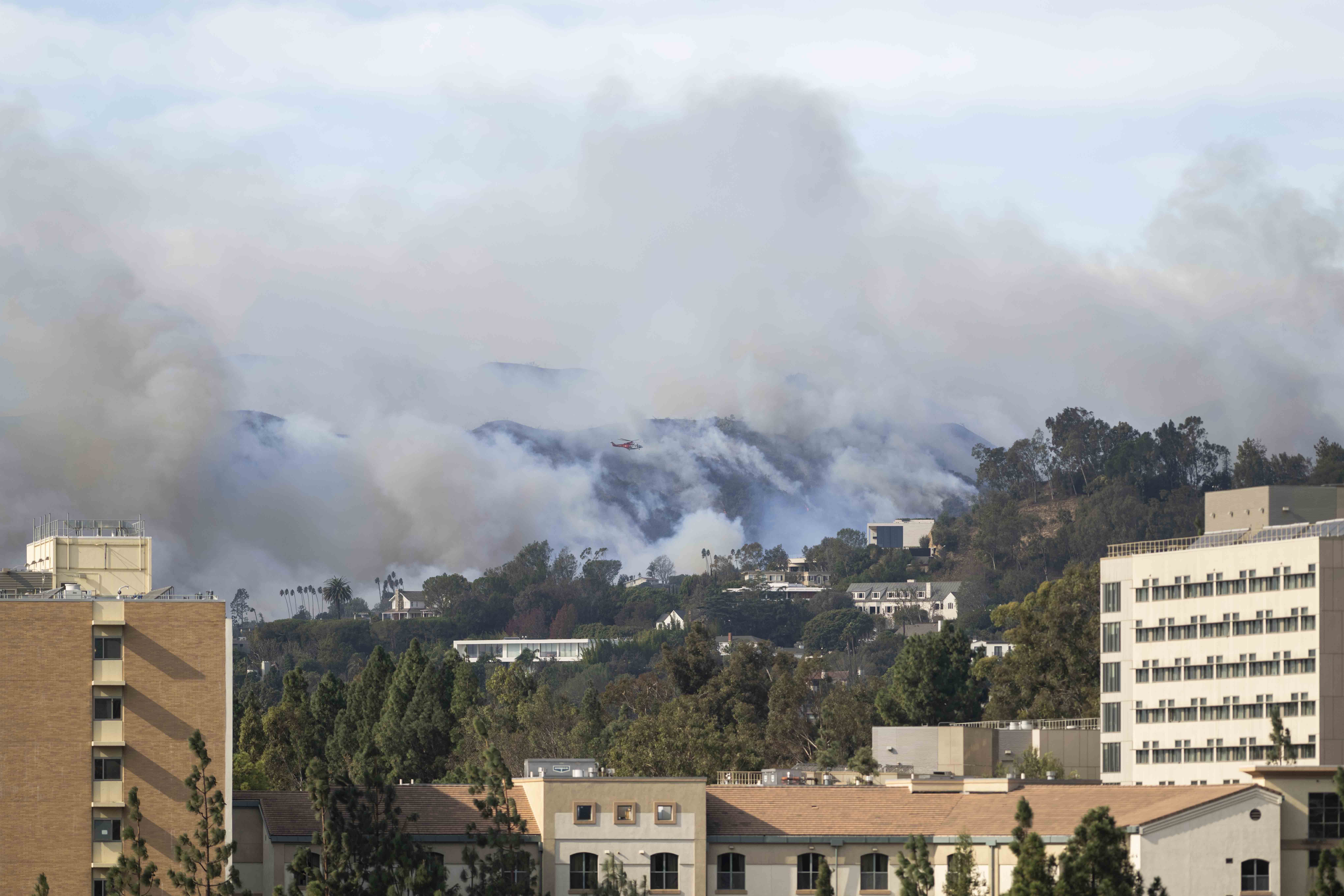
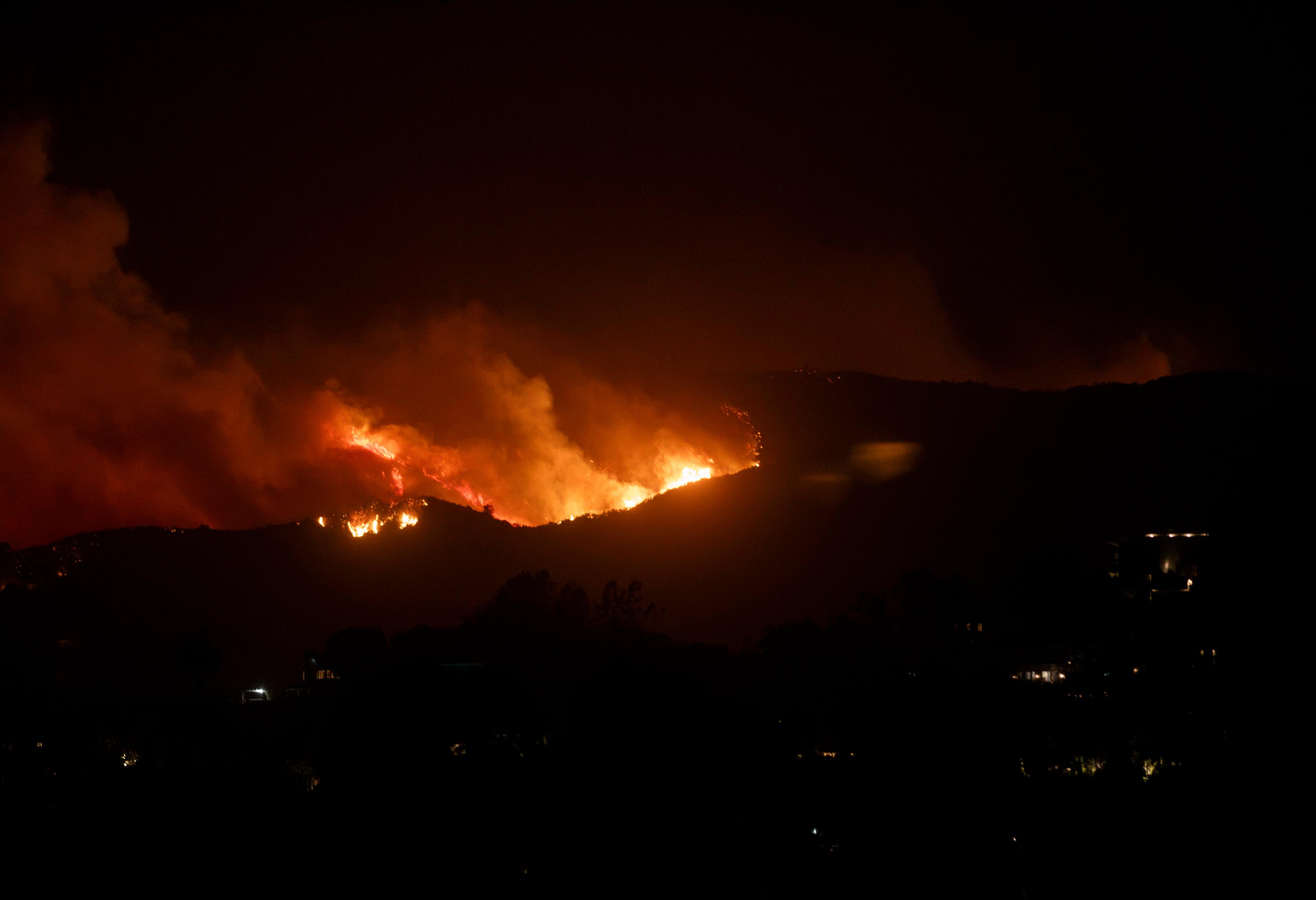
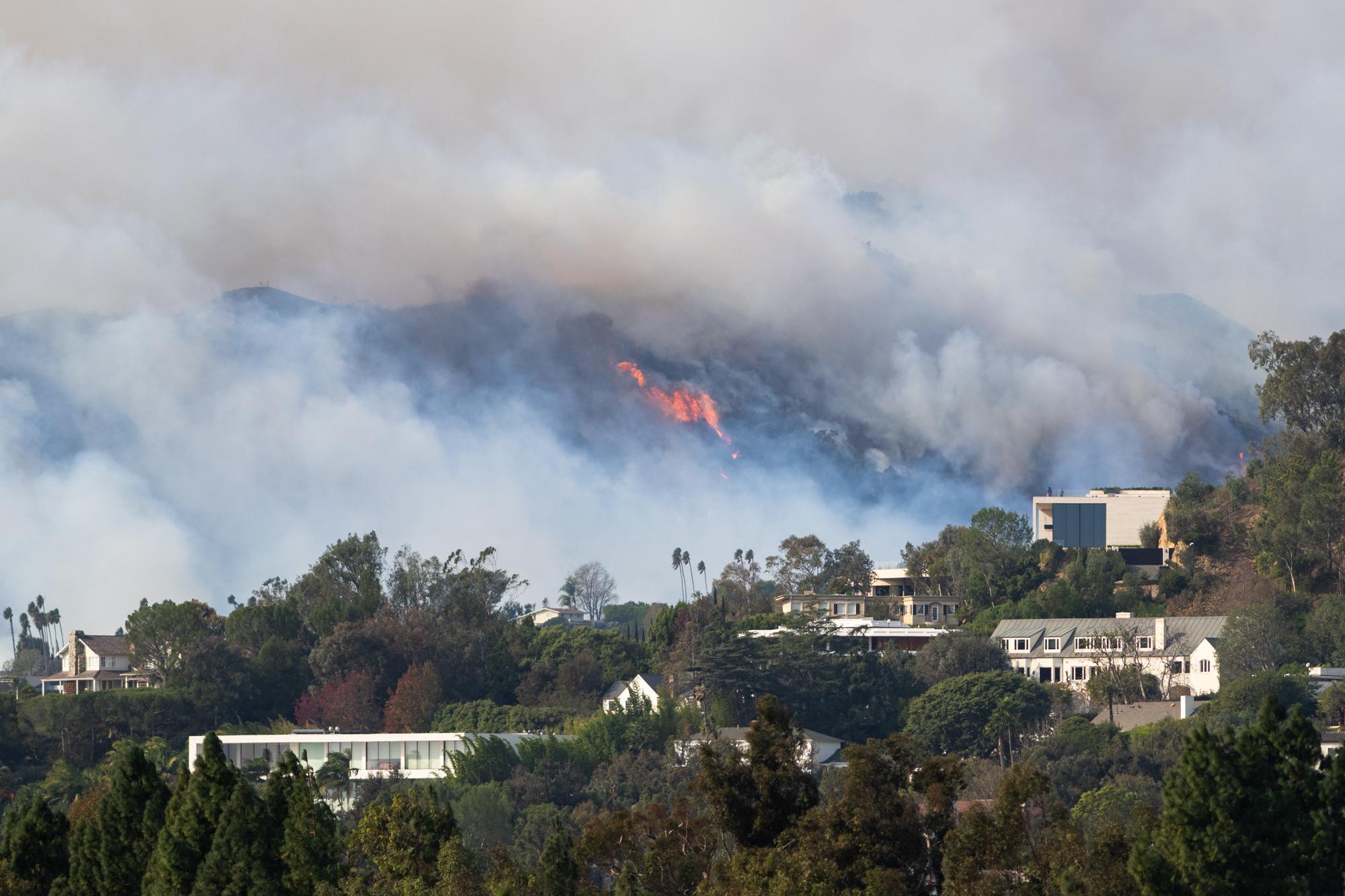
Smoke rising into the sky from the 2025 Palisades fire is pictured. The 2025 Los Angeles wildfires have ranked as among the top 10 most expensive natural disasters in United States history. (Aidan Sun/Assistant Photo editor)

By Riya Abiram
Feb. 17, 2026 7:35 p.m.
This post was updated Feb. 18 at 10:35 a.m.
Experts have evaluated the January 2025 Los Angeles wildfires to be among the top 10 most expensive natural disasters in United States history.
Reports from the UCLA Anderson School of Management place the total property and capital losses between $76 billion and $131 billion. According to the New York Times, rebuilding is estimated to take, at minimum, another five years. One year after the fires, UCLA researchers reflect on the lessons learned from the past and ways to better prepare the city ahead of future fires.
A major focus of current research is understanding the disaster’s impact on health outcomes.
People in evacuation zones saw a worsening of existing health conditions, alongside declines in mental health, said Dr. David Eisenman, a professor in residence at the David Geffen School of Medicine.
“We saw spikes in emergency room visits for lung problems, respiratory complaints and also for heart attacks,” Dr. Eisenman said.
According to a Stanford University report, wildfire smoke is estimated to be roughly 10 times more toxic than typical ambient air pollution.
While standard pollution largely stems from fossil fuels, wildfire smoke carries a mix of volatile organic compounds, benzene and heavy metals. These fine particulates are especially dangerous because they can penetrate deep into the lungs and enter the bloodstream, driving the spike in respiratory and cardiovascular issues, according to the Stanford report.
According to the same source, the more frequently individuals are exposed to wildfire smoke, the higher their risk for long-term negative health outcomes. This puts LA residents at significant risk, as the region is particularly prone to wildfires.
The local climate in LA presents a particular risk for fires, said Gregory Pierce, director of the UCLA Human Right to Water Solutions Lab.
“We also have this concentration of extremes where we get wetter periods as well, and that helps to lead to more vegetation more quickly,” Pierce said. “Then it dries out and leads to more dry fuel, and then when it gets super dry and hot, the fires are likely to break out, and there’s more for them to persist on – so it’s kind of a vicious cycle.”
To mitigate the effects of LA’s weather cycles, researchers are exploring urban design changes that may better protect residents.
Hitoshi Abe, a professor at the UCLA School of the Arts and Architecture, said he uses the principle of regenerative urbanism – an approach that recognizes the flexible infrastructure within cities and its capacity to adapt to threats such as wildfires.
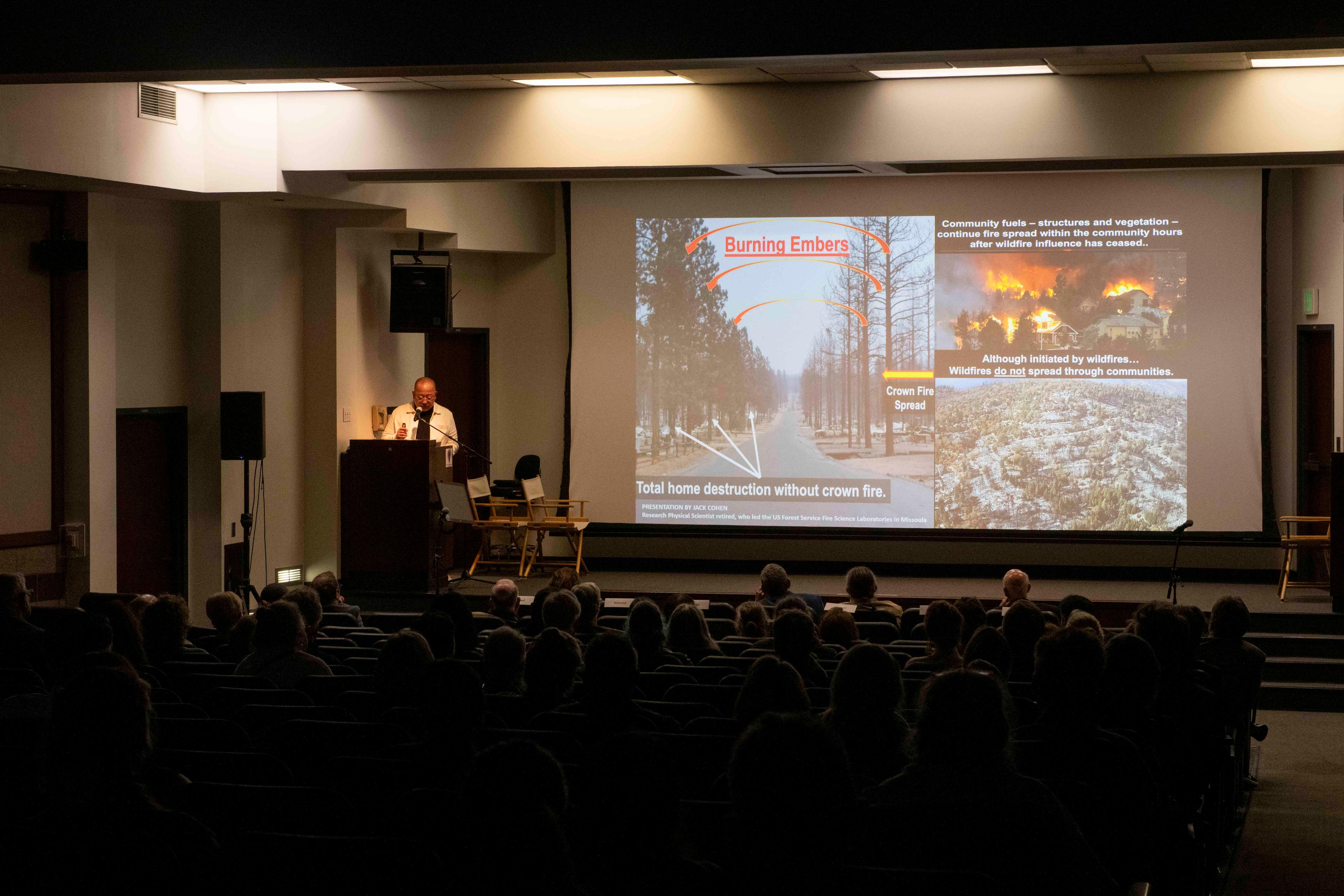
One proposal involves dividing cities and wildland-urban interfaces into clusters protected by firebreaks. These WUIs are defined as high-risk zones where human development meets wilderness, a category that encompasses nearly the entirety of areas like Altadena and the Palisades.
“Regenerative urbanism is a way to mediate these two phenomena – the human activity, or the human mechanism, and also nature’s mechanism – and try to find a way to weave them into each other so that they can co-exist, and we can kind of let the disaster go,” Abe said.
Before any such innovative strategies can be implemented, a UCLA Architecture and Urban Design study found that experts from other fields, such as politicians, investors, insurers, businesses and policymakers, must be properly consulted.
“Any sort of urban design or approach requires collaboration with a political entity or a large community entity and so on, and all of them have their own agenda,” Abe said. “I don’t think it’s impossible – but (it is) difficult – to kind of mitigate all these different sorts of conditions.”
In addition to proposing new architectural models, several researchers are investigating why established water infrastructure systems proved insufficient during last year’s disasters. This follows public and policymaker backlash over the perceived underperformance of water infrastructure in the January 2025 wildfires.
According to Pierce’s research, the temporary loss of hydrant pressure during major urban fires, like the Palisades and Altadena fires, is a predictable outcome of high demand, depleted storage and topographic limitations.
While the public often views these failures as alarming, there was no actual shortage of water in the LA region as a whole. Instead, the crisis centered on the timely availability of water and the physical challenge of delivering it to specific areas of need during a fast-moving disaster.
“The core sort of issues are around the physical properties of water and how water pipeline systems are designed in that you can’t move water around quickly, especially not uphill, which is what you’re often having to do with these fires,” Pierce said.
This issue remains difficult to resolve because water distribution systems are fairly rigid infrastructures. Peak water flow is strictly regulated by the size of the pipes, which do not adapt to spikes in demand and cannot easily be scaled up during emergencies, according to the UCLA Luskin Center for Innovation.
Rather than working to improve existing infrastructure, Pierce said communities should look toward alternative solutions.
People are looking for more temporary solutions, such as establishing better coordination with fire agencies or storing water locally to negate existing regulatory standards, Pierce said.
While current research has identified the immediate health toll of last year’s wildfires, long-term outcomes are still unknown.
In an effort to close these gaps, Eisenman, alongside other faculty members, established the UCLA Wildfire Impacted Communities Research Registry, aiming to explore how fire-related toxins affect the heart, lungs and other possible health risks over the long term.
Eisenman is also involved in the LA Fire Human Exposure and Long-Term Health Study, a 10-year study of LA fires focused on identifying pollutants present after the fires and tracking their levels over the long term. In addition, the LA Fire HEALTH Study team plans to investigate associated short-term and chronic health outcomes of participants.
Eisenman said that the volume of toxins released in last year’s fires was unprecedented.
“Most of what burned was cars and houses, and … all that manufactured, man-made materials turned into new chemicals and toxic chemicals and went into the air,” Eisenman said. “The volume of that amount of toxins – that’s never been seen before. So how do they affect humans? We don’t really know,” Eisenman said.