Statistics and data science symposium hosts early-career scientists
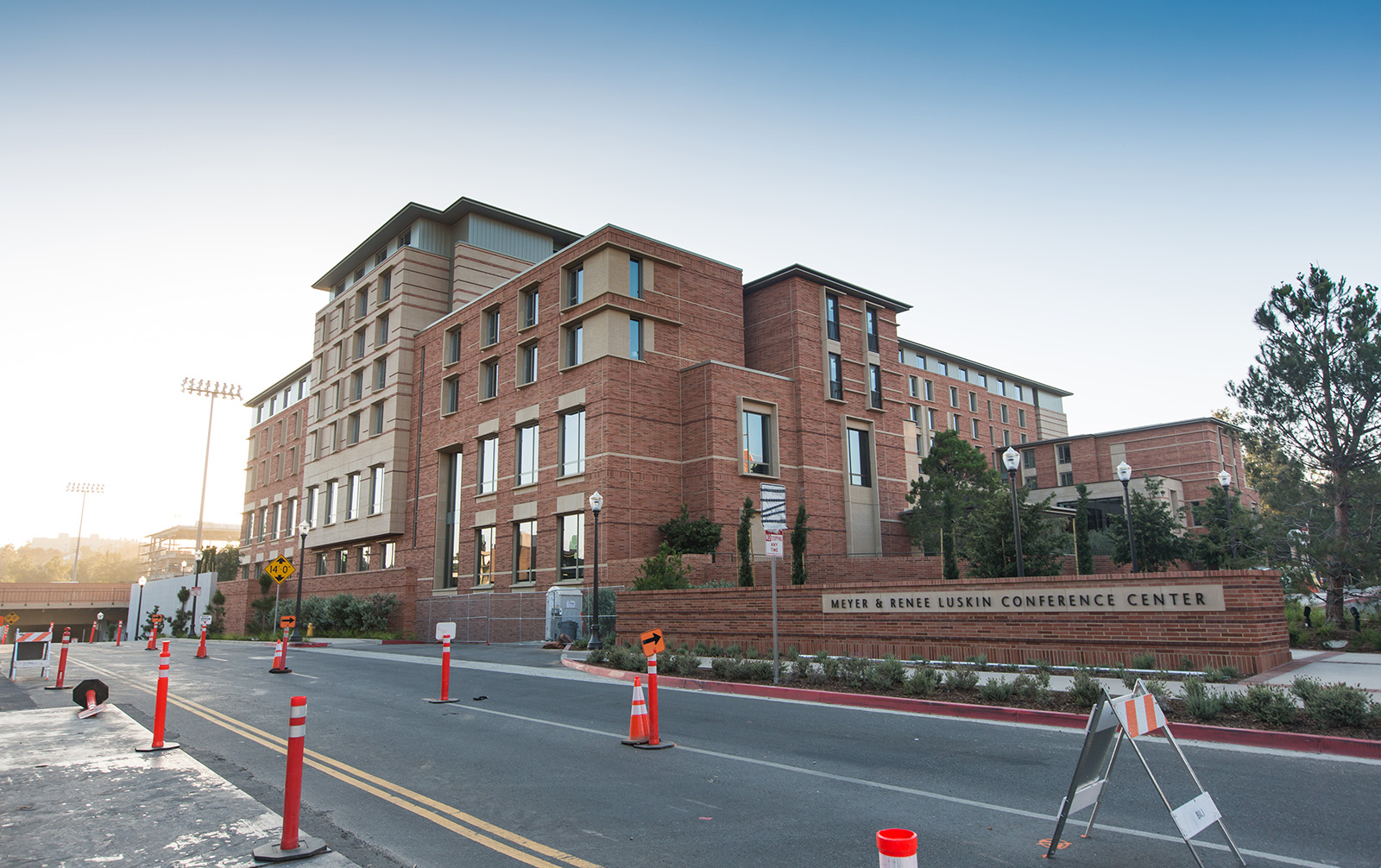
The Meyer and Renee Luskin Conference Center, the site of the sixth annual Lange Symposium, is pictured. (Daily Bruin file photo)

By Donya Hassanshahi
Feb. 8, 2026 8:30 a.m.
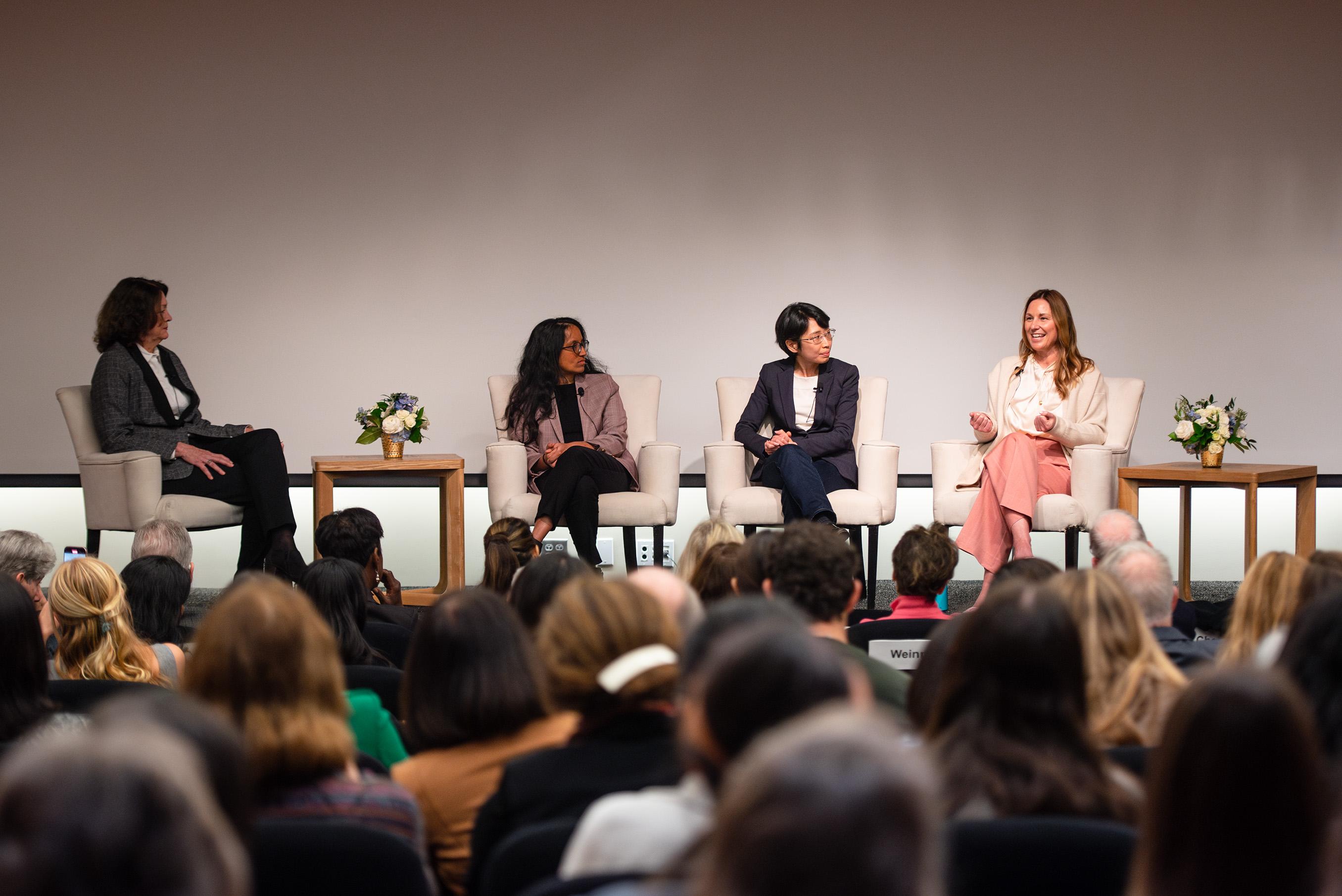
Researchers celebrated the role of numerical data in scientific research at a Jan. 26 event at the Meyer and Renee Luskin Conference Center.
The Lange Symposium on Computational Statics and Biomedical Data Science – hosted by the UCLA Department of Computational Medicine and Human Genetics – invited six speakers from across the country to discuss their research. The goal of the event was to educate the audience on the integration of clinical data into human genetics research, said Jeanette Papp, one of the event’s organizers and vice chair of the UCLA Department of Human Genetics.
“The reason for doing these kinds of events is the science and bringing cutting-edge scientists and researchers to UCLA and educating our students and faculty and letting people interact with the scientists,” Papp said.
The annual event also honored Kenneth Lange, chair of the human genetics department at UCLA, and his influence on science. Lange, a National Academy of Sciences fellow, has published more than 200 papers in several scientific fields, including genetic epidemiology, according to UCLA’s computational medicine department website.
Emily Fox, a professor of statistics and computer science at Stanford, said during her talk that machine learning has the potential to revolutionize health. She said clinical data has advanced what researchers know about drug development and has made machine learning models more precisely.
“Everybody’s talking about the AI revolution, but what’s critical to the story here is the complements of the biology revolution, because in particular, we’re leveraging the increasing wealth of clinical data modalities that are becoming repeatedly collected together with human genetics,” Fox said.
Lieven Vandenberghe, a professor in the Department of Electrical and Computer Engineering and the mathematics department at UCLA, said students should immerse themselves both in and outside of their respective STEM fields.
“Learn about new topics, right, and get pointers about new areas that you may not know that much about,” Vandenberghe said.
Atef Ali, a doctoral student in bioinformatics, said he attended the event to learn more about statistical modeling and inference, as well as how the speakers applied statistical methods to their research. He added that he was hoping to connect with the researchers who presented at and attended the event.
Papp said the conference was meant to highlight seasoned and emerging scientists in their fields.
“It’s not a workshop; it’s to showcase new and emerging research and then we start inviting people and we try to have a diversity of topics and backgrounds and career levels,” she said. “We try to make sure that we’re not just inviting late-stage, late-career scientists. We try to also invite early-career scientists to make their research more widely available to people.”