Professors discuss implications of US withdrawing from World Health Organization
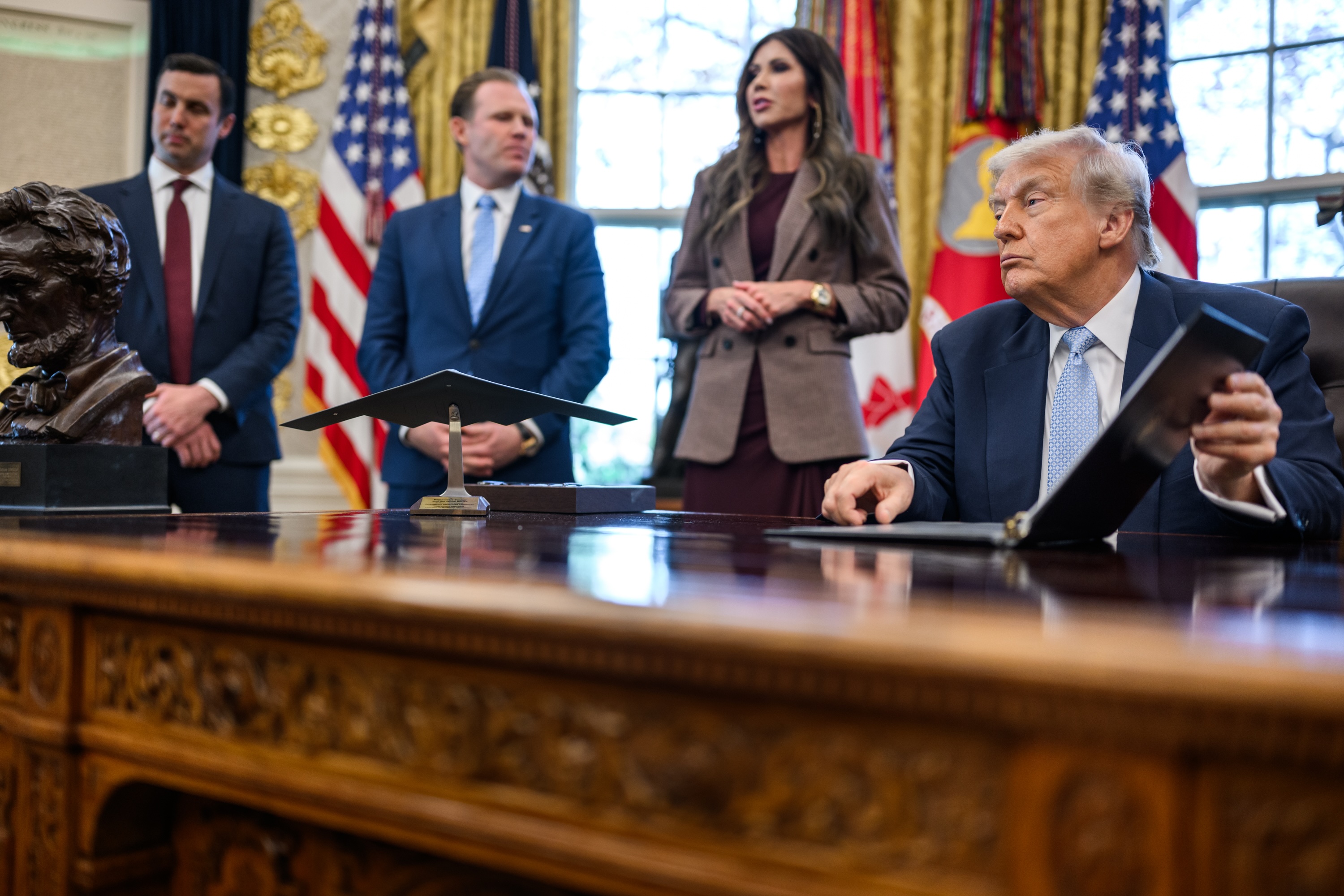
President Donald Trump addresses members of the media after meeting with the White House Task Force on the 2026 FIFA World Cup Monday, November 17, 2025, in the Oval Office. (Courtesy of The White House)

By Leilani Krantz
Feb. 8, 2026 10:36 p.m.
The United States officially withdrew from the World Health Organization on Jan. 22, marking the end of its 78-year membership.
The United Nations agency – established in 1948 – encourages international collaboration to achieve the “highest attainable standard of health,” according to the WHO constitution. None of the WHO’s 194 member countries have left after joining the organization.
The WHO is unique because it groups member nations into six regional offices, allowing for both local health monitoring and international collaboration, said Ralph Frerichs, a professor emeritus of epidemiology at the UCLA Fielding School of Public Health. He added that this structure makes the agency the only organization able to coordinate health strategies within and between regions.
“We’ve had nations come in, but we’ve never had one nation drop out,” Frerichs said. “That’s the seminal part about this – the fact that the U.S., the largest donor, dropped out is a major event.”
The WHO constitution does not have a withdrawal clause. However, the U.S. Congress reserved its right to leave when it joined, under the WHO’s conditions that the U.S. gave one-year notice of its departure and paid all outstanding dues, according to the joint resolution.
The U.S. said it will not pay the nearly $280 million it owes to the WHO for the 2024-25 period, and all U.S. funding to the organization will be paused, according to President Donald Trump’s Jan. 20 executive order withdrawing from the organization.
The U.S. was the organization’s largest contributor, donating $958 million – nearly 15% of the agency’s $6.5 billion two-year budget ending in 2025, according to the Associated Press. The second and third largest funders are the Bill and Melinda Gates Foundation and Gavi, The Vaccine Alliance, which contribute about $689 million and $500 million to this budget, respectively.
The U.S. Department of Health and Human Services alleged in a press release explaining the U.S.’s exit that the WHO mishandled the COVID-19 pandemic. Trump first tried to leave the WHO amid the COVID-19 pandemic during his first term, but then-president Joe Biden – his successor – reversed the plan.
The order also added that the U.S. and its taxpayers have carried a disproportionate financial burden funding the WHO, as compared to other countries.
The loss of the U.S.’s financial support will impair the WHO’s ability to function, said Burt Cowgill, an associate professor-in-residence of health policy and management at the School of Public Health.
“Without those sustained contributions, the World Health Organization is not going to have the capacity to engage in the scope and breadth of the work they do around the globe,” he said. “They will likely have to lay people off. It means there might not be as a rapid response time and access to data and information with new diseases emerging.”
The WHO said it would slash 2,000 jobs by mid-2026 after the U.S. announced its departure, according to Reuters.
Colleagues at the WHO participate in HIV drug surveillance for pregnant and breastfeeding individuals, said Dr. Dvora Joseph Davey, an adjunct associate professor of epidemiology at the School of Public Health, adding that the loss of this information would disrupt intervention programs and safe treatments.
The loss of funding will also diminish the agency’s capacity to collect epidemiological data, Cowgill said. He added that these statistics inform the U.S.’s disease preparedness.
“It’s not just developed countries, but it’s also lesser-developed countries where we get the signal sometimes that a pandemic or other disease is occurring,” he said. “It gives us an opportunity to intervene early on and localize the problem.”
The Food and Drug Administration and the Centers for Disease Control and Prevention will no longer be able to join biannual WHO meetings – during which current influenza strains and spreading patterns are discussed, Frerichs said. He added that the lack of this information could disrupt effective vaccine development.
China’s withholding of information related to the COVID-19 pandemic’s origin created tension between the U.S. and WHO, Frerichs said. However, the decision to pull out of international public health collaboration does not address these concerns and could actually give China a larger role in global health policy, he added.
The organization’s leadership has been critical in managing and mitigating the burden and spread of diseases, including polio, malaria and cholera, Frerichs said, adding that the U.S.’s concerns do not outweigh the benefits of WHO membership.
“Like with friends, you deal with them by talking to them face-to-face and pointing out what you want of them and what you think they should’ve done – if you’re an effective leader,” Frerichs said. “We need to get back into a collaborative situation and work with WHO and help them through the difficulties they’ve had in recent years.”
Infectious diseases do not abide by borders, Joseph Davey said, which necessitates concerted global efforts to mitigate their spread.
“Global health leadership requires sustained engagement, and not retreat from organizations like the World Health Organization,” she said. “Walking away from the WHO doesn’t make the U.S. safer; it doesn’t make the world safer – it really makes us more fragmented, less prepared to fight new diseases.”