Luskin School holds panel on civil and immigrant rights, prosecuting ICE agents
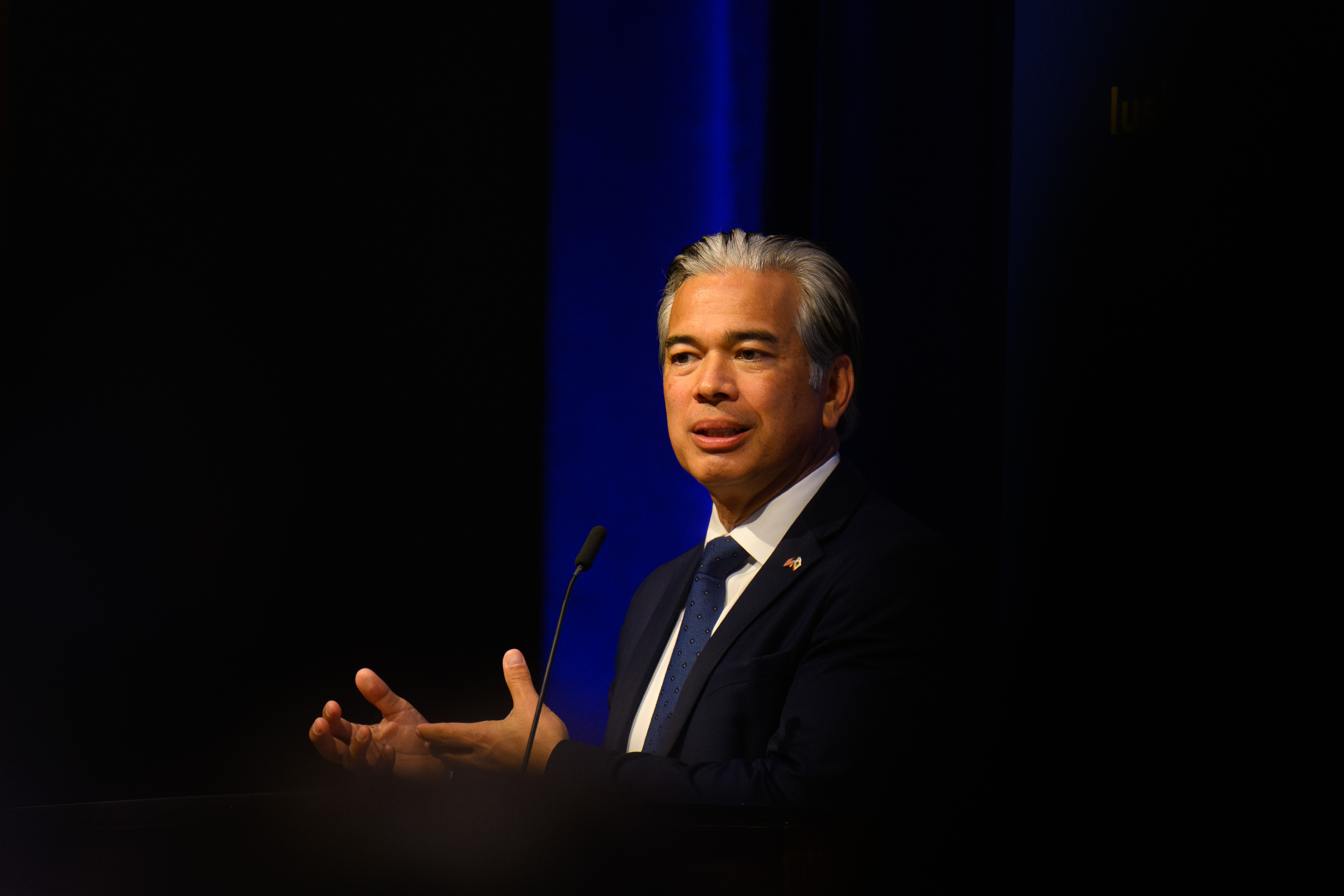
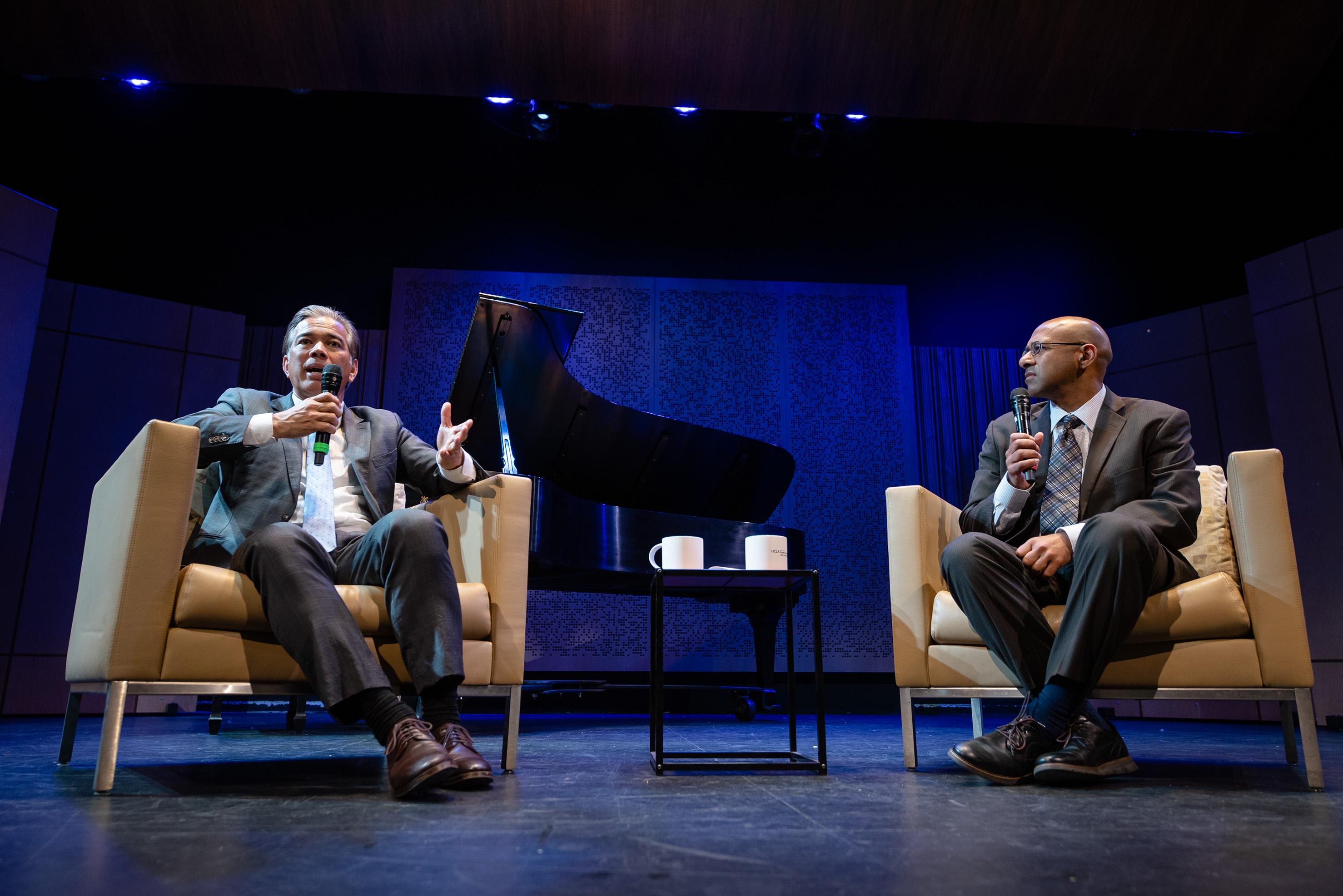
California Attorney General Rob Bonta is pictured. Bonta said California will prosecute federal immigration enforcement officers who violate residents’ constitutional rights at a Thursday UCLA event. (Andrew Ramiro Diaz/Photo editor)

This post was updated Feb. 8 at 10:01 p.m.
California Attorney General Rob Bonta said California will prosecute federal immigration enforcement officers who violate residents’ constitutional rights at a Thursday UCLA event.
The event was part of the UCLA Luskin School of Public Affairs’ lecture series and was co-hosted by the UCLA Center for Neighborhood Knowledge, the UCLA Latino Policy and Politics Institute and the UCLA Asian American Studies Center. Miguel Santana, the CEO and president of the California Community Foundation – an organization focused on supporting charitable causes in Los Angeles – moderated the conversation between Bonta and several UCLA professors and researchers.
Anastasia Loukaitou-Sideris, the interim dean of the Luskin School, began the event with a moment of silence for people she said had died fighting for justice.
The Trump administration ramped up immigration enforcement across LA in June, arresting more than 10,000 people as of Dec. 11, according to the U.S. Department of Homeland Security. Advocates have alleged that the federal government has ignored immigrants’ due process rights by deporting them without court hearings.
Twenty-eight percent of people in California in 2024 were immigrants, according to the Public Policy Institute of California. California had the largest number of undocumented immigrants out of any state in 2023, according to the Pew Research Center.
California has filed 55 lawsuits challenging what Bonta characterized during the panel as unlawful actions from the Trump administration. California has won rulings in about 80% of these lawsuits, including both final decisions and preliminary injunctions – decisions that hold as cases move through the courts – he added.
Bonta said he will prosecute federal agents who commit crimes in California. He added that the state is attempting to create a legal pathway that will allow Californians to sue federal agents if they violate their constitutional rights.
The California State Senate passed SB 747 – called the “No Kings Act” – in January, which, if signed into law, would make it easier for residents to sue U.S. Immigration and Customs Enforcement agents who violate their constitutional rights.
“Our job at the California Department of Justice is simple: to safeguard the rights of everyone who calls this a home, no matter their background or status or their zip code,” Bonta said. “The bottom line is nobody should be living in fear.”
Bonta also said he believes Trump is attempting to remake the U.S. into a country without public safety and justice by targeting Democrat-led cities and states.
“If you are a human being with a beating heart, it’s impossible to ignore what’s happening right now,” Bonta said. “Every day we turn on television, and there’s a growing collective fear of what’s going to happen next, what tragedy will be displayed across the screen as a result of a federal administration pushing forward an aggressive, fear-driven immigration agenda.”
The Trump administration deployed 2,000 National Guard troops and 700 United States Marines to LA in June in response to local protests against ICE raids.
[Related: National guard troops station in Westwood after Trump administration deployment]
Panelist Ahilan Arulanantham, a professor of practice at the UCLA School of Law, said during the panel that he believes ICE officers need to be prosecuted for their crimes. Arulanantham, the faculty co-director of UCLA Law’s Center for Immigration Law and Policy, added that lawmakers and the state DOJ should place greater emphasis on improving conditions in detention centers.
Santana said during the panel that immigration raids have driven some Californians out of public spaces, discouraging civic participation and impacting certain industries such as agriculture, where nearly two-thirds of workers are immigrants.
“It’s impossible to live in this state, certainly in this county, without knowing someone – someone who isn’t impacted by what’s happening in your families, in your neighborhoods, a colleague, someone you work with, a friend, a fellow student,” he said. “If anything, this moment has shown us how connected we are as a community.”
Panelist Angelica Salas, the executive director for the Coalition for Humane Immigrant Rights LA, said during the panel she believes new California laws requiring immigration enforcement officers to identify themselves and banning them from wearing masks have the potential to hold federal agents accountable.
[Related: UCLA faculty discuss new California laws restricting immigration enforcement]
Five laws restricting immigration officials’ actions were signed into law in September. UCLA said in a Dec. 11 emailed statement that the university plans to comply with Senate Bill 98, which requires that California Community Colleges and California State Universities notify students and faculty when immigration enforcement officers are on campus, and requests that UC campuses do the same.
[Related: UCLA shares immigration enforcement policies, procedures in accordance with CA law]
Panelist Paul Ong, a professor emeritus of Asian American studies, social welfare and urban planning, said during the panel that he believes data – when coupled with legal action and local activism – can provide a more complete picture of ongoing events to the public.
Salas, a Luskin senior fellow, said in an interview UCLA should continue to support the DREAM Resource Center – a program within the UCLA Labor Center that mentors immigrant students, including those who are undocumented.
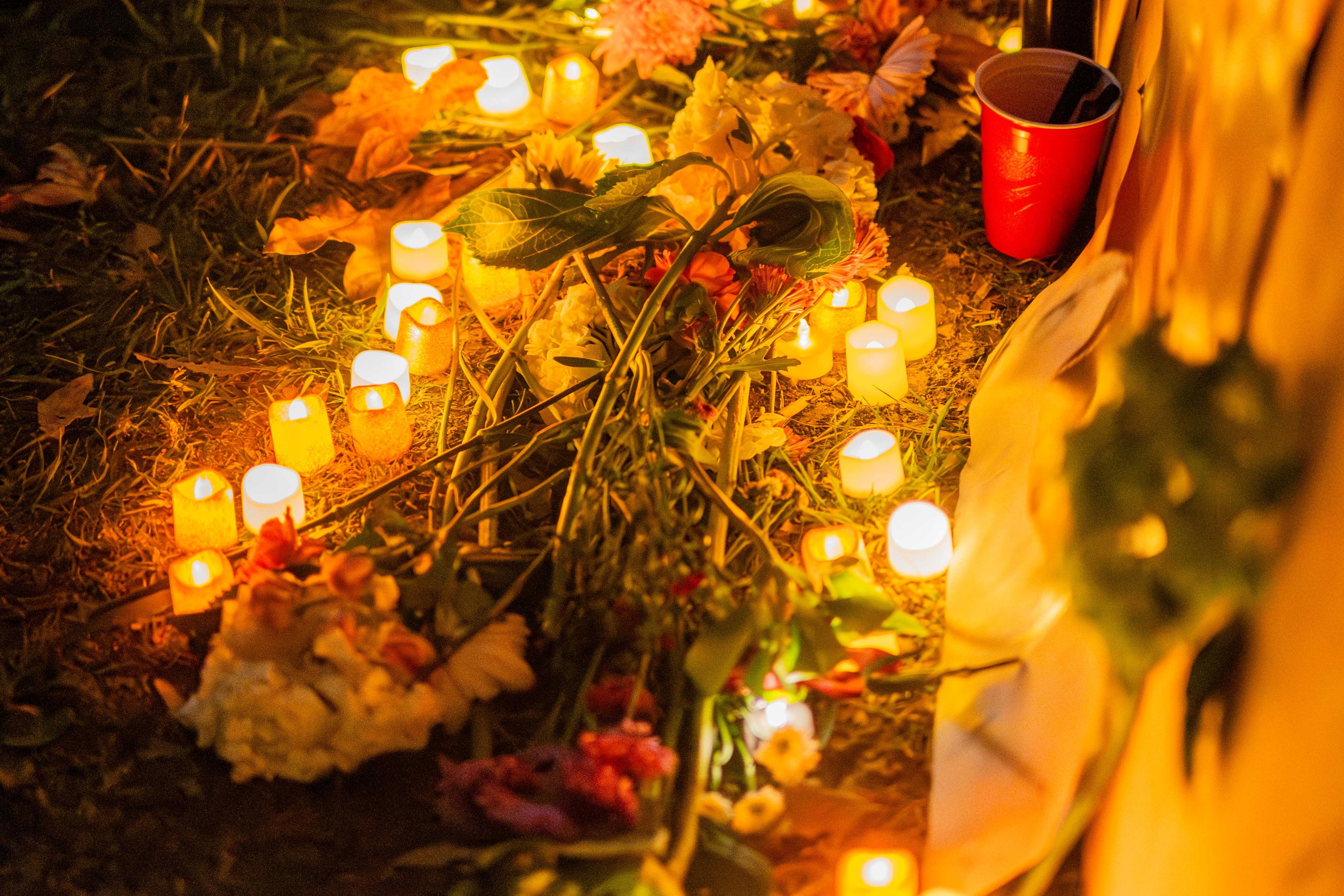
During the panel, Salas also called on advocates to honor people who have died in ICE-related incidents, such as Jaime Alanis García. He was a farmworker who died fleeing an immigration raid at a cannabis farm near Camarillo, California, in July and was the first known person to die during immigration enforcement operations since the start of President Trump’s second term, according to CNN.
“The most important thing that I want to really convey to every single one of you is that every individual who’s detained, who’s stanched, who’s beaten when they’re being arrested, who’s brutalized, has a family,” Salas said. “They have spouses. They have children.”
UCLA students have also held several demonstrations against the ICE in recent weeks, including a Jan. 28 walkout that drew over 1,000 attendees.
[Related: Over 1,000 demonstrators join on-campus walkout to protest ICE crackdowns]
Bonta said the audience should consider holding the Trump administration accountable by bringing lawsuits against the federal government, protesting and standing up for their rights, even when there is fear of retaliation.
Santana also called on the audience to vote to fight back against the federal government’s actions.
“The most important thing is that no one is powerless, that no one is without agency, that if you disagree or you’re concerned or even fearful of what is happening in this country, that you have a voice, that you have a vote, that you have the ability to express it and take action,” Santana said in an interview.
Salas added in the interview that students should call their congress members and urge them against allocating funding to the U.S. Department of Homeland Security.
“It matters when UCLA students speak up,” Salas said in the interview. “It matters when UCLA professors and administrators speak up on behalf of communities that are being targeted, whether it’s the immigrant community, the trans community, or any other community that’s currently being targeted.”
Natalia Osorio, a third-year political science and public affairs student, said she attended the event to learn more about how to support undocumented people in LA and across California.
Jack Feng, the external vice president of the UCLA Graduate Students Association, said he attended the event to meet other community stakeholders who might be interested in supporting his efforts as the chair of GSA’s Immigrant, Undocumented, and International Student Protection Committee.
“There’s so much that UC and UCLA can do,” said Feng, a doctoral student in epidemiology. “In terms of international students, given the current climate, nobody is safe from a violation of due process.”
Bonta said in an interview that he hopes the event provided attendees with more information about the increased immigration enforcement activity in California and inspired them to take action, regardless of if they are professors or students.
He added that as the child of an immigrant – and an immigrant himself – he has and intends to continue to support immigrant and undocumented students.
“Everyone has a role to play, and I hope people come away like I did, feeling inspired about how they can confront and tackle and hopefully eventually solve this problem we’re collectively facing here in California,” he said in the interview.