UCLA researchers look into cannabis health effects with California state grant
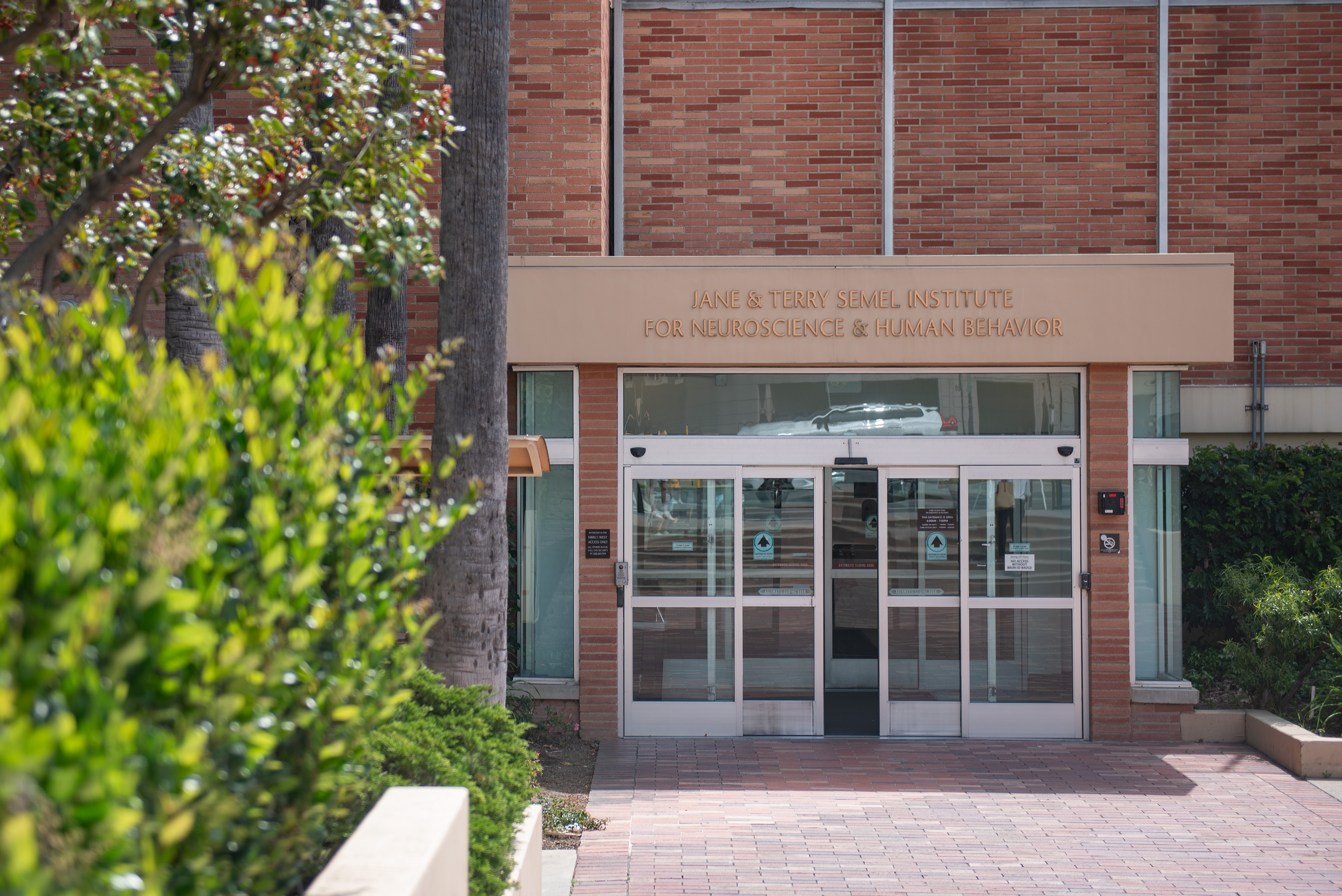
The UCLA Semel Institute for Neuroscience and Human Behavior is pictured. The UCLA Center for Cannabis and Cannabinoids is located here. (Zimo Li/Daily Bruin senior staff)

By Charlie Hamilton
Feb. 6, 2026 8:50 a.m.
The California Department of Cannabis Control gave UCLA four grants in January totaling $7.3 million for cannabis research.
These grants will fund four research studies that will allow UCLA to develop the science and evidence to help guide public policy related to cannabis availability, safety and accessibility, said Ziva Cooper, a professor-in-residence of psychiatry and behavioral sciences.
Cooper, who is the director of the UCLA Center for Cannabis and Cannabinoids, said she is personally involved in two studies: one about the cardiovascular effects of smoking and consuming cannabis, and another about the effects of flavoring and other additives in cannabis products.
“We know that the chemicals in the cannabis plant, specifically THC, increase heart rate,” Cooper said. “We don’t necessarily know what the long-term effects of that are.”
The cannabis plant contains naturally occurring chemicals called terpenes that give it a flavor, Cooper said. These terpenes can be modified and enhanced to create flavored cannabis products, and her study will examine how added terpenes affect human biology, she added.
As the United States moves toward cannabis legalization, the data from these studies will be helpful to inform public policy relating to cannabis, she added.
Cannabis is currently legal recreationally and medicinally in 25 states – and in 15 others for medical use only, according to Forbes.
“(Cannabis) is touching almost all aspects of Angelenos’ lives,” Cooper said. “There are more dispensaries than there are Starbucks.”
Dr. Holly Middlekauff, a professor of medicine and physiology, said she is studying the cardiovascular effects of cannabis with Cooper. Middlekauff, who is a cardiologist and assistant dean of student affairs at the David Geffen School of Medicine, said her patients often ask her if smoking or consuming cannabis in an edible gummy form is safe for their heart health, but the lack of evidence-based data prevents her from providing them with credible answers.
Cooper said while cannabis is legal for consumers and medical use in California, that does not mean those policy decisions were guided by science. Products are being developed faster than scientists can test them, she added, leading to uncertainty regarding the health risks of new enhanced or flavored cannabis.
It is imperative that people understand what it is that they are using, she added, and what potential impacts the products could have for their health. Cooper said she hopes their study – funded by the state grants – will provide the answers needed for consumers to make educated decisions on cannabis use.
Chelsea Shover, an associate professor-in-residence of medicine and the leader of another study on the illicit cannabis market, said illegally sold cannabis does not undergo quality control testing. Many consumers, she said, cannot tell the difference between regulated and unregulated storefronts.
“A lot of people who have lived in Los Angeles have had the experience of walking along Venice Beach Boulevard and seeing all the different places where you can buy cannabis products,” she said. “In fact none of those are licensed dispensaries.”
Shover said her main concern for potential harm lies in unregulated cannabis vapes and other smoking devices because of the lung injuries they could cause.
Side effects used to be rare but are becoming more and more common as cannabis gains popularity, she added. Shover said her main goal is to translate her findings into data that policymakers can understand and use to make evidence-based decisions and laws.
“It is functionally not possible for an adult to have a cannabis fatal overdose, but it’s absolutely possible, and happening all the time, for people to use more than they intend,” she said. “It is associated with things like psychosis and cannabis hyperemesis syndrome (uncontrollable vomiting).”
Rosalie Liccardo Pacula, professor at the USC Sol Price School of Public Policy and fellow researcher in the illicit cannabis market study, said she wants to test whether or not stricter regulations encourage the illicit cannabis market due to added costs on legal distributors.
“Many jurisdictions inside the U.S. and outside the U.S. have discussed the benefits of legalization because of reducing and eliminating the illicit market, particularly given that we have centuries of data on cannabis, and so the question is, does how you legalize matter for impacting the illicit market?” Pacula said.
Neil Garg, a distinguished professor in chemistry and biochemistry, said he is leading another study funded by the CDCC’s grants investigating the effects of synthetic cannabis products on the body.
He added that he is specifically interested in developing a roadmap for tests needed to ensure a new cannabis product is safe for the market and consumers, which could be shared with cannabis producers to ensure public safety.
Garg said the best part of this research is that it enables students from across UCLA to get involved in projects, such as his study, with enormous societal consequences.
“Interest in cannabis and cannabinoids worldwide is only going in one direction, massively, very quickly, and we are very much behind,” Garg added.