LA County Sheriffs yet to ban license plate data sharing with federal agencies
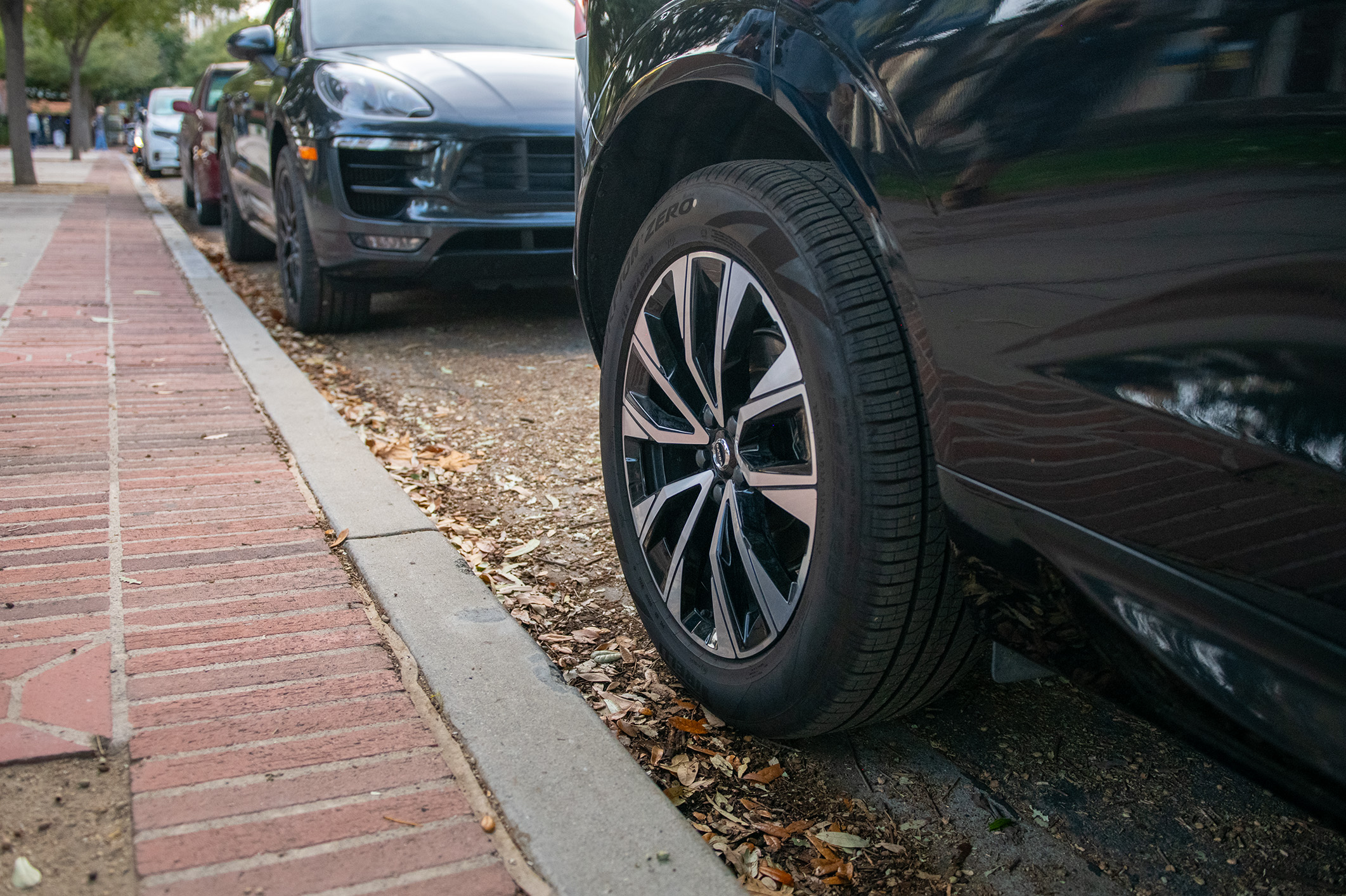
A line of cars is parked along a street. The LA County Board of Supervisors requested in September that the LA County Sheriff’s Department ban license plate data sharing with federal agencies. (Karla Cardenas-Felipe/Daily Bruin staff)

By Phoebe Huss
Feb. 3, 2026 11:07 p.m.
This post was updated Feb. 21 at 7:51 p.m.
Los Angeles County Sheriffs have not banned sharing license plate data with immigration enforcement agencies, despite a 2016 law prohibiting state police from sharing these images with the federal government.
Senate Bill 34 prohibits police in California from sharing license plate recognition data with federal agencies, including the U.S. Department of Homeland Security. The LA County Board of Supervisors also requested in September that LASD change its privacy policy to ban data sharing with federal agencies by Jan. 14.
LA County Sheriff Robert Luna said in a Jan. 13 letter that LASD, however, could not make the privacy policy changes by the deadline, citing a need to meet with “impacted labor unions” over the change.
The LA County Sheriff’s Department operates more than a thousand Automated License Plate Recognition cameras throughout LA County, in addition to 44 cameras on patrol vehicles, according to the LA Office of the Inspector General. Plate readers, often fixed to traffic lights and freeway exit ramps, scan about 3 million license plates in LA County each week.
The LASD currently retains data for five years, which is among the longer retention periods in the state.
Thirteen UCPD vehicles are equipped with ALPR cameras, UCPD said in an emailed statement. The UCLA Transportation Office operates five parking enforcement vehicles and three parking facilities with ALPR systems, the office said in an emailed statement.
These cameras are used for occupancy counts in parking lots, identifying parking violators and detecting vehicles owned or used by threatening people, according to UCLA policy.
The images taken by UCLA readers are stored for 60 days and then erased, unless longer retention is deemed necessary for law or parking enforcement, according to the policy. The data can be shared with other public agencies, including law enforcement, for any “legal purpose” – including investigations and academic research – per UCLA policy.
An investigation of ALPRs last June – conducted by the privacy rights organization Oakland Privacy – revealed that several California police agencies cited “Homeland Security Investigations (HSI)” or “Custom and Border Patrol (CBP)” as their reason for searching license plate databases. CalMatters confirmed the report after obtaining the query database in June.
HSI is a U.S. Immigration and Customs Enforcement subagency, and CBP is a DHS division that includes Border Patrol.
The investigation prompted the LA Board of Supervisors to pass a motion in September requesting that the LASD ban the use of license plate data for civil immigration enforcement. The supervisors also requested the sheriffs follow privacy policy changes recommended by the OIG.
The office suggested in August that LASD audit its own ALPR use and data-sharing agreements with other agencies more frequently, and proposed the sheriffs consider shortening their five-year data retention period. The office also recommended LASD officially prohibit sharing plate data with federal agencies.
The supervisors also mandated annual training for the sheriffs on its updated ALPR policy, SB 34 and California’s law banning local law enforcement agencies from using their resources for immigration enforcement. This law, which went into effect in 2018, made California a “sanctuary” state.
The motion requested the sheriffs report back on their updated privacy policy and the implementation of the new training by Jan. 14 of this year.
Luna wrote in the Jan. 13 letter that the sheriffs needed to discuss the new training requirement with “impacted labor unions.” As a result, the sheriffs cannot change their privacy policy to meet the supervisors’ requests by the deadline, Luna added.
Meeting with labor unions to discuss new training is a legal obligation, LASD said in an emailed statement. It added in the statement that the department has already taken some actions to revise their ALPR policy, including consulting with OIG and the Sheriff Civilian Oversight Commission.
“It should be noted that our existing policy has protections already in place that prohibit sharing ALPR data with federal agencies strictly for civil immigration enforcement,” LASD said in the statement.
Neither the sheriffs’ ALPR Privacy Policy nor any of the ALPR policies listed in the LASD Manual of Policy and Procedures contain the term “immigration.”
More than half of UCLA employees drive to work, according to the latest available UCLA State of the Commute 2024 report from the UCLA Transportation Office, which is the latest available report. About a quarter of commuter students either drive alone, carpool or use a rideshare or autonomous vehicle service to come to campus, according to the report.
An average of 83,529 vehicle trips were made to and from campus daily in 2024, per the report.
License plate readers scan vehicle plates in their vicinity and upload them to a database. If an ALPR in LA County detects a license plate that is on a “hotlist” – a database of vehicles of interest, often related to criminal activity – the readers alerts law enforcement of the vehicle’s location.
Some journalists have reported difficulties in accessing LASD’s ALPR search log data.
Oakland Privacy advocacy director Tracy Rosenberg said in an emailed statement her organization made a public records request for ALPR search logs from LASD in June. The particular request asked for logs from ALPRs by the brand Flock Safety, a surveillance company.
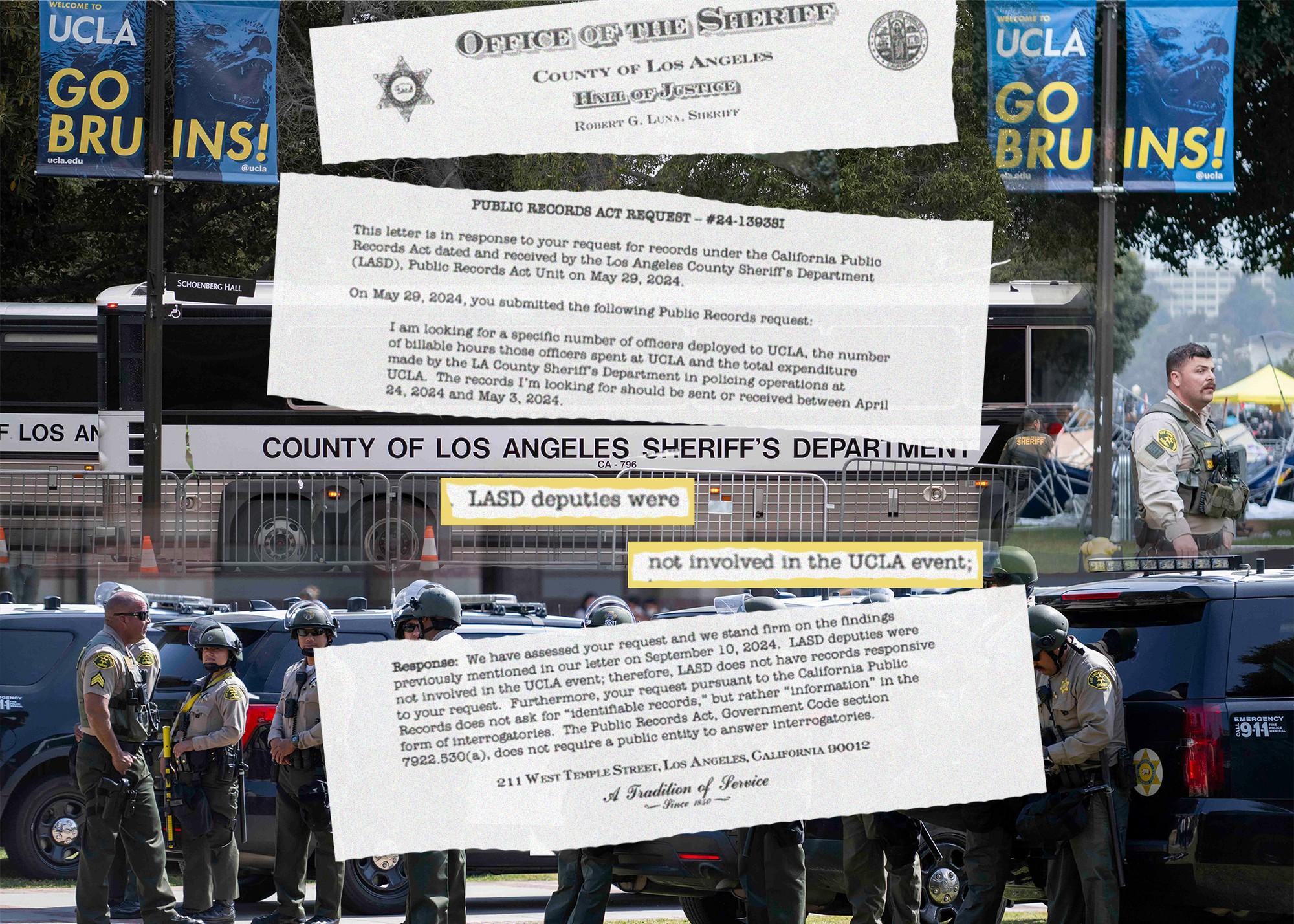
The California Public Records Act requires public agencies in the state to provide public records upon request.
LASD sent a response to Oakland Privacy’s request July 29, which the Daily Bruin reviewed. The response said the sheriffs do not operate any Flock Safety cameras. However, LASD said in a September statement to the Los Angeles Times that they own 476 Flock Safety cameras located in contract cities and unincorporated areas.
The sheriffs’ July message said people can obtain the records relevant to Oakland Privacy’s request through record requests from individual cities the Flock cameras operate in. But unincorporated areas in LA County are governed by the county, according to the county website.
LASD said in a Jan. 27 emailed statement to the Daily Bruin that the sheriffs closed Oakland Privacy’s request.
Oakland Privacy submitted a public record request for Flock Safety logs from the city of Paramount on Feb. 3, Rosenberg said in an emailed statement. The city said in an emailed response – which Rosenberg shared with the Daily Bruin – that LASD maintains those records and would be the agency to provide them through CPRA.
Joey Scott, an investigative journalist, also requested ALPR records – including all camera locations, emails from ALPR company personnel and communications related to ALPR installations – from the sheriffs in March 2025.
LASD denied the request, adding that such records are exempt from disclosure, according to documents posted on MuckRock’s database of record requests.
Scott requested the same records from police and sheriffs in Chula Vista, Fontana, Anaheim and Orange County – whose departments completed the requests, according to MuckRock.
“The Department will provide the Board with additional updates on this matter every 90 days, from the previously requested deadline of January 14, 2026, until the new policy is enacted,” Luna’s letter said.