LA Fires Research Conference fosters discussion on fire survivors’ experiences
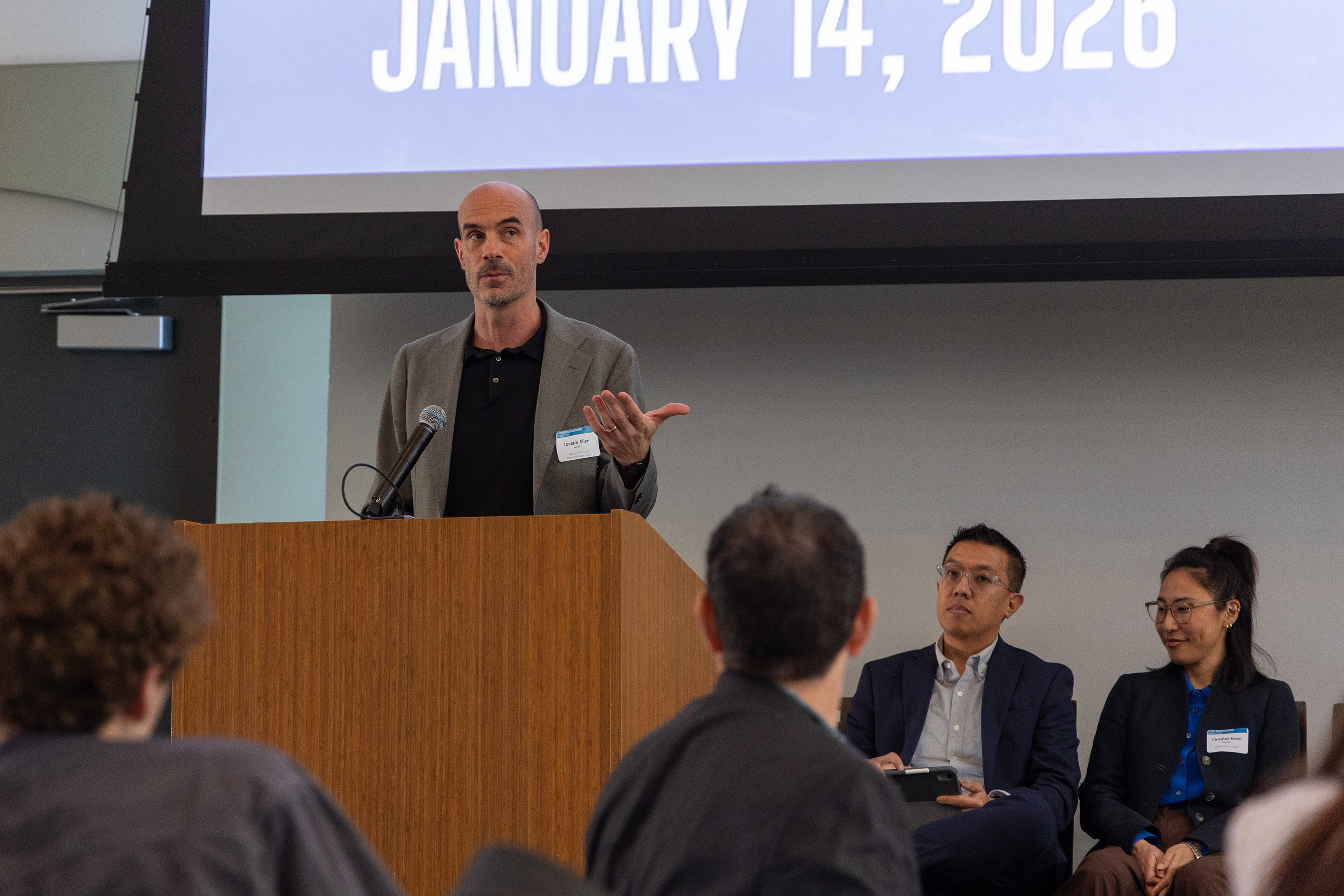
A professor in the department of environmental health at the Harvard T.H. Chan School of Public Health, is pictured speaking at the event. The conference centered on the experiences of fire survivors from the January 2025 Los Angeles county fires. (Chenrui Zhang/Daily Bruin)

By Nicholas Mouchawar
Jan. 30, 2026 4:50 p.m.
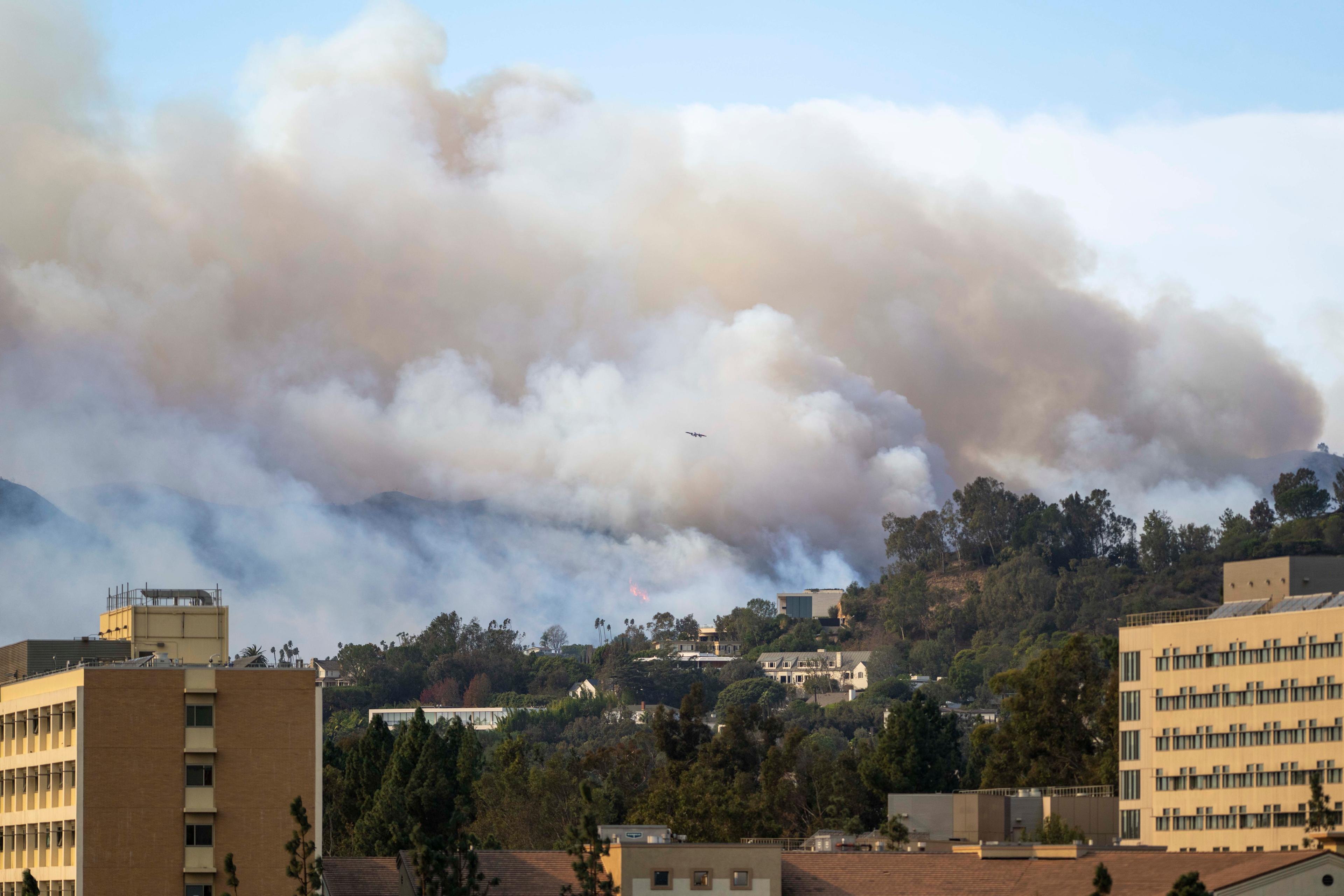
More than half of tested homes in Los Angeles county fire-impacted communities had unsafe contaminant levels one year after the January 2025 fires, a survivor advocacy group said at the first annual LA Fires Research Conference on Jan. 14.
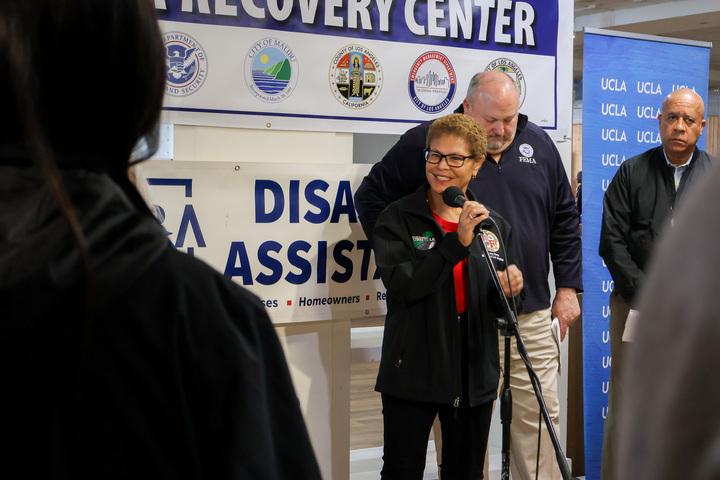
The event, hosted by the Fielding School of Public Health’s Center for Healthy Climate Solutions, invited scientists, community leaders and fire survivors to discuss how the January 2025 LA fires impacted health, housing and the environment.
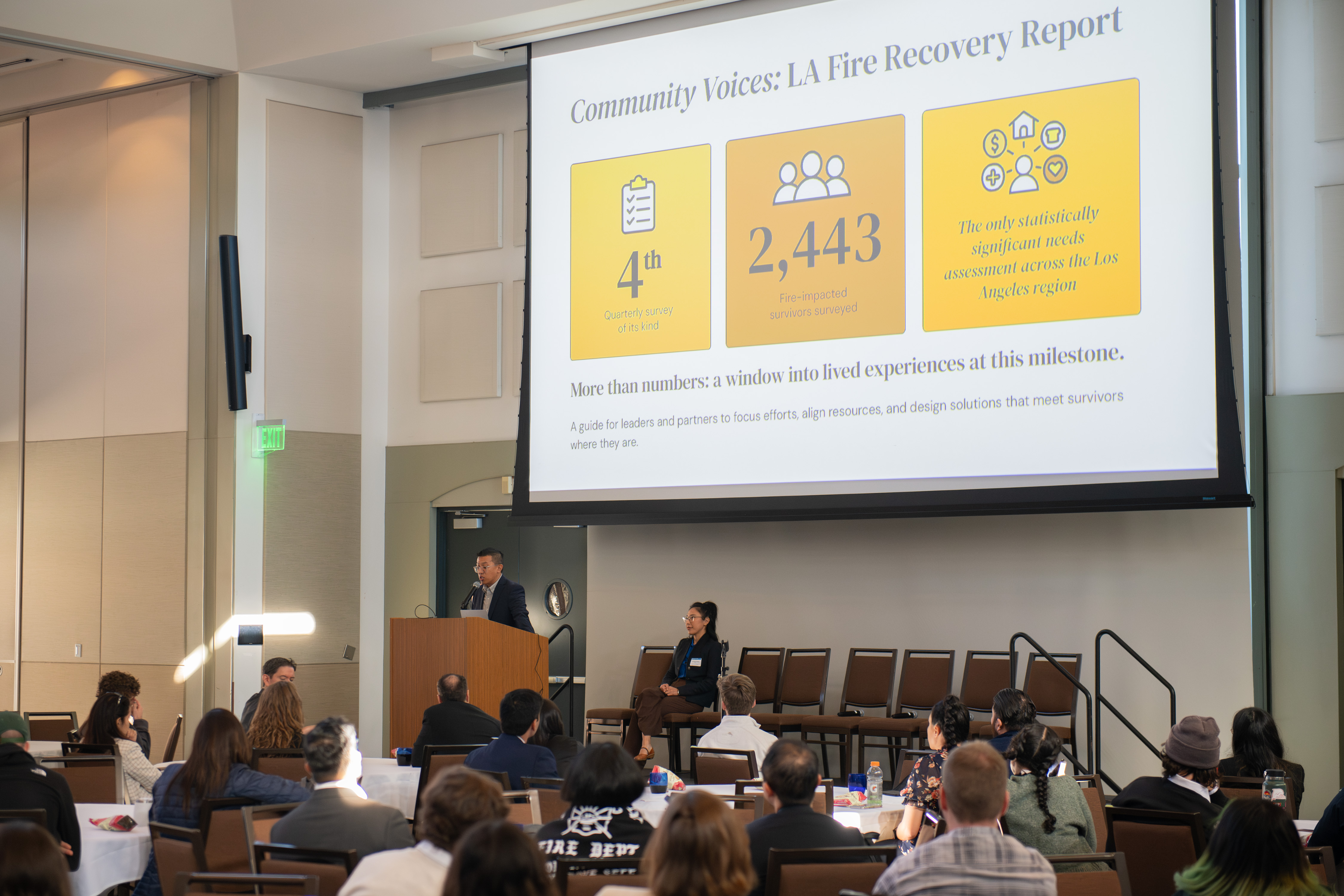
The conference centered on the experiences of fire survivors, such as the Department of Angels – a survivor-led organization that tracks recovery outcomes across fire-affected communities. Its panelists presented survey data showing that nearly seven in 10 survivors remain displaced from their homes one year after the fires, with more than half living in unstable or temporary housing conditions.
Andrew King, the Department of Angels’ head of community engagement and education, said recovery challenges have compounded over time, rather than eased.
“Behind every statistic is a person navigating emotional tragedy while trying to rebuild their lives,” King said. “The longer displacement and instability continue, the heavier this burden becomes.”
King, a survivor of the Eaton fire, said that a Department of Angels survey found over 80% of survivors reported experiencing worse mental health than before the fires – pointing to housing instability, financial strain and environmental uncertainty. He added that institutional systems, including government agencies and insurance companies, have fallen short of meeting survivors’ needs.
Yifang Zhu, a professor of environmental health sciences at UCLA, said many survivors still have questions about remediation – the process of removing fire-related contaminants such as smoke residue and toxic particles from homes and surrounding environments – and whether current methods are effective enough for allow them to return to their homes.
“They (Survivors) really want to know what remediation actually works and what doesn’t really work,” Zhu said. “Given the funding situation, the scientific community hasn’t been able to really do reverse research and data collection to answer that question.”
Zhu added that she believes it is important to answer these questions now, so that the city can prepare for future wildfires.
“It’s very unlikely any other fire will provide so much research capacity, philanthropy resources and foundation grants to go support these efforts,” Zhu said.
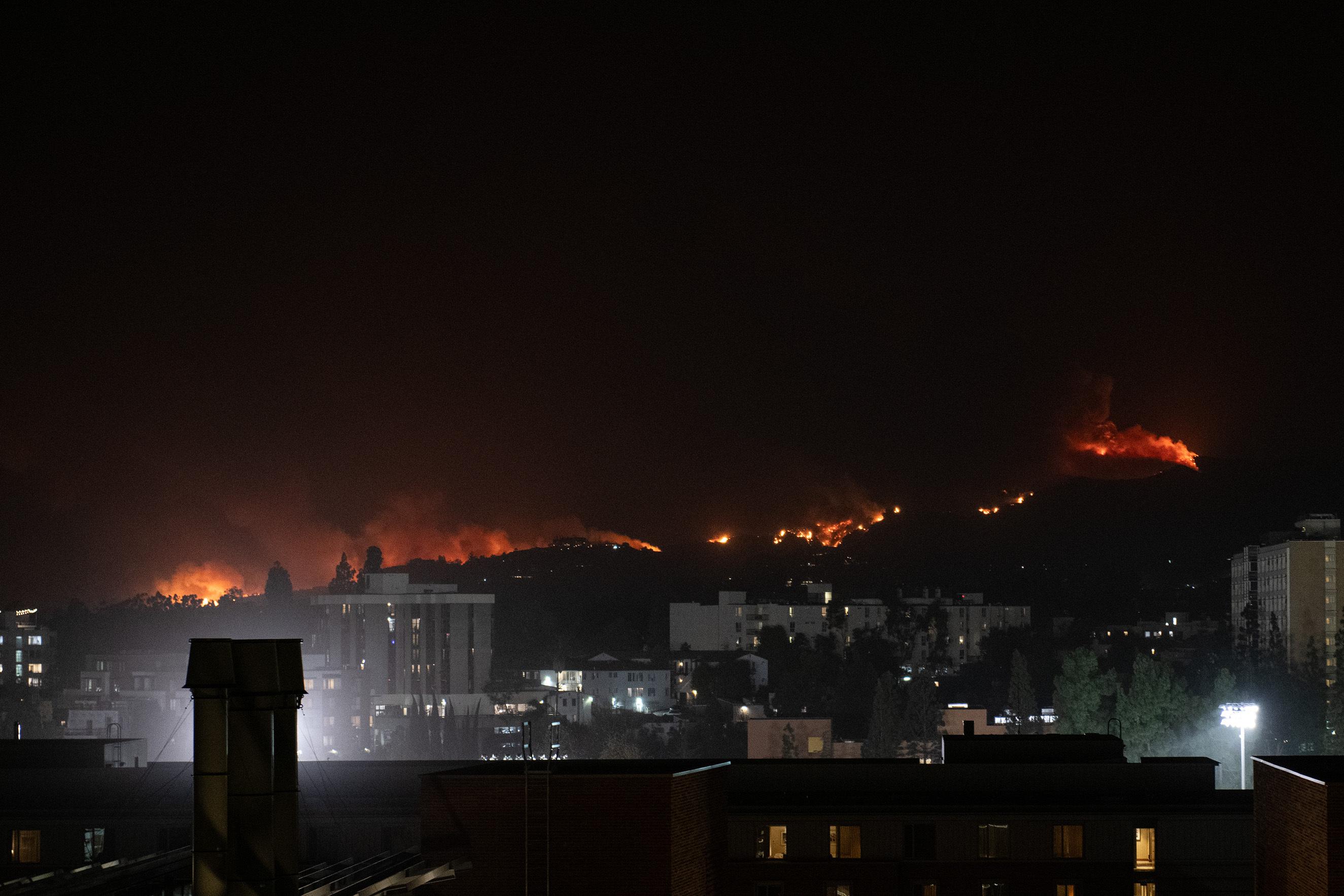
Zhu, along with other researchers, said the LA fires were a “multimedia” environmental disaster. Fire exposure, she added, affected soil, water, dust and indoor environments.
Rima Habre, an associate professor of environmental health and spatial sciences at the University of Southern California, said the January 2025 LA fires presented a more complex risk than typical forest fires might.
“This is just a different beast,” Habre said. “What we’re worried about is more (smoke) – a different beast of a mixture of very intense emissions, the infrastructural burn and all other things that make it very different chemically than a forest fire.”
Nicole McCalla, the director of data science for Eaton Fire Residents United, said the conference highlighted the numerous wildfire research efforts. Some victims, she added, have felt left in the dark about post-fire safety – but hearing about these research efforts, she said, validated her concerns.
“To be honest, our California Department of Public Health, LA County’s and Pasadena’s have largely left us in a lurch,” McCalla, a USC faculty member, said. “I’ve been told so many times, ‘I wouldn’t worry about it if I were you.’ Today validates what many of us that live in these communities understand, which is we should be prioritizing human health and safety as a key part of recovery and as a key part of understanding even the devastation of the fires.”
Christine Kwon, lead of the Department of Angels, said the tragedy led to widespread acts of generosity among survivors, with neighbors and friends stepping in to provide victims with housing and support.
“If we all stack hands and arise to the challenge, we can help our fellow Angelinos return home, rebuild stronger and restore the stability and sense of belonging every survivor deserves,” King said.