Opinion: Open dialogue, education can change cannabis culture in the UCLA community
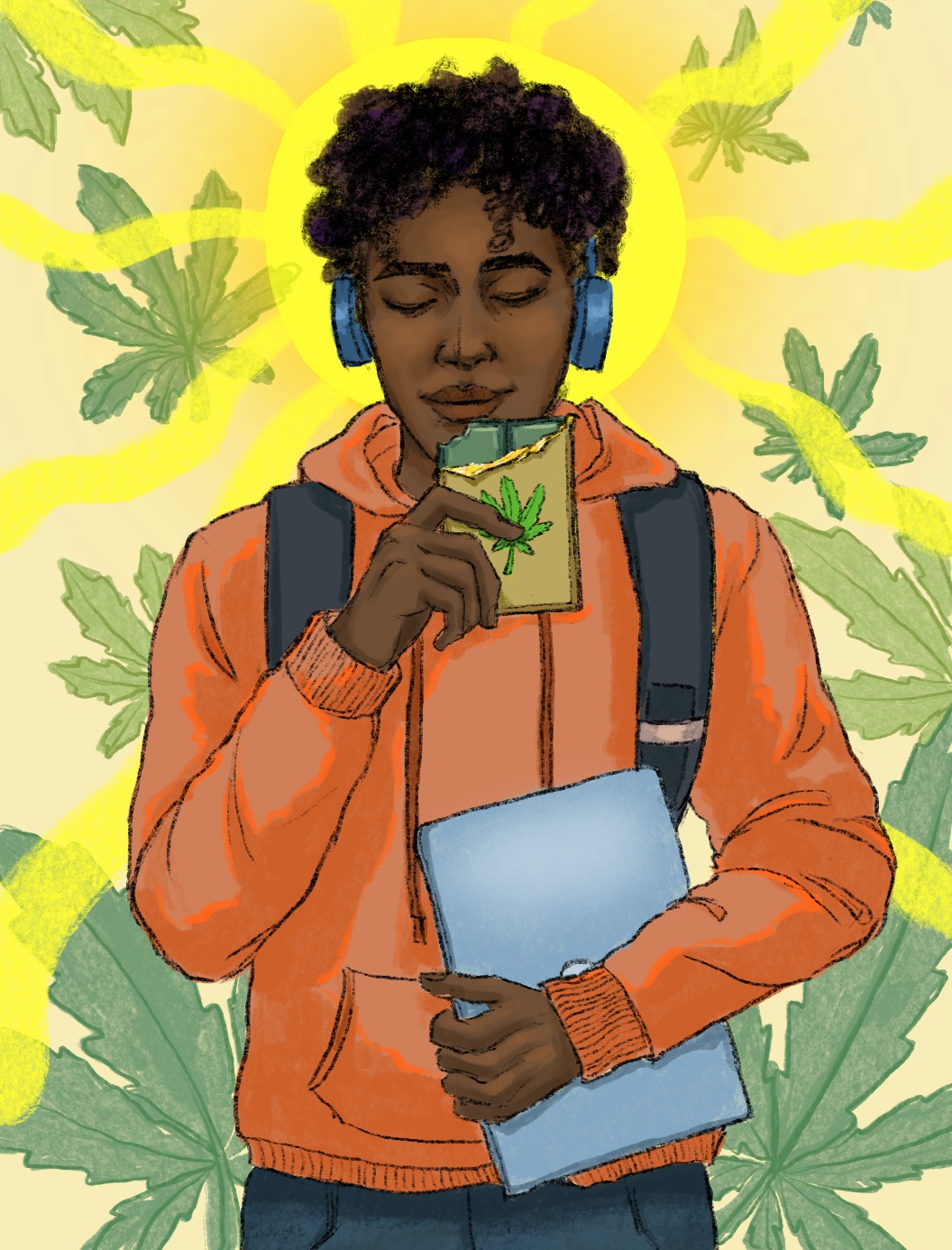
(Evanceline Tang/Daily Bruin)

By Anthony Folsom II
Jan. 24, 2026 12:42 p.m.
This post was updated Feb. 5 at 7:07 p.m.
We pride ourselves on curiosity, questioning mindsets, breaking stereotypes and expanding knowledge at UCLA.
Yet one topic is often left in a cloud of haze: cannabis use and its role in higher education.
Cannabis use among college students remains a taboo subject – even after recreational legalization across 24 states. We openly discuss alcohol use and even have required training on it.
Yet cannabis still hovers on the edge of whisper networks, coded jokes and strictly regulated policy, especially for student organizations such as Cannaclub at UCLA.
Given that UCLA is a hub of research and discovery, there must be more open dialogue regarding the plant, both among students and administrators. UCLA must include cannabis education alongside its already mandatory alcohol use training.
To me, cannabis use has never fit neatly into the caricatures invoked in policy debates or prevention campaigns. My own relationship with cannabis has shifted over time – tied sometimes to stress, sometimes to creativity and other times to community.
I learned more about cannabis from peers and experience than from any institutional guidance, navigating its benefits and drawbacks largely on my own. Silence and contradiction shaped my perspectives.
“My use of cannabis has connected me with many cool people, and I’ve been in so many cool spaces,” said Rickia Latchman, a second-year psychology student and media marketer for Cannaclub. “I would say I do use it as a coping mechanism, in all honesty. Dealing with things like depression and anxiety, it can be difficult, and for me personally, I wasn’t super interested in taking medicine.”
Cannabis stigmatization stems from harsh campaigns before and after the Reagan administration’s war on drugs. The D.A.R.E. program, AboveTheInfluence.com, the film “Reefer Madness” and other anti-cannabis marketing tactics that have occurred for the past century in the United States have done little to prevent cannabis consumption or the consumption of illicit substances.
Programs such as these never attempted to create a dialogue around cannabis or other substances. Instead, they created a taboo culture around even the mention of the plant.
Researchers have determined that the D.A.R.E. program had the opposite effect of its original intention of drug prevention, instead generating curiosity around the consumption of cannabis and other illicit substances.
We have allowed these perceptions to frame the way we see cannabis users.
“There’s still, in general, negative connotations around people who use,” Latchman said.
Ziva Cooper, the director of the UCLA Center for Cannabis and Cannabinoids, said this is despite increased research.
“Cannabis research has exploded,” she said. “It’s no longer being intensely looked at in researchers who are studying cannabis use disorder or substance use disorders. People are looking at it for the potential therapeutic effects. People are looking at it because it’s touching every sector of people’s lives.”
Common misconceptions of cannabis only grow when discussion is lacking.
Cooper said different strains, delivery methods and chemical compositions can produce differing effects. Yet public policy and discourse often flatten those distinctions, leaving consumers without clear guidance and reinforcing confusion around safety, efficacy and risk.
While Cooper’s research explains how cannabis use can carry real risks for some people, it also highlights how little nuance exists in public understanding of those risks.
For students navigating academic pressure, mental health concerns and inconsistent information about cannabis, the gap between science and experience can positively shape how and why individuals consume in the first place.
Chris Sydnor, a third-year applied mathematics student, said his cannabis consumption shaped how he is perceived by his peers on campus. He added that stigma surrounding cannabis consumption often comes less from university policy and more from student culture, especially within competitive academic spaces.
“I’ve had a lot of falling-outs with friends here because they judge or assume that the cannabis use is in a very toxic manner,” Sydnor said. “A lot of people do have a very negative connotation (about cannabis use).”
Cannabis use on college campuses must not be reduced to stereotypes or assumptions held by college administrators or peers. Students should be educated and trained on cannabis awareness and safe consumption through UCLA’s mandatory training, the same way they are for substances like alcohol.
Approaching these conversations with curiosity rather than prejudice allows space for both accountability and compassion – something higher education should be uniquely equipped to model.