Regents authorize new disciplinary timeline, intercampus hearing committees
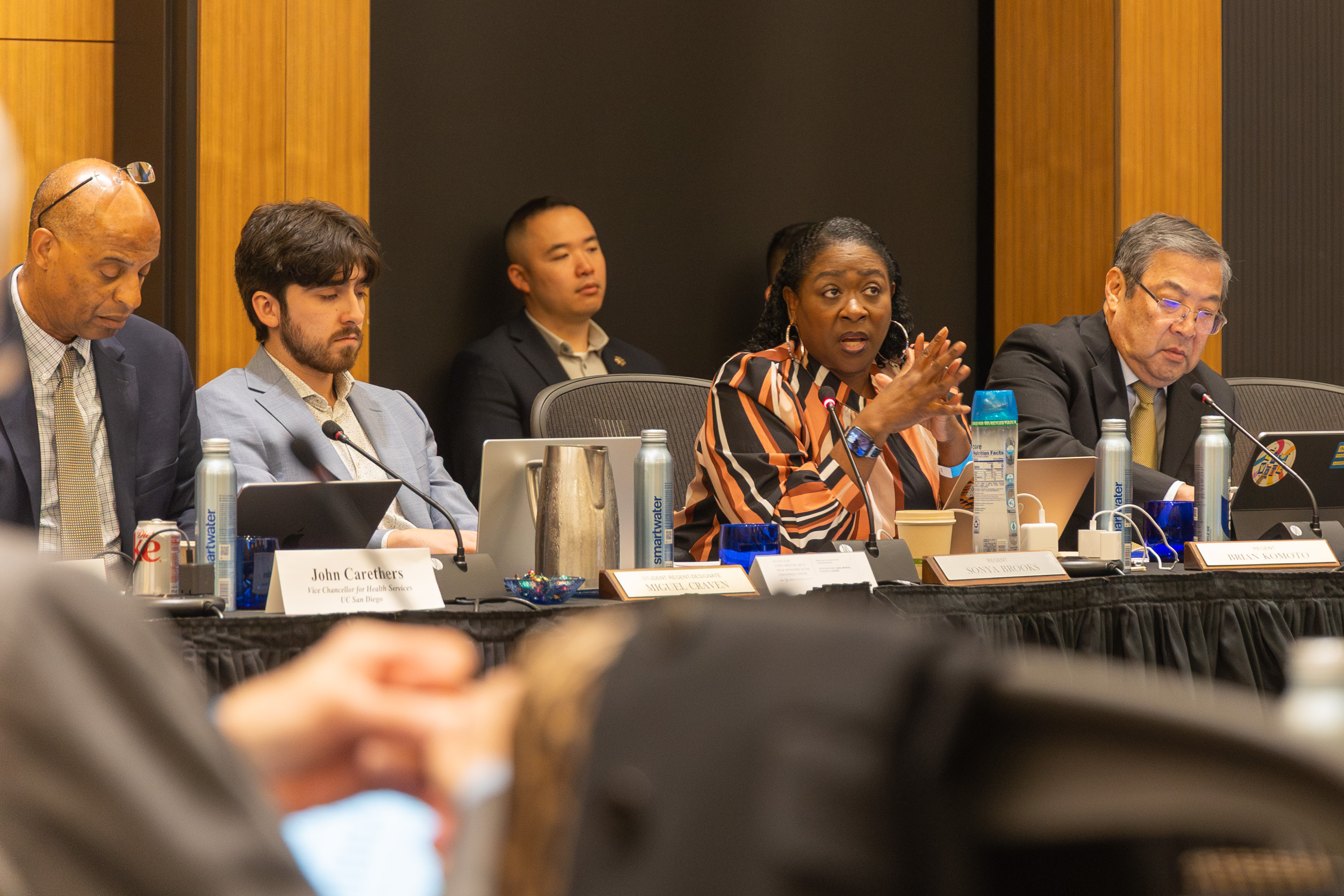
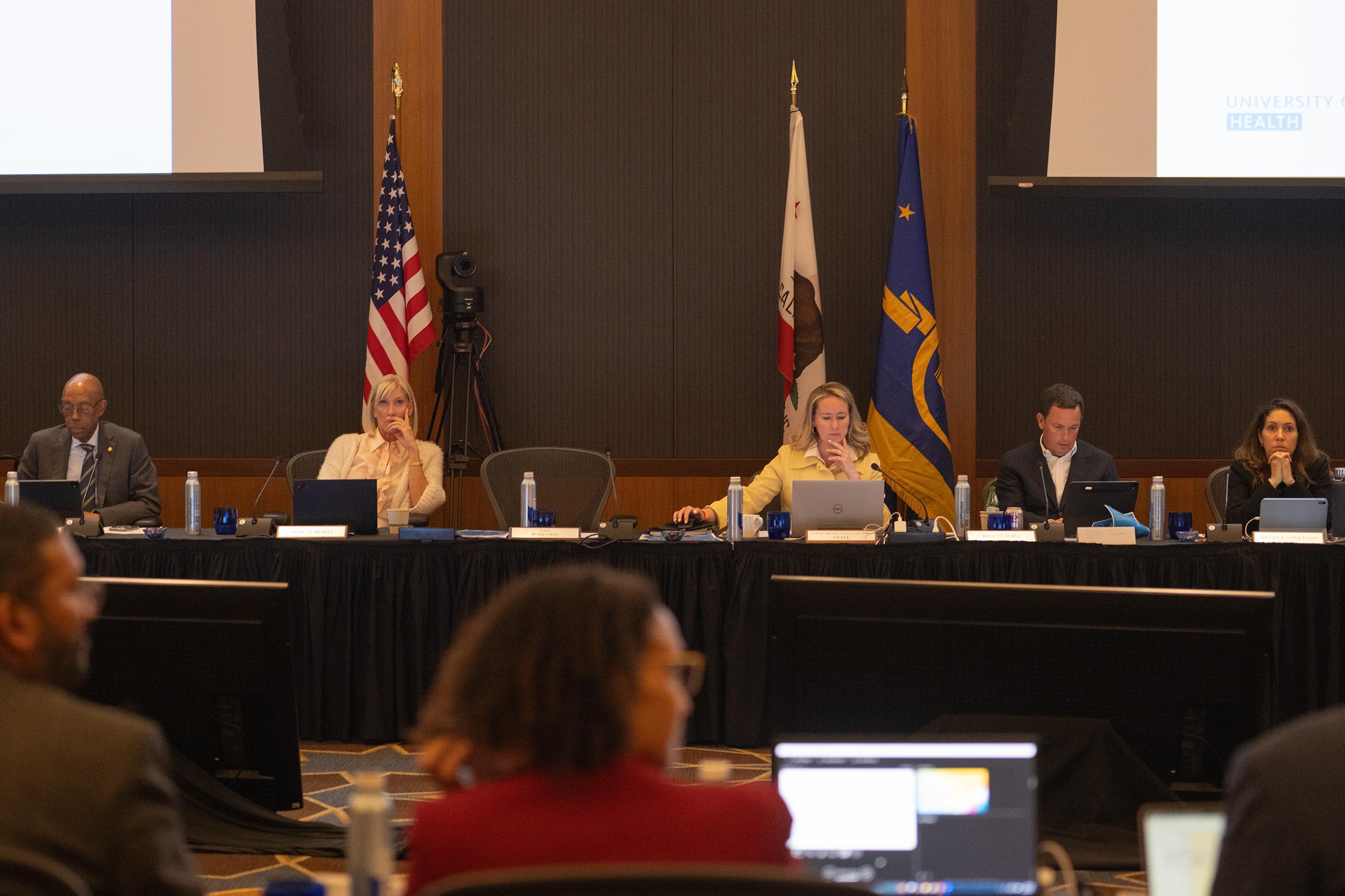
The UC Board of Regents meets at the Meyer and Renee Luskin Conference Center in January. The board approved the creation of a committee that can participate in faculty conduct hearings and a new timeline for disciplinary cases Wednesday. (Chenrui Zhang/Daily Bruin)
By Josephine Murphy
Jan. 23, 2026 12:31 a.m.
This post was updated Jan. 25 at 11:56 p.m.
The UC Board of Regents approved the creation of a committee that can participate in faculty conduct hearings and a new timeline for disciplinary cases Wednesday.
The Academic Personnel Manual is the UC’s official rulebook for academic appointees. The board voted on changes to the manual at its January meeting, which was held Tuesday and Wednesday at the Meyer and Renee Luskin Conference Center.
The Joint Workgroup of the Administration and Academic Senate, which was established to evaluate the UC’s rules and procedures, reviewed the two policies from August to November. The workgroup accepted comments and revised the policies, according to the action item.
“The comments received from the 90-day systemwide review truly reflect the wisdom and value of shared governance to shape these extremely important policies,” said Ahmet Palazoglu, the chair of the UC Academic Senate, during the Wednesday meeting.
Under the revised guidelines, the University will establish a systemwide Reserve Privilege and Tenure Pool to investigate faculty conduct violations. The pool would include former P&T members, senior faculty and faculty emeriti, giving more people the opportunity to serve on a hearing committee, said Monica Varsanyi, the UC’s vice provost of faculty affairs and academic programs.
A hearing committee must be established within 50 days after initial disciplinary filing, according to the meeting slides.
Eleni Kounalakis, the lieutenant governor of California, said the revisions to the previous policy arose out of a “particularly troubling incident” that she believes revealed a lack of preparation on the University’s end.
“As a pillar of free speech that the University of California is, finding ways to be able to put guardrails around appropriate behavior, including having a process for dealing with the extremely inappropriate and upsetting incident that happened – I know it was just really difficult,” she said.
Varsanyi said the new rules also establish a review timeline for disciplinary cases, which sets aside 30 business days for an initial assessment of the situation, 120 business days to investigate and create a report and 40 business days to file any disciplinary charges. The University previously did not have a timeline for these cases, she added.
“Good cause” extensions to the timeline may be granted when necessary, Varsanyi said.
“I would keep my eye on … whether good cause is appropriately used and appropriately limited,” said Regent Lark Park.
Regent Richard Leib said he would like Katherine Newman, the UC’s provost and executive vice president of academic affairs, to provide an update after the new guidelines – which must go into effect by March at the latest – have been in place for one to two years.
Palazoglu said a new joint workgroup will form this month to draft guidelines on what the UC will consider conduct violations with regard to expressive activities. The systemwide guidelines and FAQs, he said, will be issued over the summer and presented at the September UC Board of Regents meeting.
He added that another 90-day review period will be carried out this spring.
The proposed amendments “are also responsive to concerns that have been raised about faculty conduct policies and procedures to the extent that they may be perceived as overly protracted or inconsistently applied across our campuses,” Newman said.