Writer Sammy Roth urges accurate, engaging storytelling in climate journalism
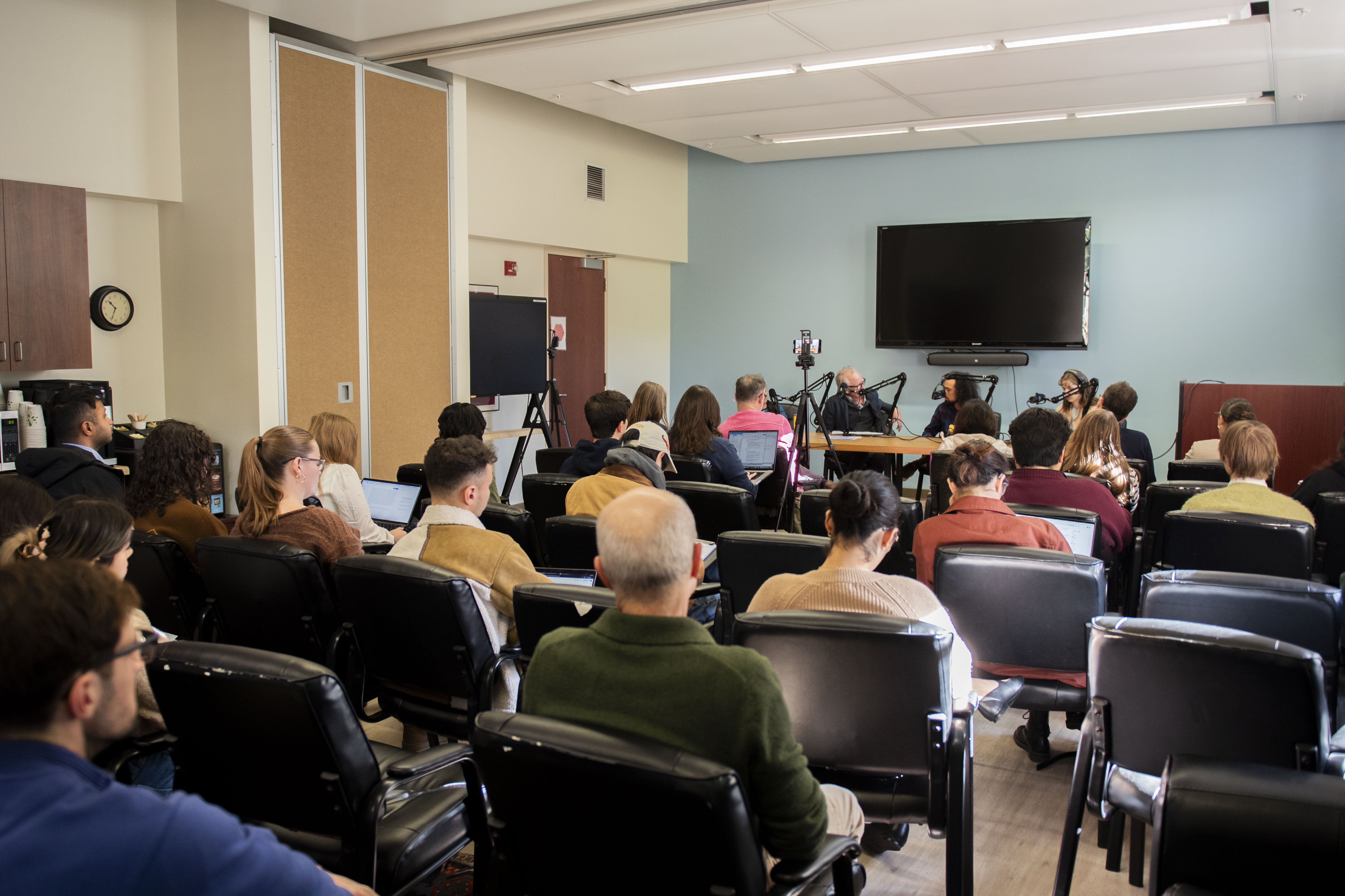
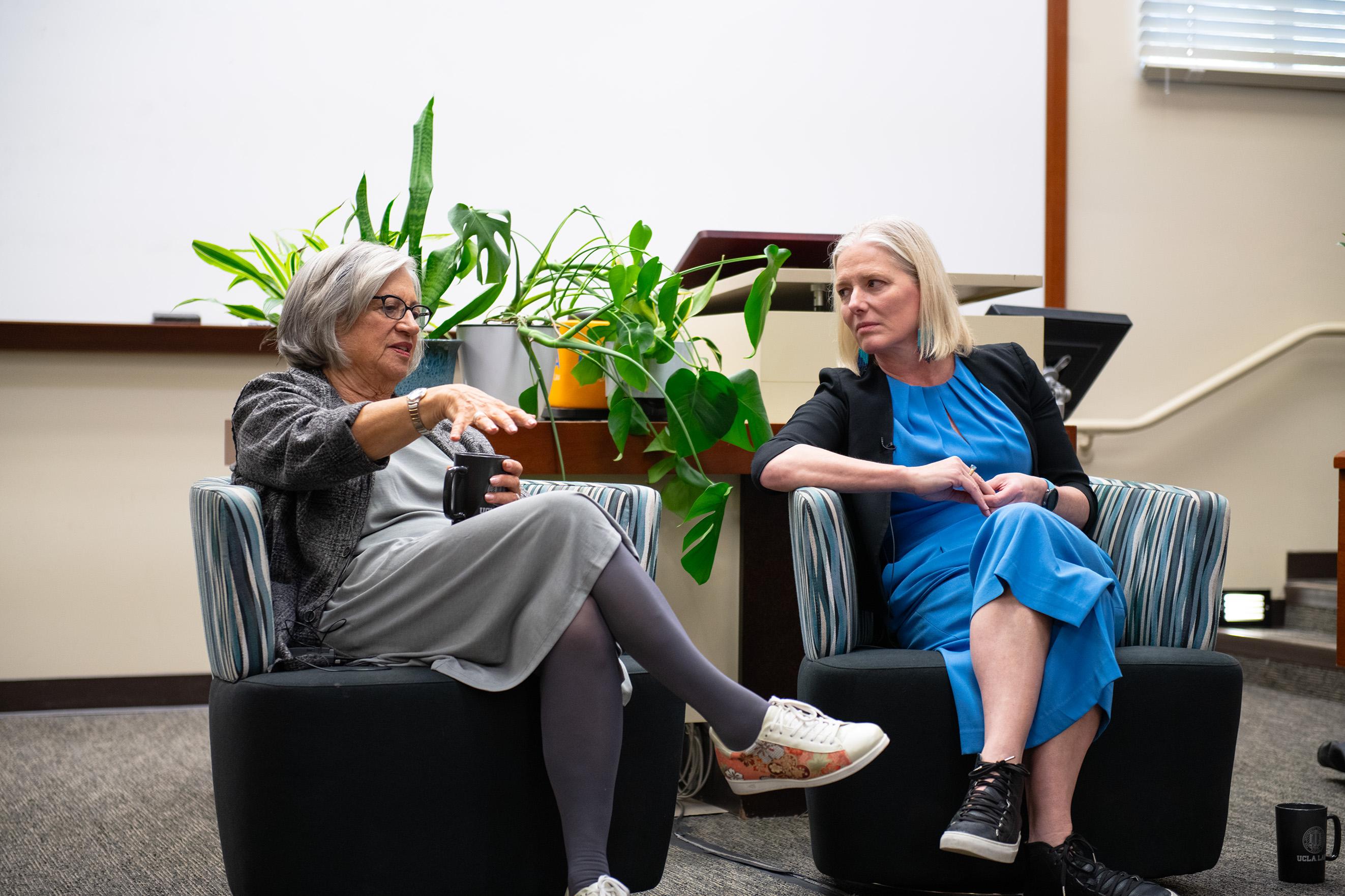
Roth speaks to an audience about the importance of accurate and engaging storytelling in the fight against climate change. (Alexis Muchnik/Daily Bruin)

By Delilah Brumer
Jan. 13, 2026 10:45 p.m.
Environmental journalist Sammy Roth emphasized the importance of accurate and engaging storytelling in the fight against climate change during a Friday event.
Roth has spent more than a decade reporting on climate change, energy, policy and the intersection of the environment and pop culture. He is currently the author of the independent Substack newsletter Climate-Colored Goggles and was previously a climate columnist at the Los Angeles Times.
UCLA’s Laboratory for Environmental Narrative Strategies and the Emmett Institute on Climate Change and the Environment organized the event. The conversation was recorded for a new episode of the LENS podcast, “Changing Stories for a Changing Planet,” which features conversations with climate activists and experts.
Roth said there are several untraditional venues that can be used for conveying climate change information, like TikTok, movies and comedy shows.
“There are a lot of opportunities within culture to change narratives and to shift stories that are currently sort of deleterious and make them cleaner and more selling a better message,” Roth said.
He added that, amid significant political polarization and misinformation around climate change, he believes scholars, experts and journalists should try to make their work more public-facing and relatable to general audiences.
“It’s quite important to find spaces that are outside of politics, and unfortunately, outside of even traditional news media, where you read something that you don’t agree with that doesn’t sound right to you, and most of the time it gets rejected,” Roth said. “Find a space that’s more neutral or that feels less like politics, where you can tell stories and give messages that might seep into your consciousness in a different way.”
Jon Christensen, who serves as the director of LENS and helped organize the event, said he has long admired Roth’s journalistic work. Christensen, who is also an adjunct professor at the Institute of the Environment and Sustainability, added that environmental storytelling is central to what he teaches.
The event with Roth and the LENS podcast as a whole are products of interdisciplinary collaboration between students and faculty, Christensen said.
“We’re in an era of incredible misinformation and lies and distortion about many things, including climate change,” Christensen said. “For all of us who are concerned about telling stories, fact-based journalism, scholarship and research, … it’s a very concerning time.”
Ursula Heise, a distinguished professor in the English department who also helped organize the event, said she is especially interested in how communication about climate change differs between cultures.
“We should not assume that the way that Americans look at particular environmental problems is the way that everybody looks at them,” Heise said. “Looking at even, what are the terms that are used in German or Japanese or Spanish for these different problems? How are they framed linguistically? And then what cultural memories come in when you talk about them?”
Liv Slaby, an English doctoral student who serves as the producer of the LENS podcast, led the conversation with Roth. Slaby, who earned her bachelor’s degree in musicology from UCLA, said the podcast allows her to explore the audio medium from a new angle.
“It can inspire people to action because historically, the LENS podcast has worked with activists and advocates, and people can find out about their work and get involved,” Slaby said. “People can be more critically reflective of the narratives that they see about climate and be conscious of how the narratives that we hear in pop culture and media and art, how those actually shape our mindsets.”
Grace Crabtree, a third-year English and political science student, said she was interested in the environmental narrative aspect of the LENS event.
Crabtree, who is enrolled in one of Heise’s classes, said a highlight of the event was hearing Roth speak about how he believes Hollywood should not shy away from climate topics.
“No matter what your field of study is at UCLA, it’s always important to recognize and talk about the environment and climate change because whether we like it or not, it’s all going to affect us,” Crabtree said.
Roth finished his talk with a reminder that although the impacts of climate change are grim, there is also room for hope, humor and storytelling about climate solutions.
“I don’t know if that does it for everyone, but that does it for me, knowing that as bad as it is, that continuing to fight is always worthwhile, because if you can just prevent a little bit, that’s a hopeful message,” Roth said.