Q&A: Mary E. Brunkow shares research journey, urges scientific curiosity
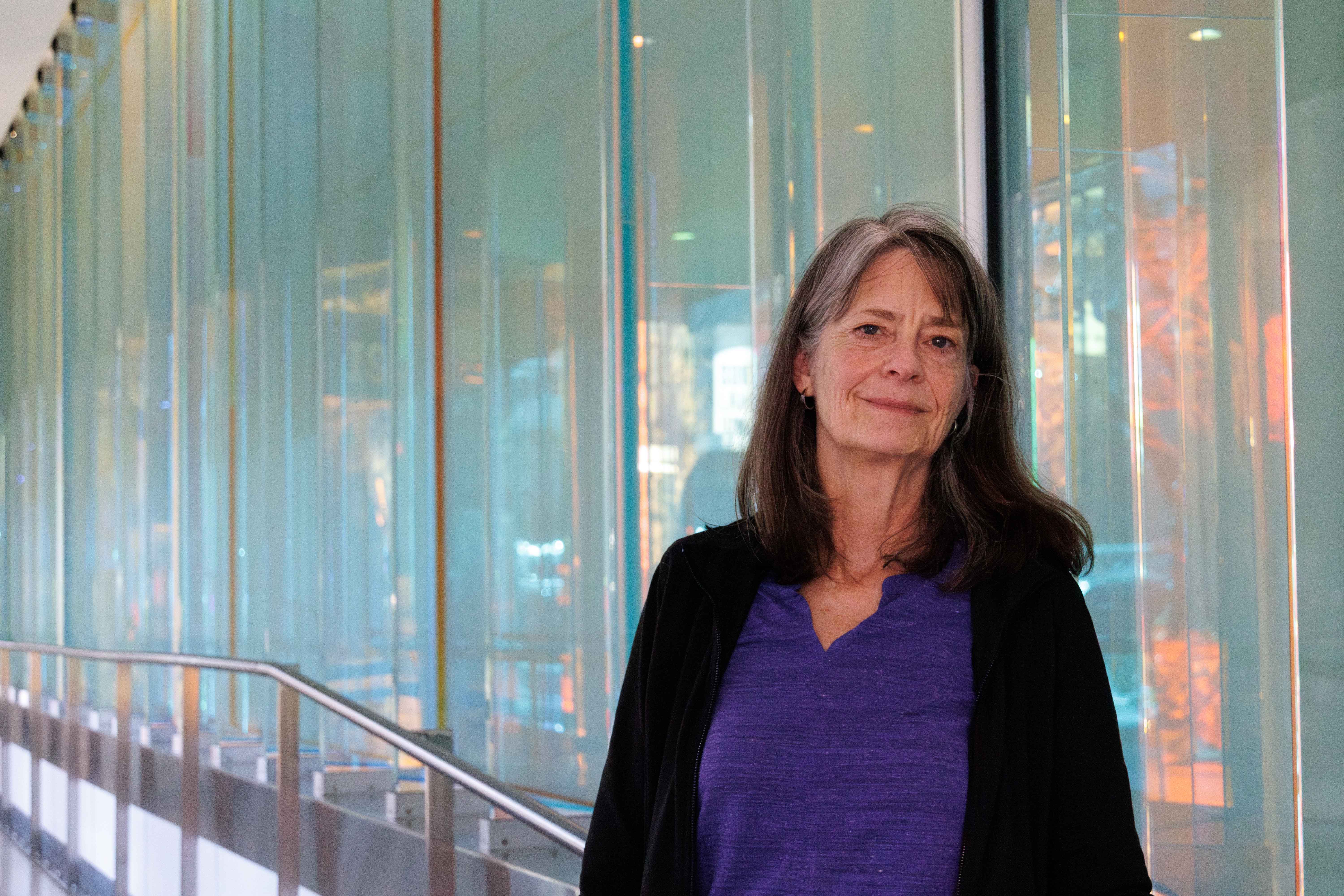
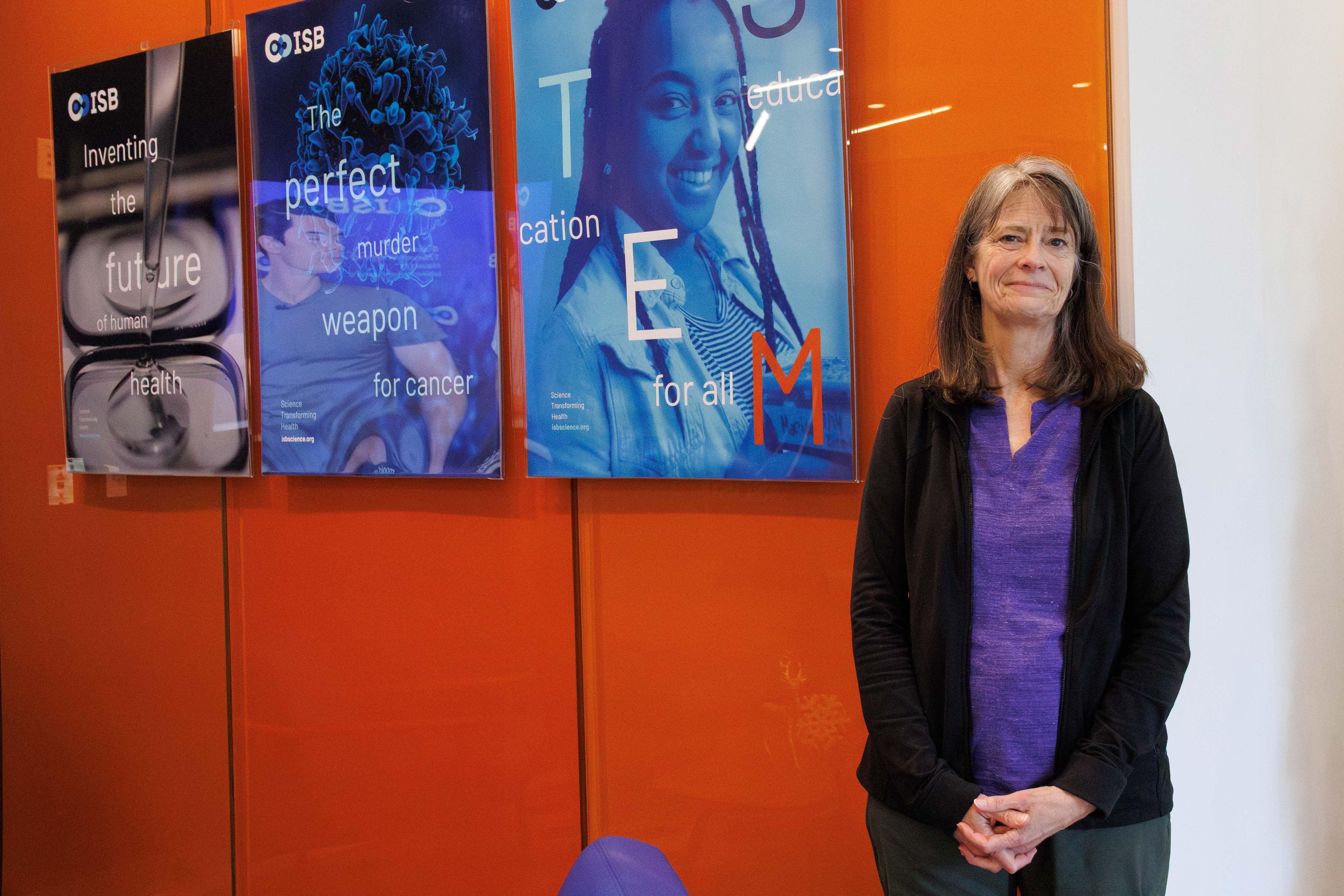
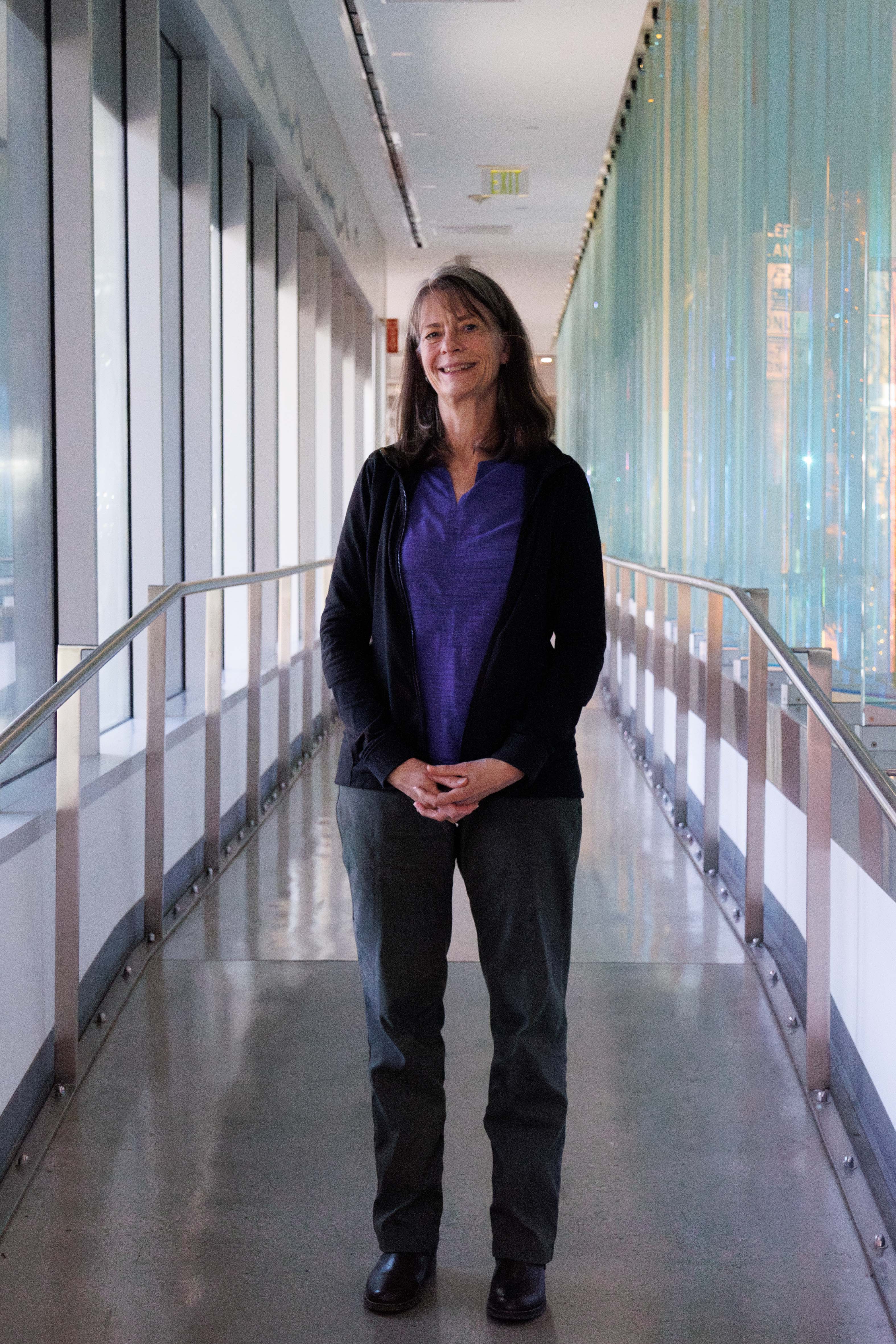
Mary E. Brunkow, one of the 2025 Nobel laureates, is pictured. Brunkow, UCLA alumnus Fred Ramsdell and Shimon Sakaguchi earned the prize for their work in discovering the Foxp3 gene and its crucial function in regulatory T-cell development. (Selin Filiz/Assistant Photo editor)

By Selin Filiz
Jan. 9, 2026 10:27 p.m.
This post was updated Jan. 13 at 9:42 p.m.
“Scurfy” mice, DNA sequencing and a Seattle biotechnology company were integral to the research that Mary E. Brunkow conducted to win the 2025 Nobel Prize in physiology or medicine.
According to scientific journal Nature, the scurfy mice strain harbors a mutation which causes scaly and ruffled skin, among other traits. The strain arose from atomic testing at the Oak Ridge National Laboratory in Tennessee meant to measure the effect of radiation on mice.
Brunkow, UCLA alumnus Fred Ramsdell and Shimon Sakaguchi earned the prize for their work in discovering the Foxp3 gene and its crucial function in regulatory T-cell development. These findings explain the phenomenon of peripheral immune tolerance, or how immune systems recognize and avoid attacking the body’s own tissue, according to Nature. Their research has since opened new avenues for treating autoimmune diseases and cancers.
Brunkow was integral to characterizing the Foxp3 gene in 2001 when she worked with the scurfy mice strain at biotechnology company Darwin Molecular in Seattle. She is currently a senior program manager at the Institute for Systems Biology in Seattle.
Brunkow sat down with Daily Bruin senior staff writer Selin Filiz to discuss her Nobel-prize winning research and outlook on science education.
This interview has been edited for length and clarity.
Daily Bruin: What is getting a Nobel Prize like?
Mary E. Brunkow: I had two months of pure chaos in my life because my email inbox and my phone, voicemail, text messages were coming in from everywhere, and there was both a ton of congratulations and hearing from people that I knew from all parts of my life. There were a lot of interview requests and press requests, which, of course, I had never experienced before.
I also received a lot of messages from people who are suffering with autoimmune disease or cancer, and they read about the Nobel Prize being relevant to autoimmunity and peripheral immune tolerance. It was surprising how quickly they came and how many messages came. There’s a lot of people out there who are really affected by these kind of diseases, and they’re desperate for answers – meaning that the current treatments are not adequate, and hopefully what we discovered will help them, eventually.
DB: How did you first get interested in genetics and research?
MB: I always liked science in school as a kid. Genetics was the area of study that interested me the most. I think it’s the logic behind it all, and the rules that are followed, and the way that it can explain the phenotypes or the visible traits that you see.
In university – I was an undergrad at University of Washington – again, genetics and molecular biology was always the most interesting to me. In my last year there, I had the good fortune of taking an upper level genetics class from a professor named Larry Sandler, who was a classical fruit fly geneticist. I did really well in the class, and was really excited by his class, and then I was able to do an undergraduate research project in his lab. That’s what really turned me on to research. I had been on a pre-med track, but almost the minute I walked into that research laboratory, it was just an environment that really struck me, and I knew I wanted to go into research.
DB: You did your Nobel Prize-winning work at the biotechnology company Darwin Molecular. What do you think are the strengths and synergies between research in the private sector and in academic labs?
MB: The little biotech company that I worked at had a vision of being able to use a gene discovery based approach to finding new drug targets. The Human Genome Project was underway, and there were all these new techniques. New technologies for doing DNA sequencing, and oligosynthesis and array analysis that stepped things up to a level where you could contemplate going after specific genes that are underlying phenotypes of interest.
The synergy comes from the fact that we were a really small, brand new group, and we were able to take advantage of a whole lot of research resources that had come out of years of academic research. I think that’s what makes the biotech environment somewhat unique in that we were doing basic research, but always with a very specific goal. Everybody brings their particular expertise together to work as a team, and the ultimate end goal must be something that will eventually turn into a drug or treatment for patients.
What has become very apparent in the 25 years since we did our work is that what we discovered and what we reported was definitely taken up by the scientific community, and there are academic labs around the world who have taken our findings and built on the research that started at Darwin. Both academic research and biotech research have their own strengths, but they’re very complementary. If there can be an exchange of information back and forth between those two environments, it really is a very powerful way to make major advances in science.
DB: You originally joined the Institute for Systems Biology as a science writer. What do you think the role of science communicators should be in research?
MB: One problem is that science communication tends to reach people who are already interested in science. I really enjoy reading scientific communications that are in areas of study that are not really my specialty. So, I need something that’s written at a layperson level, but still gives me a flavor for the greatest new physics discovery, for example.
The challenge is to somehow get good science communicators who can reach people who don’t tend to think very deeply about how basic research affects their lives in really concrete ways. I don’t know what that answer is, but the school system might be a place where, if you could really beef up students’ interest in science of all different types and beyond what they’re learning in a textbook, if you could teach them more real-world applications of basic research and how it really impacts their lives, then they’re going to grow into adults who continue to have an appreciation for that. Maybe that would be a way of broadening the reach and the excitement for science that I think is important for continuing to keep politicians excited in supporting science.
DB: Has receiving the Nobel Prize changed your perspective on science or research in any way?
MB: For one thing, the work that’s being honored by the Nobel Prize was done 25 to 30 years ago, and I haven’t really worked in that field since. That right there was such a surprise to hear that the work was being recognized in that way. I mean, 25 years ago, I knew that what we had done was important and it was pretty cool. But it wasn’t until two months ago, when I started looking more closely back at what’s happened in the intervening 25 years, that I really realized what the impact of what we did has had on how you can think about treating things like autoimmune diseases and cancer.
On a practical level, it hasn’t changed my day-to-day job. I’m in a position now where people will listen if I choose to take up a cause such as better science education or maintaining a high level of federal funding for basic research. What I’m learning is that this very exclusive club of Nobel laureates really carries a lot of weight.
Now, I look forward to taking some time to figure out how I can best manage this new identity that could be quite powerful and quite interesting. I look forward to talking to a lot of people and getting people’s ideas on where I could best use that – I don’t want to say power, but there is some influence that comes along with the Nobel laureate title, which is not anything that I had ever thought about in the past, because I never, ever imagined that I might be one of those laureates. So my answer is just that things are still so new that I haven’t really figured out exactly what is going to be new in my career.
DB: You’ve also talked about promoting science education and access for young women. What do you think is the role of researchers in mentoring younger generations, and how do you hope to continue that work?
MB: I think in my own early life as a student and then as a young scientist, it was so valuable to see other women scientists who were being very successful at a high level, either academically or in a company situation. That mentoring relationship can go a long ways to encouraging girls and young women to find their place in science, if that’s what they’re interested in doing.
I would like to see improved education in scientific areas, in general, in schools, girls and boys. There’s probably more creative and effective ways of teaching science. What ISB (Institute for Systems Biology) has been doing in their education outreach programs, is really powerful and has been really successful. If I could find a way to also contribute to those efforts, that could be a place where I would enjoy having some input – because they’ve clearly demonstrated that there really are more effective ways and more effective curricula that you can implement in schools and get kids excited and learning more effectively.
DB: What’s your message or advice to students in science?
MB: My message is always to keep an open mind. In early stages, when you think you’re interested in something in science, something really grabs your attention, go ahead and do a deep dive and learn everything you can about it. And if it means going to graduate school and really pursuing something in depth, that’s great, but you always have to keep your eyes open for alternate paths.
It’s dangerous when people put the blinders on, and they only see where they want to go. They want a faculty position in academia, for example, and they lose opportunities to try a different path. It’s perfectly acceptable to jump off one track and try a different track.
There’s so much in life that just happens by chance. You’re in the right place at the right time, but you’ll miss it if you’re not open to it.