Evaluation shows some LAPD mental health protocols don’t support at risk people
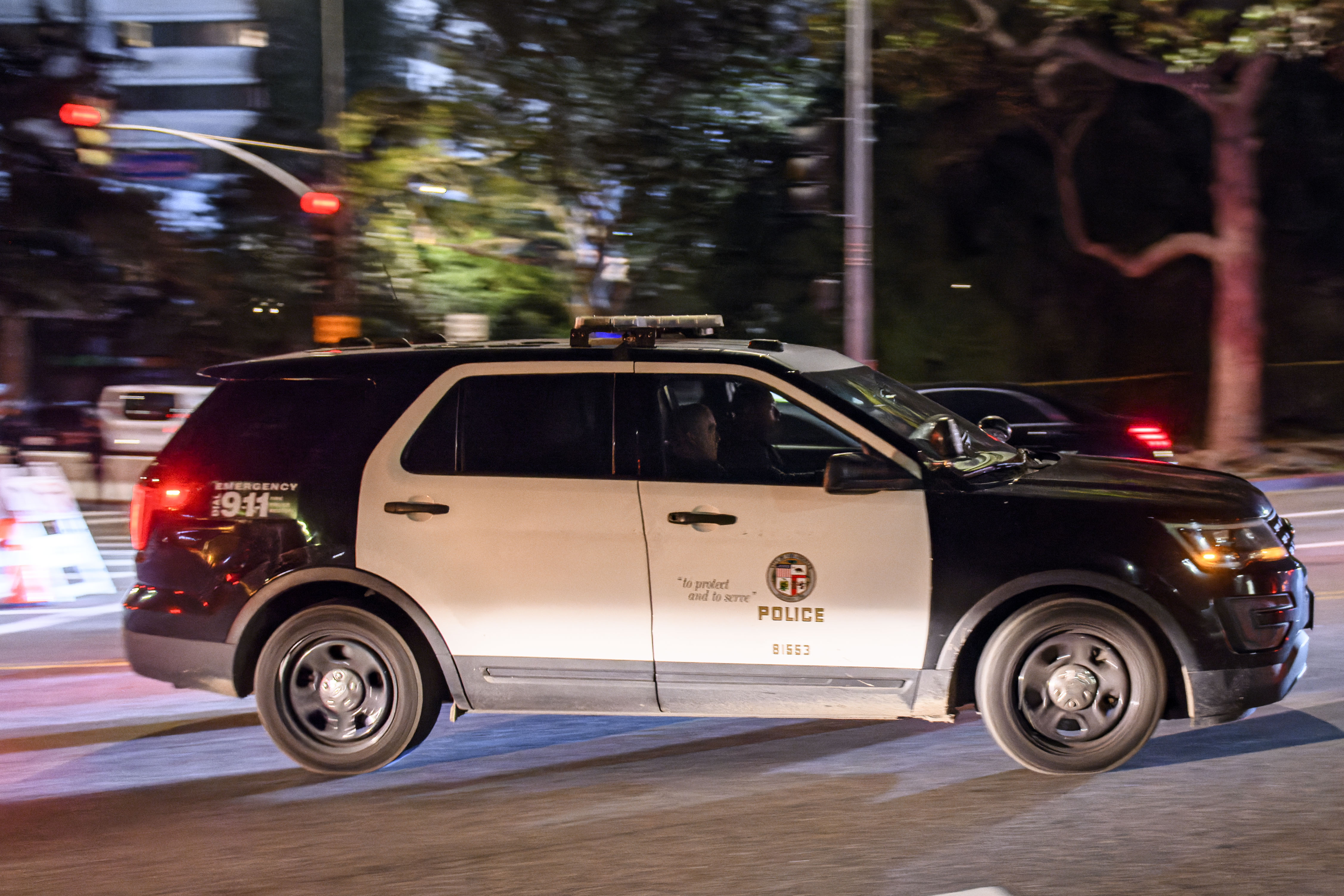
A LAPD vehicle is pictured. Some law enforcement protocols for handling mental health crises are ineffective, according to UCLA experts and a fall evaluation of LAPD from the city controller. (Daily Bruin file photo)

By Alexis Muchnik
Dec. 23, 2025 6:20 p.m.
Some law enforcement protocols for handling mental health crises are not effective in supporting people at risk, according to UCLA experts and a fall evaluation of LAPD from the city controller.
Poco Kernsmith, the chair of the department of social welfare at the Luskin School of Public Affairs, said law enforcement can escalate sensitive mental health-related situations due to a lack of deescalation training or a person’s negative reactions to seeing a uniformed officer. When mental health professionals lead the initial interaction with people experiencing a crisis, those people are more likely to feel safe and the situation is less likely to escalate, she added.
Kernsmith said police officers should be trained to focus on helping the subject of a mental health-related call, instead of on how the person may have violated the law. Training that officers receive should emphasize maintaining the person’s safety, she said.
“It (training) really also involves a mindset of ‘we’re public safety officers and we’re here to create safety for all members of the community, not to just enforce the law,’” Kernsmith said.
Laura Abrams, a professor of social welfare at the Luskin School, said that 72-hour involuntary holds, a possible outcome of mental health calls to law enforcement, involve a person being brought to a mental health facility and evaluated against their will – if they are deemed a danger to themselves or others.
An assessment by the Los Angeles City Controller’s office found that 86% of calls handled by the LAPD’s mental health unit in 2023 resulted in an involuntary hold.
Sometimes, people may be held in a longer-term mental health facility, Abrams added. However, these facilities may be less effective than psychiatric hospitals, she said.
However, Abrams added that police officers often bring those experiencing mental health crises to jail, especially when that person is experiencing homelessness. According to the LA Homeless Services Authority, over 72,000 people in LA County are unhoused.
“There’s a lot of revolving door,” Abrams said. “Of folks maybe having a 72-hour hold or a stay in the hospital and then they’re released back to the streets and the underlying issues aren’t necessarily resolved.”
All UCPD officers receive training for interacting with a person experiencing a mental health crisis while in the police academy, said Scott Scheffler, the captain of UCPD’s administrative bureau, in an emailed statement. Officers who train new officers receive additional training, he added in the statement.
UCPD collaborates with LAPD on mental health-related calls in Westwood if the call is not from the UCLA campus and does not involve an affiliate, he said in the statement.
When a UCPD officer arrives on scene, they first ensure all parties are safe, then evaluate if the person experiencing a mental health crisis meets the criteria for an involuntary hold or can be provided with other resources, Scheffler said in the emailed statement.
Donavon Lea, the president of the Health Law Society at UCLA, said they believe the role of police when intervening in mental health crises on college campuses should be rethought.
He added that college campuses have resources that cities do not to reevaluate a law enforcement officer’s response to a person experiencing a mental health crisis.
“If … a student’s having a mental health crisis, their title or position as a student is now secondary,” Lea said. “Now they’re a danger or a potential bad actor.”
The LA City Controller’s office found in an Oct. 27 evaluation of LAPD’s Mental Evaluation Unit’s Systemwide Mental Assessment Response Team unit that, based on incident data from 2020-22 and “use of force” data from 2021-24, 35% of shootings involving an LAPD officer also involved a person experiencing a mental health crisis.
Only 6% of incident reports included an officer attempting to de-escalate the situation, according to the report.
The assessment followed the killing of three men who either seemed to be experiencing a crisis or had a history of mental health related issues in January 2023, according to the report.
The report also found that the LAPD’s “use of force” policies do not specifically address how officers should interact with people experiencing a mental health crisis.
Additionally, SMART focuses on executing involuntary holds, according to the report. The unit only measures success in the speed with which patrol officers are relieved from the scene, the assessment found.
The assessment also found that police officers were more likely to document behavior indicative of a mental health crisis if the person was white.
Abrams said she believed national data shows police are more likely to use excessive force with people of color who appear to be experiencing a mental health crisis. Kernsmith said police training protocols should account for “implicit bias” related to race.
Abrams said college and other small police forces likely receive more extensive training in handling mental health crises than large police forces, like LAPD.
“Campus police and police that are dealing with students are a bit more attuned to what a mental health crisis is,” Abrams said.