Opinion: Student researchers need to stand up for themselves politically
(Amelia Chief/Daily Bruin senior staff)

By William Johnson
Nov. 19, 2025 11:07 a.m.
This post was updated Dec. 3 at 7:15 p.m.
The Trump administration’s policies have left a lasting imprint on universities across the country – and UCLA has not been spared.
With continual threats to scholarly autonomy, academics must become more politically engaged to safeguard progress.
Over the summer, UCLA temporarily lost around $584 million in federal research funds. Even though the vast majority of that funding has been temporarily restored, the effects reverberate across campus.
The mathematics department recently had to eliminate its paid graders and cut hours for its teaching assistants. Aleph, the only official undergraduate journal for the humanities and social sciences, lost all university support, and the Undergraduate Research Center faced significant cuts, leading to the loss of important programs such as Research Revealed.
The administration went further in issuing the university a list of demands, which included a payment of $1.2 billion – demands that UC president James Milliken called a “death knell” for research.
After a lawsuit by the American Association of University Professors, labor unions and faculty associations, a district court has barred these demands as coercion, but uncertainty still looms on the horizon.
Researchers and academics – both those in science and humanities – have a responsibility to become more politically active. Whether by calling representatives, participating in protests or tying their research to policy issues, all forms of political engagement are not just valid but necessary.
The cuts aren’t a distant scare used to pad headlines. They slice straight into the heart of our campus community, impacting every part of academic discovery.
Jordan Lombardi, the co-editor for the now purely student-run research journal Aleph, said funds were immensely important to the journal’s operations. The money was used to produce print copies of the journal, put on events with research speakers and host networking events, she added.
When the university terminated the journal administrator and cut all university funding, its vitality was unclear.
“It was just a real moment of, ‘I don’t know what we’re going to do – I don’t know even if Aleph can continue,’” said Lombardi, a fourth-year applied mathematics and sociology student.
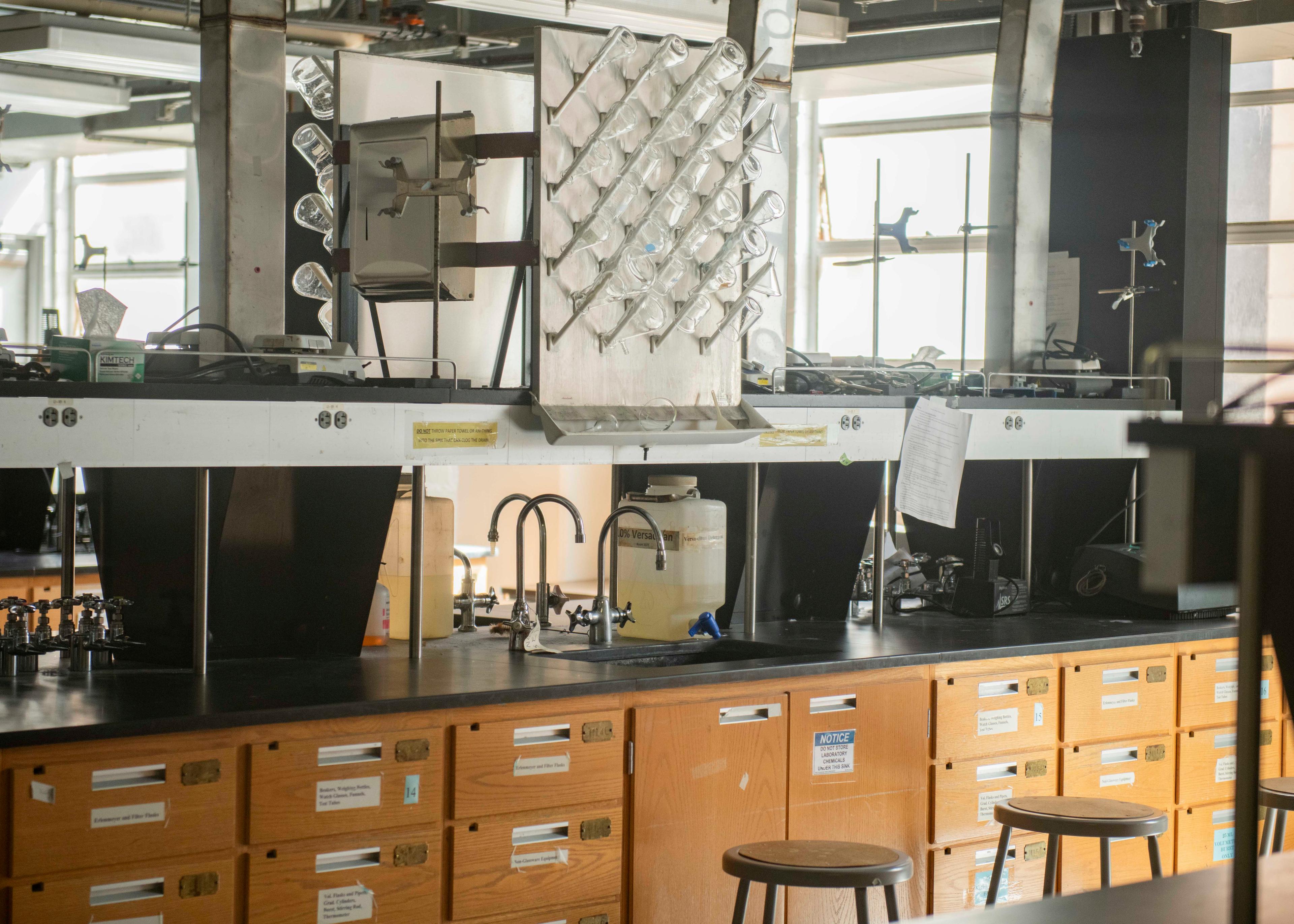
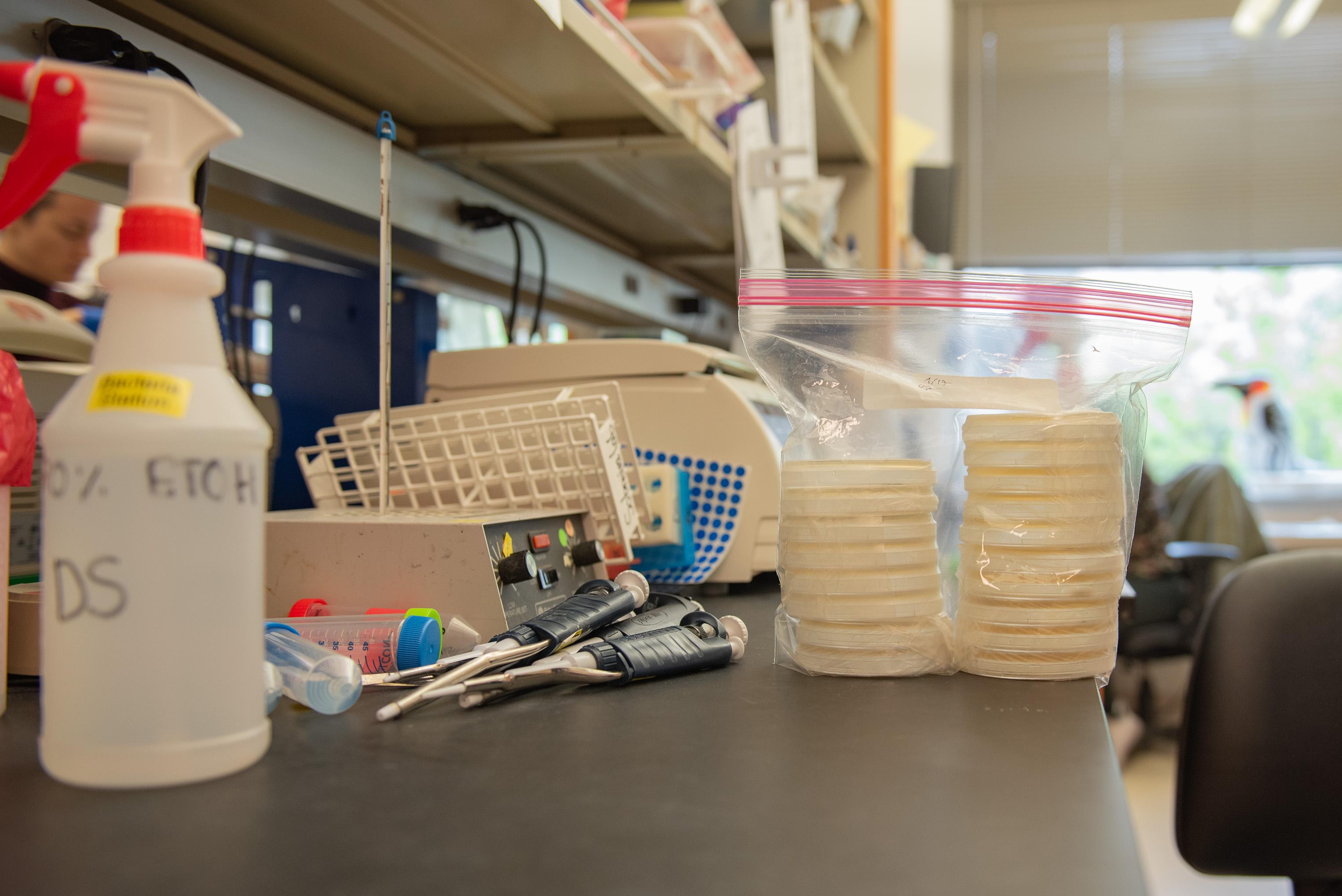
Labs across South Campus also struggled under the pressures of a tighter budget.
Ivan Moran, who works in a lab focusing on neurodegenerative diseases such as Alzheimer’s disease, said the cuts brought uncertainty to his lab.
“There definitely is a lot more concern and frustration over the budget cuts – not knowing if certain things, if certain funds are going to be available in the next year or two,” said Moran, a second-year molecular, cell and developmental biology student.
Those in academia can’t stand by waiting for someone else to solve these problems. We have a duty to truth – not just to discover it but to defend it when it is under siege.
Researchers can involve themselves in political decisions most directly through participating in pre-established channels of political action such as grassroots campaigning or legal action.
Jorge Avila, assistant director of the Undergraduate Research Center for the Sciences, discussed the importance of scientists advocating in the policy field. To him, science is more than just working in the lab – it involves getting our work and ideas out to society.
“That’s a big part of how we advocate in science – we go straight to the lawmakers,” Avila said.
Avila stressed the importance of strength in numbers. When coming together as large unified groups, we may be able to find ways to influence policy in a direction that can reshape this nation’s view of science, he said.
These methods have proven effective in recent court decisions. Yet, such methods are only as effective as the individuals who are willing to persevere.
A more implicit method researchers can take is integrating their research into the political field. By leveraging the societal impact of their work, researchers can engage with the public to demonstrate how its implications require certain action.
A former director of undergraduate research programs for the URC who was recently laid off as a result of the cuts, commented in a written statement on what students and the university can do during these times of uncertainty to remain effective. She was granted anonymity for fear of retaliation.
“During the pandemic, we saw pre-med students collaborating with philosophy faculty and molecular biologists engaging in policy analysis,” the former director wrote in a statement. “These kinds of cross-disciplinary projects can be both meaningful and accessible.”
Through joint collaboration, researchers can fight funding cuts by demonstrating their studies’ impact on society.
“In a lot of ways, students can act as bridges – bringing research beyond the campus and into communities, industries, and global conversations where it can have real impact,” the former director added in the written statement.
Regardless of the approach, academics must contend with political adversities to maintain the thriving atmosphere that continues to set records in groundbreaking research.
Every one of us has a role in deciding how our university gets through these difficult times. We must work together to create and spread ideas. These are policies that affect us all and no one – not humanities nor STEM students – has the leisure of distance.
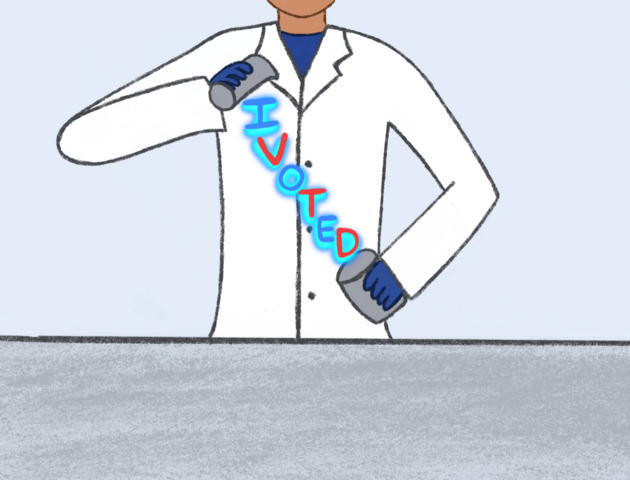
As researchers, we must find the time to take off our lab coats, close our books and take a stand. We must do this together, not just as North and South campuses. Whether in times of stability or crisis, we are obligated to show that truth is a non-negotiable.
United, we are greater than the sum of our parts.