Trump administration’s UCLA demands target international students, DEI initiatives
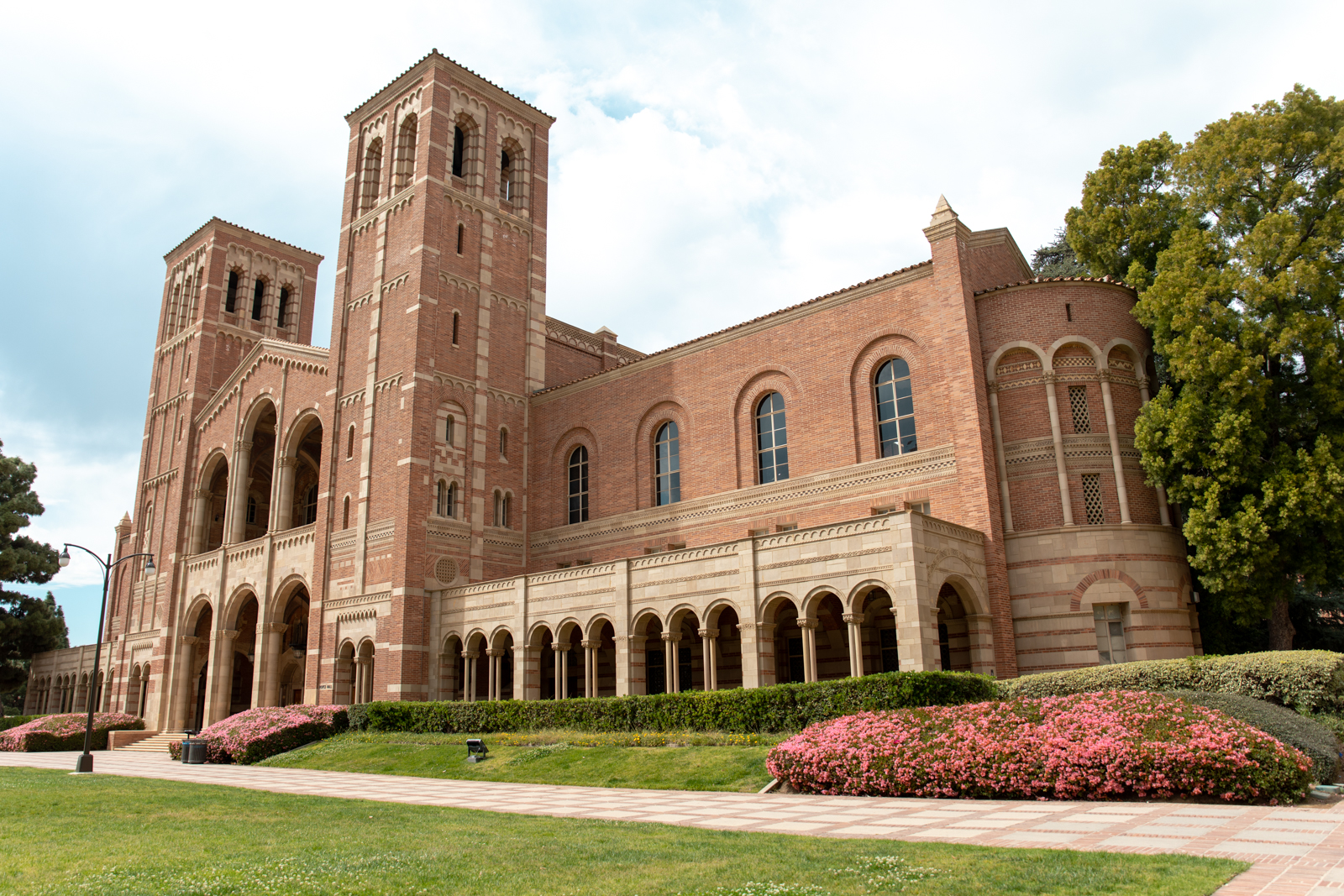
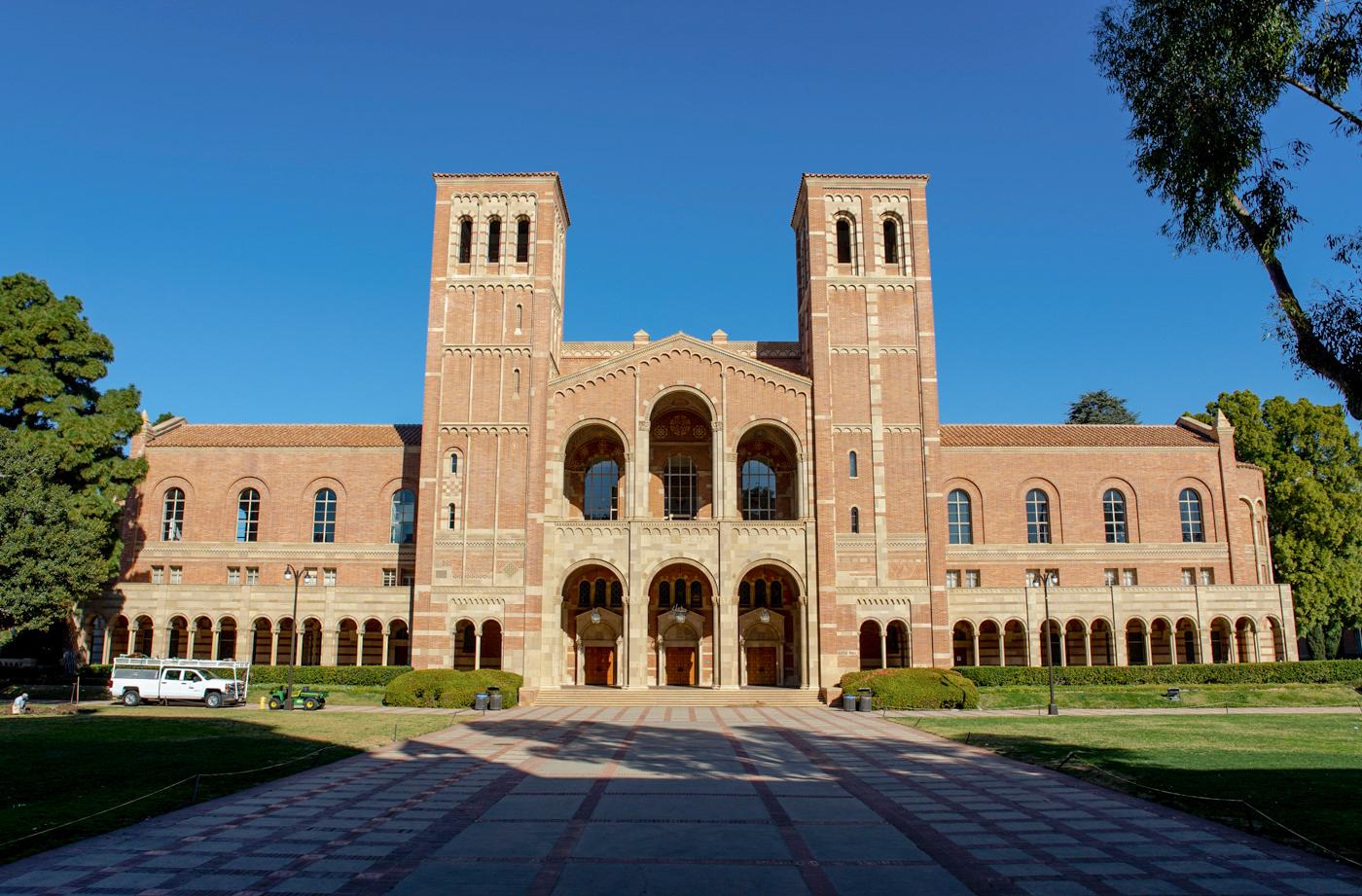
Royce Hall is pictured. The federal government wants UCLA to restrict its enrollment of international students, end diversity initiatives and hire external auditors to oversee the university, according to a draft settlement publicized Friday. (Daily Bruin file photo)
By Josephine Murphy
Oct. 25, 2025 4:13 p.m.
This post was updated Oct. 26 at 10:27 p.m.
The federal government wants UCLA to restrict its enrollment of international students, end diversity initiatives and hire external auditors to oversee the university, according to a draft settlement publicized Friday.
The Trump administration sent the 27-page proposal to the university Aug. 8. The proposed settlement – which UC President James Milliken said would be a “death knell” for research – detailed requirements UCLA would have to agree to in exchange for the $584 million in federal research funds that the Trump administration froze in late July.
The administration previously alleged the university allowed antisemitism, affirmative action and “men to participate in women’s sports.”
UCLA, the UC Office of the President and the UC Board of Regents have not given any indication that they would accept the draft proposal.
[Related: UC releases Trump administration’s proposed settlement for UCLA research funding]
The California Supreme Court ruled Friday that the UC – following two failed appeals to keep the document confidential – had to publicize the settlement. Multiple UC faculty groups filed a lawsuit Sept. 17 to access the proposal under the California Public Records Act, which mandates that the government produce records if requested, except if the release would cause privacy or public safety concerns.
Annie McClanahan, the co-president of the Council of UC Faculty Associations, said in a press release that the demands outlined in the draft proposal would serve President Donald Trump, rather than California, adding that faculty have to “stand up and fight back.”
“The University of California cannot survive these demands as the engine of social transformation it is today,” she said. “If UC cannot admit students of color and support their studies, cannot hire top researchers born outside the United States, cannot safeguard its immigrants students and workers, it will no longer truly serve the citizens of California.”
CNN exclusively obtained a draft of the settlement the day it was sent to the university, revealing that the Trump administration was asking UCLA for $1 billion to restore the frozen grants, $172 million in a claims fund for those allegedly impacted by violations of Title VII of the Civil Rights Act of 1964 – employment discrimination based on identity – and two new administrators to oversee the school.
If UCLA had signed the draft agreement, it would have been expected to pay equal installments toward the $1 billion over the term of the agreement – with the first installment being paid within five business days of entering the agreement – and fund an outside monitor who would report on the university’s compliance with the policies, according to the proposed settlement. The monitor could have requested to bring on any “additional persons or entities” needed to support their work, the settlement said.
The settlement would have lasted three years following the effective date, according to the document.
And even if UCLA had signed the agreement, the university would still be subject to further “compliance reviews, investigations, defunding, or litigation,” according to the settlement. A California federal district court judge temporarily restored the majority of the university’s grants by issuing two injunctions in a case brought by UC researchers, which will hold while the case moves forward.
The settlement demanded that the university must alter the Feinberg School of Medicine’s policies, protocols and public-facing materials to no longer provide gender-affirming health care to minors. However, the Feinberg School of Medicine is Northwestern University’s medical school – a different university the Trump administration suspended $790 million in research funding from.
The White House did not respond to questions on whether it intended to refer instead to the David Geffen School of Medicine at UCLA.
The draft settlement also said within 60 days of the agreement going into effect, UCLA would have had to submit a report confirming it revised its policies and stopped performing gender-affirming surgeries to minors.
UCLA would also have been expected to send a “personalized letter” apologizing to “impacted female” athletes whose athletics programs have “permit male athletes” to compete. UCLA Athletics, as a member of the NCAA, does not allow transgender women to participate in women’s sports.
If UCLA had signed the agreement, the university would have been required to ask international applicants questions “designed to elicit their reasons for wishing to study in the United States,” conduct an overall review of its recruiting policies and ensure that those likely to engage in “anti-Western, anti-American, or antisemitic disruptions” are not admitted.
UCLA would also have been expected to ensure it does not have any financial reliance on its foreign students or foreign entities.
If it accepted the settlement, the university would also have had to inform the U.S. government about any disciplinary action taken toward students using a visa to study in the country.
The Trump administration revoked the visas of at least 19 UCLA students and recent alumni in early April. However, the federal government announced later that month that it would temporarily restore students’ visas while it developed a consistent framework for status termination.
The university’s legal counsel would work alongside the federal government to provide “full and direct access” to “UCLA staff employees, facilities, documents, and data related to the Agreement” – with exceptions for documents protected by attorney-client or work product privilege.
UC Berkeley and UC San Diego gave the personal information of students, staff and faculty at each school to the federal government for investigation, according to the Daily Californian and UCSD Guardian.
If the agreement were signed, a UC Board of Regents subcommittee would conduct a regular review to determine if UCLA has resolved antisemitism complaints and any violations of “the University’s Demonstration and Display and Solicitation Policies.” While UCLA does not have a set of rules by that name, it does have recently finalized Time, Place and Manner rules which mandate when and where demonstrations can occur on campus.
[Related: UCLA’s finalized Time, Place and Manner policy alters public expression guidelines]
The settlement demands that an external auditor conduct a survey to evaluate UCLA’s “campus climate” – particularly for Jewish students. The survey would have included questions about community members’ experiences with antisemitism and reporting procedures.
The federal government also asked UCLA to submit a report about its bias reporting systems within 30 days of the settlement’s effective date. The Trump administration cited UCLA allegedly allowing illegal affirmative action in hiring and admissions as another reasoning for the freeze.
The draft agreement also called on the university to hire a new senior administrator to review UCLA’s policies and programs relating to diversity, equity and inclusion – which the settlement calls “discrimination policies” – and “faculty hiring, retention, promotion, and scholarship programs,” as well as curricular changes.
If it signed the agreement, UCLA would have also needed to eliminate diversity incentive programs that provide “financial bonuses or benefits” for hiring on the basis of race, sex or ethnicity.
The draft agreement called on the university to maintain a “security infrastructure” with resources from UCLA Environment, Health and Safety and establish a framework to work alongside “local, regional, and federal law enforcement” to prevent – and investigate – violations of the law or UCLA policy.
“UCLA shall establish procedures by which any member of the UCLA community can report allegations of noncompliance with the reforms detailed in this Agreement to the Administrator and the Resolution Monitor,” the document said. “Those procedures shall also prohibit UCLA from retaliating against someone for making a report of noncompliance.”
Details of the settlement had only been previously publicized by CNN and the Los Angeles Times, which obtained the draft proposal in August and September, respectively. Neither outlet published the settlement’s contents in full.
“As a public university, we are stewards of taxpayer resources and a payment of this scale would completely devastate our country’s greatest public university system as well as inflict great harm on our students and all Californians,” Milliken said in an Aug. 8 statement. “Americans across this great nation rely on the vital work of UCLA and the UC system for technologies and medical therapies that save lives, grow the U.S. economy, and protect our national security.”
Contributing reports from Alexandra Crosnoe, News editor.